Loading...
This comparison has not been analyzed yet.
One-time AI generation (~1 minute). Scores and timeline are already available below.
Emperor Wu of Han vs Munmu of Silla
Emperor Wu of Han leads by 8.4 pts · 2 figures compared
…
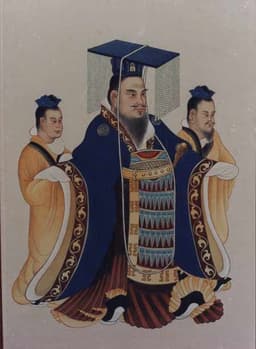
Emperor Wu of Han
Emperor · Ancient
71.3Total

Munmu of Silla
Emperor · Ancient
62.9Total
Basic Information
Born
-156
-626
Died
-87
—
Era
Ancient
Ancient
Nationality
China
Korea
Occupation
Emperor
Emperor
Civilization
Eastern
Eastern
Score Comparison
Military (10%)
78.5
72.0
Political (20%)
72.0
72.0
Influence (20%)
65.0
60.0
Legacy (20%)
70.0
52.0
Leadership (15%)
80.0
72.0
Strategy (15%)
69.1
61.2
TOTAL
71.3
62.9
Emperor Wu of Han — Complete Timeline
138 BC
Establishment of the Silk RoadPolitical Action
Emperor Wu dispatched Zhang Qian on a diplomatic mission to the Western Regions, initiating direct contact between China and Central Asian states. This led to the establishment of the Silk Road trade network, facilitating cultural and economic exchange.
Silk RoadDiplomacyTrade
Impact: globalconstructive
136 BC
Promotion of Confucianism as State DoctrineCultural
Emperor Wu established the Imperial Academy and made Confucian texts the basis for civil service examinations. This elevated Confucianism to the official state ideology, shaping Chinese governance and education for two millennia.
ConfucianismEducationBureaucracy
Impact: globalconstructive
133 BC
Campaigns against the XiongnuWar◆ Major
Emperor Wu launched a series of large-scale military campaigns against the Xiongnu confederation, pushing them north of the Gobi Desert. These wars secured the Hexi Corridor and opened the way for trade with Central Asia.
XiongnuExpansionSilk Road
Impact: regional
117 BC
Salt and Iron MonopoliesReform◆ Major
Emperor Wu nationalized the salt and iron industries, placing them under state control to generate revenue for his military campaigns. This policy increased central government power and became a model for later dynasties.
Economic ReformMonopolyRevenue
Impact: national
111 BC
Annexation of the Nanyue KingdomWar◆ Major
Emperor Wu's forces conquered the Nanyue kingdom in modern-day southern China and northern Vietnam. This expanded Han territory to the South China Sea and incorporated the region into the empire.
ExpansionNanyueVietnam
Impact: regional
Munmu of Silla — Complete Timeline
668 AD
Conquest of GoguryeoWar
King Munmu led Silla forces, in alliance with Tang China, to conquer Goguryeo. The fall of Goguryeo's capital, Pyongyang, ended the kingdom's 700-year history and completed the unification of the Korean Peninsula under Silla control.
ConquestGoguryeoUnification
Impact: regionaldestructive
670 AD
Construction of Gameunsa TempleCultural
Munmu ordered the construction of Gameunsa Temple near Gyeongju, dedicated to the protection of the unified kingdom. The temple was built with the hope of ensuring peace and prosperity, and it became a symbol of Silla's Buddhist faith and royal authority.
TempleBuddhismSilla
Impact: nationalconstructive
676 AD
Expulsion of Tang forces from KoreaWar◆ Major
After the conquest of Goguryeo, Tang China attempted to establish control over the peninsula. Munmu led Silla forces in a war to expel the Tang armies, culminating in the Battle of Maeso. This victory secured Silla's independence and unified Korea under native rule.
WarTang ChinaSilla
Impact: regionaldestructive
Establishment of the Unified Silla kingdomPolitical Action
Munmu formally established the Unified Silla kingdom, consolidating the former territories of Baekje, Goguryeo, and Silla under a single government. This unification ended the Three Kingdoms period and initiated a new era of Korean history.
UnificationState FormationSilla
Impact: regionalconstructive
681 AD
Death and burial at seaOther
Munmu died and was cremated, with his ashes scattered in the East Sea near Gyeongju. His burial at sea was a unique act, reflecting his wish to become a dragon protecting the kingdom. This practice was unprecedented in Korean royal tradition.
DeathBurialSilla
Impact: national
This comparison has not been analyzed yet.
One-time AI generation (~1 minute). Scores and timeline are already available below.
Rankings
🥇
Emperor Wu of HanLeader
Mil: 78.5Pol: 72.0Inf: 65.0
71.3
🥈
Munmu of Silla
Mil: 72.0Pol: 72.0Inf: 60.0
62.9
+8.4 behind
How This Comparison Works
Algorithm
Each figure is scored on 6 dimensions (0—100 scale) based on structured historical data: Military (10%), Political (20%), Influence (20%), Legacy (20%), Leadership (15%), Strategy (15%). The weighted total produces the final ranking.
Data Sources
Scores are computed from structured sub-indicators in the database. Scale factors adjust for era (Ancient ×0.85, Modern ×1.0) and civilization size (Eastern ×1.05, Other ×0.80) to account for differences in population and military scale.
Maximum 3 Figures
Comparisons are limited to 2—3 figures to ensure readability and statistical meaningfulness.
Error Margins
±5 points per dimension — Sub-scores are derived from historical records with inherent uncertainty. Two figures within 5 points on a dimension should be considered roughly equivalent in that area.
Total Score Accuracy
±3 points overall — The weighted combination of 6 dimensions produces a total score with approximately ±3 points of uncertainty. Differences of less than 3 points are not statistically significant— the figures are effectively tied.
Known Limitations
- Historical records are incomplete and uneven across civilizations
- Figures from oral-tradition societies may be underrepresented
- Occupation labels can misclassify multi-role figures
- Scores measure capability and impact, not moral character
- Quantitative scoring is a comparison tool, not absolute truth
Capability Radar
Military (10%) — Battles & Warfare
Battles
85
75
Win Rate
80
80
Expansion
90
85
Political (20%) — Governance & Reform
Reform
80
65
Diplomacy
85
80
Economy
75
60
Influence (20%) — Cultural & Global Reach
Cultural
90
65
Global
85
55
Legacy (20%) — Historical Impact
Historical
95
80
Longevity
95
70
Leadership (15%) — Power & Stability
Tenure
85
70
Stability
70
70
Strategy (15%) — Tactics & Innovation
Strategy
85
75
Tactics
75
70
Reform
70
60
Similar Comparisons
Comments & Discussion
No comments yet. Be the first to share your thoughts!