Loading...
This comparison has not been analyzed yet.
One-time AI generation (~1 minute). Scores and timeline are already available below.
Emperor Xianzong of Tang vs Gangjong of Goryeo
Emperor Xianzong of Tang leads by 24.9 pts · 2 figures compared
…
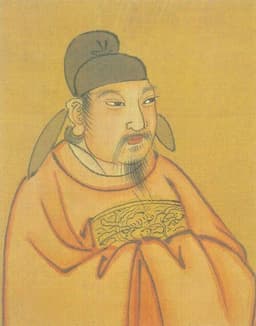
Emperor Xianzong of Tang
Emperor · Medieval
60.7Total

Gangjong of Goryeo
Emperor · Medieval
35.8Total
Basic Information
Born
778
1152
Died
820
1213
Era
Medieval
Medieval
Nationality
China
Korea
Occupation
Emperor
Emperor
Civilization
Eastern
Eastern
Score Comparison
Military (10%)
70.0
10.2
Political (20%)
65.0
29.3
Influence (20%)
59.0
47.9
Legacy (20%)
54.0
37.5
Leadership (15%)
68.0
33.6
Strategy (15%)
55.0
39.6
TOTAL
60.7
35.8
Emperor Xianzong of Tang — Complete Timeline
805 AD
Yuanhe RestorationPolitical Action
Emperor Xianzong initiated the Yuanhe Restoration, a series of reforms aimed at centralizing power and curbing the autonomy of military governors (jiedushi). He reasserted imperial authority over several rebellious provinces, strengthening the Tang state.
ReformCentralization
Impact: regionalconstructive
810 AD
Campaign against the Chengde CircuitWar◆ Major
Emperor Xianzong launched a military campaign against the Chengde Circuit, a rebellious province in Hebei. After initial setbacks, the Tang forces secured a victory, forcing the Chengde governor to submit to imperial authority.
Military CampaignRebellion Suppression
Impact: nationalconstructive
812 AD
Campaign against the Zhaoyi CircuitWar◆ Major
Emperor Xianzong's forces conquered the Zhaoyi Circuit, a rebellious province in modern Shanxi. This victory further reduced the power of the military governors and strengthened imperial control.
Military CampaignRebellion Suppression
Impact: nationalconstructive
818 AD
Campaign against the Pinglu CircuitWar◆ Major
Emperor Xianzong launched a campaign against the Pinglu Circuit in Shandong. The Tang forces defeated the rebel governor, bringing the province back under imperial control and completing the Yuanhe Restoration's military successes.
Military CampaignRebellion Suppression
Impact: nationalconstructive
820 AD
Death of Emperor XianzongPolitical Action◆ Major
Emperor Xianzong died suddenly, possibly poisoned by eunuchs. His death ended the Yuanhe Restoration, and subsequent emperors were unable to maintain the centralization he achieved, leading to the Tang dynasty's further decline.
DeathSuccession Crisis
Impact: regionaltragic
Gangjong of Goryeo — Complete Timeline
1211 AD
Accession during Mongol threatPolitical Action◆ Major
Gangjong became king after his brother Huijong was deposed by Choe Chung-heon. His reign coincided with the first Mongol invasions of Goryeo, though he had no authority to direct military policy.
AccessionMongol ThreatGoryeo
Impact: national
Reign under Choe military rulePolitical Action
Like his predecessors, Gangjong was a puppet king under the Choe military dictatorship. All major decisions, including responses to the Mongol threat, were made by Choe Chung-heon and his private army.
Puppet KingMilitary RuleGoryeo
Impact: national
1213 AD
Death during Mongol invasionWar
Gangjong died in 1213, just as Mongol forces under Genghis Khan began their first major campaign against Goryeo. His brief reign of two years saw no significant policy changes, and the Choe regime continued to dominate.
DeathMongol InvasionGoryeo
Impact: nationaltragic
This comparison has not been analyzed yet.
One-time AI generation (~1 minute). Scores and timeline are already available below.
Rankings
🥇
Emperor Xianzong of TangLeader
Mil: 70.0Pol: 65.0Inf: 59.0
60.7
🥈
Gangjong of Goryeo
Mil: 10.2Pol: 29.3Inf: 47.9
35.8
+24.9 behind
How This Comparison Works
Algorithm
Each figure is scored on 6 dimensions (0—100 scale) based on structured historical data: Military (10%), Political (20%), Influence (20%), Legacy (20%), Leadership (15%), Strategy (15%). The weighted total produces the final ranking.
Data Sources
Scores are computed from structured sub-indicators in the database. Scale factors adjust for era (Ancient ×0.85, Modern ×1.0) and civilization size (Eastern ×1.05, Other ×0.80) to account for differences in population and military scale.
Maximum 3 Figures
Comparisons are limited to 2—3 figures to ensure readability and statistical meaningfulness.
Error Margins
±5 points per dimension — Sub-scores are derived from historical records with inherent uncertainty. Two figures within 5 points on a dimension should be considered roughly equivalent in that area.
Total Score Accuracy
±3 points overall — The weighted combination of 6 dimensions produces a total score with approximately ±3 points of uncertainty. Differences of less than 3 points are not statistically significant— the figures are effectively tied.
Known Limitations
- Historical records are incomplete and uneven across civilizations
- Figures from oral-tradition societies may be underrepresented
- Occupation labels can misclassify multi-role figures
- Scores measure capability and impact, not moral character
- Quantitative scoring is a comparison tool, not absolute truth
Capability Radar
Military (10%) — Battles & Warfare
Battles
60
10
Win Rate
65
10
Expansion
50
5
Political (20%) — Governance & Reform
Reform
80
10
Diplomacy
70
20
Economy
70
10
Influence (20%) — Cultural & Global Reach
Cultural
55
10
Global
40
5
Legacy (20%) — Historical Impact
Historical
65
15
Longevity
50
10
Leadership (15%) — Power & Stability
Tenure
65
15
Stability
60
15
Strategy (15%) — Tactics & Innovation
Strategy
70
10
Tactics
55
10
Reform
75
5
Similar Comparisons
Comments & Discussion
No comments yet. Be the first to share your thoughts!