Loading...
Emperor Xiaowen of Northern Wei vs Piye
Piye leads by 0.5 pts · 2 figures compared
…
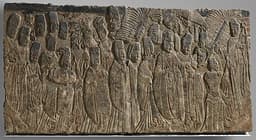
Emperor Xiaowen of Northern Wei
Emperor · Ancient
59.4Total

Piye
Emperor · Ancient
59.9Total
Basic Information
Born
467
-780
Died
499
-721
Era
Ancient
Ancient
Nationality
China
Nubia
Occupation
Emperor
Emperor
Civilization
Eastern
Other
Score Comparison
Military (10%)
55.0
74.0
Political (20%)
72.0
62.7
Influence (20%)
56.7
55.0
Legacy (20%)
52.0
52.0
Leadership (15%)
66.0
68.0
Strategy (15%)
60.0
61.2
TOTAL
59.4
59.9
Emperor Xiaowen of Northern Wei — Complete Timeline
485 AD
Land Equalization SystemReform◆ Major
Emperor Xiaowen implemented the Land Equalization System, which allocated land to peasant households based on the number of able-bodied men. This reform aimed to increase agricultural productivity and tax revenue, and it became a model for later Chinese dynasties.
Land ReformEconomic Policy
Impact: regionalconstructive
490 AD
Implementation of Sinicization ReformsReform◆ Major
Emperor Xiaowen enacted a series of reforms to adopt Chinese culture, including banning Xianbei clothing and language at court, promoting intermarriage between Xianbei and Chinese elites, and adopting Chinese surnames. These reforms aimed to strengthen the dynasty but also caused resentment among some Xianbei nobles.
Cultural ReformSinicization
Impact: regionalconstructive
494 AD
Move of Capital to LuoyangPolitical Action
Emperor Xiaowen moved the Northern Wei capital from Pingcheng (modern Datong) to Luoyang, a traditional Chinese capital. This move was part of his Sinicization reforms, aimed at integrating the Xianbei elite into Chinese culture and administration.
Capital MoveSinicization
Impact: regionalconstructive
496 AD
Adoption of Chinese SurnamesReform
Emperor Xiaowen ordered Xianbei nobles to adopt Chinese surnames, with the imperial family taking the surname Yuan. This was a key part of his Sinicization policy, intended to erase ethnic distinctions and integrate the Xianbei into Chinese society.
Cultural ReformSinicization
Impact: nationalconstructive
Piye — Complete Timeline
728 BC
Siege of HermopolisWar
Piye besieged the city of Hermopolis, ruled by Nimlot, a Libyan chief. After a prolonged siege, Nimlot surrendered, and Piye accepted his submission, demonstrating his strategy of incorporating defeated rulers into his administration.
SiegeMilitary CampaignLibyan Chiefs
Impact: regional
727 BC
Conquest of EgyptWar◆ Major
Piye led a Kushite army from Nubia into Egypt, defeating the coalition of Libyan chieftains and local Egyptian rulers. He captured Memphis and Thebes, establishing the 25th Dynasty and ruling Egypt from Napata.
Kushite Conquest25th DynastyEgypt
Impact: regional
Restoration of Amun CultReform
After conquering Egypt, Piye restored the traditional cult of Amun at Thebes, which had been neglected under Libyan rule. He made offerings and reaffirmed the priesthood, aligning himself with Egyptian religious traditions to gain legitimacy.
Religious ReformAmunLegitimacy
Impact: regionalconstructive
Victory Stela InscriptionCultural◆ Major
Piye commissioned the Victory Stela at Gebel Barkal, recording his conquest of Egypt. The inscription details his military campaign, the submission of Egyptian rulers, and his religious piety toward the god Amun, legitimizing his rule.
InscriptionPropagandaAmun Cult
Impact: regional
Return to NubiaPolitical Action
After his conquest, Piye returned to his capital at Napata in Nubia rather than remaining in Egypt. He left local Egyptian rulers as vassals, establishing a system of indirect rule that characterized the early 25th Dynasty.
GovernanceNubiaVassalage
Impact: regional
Expert Analysis
Origins
Emperor Xiaowen of Northern Wei (born 467 CE, personal name Tuoba Hong) was a member of the Xianbei Tuoba clan that ruled the Northern Wei dynasty. He ascended the throne at age five under a regency, with his grandmother Empress Dowager Feng as the de facto ruler. His early education was steeped in Chinese classics, shaping his later reforms. Piye (ruled c. 744–714 BCE) was a Kushite king from the city of Napata in Nubia (modern Sudan). He inherited a kingdom that had already absorbed Egyptian culture, and his family had long served as priests of Amun at Gebel Barkal. His father, Kashta, had already extended Kushite influence into Upper Egypt.
Rise to Power
Emperor Xiaowen assumed personal rule in 490 CE after his grandmother's death. His rise was not through conquest but through gradual consolidation of power within the court. He faced opposition from conservative Xianbei nobles but used his authority to push through reforms. Piye's rise came through military conquest. In his 20th year (c. 728 BCE), he launched a campaign into Egypt, then divided among Libyan chieftains. He defeated a coalition led by Tefnakht of Sais, capturing Memphis and Thebes. His victory was recorded on the Victory Stela at Gebel Barkal, which details his campaign. Piye scored 74.0 in military versus Xiaowen's 55.0, reflecting his direct conquest.
Leadership & Governance
Xiaowen's leadership was transformative: he moved the capital from Pingcheng to Luoyang in 494 CE to place his court in the heart of Chinese civilization. He banned Xianbei clothing and language at court, ordered nobles to adopt Chinese surnames (the imperial family took Yuan), and promoted intermarriage with Han Chinese. His Land Equalization System (485 CE) allocated land to peasants based on household size, stabilizing agriculture and tax revenue. Piye's governance focused on restoring Egyptian traditions. After conquest, he reinstated the cult of Amun at Thebes, made offerings, and appointed local rulers as vassals. He did not impose Kushite culture but rather presented himself as a traditional Egyptian pharaoh. Piye scored 62.7 in political leadership, lower than Xiaowen's 72.0, because his reforms were less systemic.
Triumph & Tragedy
Xiaowen's greatest triumph was his Sinicization policy, which integrated the Xianbei elite into Chinese culture and strengthened the state. His Land Equalization System increased agricultural output and stability. However, his reforms alienated many Xianbei nobles, leading to rebellions after his death. The Northern Wei eventually split into Eastern and Western Wei in 534 CE, partly due to cultural tensions. Piye's triumph was his conquest of all Egypt, a feat unmatched by Nubian rulers before him. He successfully restored the Amun cult and left a stable vassal system. His tragedy was that his successors, particularly Shabaka and Taharqa, had to reconquer Egypt after it slipped away, and the Assyrian invasions eventually ended Kushite rule. Piye scored 55.0 in military legacy versus Xiaowen's 52.0, but both faced posthumous decline.
Character & Destiny
Xiaowen was a determined reformer, deeply influenced by Chinese culture. He personally led the transition, even executing his own son for opposing his policies. His character drove him to push reforms rapidly, which contributed to the dynasty's instability. Piye was a pious and strategic ruler. His decision to return to Nubia after conquest, rather than rule from Egypt, showed his focus on traditional Kushite values. He scored 68.0 in leadership, slightly higher than Xiaowen's 66.0, reflecting his effective command during the campaign.
Legacy
Xiaowen's Sinicization reforms had a lasting impact: they accelerated the assimilation of the Xianbei into Chinese culture and influenced later dynasties. The Land Equalization System continued under the Sui and Tang. Piye's legacy is as the founder of the 25th Dynasty, which ruled Egypt for about 50 years. His restoration of Egyptian traditions influenced later Nubian kingdoms. However, his impact was less enduring than Xiaowen's, as the Kushite dynasty fell to Assyria. Xiaowen's political score of 72.0 versus Piye's 62.7 underscores his greater administrative impact.
Conclusion
Emperor Xiaowen had a greater overall impact than Piye. While Piye's military conquest scored higher (74.0 vs 55.0), Xiaowen's political and governance reforms (72.0 vs 62.7) reshaped an entire civilization. His Sinicization policy integrated a nomadic elite into Chinese culture, influencing the course of Chinese history for centuries. Piye's conquest was impressive but temporary; his dynasty ended after three generations. Xiaowen's reforms outlived his dynasty, making him the more consequential figure.
Rankings
🥇
PiyeLeader
Mil: 74.0Pol: 62.7Inf: 55.0
59.9
🥈
Emperor Xiaowen of Northern Wei
Mil: 55.0Pol: 72.0Inf: 56.7
59.4
+0.5 behind
How This Comparison Works
Algorithm
Each figure is scored on 6 dimensions (0—100 scale) based on structured historical data: Military (10%), Political (20%), Influence (20%), Legacy (20%), Leadership (15%), Strategy (15%). The weighted total produces the final ranking.
Data Sources
Scores are computed from structured sub-indicators in the database. Scale factors adjust for era (Ancient ×0.85, Modern ×1.0) and civilization size (Eastern ×1.05, Other ×0.80) to account for differences in population and military scale.
Maximum 3 Figures
Comparisons are limited to 2—3 figures to ensure readability and statistical meaningfulness.
Error Margins
±5 points per dimension — Sub-scores are derived from historical records with inherent uncertainty. Two figures within 5 points on a dimension should be considered roughly equivalent in that area.
Total Score Accuracy
±3 points overall — The weighted combination of 6 dimensions produces a total score with approximately ±3 points of uncertainty. Differences of less than 3 points are not statistically significant— the figures are effectively tied.
Known Limitations
- Historical records are incomplete and uneven across civilizations
- Figures from oral-tradition societies may be underrepresented
- Occupation labels can misclassify multi-role figures
- Scores measure capability and impact, not moral character
- Quantitative scoring is a comparison tool, not absolute truth
Capability Radar
Military (10%) — Battles & Warfare
Battles
30
75
Win Rate
30
80
Expansion
20
80
Political (20%) — Governance & Reform
Reform
95
60
Diplomacy
75
70
Economy
70
55
Influence (20%) — Cultural & Global Reach
Cultural
85
65
Global
60
55
Legacy (20%) — Historical Impact
Historical
80
70
Longevity
75
60
Leadership (15%) — Power & Stability
Tenure
70
65
Stability
65
60
Strategy (15%) — Tactics & Innovation
Strategy
40
75
Tactics
25
70
Reform
60
60
Similar Comparisons
Comments & Discussion
No comments yet. Be the first to share your thoughts!