Loading...
Emperor Xuanzong of Tang vs John of Denmark
Emperor Xuanzong of Tang leads by 16.7 pts · 2 figures compared
…
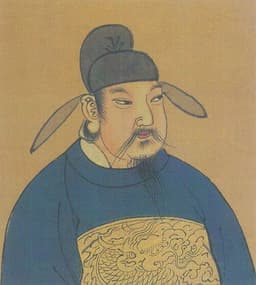
Emperor Xuanzong of Tang
Emperor · Medieval
60.8Total

John of Denmark
Emperor · Medieval
44.1Total
Basic Information
Born
685
1455
Died
762
1513
Era
Medieval
Medieval
Nationality
China
Denmark
Occupation
Emperor
Emperor
Civilization
Eastern
Western
Score Comparison
Military (10%)
65.0
45.0
Political (20%)
82.0
36.5
Influence (20%)
40.0
50.2
Legacy (20%)
65.0
41.7
Leadership (15%)
68.0
48.4
Strategy (15%)
55.0
38.6
TOTAL
60.8
44.1
Emperor Xuanzong of Tang — Complete Timeline
713 AD
Kaiyuan Golden AgeCultural
Emperor Xuanzong initiated the Kaiyuan era, a period of political stability, economic prosperity, and cultural flourishing. He appointed capable ministers, reformed the bureaucracy, and promoted the arts. This era is considered the peak of the Tang dynasty.
Golden AgeProsperity
Impact: globalconstructive
720 AD
Reform of the Equal-Field SystemReform
Emperor Xuanzong implemented reforms to the Equal-Field System to address land concentration and tax evasion. These reforms temporarily stabilized the agrarian economy and increased state revenue, but they could not reverse the long-term decline of the system.
Land ReformEconomic Policy
Impact: nationalconstructive
755 AD
An Lushan RebellionWar
The general An Lushan launched a rebellion against Emperor Xuanzong, capturing the capital Chang'an. Xuanzong fled to Sichuan and was forced to abdicate. The rebellion lasted eight years, devastating the Tang empire and leading to its decline.
RebellionCivil War
Impact: globaltragic
756 AD
Abdication and Death of Yang GuifeiPolitical Action◆ Major
During the flight from Chang'an, Emperor Xuanzong's troops mutinied and forced him to order the execution of his beloved consort Yang Guifei, whom they blamed for the rebellion. Xuanzong then abdicated in favor of his son, Emperor Suzong.
AbdicationExecution
Impact: nationaltragic
John of Denmark — Complete Timeline
1397 AD
Union of Kalmar TreatyPolitical Action◆ Major
John of Denmark became king of the Kalmar Union, which united Denmark, Norway, and Sweden under a single monarch. The union was already weakened by internal conflicts. John's reign saw continued tensions with Swedish nobility who resisted central authority, leading to periodic rebellions.
Kalmar UnionMonarchyScandinavia
Impact: regional
1471 AD
Battle of BrunkebergWar◆ Major
John of Denmark led Danish forces against Swedish regent Sten Sture the Elder at Brunkeberg near Stockholm. The Danish army was defeated, and John failed to reclaim the Swedish throne. This battle solidified Swedish resistance to the Kalmar Union and delayed Danish control over Sweden.
BattleKalmar UnionSwedish Rebellion
Impact: regionaldestructive
1509 AD
Treaty of CopenhagenPolitical Action
John of Denmark signed the Treaty of Copenhagen with the Hanseatic League, ending a trade war. The treaty granted the Hanseatic League favorable trading rights in the Baltic, weakening Danish economic control. This agreement reflected John's inability to assert Danish dominance over the powerful league.
TreatyHanseatic LeagueTrade
Impact: regional
Expert Analysis
Origins
Emperor Xuanzong of Tang, born Li Longji in 685, was the third son of Emperor Ruizong. His early life was marked by political intrigue—his grandmother Empress Wu Zetian had usurped the throne, and his father was a puppet ruler. Xuanzong grew up in the imperial palace, witnessing the machinations of court life. He received a traditional Confucian education, emphasizing statecraft, military arts, and cultural refinement.
John of Denmark, born in 1455, was the son of King Christian I and Dorothea of Brandenburg. He was groomed for kingship from childhood, becoming heir to the Kalmar Union—a personal union of Denmark, Norway, and Sweden. His upbringing was centered on Scandinavian politics and the challenges of maintaining a fragile union.
Rise to Power
Xuanzong's rise began with a coup in 710, when he and his aunt Princess Taiping overthrew Empress Wei, who had attempted to seize power after Emperor Zhongzong's death. In 712, his father abdicated, and Xuanzong ascended the throne. His early reign was marked by the elimination of Princess Taiping's faction in 713, consolidating his authority. He then appointed capable chancellors like Yao Chong and Song Jing, initiating the Kaiyuan era (713–741).
John became king of Denmark in 1481 upon his father's death. He inherited the Kalmar Union, but Sweden was already rebellious under Sten Sture the Elder. John was crowned king of Norway in 1483 and Sweden in 1497 after military campaigns, but his authority was contested. His rise was less dramatic, relying on hereditary succession rather than personal ambition.
Leadership & Governance
Xuanzong's governance during the Kaiyuan era was exemplary: he reduced taxes, reformed the bureaucracy, and promoted meritocracy. He personally reviewed appointments and encouraged open criticism. The Equal-Field System was adjusted to curb land concentration. Culturally, he patronized poets like Li Bai and Du Fu, and the Tang capital Chang'an became a cosmopolitan center. However, after 741, he grew complacent, entrusting power to corrupt officials like Li Linfu and indulging in his love for Yang Guifei, leading to administrative decay.
John's leadership was constrained by the union's structural weaknesses. He attempted to centralize authority but faced resistance from Swedish nobles and the Hanseatic League. His military score of 45.0 reflects his defeat at Brunkeberg in 1471 (before his reign) and inability to quell Swedish revolts. Politically, he scored only 36.5, as his negotiations with the Hanseatic League (Treaty of Copenhagen, 1490) favored the League, weakening Danish trade. His governance was reactive, lacking the vision of Xuanzong's early reforms.
Triumph & Tragedy
Xuanzong's triumph was the Kaiyuan era, a golden age of stability and culture. His political score of 82.0 reflects his early acumen. However, his tragedy was the An Lushan Rebellion (755–763), sparked by his neglect and favoritism. He fled Chang'an, was forced to execute Yang Guifei, and abdicated in 756. The rebellion devastated the Tang dynasty, leading to long-term decline.
John's triumph was briefly reuniting the Kalmar Union in 1497, but it was short-lived. His tragedy was the loss of Swedish loyalty and the union's dissolution after his death. He failed to secure a lasting legacy, with his influence score of 50.2 inflated by his royal title rather than achievements.
Character & Destiny
Xuanzong was initially energetic and reform-minded, but later became hedonistic and detached. His character shift from capable ruler to pleasure-seeking emperor directly caused the rebellion. Historians note his early brilliance and later folly as a cautionary tale.
John was persistent but lacked strategic insight. His strategy score of 38.6 indicates poor decision-making, such as alienating Swedish nobles. His destiny was to preside over a declining union, unable to reverse its fragmentation.
Legacy
Xuanzong's legacy is complex: the Kaiyuan era remains a benchmark for Chinese governance, but the An Lushan rebellion marked the Tang's turning point. His cultural patronage endured, with poets and art from his reign celebrated. His legacy score of 65.0 reflects this mixed impact.
John's legacy is minimal. The Kalmar Union collapsed after his death, and he is largely forgotten outside Scandinavia. His legacy score of 41.7 reflects his limited historical footprint.
Conclusion
Emperor Xuanzong of Tang had a greater impact than John of Denmark. With a total score of 60.8 to John's 44.1, the gap of 16.7 points is significant. Xuanzong presided over a golden age that shaped Chinese civilization, while John failed to preserve a union that was already fragmenting. Xuanzong's political and leadership scores (82.0 and 68.0) dwarf John's (36.5 and 48.4). Despite his later failures, Xuanzong's early achievements altered the course of Chinese history, whereas John's reign was a footnote in Scandinavian decline.
Rankings
🥇
Emperor Xuanzong of TangLeader
Mil: 65.0Pol: 82.0Inf: 40.0
60.8
🥈
John of Denmark
Mil: 45.0Pol: 36.5Inf: 50.2
44.1
+16.7 behind
How This Comparison Works
Algorithm
Each figure is scored on 6 dimensions (0—100 scale) based on structured historical data: Military (10%), Political (20%), Influence (20%), Legacy (20%), Leadership (15%), Strategy (15%). The weighted total produces the final ranking.
Data Sources
Scores are computed from structured sub-indicators in the database. Scale factors adjust for era (Ancient ×0.85, Modern ×1.0) and civilization size (Eastern ×1.05, Other ×0.80) to account for differences in population and military scale.
Maximum 3 Figures
Comparisons are limited to 2—3 figures to ensure readability and statistical meaningfulness.
Error Margins
±5 points per dimension — Sub-scores are derived from historical records with inherent uncertainty. Two figures within 5 points on a dimension should be considered roughly equivalent in that area.
Total Score Accuracy
±3 points overall — The weighted combination of 6 dimensions produces a total score with approximately ±3 points of uncertainty. Differences of less than 3 points are not statistically significant— the figures are effectively tied.
Known Limitations
- Historical records are incomplete and uneven across civilizations
- Figures from oral-tradition societies may be underrepresented
- Occupation labels can misclassify multi-role figures
- Scores measure capability and impact, not moral character
- Quantitative scoring is a comparison tool, not absolute truth
Capability Radar
Military (10%) — Battles & Warfare
Battles
65
25
Win Rate
60
30
Expansion
70
20
Political (20%) — Governance & Reform
Reform
90
30
Diplomacy
80
35
Economy
95
30
Influence (20%) — Cultural & Global Reach
Cultural
90
25
Global
75
15
Legacy (20%) — Historical Impact
Historical
85
30
Longevity
80
20
Leadership (15%) — Power & Stability
Tenure
85
40
Stability
40
20
Strategy (15%) — Tactics & Innovation
Strategy
70
25
Tactics
55
20
Reform
75
15
Similar Comparisons
Comments & Discussion
No comments yet. Be the first to share your thoughts!