Loading...
Emperor Xuanzong of Tang vs Napoleon Bonaparte
Napoleon Bonaparte leads by 10.1 pts · 2 figures compared
…
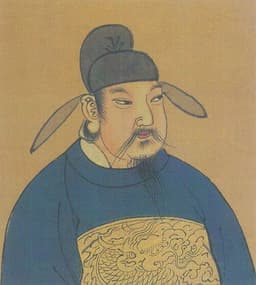
Emperor Xuanzong of Tang
Emperor · Medieval
60.8Total

Napoleon Bonaparte
General · Modern
70.9Total
Basic Information
Born
685
1769
Died
762
1821
Era
Medieval
Modern
Nationality
China
France
Occupation
Emperor
General
Civilization
Eastern
Western
Score Comparison
Military (10%)
65.0
94.0
Political (20%)
82.0
72.0
Influence (20%)
40.0
40.0
Legacy (20%)
65.0
80.0
Leadership (15%)
68.0
78.0
Strategy (15%)
55.0
90.0
TOTAL
60.8
70.9
Emperor Xuanzong of Tang — Complete Timeline
713 AD
Kaiyuan Golden AgeCultural
Emperor Xuanzong initiated the Kaiyuan era, a period of political stability, economic prosperity, and cultural flourishing. He appointed capable ministers, reformed the bureaucracy, and promoted the arts. This era is considered the peak of the Tang dynasty.
Golden AgeProsperity
Impact: globalconstructive
720 AD
Reform of the Equal-Field SystemReform
Emperor Xuanzong implemented reforms to the Equal-Field System to address land concentration and tax evasion. These reforms temporarily stabilized the agrarian economy and increased state revenue, but they could not reverse the long-term decline of the system.
Land ReformEconomic Policy
Impact: nationalconstructive
755 AD
An Lushan RebellionWar
The general An Lushan launched a rebellion against Emperor Xuanzong, capturing the capital Chang'an. Xuanzong fled to Sichuan and was forced to abdicate. The rebellion lasted eight years, devastating the Tang empire and leading to its decline.
RebellionCivil War
Impact: globaltragic
756 AD
Abdication and Death of Yang GuifeiPolitical Action◆ Major
During the flight from Chang'an, Emperor Xuanzong's troops mutinied and forced him to order the execution of his beloved consort Yang Guifei, whom they blamed for the rebellion. Xuanzong then abdicated in favor of his son, Emperor Suzong.
AbdicationExecution
Impact: nationaltragic
Napoleon Bonaparte — Complete Timeline
1799 AD
Coup of 18 BrumaireOther◆ Major
Napoleon Bonaparte, with support from his brother Lucien and key political figures, overthrew the Directory in a bloodless coup. He established the Consulate with himself as First Consul, effectively becoming the ruler of France. This event ended the French Revolution's most unstable period.
French RevolutionCoupRise to Power
Impact: regional
1804 AD
Promulgation of the Napoleonic CodeOther◆ Major
Napoleon enacted the Civil Code of the French, known as the Napoleonic Code, a comprehensive set of laws that replaced the fragmented feudal legal systems. The code established legal equality, protected property rights, and secularized law. It became the basis for legal systems in many European and world countries.
Legal ReformNapoleonic CodeCivil Law
Impact: globalconstructive
1805 AD
Battle of AusterlitzWar◆ Major
Napoleon's Grande Arm
Napoleonic WarsBattleDecisive Victory
Impact: global
1812 AD
Invasion of RussiaWar◆ Major
Napoleon led the Grande Arm
Napoleonic WarsInvasionDisaster
Impact: globaldestructive
1815 AD
Battle of WaterlooWar◆ Major
Napoleon's French army was defeated by the combined forces of the Duke of Wellington's Anglo-Allied army and Gebhard Leberecht von Bl
Napoleonic WarsBattleFinal Defeat
Impact: globaldestructive
Expert Analysis
emperor-xuanzong-of-tang-vs-napoleon-bonaparte
# The Emperor and the General: Two Paths to Glory and Ruin
In the spring of 756, two men at the height of their power faced very different fates. On one side of the world, a Chinese emperor fled his capital in the dead of night, his beloved concubine strangled by his own soldiers as he wept. On the other side, a French general had already conquered Italy and Egypt, his name whispered with awe from Paris to Cairo. Both had risen from nothing to rule empires. Both would see those empires crumble. But the stories of Emperor Xuanzong of Tang and Napoleon Bonaparte reveal how personality, circumstance, and era shape the arc of power—and how the same ambition can lead to either golden ages or catastrophic falls.
Origins
Napoleon Bonaparte was born in 1769 on the island of Corsica, a rugged Mediterranean outpost that had just become French. His family was minor nobility, poor and proud, speaking Italian and resenting French rule. The boy grew up with a chip on his shoulder, driven by a hunger to prove himself. The French Revolution, erupting when he was twenty, shattered the old order and opened doors for talented outsiders. Napoleon seized that moment with both hands.
Emperor Xuanzong, born Li Longji in 685, belonged to the Li family that had ruled China since the Tang dynasty’s founding. But his path was no easier. His grandmother, Empress Wu Zetian, had usurped the throne, and his early years were spent in a court thick with intrigue and assassination. At age twenty-seven, he led a coup to restore his father to power, then took the throne himself. Unlike Napoleon, Xuanzong inherited a system, not a revolution. He had to reform it from within.
The difference in their origins is crucial. Napoleon was forged in the chaos of revolution, where military skill and personal charisma could vault a man to the top. Xuanzong was shaped by the Confucian bureaucracy of imperial China, where legitimacy came from tradition and the Mandate of Heaven. One was a conqueror; the other was a steward.
Rise to Power
Napoleon’s rise was meteoric. In 1795, at twenty-six, he dispersed a royalist mob in Paris with a “whiff of grapeshot,” earning him command of the Army of Italy. Over the next two years, he defeated Austria and carved out a reputation as Europe’s most brilliant general. By 1799, he had overthrown the Directory and made himself First Consul. Five years later, he crowned himself Emperor.
Xuanzong’s ascent was slower and more careful. After his coup in 712, he purged corrupt officials and curbed the power of the imperial princes. He surrounded himself with capable ministers like Yao Chong and Song Jing, who helped him stabilize the empire. The era he inaugurated in 713, the Kaiyuan Golden Age, lasted nearly three decades. It was a period of peace, prosperity, and cultural flowering—the Tang dynasty’s finest hour.
The contrast is stark. Napoleon seized power through war and personal ambition. Xuanzong consolidated power through political maneuvering and institutional reform. One was a lightning bolt; the other was a rising tide.
Leadership & Governance
Napoleon’s genius was military and administrative. His scores—Military 94, Strategy 93—reflect a commander who revolutionized warfare with speed, artillery, and mass conscription. He won sixty battles and dominated Europe from Spain to Russia. His Napoleonic Code, a legal system based on merit and equality before the law, influenced civil codes worldwide. But his political score of 75 tells a different story. He centralized power, suppressed dissent, and crowned himself emperor, betraying the revolution’s ideals. His leadership was charismatic but autocratic.
Xuanzong’s strength was political. His score of 80 in Politics reflects his ability to govern a vast empire through a sophisticated bureaucracy. He reformed the Equal-Field System in 720 to address land concentration and tax evasion, ensuring the peasantry could survive. He patronized poets like Li Bai and Du Fu, making the Tang capital Chang’an a beacon of culture. His military score of 70.9 is respectable but not extraordinary. He relied on generals like Wang Zhongsi to defend the frontiers. Xuanzong was a ruler, not a soldier.
Why the difference? Napoleon governed a fractured Europe where war was constant; his legitimacy rested on victory. Xuanzong governed a unified China where stability was paramount; his legitimacy rested on good governance. One needed to conquer; the other needed to cultivate.
Triumph & Tragedy
Napoleon’s greatest moment came in 1805 at Austerlitz, where he destroyed the combined armies of Russia and Austria. His empire stretched from the Atlantic to the Vistula. His greatest failure was the 1812 invasion of Russia, where winter and scorched earth annihilated his Grande Armée. By 1814, he was exiled to Elba. He returned in 1815 for the Hundred Days, only to be defeated at Waterloo. He died in 1821 on Saint Helena, a prisoner.
Xuanzong’s triumph was the Kaiyuan era—a golden age of arts, trade, and stability. His tragedy was the An Lushan Rebellion, which began in 755. The general An Lushan, once a trusted commander, turned against the emperor. Xuanzong fled Chang’an, and his troops forced him to order the execution of his beloved concubine, Yang Guifei. He abdicated in 756 and died in exile six years later, broken and alone.
Both men fell from grace. Napoleon fell because he overreached—his ambition had no limits. Xuanzong fell because he grew complacent—he trusted the wrong people and ignored the rot in his system. One died in exile, the other in despair.
Character & Destiny
Napoleon was a force of nature: brilliant, ruthless, and endlessly driven. He once said, “Impossible is a word to be found only in the dictionary of fools.” That confidence built an empire but also destroyed it. He could not stop, could not compromise, could not share power. His destiny was shaped by his refusal to accept limits.
Xuanzong was more complex. In his youth, he was decisive and reform-minded. In his old age, he became indulgent and withdrawn, obsessed with Yang Guifei and neglectful of state affairs. His Confucian training taught him that a ruler’s virtue determined the empire’s fate. When he lost that virtue, the empire crumbled. His destiny was shaped by his failure to sustain his own greatness.
Legacy
Napoleon’s legacy is immense. He reshaped Europe, spread nationalism, and created modern legal systems. His score of 82 in Influence and 78 in Legacy places him among history’s titans. He is remembered as both a hero and a tyrant—the man who brought glory and war to the continent.
Xuanzong’s legacy is more bittersweet. His golden age is celebrated in Chinese poetry and art, but his fall is a cautionary tale. His score of 74 in Influence and 75.1 in Legacy reflects a ruler who achieved greatness but could not sustain it. He is remembered as the emperor who loved a woman too much and lost an empire.
Conclusion
Standing on the deck of the *Bellerophon* in 1815, Napoleon looked at the English coast and said, “What a beautiful country. I would have liked to see it.” Xuanzong, fleeing Chang’an in 756, looked back at the smoke rising from his capital and wept. Both men had held the world in their hands. Both had let it slip away. Their stories remind us that power is not a destination but a journey—and that the same qualities that lift a ruler to the heavens can also cast him into the abyss. The emperor and the general, East and West, golden age and empire of smoke: they are mirrors of each other, and of us all.
Rankings
🥇
Napoleon BonaparteLeader
Mil: 94.0Pol: 72.0Inf: 40.0
70.9
🥈
Emperor Xuanzong of Tang
Mil: 65.0Pol: 82.0Inf: 40.0
60.8
+10.1 behind
How This Comparison Works
Algorithm
Each figure is scored on 6 dimensions (0—100 scale) based on structured historical data: Military (10%), Political (20%), Influence (20%), Legacy (20%), Leadership (15%), Strategy (15%). The weighted total produces the final ranking.
Data Sources
Scores are computed from structured sub-indicators in the database. Scale factors adjust for era (Ancient ×0.85, Modern ×1.0) and civilization size (Eastern ×1.05, Other ×0.80) to account for differences in population and military scale.
Maximum 3 Figures
Comparisons are limited to 2—3 figures to ensure readability and statistical meaningfulness.
Error Margins
±5 points per dimension — Sub-scores are derived from historical records with inherent uncertainty. Two figures within 5 points on a dimension should be considered roughly equivalent in that area.
Total Score Accuracy
±3 points overall — The weighted combination of 6 dimensions produces a total score with approximately ±3 points of uncertainty. Differences of less than 3 points are not statistically significant— the figures are effectively tied.
Known Limitations
- Historical records are incomplete and uneven across civilizations
- Figures from oral-tradition societies may be underrepresented
- Occupation labels can misclassify multi-role figures
- Scores measure capability and impact, not moral character
- Quantitative scoring is a comparison tool, not absolute truth
Capability Radar
Military (10%) — Battles & Warfare
Battles
65
95
Win Rate
60
90
Expansion
70
95
Political (20%) — Governance & Reform
Reform
90
95
Diplomacy
80
80
Economy
95
85
Influence (20%) — Cultural & Global Reach
Cultural
90
85
Global
75
90
Legacy (20%) — Historical Impact
Historical
85
95
Longevity
80
90
Leadership (15%) — Power & Stability
Tenure
85
85
Stability
40
70
Strategy (15%) — Tactics & Innovation
Strategy
70
95
Tactics
55
98
Reform
75
92
Similar Comparisons
Comments & Discussion
Historical Ironist6/17/2026
Here’s the twist: Napoleon overthrew a monarchy to crown himself emperor; Xuanzong was born into a dynasty but had to purge his own grandmother’s coup legacy. One built an empire on revolutionary ash, the other restored traditional order. Yet both ended deposed, dying in exile or despair. The throne is a magnet for tragedy, not glory.
Temporal Strategist6/17/2026
Yes, Napoleon conquered Europe, but Xuanzong presided over the most literate, artistically fertile era in human history—the High Tang produced Li Bai and Du Fu, poets whose every line still shapes Chinese thought. Napoleon’s greatest cultural legacy is the Napoleonic Code, dry as dust. Give me a civilization that sings over one that just codifies.
盛衰双面人6/17/2026
拿什么比?拿破仑连科西嘉都没搞定就跑去画欧洲地图,唐玄宗可是亲手终结了武则天时代的血洗,再造李氏江山。你看李隆基早年的“开元之治”,吏治清明、边疆稳固,到晚年就被杨贵妃迷了魂。拿破仑的败是战略溃散,玄宗的败是人性崩塌,两码事。
NumbersWontLie6/17/2026
Facts are stubborn: Napoleon’s campaigns cost France roughly 1 million military deaths in a population of 29 million—that’s a 3.4% loss. The An Lushan Rebellion under Xuanzong killed an estimated 13 million out of 50 million Tang subjects, a staggering 26% of the population. By raw casualty rate, Xuanzong’s failure dwarfs Napoleon’s. Praise his poetry, but his governance bled the empire dry.
铁血评鉴家6/17/2026
拿破仑败于滑铁卢,是战术失误和援军不到;玄宗败于马嵬坡,是军队哗变杀了他的女人。哪个更丢人?一个将军输了仗,一个皇帝连爱妃都保不住。拿破仑至少拿剑自杀未遂,保持了尊严,玄宗却只能眼睁睁看着杨玉环被缢死。英雄末路,高下立判。