Loading...
Enrique Pena Nieto vs Napoleon Bonaparte
Napoleon Bonaparte leads by 23.1 pts · 2 figures compared
…
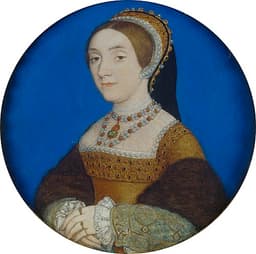
Enrique Pena Nieto
Politician · Modern
47.8Total

Napoleon Bonaparte
General · Modern
70.9Total
Basic Information
Born
1966
1769
Died
—
1821
Era
Modern
Modern
Nationality
Mexico
France
Occupation
Politician
General
Civilization
Western
Western
Score Comparison
Military (10%)
50.0
94.0
Political (20%)
42.3
72.0
Influence (20%)
51.8
40.0
Legacy (20%)
38.3
80.0
Leadership (15%)
65.0
78.0
Strategy (15%)
41.5
90.0
TOTAL
47.8
70.9
Enrique Pena Nieto — Complete Timeline
2012 AD
Return of the PRI to the presidencyPolitical Action
Enrique Peña Nieto won the presidential election, returning the Institutional Revolutionary Party (PRI) to power after 12 years in opposition. His victory was seen as a restoration of the old guard, despite promises of reform.
ElectionPRIPolitical Return
Impact: national
Signing of the Pact for MexicoPolitical Action◆ Major
Peña Nieto brokered the Pact for Mexico, a cross-party agreement to pass structural reforms. The pact enabled major legislation on energy, education, and telecommunications, but later collapsed amid corruption scandals.
Political PactReformsLegislation
Impact: nationalconstructive
2013 AD
Energy reform opening oil sector to private investmentReform◆ Major
Peña Nieto pushed through a constitutional reform ending Pemex's monopoly, allowing private and foreign companies to explore and produce oil and gas. This was a historic shift in Mexico's energy policy, aimed at boosting production.
Energy ReformPrivatizationPemex
Impact: nationalconstructive
2014 AD
Ayotzinapa mass kidnapping and cover-upOther
On September 26, 2014, 43 students from the Ayotzinapa Rural Teachers' College were forcibly disappeared in Iguala, Guerrero. Pe
AyotzinapaDisappearanceHuman Rights Crisis
Impact: nationaltragic
Napoleon Bonaparte — Complete Timeline
1799 AD
Coup of 18 BrumaireOther◆ Major
Napoleon Bonaparte, with support from his brother Lucien and key political figures, overthrew the Directory in a bloodless coup. He established the Consulate with himself as First Consul, effectively becoming the ruler of France. This event ended the French Revolution's most unstable period.
French RevolutionCoupRise to Power
Impact: regional
1804 AD
Promulgation of the Napoleonic CodeOther◆ Major
Napoleon enacted the Civil Code of the French, known as the Napoleonic Code, a comprehensive set of laws that replaced the fragmented feudal legal systems. The code established legal equality, protected property rights, and secularized law. It became the basis for legal systems in many European and world countries.
Legal ReformNapoleonic CodeCivil Law
Impact: globalconstructive
1805 AD
Battle of AusterlitzWar◆ Major
Napoleon's Grande Arm
Napoleonic WarsBattleDecisive Victory
Impact: global
1812 AD
Invasion of RussiaWar◆ Major
Napoleon led the Grande Arm
Napoleonic WarsInvasionDisaster
Impact: globaldestructive
1815 AD
Battle of WaterlooWar◆ Major
Napoleon's French army was defeated by the combined forces of the Duke of Wellington's Anglo-Allied army and Gebhard Leberecht von Bl
Napoleonic WarsBattleFinal Defeat
Impact: globaldestructive
Expert Analysis
enrique-pena-nieto-vs-napoleon-bonaparte
### The Emperor and the Reformer: Two Paths from Power to Posterity
In the winter of 1814, as Napoleon Bonaparte watched his empire crumble, he famously remarked, "There is only one step from the sublime to the ridiculous." He knew the vertiginous heights of absolute power and the abyss of exile. Two centuries later, in the summer of 2018, another leader—Enrique Peña Nieto of Mexico—handed over the presidential sash to his successor, leaving office with approval ratings in the teens, his name forever linked to a mass kidnapping and a national trauma. Both men stood at the pinnacle of their nations, both fell from grace. Yet their falls were of entirely different orders—one a thunderclap that shook a continent, the other a slow, grinding erosion of trust. Why did one become a titan of history, the other a footnote of disappointment? The answer lies not just in their actions, but in the very nature of their ambition and the eras that shaped them.
#### Origins
Napoleon was born on the island of Corsica in 1769, a year after France purchased the island from Genoa. He was an outsider, a provincial with a foreign accent in a kingdom of rigid hierarchies. His family was minor nobility, but poor. This duality—a desire to belong to France while never fully being French—fueled a relentless drive. The French Revolution, which erupted when he was 20, shattered the old world and opened a path for talent over birth. It was a time of chaos and opportunity, and Napoleon, with his mathematical mind and iron will, was perfectly suited to seize it.
Enrique Peña Nieto, born in 1966, was an insider from the start. His family was deeply embedded in the Institutional Revolutionary Party (PRI), the political machine that had ruled Mexico for most of the 20th century. He studied law, married into a wealthy political family, and cultivated a telegenic image. His era was one of globalized democracy, where power was won not on battlefields but in debates and polling stations. Where Napoleon was forged in revolution, Peña Nieto was groomed for continuity. Their origins explain everything: one man needed to conquer the world to prove his worth; the other only needed to hold onto what his family had already built.
#### Rise to Power
Napoleon’s ascent was a masterpiece of speed and audacity. At 24, he was a brigadier general after his artillery cleared the British from Toulon. At 26, he saved the French government from a royalist uprising with a "whiff of grapeshot." By 30, he was First Consul, effectively dictator of France. His rise was built on victory: the Italian campaign of 1796-1797, where he turned a ragged army into a conquering force, and the Egyptian expedition of 1798, which, though a military failure, made him a legend. Each campaign was a gamble, and each gamble paid off—until they didn’t.
Peña Nieto’s rise was a study in managed expectations. He was governor of the State of Mexico, the country’s most populous, where he oversaw infrastructure projects and cultivated a media-friendly persona. In 2012, he won the presidency, returning the PRI to power after 12 years of opposition rule. His victory was not won on a battlefield but through a carefully calibrated campaign that promised a "new PRI"—modern, transparent, reformist. The turning point was the Pact for Mexico, a cross-party agreement he brokered in December 2012, just weeks after taking office. For a moment, it seemed he had done what Napoleon had done with his sword: forged unity out of division.
#### Leadership & Governance
Napoleon governed as he fought—decisively, ruthlessly, and with a grand vision. His Napoleonic Code, implemented in 1804, standardized French law, established meritocracy, and protected property rights. It was his most enduring achievement, a foundation for modern legal systems across Europe. As a military commander, he was a genius of maneuver, striking at enemy flanks and exploiting interior lines. From Austerlitz in 1805, where he destroyed an Austro-Russian army, to Jena in 1806, where he shattered Prussia, his dominance was near-total. Yet his political wisdom was flawed: he crowned himself emperor, placed his brothers on thrones, and treated conquered nations as spoils. His ambition had no limit, and that became his undoing.
Peña Nieto’s governance was a paradox of ambition and constraint. His energy reform of 2013, which opened Mexico’s oil sector to private investment after 75 years of state monopoly, was a structural change of Napoleonic proportions. It broke a sacred taboo and was hailed by economists as visionary. But Peña Nieto was not an emperor; he was a president in a democracy with a divided congress, a free press, and a skeptical public. He had to negotiate, compromise, and sell his reforms. Where Napoleon could issue a decree, Peña Nieto had to build a coalition. And when the coalition frayed—as it did after the Ayotzinapa disaster in 2014—he had no army to enforce his will. His military score of 37.5 versus Napoleon’s 94 is not just about skill; it reflects the nature of their power. One commanded armies; the other commanded a bureaucracy.
#### Triumph & Tragedy
Napoleon’s greatest moment was Austerlitz, the "Battle of the Three Emperors," where he crushed the combined forces of Russia and Austria. It was the zenith of his military genius. His greatest tragedy was the invasion of Russia in 1812. With 600,000 men, he marched into a vast, frozen emptiness. The Russians refused to fight a decisive battle, burning their own land as they retreated. Only 30,000 of Napoleon’s soldiers returned. It was not a defeat in battle but a defeat by geography and pride. He never recovered.
Peña Nieto’s triumph was the Pact for Mexico and the energy reform—a rare moment of cross-party cooperation that seemed to modernize the country. His tragedy was Ayotzinapa. On September 26, 2014, 43 students from a rural teachers’ college were kidnapped in Iguala, Guerrero, by corrupt police working with drug cartels. The government’s response was a masterclass in obfuscation: conflicting stories, destroyed evidence, and a "official truth" that collapsed under scrutiny. For the Mexican public, it was not just a crime but a revelation—that the "new PRI" was the same old PRI, capable of the worst abuses. Peña Nieto’s legacy was poisoned from that night onward.
#### Character & Destiny
Napoleon’s character was a force of nature: immense self-confidence, relentless energy, and a belief that he could impose order on chaos. He once said, "The only way to lead people is to show them a future: a leader is a dealer in hope." But his hubris was his destiny. He could not stop, could not consolidate, could not accept limits. His personality demanded perpetual victory, and when victory failed, he collapsed.
Peña Nieto’s character was more elusive. He was charming, polished, and seemingly competent. But he lacked the fire of a true reformer. He was a manager, not a visionary; a politician, not a revolutionary. His destiny was shaped not by grand ambition but by a series of poor choices and a failure of moral courage. When the Ayotzinapa crisis demanded truth and accountability, he offered spin. When his party’s corruption surfaced, he looked away. His tragedy was not a Russian winter but a slow erosion of credibility, a death by a thousand cuts.
#### Legacy
Napoleon’s legacy is monumental. He reshaped Europe, spread the ideals of the French Revolution—legal equality, secular governance, nationalism—and left a legal code that still governs millions. He is remembered as both a tyrant and a genius, a man who conquered and created. His total score of 82.4 reflects this complexity.
Peña Nieto’s legacy is far more modest. His energy reform may yet prove transformative, but it is overshadowed by corruption and violence. His total score of 57.8 places him in the middle rank of leaders—neither disastrous nor great. He is remembered, if at all, as the president who promised change and delivered disappointment. In Mexico, his name is often spoken with a sigh.
#### Conclusion
Napoleon and Peña Nieto are separated by two centuries, by the nature of their power, and by the scale of their ambition. One sought to conquer the world; the other sought to manage a nation. One fell in a blaze of glory and exile; the other fell into quiet disgrace. Yet both illustrate a timeless truth: that power is a test of character. Napoleon’s test was whether he could restrain his ambition; he failed. Peña Nieto’s test was whether he could lead with integrity; he failed too. Their failures were different, but in the end, both men remind us that history judges not just what we achieve, but who we are when the moment of truth arrives.
Rankings
🥇
Napoleon BonaparteLeader
Mil: 94.0Pol: 72.0Inf: 40.0
70.9
🥈
Enrique Pena Nieto
Mil: 50.0Pol: 42.3Inf: 51.8
47.8
+23.1 behind
How This Comparison Works
Algorithm
Each figure is scored on 6 dimensions (0—100 scale) based on structured historical data: Military (10%), Political (20%), Influence (20%), Legacy (20%), Leadership (15%), Strategy (15%). The weighted total produces the final ranking.
Data Sources
Scores are computed from structured sub-indicators in the database. Scale factors adjust for era (Ancient ×0.85, Modern ×1.0) and civilization size (Eastern ×1.05, Other ×0.80) to account for differences in population and military scale.
Maximum 3 Figures
Comparisons are limited to 2—3 figures to ensure readability and statistical meaningfulness.
Error Margins
±5 points per dimension — Sub-scores are derived from historical records with inherent uncertainty. Two figures within 5 points on a dimension should be considered roughly equivalent in that area.
Total Score Accuracy
±3 points overall — The weighted combination of 6 dimensions produces a total score with approximately ±3 points of uncertainty. Differences of less than 3 points are not statistically significant— the figures are effectively tied.
Known Limitations
- Historical records are incomplete and uneven across civilizations
- Figures from oral-tradition societies may be underrepresented
- Occupation labels can misclassify multi-role figures
- Scores measure capability and impact, not moral character
- Quantitative scoring is a comparison tool, not absolute truth
Capability Radar
Military (10%) — Battles & Warfare
Battles
27
95
Win Rate
32
90
Expansion
37
95
Political (20%) — Governance & Reform
Reform
30
95
Diplomacy
40
80
Economy
30
85
Influence (20%) — Cultural & Global Reach
Cultural
20
85
Global
30
90
Legacy (20%) — Historical Impact
Historical
20
95
Longevity
10
90
Leadership (15%) — Power & Stability
Tenure
60
85
Stability
20
70
Strategy (15%) — Tactics & Innovation
Strategy
36
95
Tactics
40
98
Reform
44
92
Similar Comparisons
Comments & Discussion
马背上的法律家6/17/2026
比较政治人物得看他们留下的制度遗产。拿破仑的伟大不在于滑铁卢的惨败,而在于《拿破仑法典》至今还在法国、比利时、卢森堡乃至魁北克运转。佩尼亚·涅托呢?他留给墨西哥的只有"伊瓜拉43人失踪案"的耻辱。帝国会垮,但法典能活两百年。将军和律师,本质差距就在这儿。别拿"改革者"给他贴金——他连个像样的土地改革都没搞定。
The Last Jacobin6/17/2026
Let's cut the false equivalence: Napoleon was a military genius who redrew the map of Europe and established lasting institutions; Peña Nieto was a PR-constructed empty suit who privatized oil and saw a 22% inflation spike while hiding the Ayotzinapa massacre. One commanded armies at Austerlitz, the other’s security forces kidnapped 43 students. The only "fall" in common is gravity—but Napoleonic ambition versus neoliberal incompetence isn’t a comparison, it’s an insult to history.
数据狙击手6/17/2026
我不管什么"历史地位",先看数字。拿破仑在1810年统治了约7000万欧洲人,法国GDP占欧洲近20%。佩尼亚·涅托离任时墨西哥GDP增速仅0.4%,比索对美元贬值超50%,杀人案从2012年的2.2万飙升到2018年的3.4万。拿破仑最后被反法同盟放逐;佩尼亚·涅托离任后呢?他躲进私人基金会,拿着每年约1000万比索的终身补贴。一个流放圣赫勒拿,一个领福利——这叫同样"从辉煌到耻辱"?
Revisionist's Scalpel6/17/2026
The comparison reeks of lazy shorthand. Peña Nieto’s failure wasn’t "falling from grace" but from the Peso 2.0 neoliberal consensus—he implemented structural reforms that increased foreign investment by 60% in energy, yet got crucified for the same systemic corruption that preceded him. Napoleon’s "glory" includes selling Louisiana, reinstating slavery in the French Caribbean, and losing 500,000 men in Russia. Both are case studies in how we romanticize empire while demonizing reform.
古典学局的狐狸6/17/2026
佩尼亚·涅托和拿破仑之间隔着的不只是两百年,而是两种完全不同的权力脚本。拿破仑扮演的是"罗马共和末期的独裁官"——用战争、法典和艺术宣传巩固个人权威。佩尼亚·涅托演的是"21世纪民主疲劳下的技术官僚"——签个电视协议,被拍到和莎尔玛·海耶克握手,改革通过就完事。拿破仑在枫丹白露退位时还有尊严,佩尼亚·涅托连最后一年的记者会都不敢开。完全