Loading...
This comparison has not been analyzed yet.
One-time AI generation (~1 minute). Scores and timeline are already available below.
Epitacio Pessoa vs William Gladstone
William Gladstone leads by 9.7 pts · 2 figures compared
…

Epitacio Pessoa
Politician · Modern
52.5Total
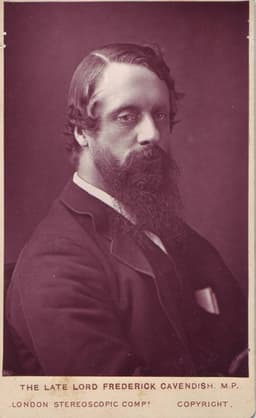
William Gladstone
Politician · Modern
62.2Total
Basic Information
Born
1865
1809
Died
1942
1898
Era
Modern
Modern
Nationality
Brazil
United Kingdom
Occupation
Politician
Politician
Civilization
Western
Western
Score Comparison
Military (10%)
50.0
10.0
Political (20%)
53.8
88.0
Influence (20%)
54.9
65.0
Legacy (20%)
45.0
65.0
Leadership (15%)
68.0
78.0
Strategy (15%)
42.3
38.3
TOTAL
52.5
62.2
Epitacio Pessoa — Complete Timeline
1919 AD
Elected President of BrazilPolitical Action◆ Major
Epitácio Pessoa was elected President of Brazil, succeeding Delfim Moreira. He was a jurist and former Supreme Court justice, and his presidency focused on economic development and legal reforms.
PresidencyElectionJurist
Impact: national
1920 AD
Implemented the 'Pessoa Law' (Lei Pessoa) for Agricultural CreditReform
Pessoa signed a law creating a system of agricultural credit to support farmers, particularly coffee growers. This reform aimed to modernize Brazilian agriculture and provide financial stability to the rural sector.
Agricultural ReformCreditCoffee
Impact: nationalconstructive
1922 AD
Suppressed the 1922 Tenente RevoltWar◆ Major
Pessoa ordered the military to suppress a rebellion by junior army officers (tenentes) in Rio de Janeiro. The revolt was crushed, but it marked the beginning of the tenente movement that would challenge the Old Republic.
Tenente RevoltMilitary RebellionSuppression
Impact: nationaldestructive
Oversaw the Centennial International Exposition of 1922Cultural
Pessoa presided over the Centennial International Exposition in Rio de Janeiro, celebrating 100 years of Brazilian independence. The event showcased Brazilian culture and industry, attracting international participants.
CentennialExpositionCultural Event
Impact: nationalconstructive
1923 AD
Served as Judge on the Permanent Court of International JusticePolitical Action◆ Major
After his presidency, Pessoa was elected a judge on the Permanent Court of International Justice in The Hague. He served from 1923 to 1930, becoming the first Brazilian to hold this position and contributing to international law.
International LawHague CourtPost-Presidency
Impact: globalconstructive
William Gladstone — Complete Timeline
1853 AD
First Budget as ChancellorReform
Gladstone, as Chancellor of the Exchequer, delivered his first budget in 1853, which reduced tariffs and extended income tax. He aimed for free trade and fiscal responsibility, setting the stage for his reputation as a financial reformer.
BudgetFree TradeTax Reform
Impact: nationalconstructive
1868 AD
First Term as Prime MinisterPolitical Action
Gladstone became Prime Minister for the first time on December 3, 1868, after winning the general election. His first ministry (1868-1874) passed major reforms including the disestablishment of the Irish Church, the Education Act 1870, and the Ballot Act 1872.
Prime MinisterLiberal PartyReform
Impact: nationalconstructive
1869 AD
Irish Church DisestablishmentReform◆ Major
Gladstone's government passed the Irish Church Act 1869, which disestablished the Church of Ireland as the state church in Ireland. This removed its official status and ended mandatory tithes for Catholics, addressing a major grievance in Irish politics.
IrelandChurchReligious Reform
Impact: regionalprogressive
1870 AD
Education Act 1870Reform◆ Major
Gladstone's government passed the Elementary Education Act 1870, which established school boards and provided for elementary education in England and Wales. It created a national system of education, though attendance was not compulsory until later.
EducationReformSocial Policy
Impact: nationalprogressive
1879 AD
Midlothian CampaignPolitical Action◆ Major
Gladstone conducted the Midlothian Campaign in 1879-1880, a series of speeches in Scotland attacking Disraeli's foreign policy. This was the first modern political campaign, using mass rallies and media coverage. It helped the Liberals win the 1880 general election.
Election CampaignPolitical OratoryLiberal Party
Impact: national
1886 AD
Home Rule Bill for IrelandPolitical Action◆ Major
Gladstone introduced the First Home Rule Bill in 1886, proposing a devolved parliament for Ireland. The bill split the Liberal Party and was defeated in the Commons. This issue dominated his later career and led to the formation of the Liberal Unionist Party.
IrelandHome RuleLiberal Party Split
Impact: national
This comparison has not been analyzed yet.
One-time AI generation (~1 minute). Scores and timeline are already available below.
Rankings
🥇
William GladstoneLeader
Mil: 10.0Pol: 88.0Inf: 65.0
62.2
🥈
Epitacio Pessoa
Mil: 50.0Pol: 53.8Inf: 54.9
52.5
+9.7 behind
How This Comparison Works
Algorithm
Each figure is scored on 6 dimensions (0—100 scale) based on structured historical data: Military (10%), Political (20%), Influence (20%), Legacy (20%), Leadership (15%), Strategy (15%). The weighted total produces the final ranking.
Data Sources
Scores are computed from structured sub-indicators in the database. Scale factors adjust for era (Ancient ×0.85, Modern ×1.0) and civilization size (Eastern ×1.05, Other ×0.80) to account for differences in population and military scale.
Maximum 3 Figures
Comparisons are limited to 2—3 figures to ensure readability and statistical meaningfulness.
Error Margins
±5 points per dimension — Sub-scores are derived from historical records with inherent uncertainty. Two figures within 5 points on a dimension should be considered roughly equivalent in that area.
Total Score Accuracy
±3 points overall — The weighted combination of 6 dimensions produces a total score with approximately ±3 points of uncertainty. Differences of less than 3 points are not statistically significant— the figures are effectively tied.
Known Limitations
- Historical records are incomplete and uneven across civilizations
- Figures from oral-tradition societies may be underrepresented
- Occupation labels can misclassify multi-role figures
- Scores measure capability and impact, not moral character
- Quantitative scoring is a comparison tool, not absolute truth
Capability Radar
Military (10%) — Battles & Warfare
Battles
29
0
Win Rate
33
0
Expansion
34
0
Political (20%) — Governance & Reform
Reform
55
90
Diplomacy
70
85
Economy
50
85
Influence (20%) — Cultural & Global Reach
Cultural
30
70
Global
40
75
Legacy (20%) — Historical Impact
Historical
40
80
Longevity
30
75
Leadership (15%) — Power & Stability
Tenure
60
85
Stability
45
75
Strategy (15%) — Tactics & Innovation
Strategy
36
0
Tactics
43
0
Reform
43
10
Similar Comparisons
Comments & Discussion
No comments yet. Be the first to share your thoughts!