Loading...
Erich von Manstein vs Qin Shi Huang
Qin Shi Huang leads by 29.0 pts · 2 figures compared
…
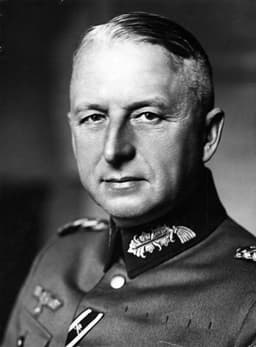
Erich von Manstein
General · Modern
56.2Total
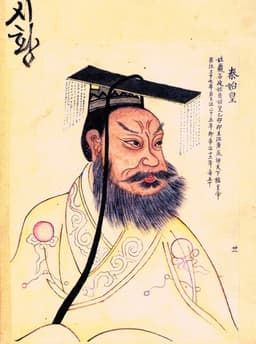
Qin Shi Huang
Emperor · Ancient
85.2Total
Basic Information
Born
1887
-259
Died
1973
-210
Era
Modern
Ancient
Nationality
Germany
China
Occupation
General
Emperor
Civilization
Western
Eastern
Score Comparison
Military (10%)
72.0
80.0
Political (20%)
35.1
90.0
Influence (20%)
65.0
85.0
Legacy (20%)
55.0
90.0
Leadership (15%)
43.8
78.0
Strategy (15%)
72.0
82.0
TOTAL
56.2
85.2
Erich von Manstein — Complete Timeline
1942 AD
Battle of SevastopolWar◆ Major
Manstein commanded the 11th Army in the assault on the Soviet fortress of Sevastopol in Crimea. After a prolonged siege, German forces captured the city in July 1942. For this victory, Manstein was promoted to field marshal.
World War IIEastern FrontSiege
Impact: regionaldestructive
1943 AD
Battle of KurskWar◆ Major
Manstein commanded Army Group South during the Battle of Kursk, the largest tank battle in history. His forces achieved tactical successes at Prokhorovka but failed to break through Soviet defenses. The German offensive was halted, marking a strategic defeat on the Eastern Front.
World War IIEastern FrontTank Battle
Impact: globaldestructive
1944 AD
Planning of the Ardennes OffensiveWar◆ Major
Manstein did not plan the Ardennes Offensive; that was Hitler's plan. Manstein was the primary planner of the 1940 Ardennes offensive through Belgium and France. His plan, known as the Manstein Plan, involved a surprise armored thrust through the Ardennes forest, leading to the rapid defeat of France.
World War IIBattle of FranceMilitary Strategy
Impact: global
Dismissal by HitlerPolitical Action◆ Major
After repeated disagreements with Hitler over military strategy, Manstein was dismissed from command of Army Group South in March 1944. He was replaced by Walter Model and never held another active command during the war.
World War IICommand ChangeHitler
Impact: national
1949 AD
Trial and ImprisonmentPolitical Action◆ Major
Manstein was tried by a British military court in Hamburg for war crimes, including the use of scorched earth tactics and mistreatment of prisoners. He was convicted on several counts and sentenced to 18 years imprisonment, but was released in 1953 due to health reasons.
War Crimes TrialPost-WarJustice
Impact: nationaltragic
Qin Shi Huang — Complete Timeline
246 BC
Construction of the Mausoleum and Terracotta ArmyOther◆ Major
Qin Shi Huang commissioned a vast mausoleum complex near Xi'an, guarded by thousands of life-sized terracotta soldiers, horses, and chariots. The project employed hundreds of thousands of workers and reflected his obsession with immortality and imperial power.
Impact: global
230 BC
Conquest of the Six Warring StatesWar
From 230 to 221 BCE, Ying Zheng led the Qin state in a series of campaigns that conquered the Han, Zhao, Wei, Chu, Yan, and Qi states. This unified China under a single ruler for the first time, ending the Warring States period.
Impact: global
221 BC
Standardization of Writing, Currency, and MeasurementsReform◆ Major
Qin Shi Huang ordered the standardization of Chinese script, currency, and weights and measures across the unified empire. This facilitated administration, trade, and cultural integration, laying a foundation for future dynasties.
Impact: globalconstructive
Proclamation of the Qin DynastyPolitical Action
After conquering the last independent state, Ying Zheng declared himself Shi Huangdi (First Emperor), founding the Qin Dynasty. He adopted a new title to signify his supreme authority and initiated centralized imperial rule.
Impact: global
214 BC
Initiation of the Great Wall ConstructionOther◆ Major
Qin Shi Huang ordered the connection and extension of existing northern fortifications to create a unified defensive wall against nomadic Xiongnu raids. This project involved massive conscripted labor and became the precursor to the later Great Wall.
Impact: regional
213 BC
Burning of Books and Burying of ScholarsPolitical Action◆ Major
On the advice of Li Si, Qin Shi Huang ordered the burning of historical records and philosophical texts not aligned with Legalist doctrine. He also had 460 Confucian scholars buried alive to suppress dissent and consolidate ideological control.
Impact: nationaldestructive
Expert Analysis
erich-von-manstein-vs-qin-shi-huang
# The Emperor and the Field Marshal: Two Titans of Power and Their Opposite Fates
On a winter morning in 1944, Erich von Manstein stood before Adolf Hitler in the Wolf's Lair, arguing against a strategy he knew would lead to catastrophe. Half a world away and two millennia earlier, Qin Shi Huang issued a decree that would burn thousands of books and bury scholars alive. Both men wielded absolute authority in their domains. Both reshaped the world around them. Yet one built an empire that lasted two thousand years; the other saw his legacy crumble within a decade. What separated them was not ambition—both had that in abundance—but something far more elusive: the ability to see beyond the moment of conquest.
Origins
Qin Shi Huang was born into chaos. In 259 BC, China was fractured into seven warring states, each fighting for supremacy. His father was a minor prince, his mother a concubine. The boy who would become the First Emperor grew up in a palace where betrayal was routine and death lurked in every shadow. He learned early that trust was a weakness, and that the only way to survive was to control everything.
Erich von Manstein, born Fritz Erich von Lewinski in 1887, came from a world of Prussian military aristocracy. His family had served kings for generations. He was raised in a system where honor and duty were absolute, where war was not chaos but an art form to be mastered. The difference was profound: Qin Shi Huang saw power as something to be seized through terror; Manstein saw it as something to be earned through competence.
Rise to Power
Qin Shi Huang's path was brutal and direct. At thirteen, he became king of Qin. By thirty-eight, he had conquered all six rival states. His campaigns from 230 to 221 BC were not wars of liberation—they were annihilations. When he took the city of Handan, he ordered the massacre of every family that had once insulted his mother. He understood that to unify China, he had to destroy the memory of division.
Manstein's rise was more circuitous. He was a staff officer in World War I, a thinker rather than a fighter. His great moment came in 1940, when he proposed the audacious plan to send German panzers through the Ardennes Forest—a route the French considered impassable. The plan worked. France fell in six weeks. Manstein became a legend not through brute force, but through intellectual daring. He saw the battlefield as a chessboard, not a slaughterhouse.
Leadership & Governance
Here the two men diverged completely. Qin Shi Huang governed through standardization and terror. He unified writing, currency, and measurements across China—a monumental achievement that made trade and communication possible. He connected the northern fortifications into what would become the Great Wall. But he also burned books and buried scholars, believing that history should begin with him. His philosophy was simple: unity through uniformity, order through fear.
Manstein governed through maneuver and deception. He believed that war was about destroying the enemy's will, not his army. At the Battle of Sevastopol in 1942, he used a combination of siege warfare and psychological pressure to break a fortress that had held for months. At Kursk in 1943, he fought the largest tank battle in history, achieving tactical victories even as the strategic situation collapsed. But he could not govern his own command: Hitler's interference, Manstein's loyalty to a regime he privately despised, and the moral compromises of fighting for Nazi Germany all corroded his effectiveness.
Triumph & Tragedy
Qin Shi Huang's greatest triumph was the unification itself. In 221 BC, he declared himself Shi Huangdi—First Emperor—and the title echoed through millennia. His greatest tragedy was his obsession with immortality. He consumed mercury pills prescribed by alchemists, poisoning himself slowly. He died in 210 BC, alone on a journey, his body carried back to the capital in a cart of rotting fish to hide the smell of decay.
Manstein's triumph was the 1940 campaign, a masterpiece of military planning. His tragedy was that he never understood the war he was fighting. He believed he could serve a criminal regime and remain a "clean" officer, that military genius could exist in a moral vacuum. In 1949, a British court sentenced him to eighteen years for war crimes. He served only four. The man who planned the conquest of France ended his days writing memoirs, arguing that he had only followed orders.
Character & Destiny
Qin Shi Huang's character was forged in paranoia. He built his mausoleum with rivers of mercury and crossbows rigged to fire at intruders. He slept in different rooms every night to avoid assassination. His need for absolute control drove his greatest achievements and his darkest atrocities. He could not imagine a future beyond his own reign, so he tried to freeze time.
Manstein's character was shaped by duty and pride. He was brilliant, arrogant, and tragically blind to the evil he served. He thought strategy could transcend politics, that a general could be above morality. He was wrong. His destiny was to be remembered not as a military genius, but as a man who lent his genius to a monstrous cause.
Legacy
Qin Shi Huang's legacy is the Chinese empire itself. The system of centralized bureaucracy he created, the written script he standardized, the roads and walls he built—all became the foundation of Chinese civilization. He is remembered as both a tyrant and a founder, a figure of awe and horror. The Terracotta Army, buried for two thousand years, still stands guard over his unfinished dream.
Manstein's legacy is more ambiguous. Military historians study his campaigns. But his name is forever tainted by the regime he served. He is a cautionary tale about the limits of professionalism, the danger of separating means from ends. The Ardennes offensive he planned was a masterpiece; the war he fought was a crime.
Conclusion
In the end, what separates these two men is not their ambition or their intelligence—both had those in abundance. It is their relationship to time. Qin Shi Huang tried to conquer time by freezing the world in his image, and in a strange way, he succeeded: China still bears his stamp. Manstein tried to master time through strategy, but he was swept away by the moral currents of his era. The First Emperor built an eternal tomb for a mortal body; the field marshal built a brilliant career on a foundation of sand. The lesson is uncomfortable but unavoidable: power without purpose, genius without conscience, leaves nothing but ruins.
Rankings
🥇
Qin Shi HuangLeader
Mil: 80.0Pol: 90.0Inf: 85.0
85.2
🥈
Erich von Manstein
Mil: 72.0Pol: 35.1Inf: 65.0
56.2
+29.0 behind
How This Comparison Works
Algorithm
Each figure is scored on 6 dimensions (0—100 scale) based on structured historical data: Military (10%), Political (20%), Influence (20%), Legacy (20%), Leadership (15%), Strategy (15%). The weighted total produces the final ranking.
Data Sources
Scores are computed from structured sub-indicators in the database. Scale factors adjust for era (Ancient ×0.85, Modern ×1.0) and civilization size (Eastern ×1.05, Other ×0.80) to account for differences in population and military scale.
Maximum 3 Figures
Comparisons are limited to 2—3 figures to ensure readability and statistical meaningfulness.
Error Margins
±5 points per dimension — Sub-scores are derived from historical records with inherent uncertainty. Two figures within 5 points on a dimension should be considered roughly equivalent in that area.
Total Score Accuracy
±3 points overall — The weighted combination of 6 dimensions produces a total score with approximately ±3 points of uncertainty. Differences of less than 3 points are not statistically significant— the figures are effectively tied.
Known Limitations
- Historical records are incomplete and uneven across civilizations
- Figures from oral-tradition societies may be underrepresented
- Occupation labels can misclassify multi-role figures
- Scores measure capability and impact, not moral character
- Quantitative scoring is a comparison tool, not absolute truth
Capability Radar
Military (10%) — Battles & Warfare
Battles
85
85
Win Rate
80
90
Expansion
75
90
Political (20%) — Governance & Reform
Reform
20
95
Diplomacy
25
75
Economy
15
90
Influence (20%) — Cultural & Global Reach
Cultural
55
95
Global
65
85
Legacy (20%) — Historical Impact
Historical
75
95
Longevity
60
95
Leadership (15%) — Power & Stability
Tenure
30
70
Stability
10
65
Strategy (15%) — Tactics & Innovation
Strategy
90
85
Tactics
95
80
Reform
70
95
Similar Comparisons
Comments & Discussion
TankTactician6/17/2026
Manstein was a brilliant operational commander, but comparing him to Qin Shi Huang is like comparing a chess grandmaster to the inventor of chess itself. The First Emperor didn’t just win battles—he created the framework for centralized imperial rule that lasted millennia. Manstein’s victories were tactical masterpieces, but his strategic blindness in backing Hitler’s doomed offensives shows he couldn’t see past the next campaign. Qin unified writing, currency, and measurements—Manstein just mov
断简残编6/17/2026
拿曼施坦因跟秦始皇比,简直是拿手术刀跟原子弹比。曼帅再厉害,也只是纳粹战争机器里一个会说话的齿轮。秦始皇呢?人家是亲手把六国捏碎、铸成中国的人。曼施坦因的闪电战灵感,说白了就是普鲁士军官团的老套路升级版,哪比得上“书同文、车同轨”这种千年计划?非要比较的话,曼施坦因顶多是历史大潮里一朵浪花,而秦始皇就是那条大河本身。
DataSkeptic6/17/2026
This comparison ignores the fundamental asymmetry in source reliability. We have detailed personal accounts from Manstein’s staff and his own memoirs—Qin Shi Huang’s records were literally burned by his enemies. The “burying scholars alive” story comes from Han dynasty propaganda written a century later. For all we know, the First Emperor might have been a pragmatic reformer vilified by Confucian historians. Manstein’s legacy is documented to the week; Qin’s is a caricature stitched together fro
铁血考据6/17/2026
瞎比较。曼施坦因的“绝对权威”是纸上谈兵——他在希特勒面前连个参谋长的建议都保不住,而秦始皇是真能下旨坑儒的。别忘了,曼施坦因1944年跟元首吵架那次,三小时后就被撤了指挥权。秦始皇呢?他一道圣旨,整个中国都得跟着改字换尺。权力厚度根本不在一个量级:一个是将军对独裁者,另一个就是独裁者本尊。
ClassicsScholar6/17/2026
The real parallel is in their obsession with control, not their military genius. Qin standardized everything from axle widths to legal codes—he wanted a world where every variable was predictable. Manstein’s famous “marching on interior lines” was the same impulse: minimize uncertainty through operational perfection. But where Qin’s system lasted because it was institutionalized in bureaucracy, Manstein’s brilliance died with his rank. Without an empire of clerks, his legacy was just anecdotes i
春秋笔法6/17/2026
别被“千年帝国”和“十年崩盘”的对比骗了。秦始皇的遗产不是因为他多聪明,而是因为他有李斯、王翦和几十万文