Loading...
This comparison has not been analyzed yet.
One-time AI generation (~1 minute). Scores and timeline are already available below.
Essam Sharaf vs Konstantin Pobedonostsev
Konstantin Pobedonostsev leads by 3.4 pts · 2 figures compared
…
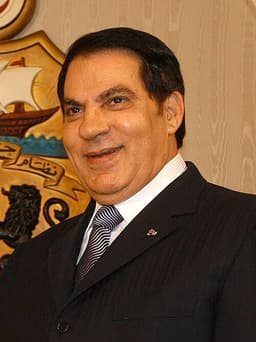
Essam Sharaf
Politician · Modern
44.0Total

Konstantin Pobedonostsev
Politician · Modern
47.4Total
Basic Information
Born
1952
1827
Died
—
1907
Era
Modern
Modern
Nationality
Egypt
Russia
Occupation
Politician
Politician
Civilization
Middle Eastern
Western
Score Comparison
Military (10%)
50.0
50.0
Political (20%)
39.4
29.3
Influence (20%)
51.0
53.3
Legacy (20%)
39.2
44.2
Leadership (15%)
41.5
62.2
Strategy (15%)
42.8
42.9
TOTAL
44.0
47.4
Essam Sharaf — Complete Timeline
2011 AD
Appointment as Prime Minister of EgyptPolitical Action◆ Major
Essam Sharaf was appointed Prime Minister by the Supreme Council of the Armed Forces in March 2011, following the resignation of Ahmed Shafik. His appointment came during the 2011 Egyptian revolution, and he was seen as a reformist figure.
Prime MinisterRevolutionEgypt
Impact: nationalconstructive
Resignation amid political crisisPolitical Action◆ Major
Sharaf resigned as Prime Minister in November 2011 after months of protests against the military's handling of the transition. His resignation followed violent clashes between security forces and demonstrators in Tahrir Square.
ResignationProtestsEgypt
Impact: nationaltragic
Konstantin Pobedonostsev — Complete Timeline
1880 AD
Appointed Ober-Procurator of the Most Holy SynodPolitical Action◆ Major
Konstantin Pobedonostsev was appointed Ober-Procurator of the Most Holy Synod, the lay head of the Russian Orthodox Church. He held this position for 25 years, using it to enforce religious orthodoxy, suppress dissent, and promote a reactionary agenda under Alexander III and Nicholas II.
ChurchOrthodoxyReaction
Impact: nationaldestructive
1881 AD
Drafted the 1881 'Temporary Rules' on press censorshipPolitical Action◆ Major
Pobedonostsev drafted and implemented the 'Temporary Rules' that severely restricted press freedom in Russia. The rules allowed the government to shut down newspapers, impose fines, and prosecute editors for criticizing the monarchy or the Orthodox Church, stifling public debate.
CensorshipPressReaction
Impact: nationaldestructive
1882 AD
Influenced the 1882 'May Laws' against JewsPolitical Action◆ Major
Pobedonostsev was a key advisor behind the 'May Laws' that imposed severe restrictions on Jewish residence, property ownership, and economic activities in the Pale of Settlement. These laws intensified state-sponsored anti-Semitism and contributed to widespread pogroms and emigration.
Anti-SemitismJewsPale of Settlement
Impact: nationaldestructive
1905 AD
Opposed the 1905 October ManifestoPolitical Action◆ Major
Pobedonostsev vehemently opposed the October Manifesto, which granted civil liberties and established the State Duma. He argued that any concession to constitutionalism would weaken autocracy and lead to revolution, but his influence waned as Nicholas II accepted the reforms.
October ManifestoConstitutionAutocracy
Impact: nationaldestructive
This comparison has not been analyzed yet.
One-time AI generation (~1 minute). Scores and timeline are already available below.
Rankings
🥇
Konstantin PobedonostsevLeader
Mil: 50.0Pol: 29.3Inf: 53.3
47.4
🥈
Essam Sharaf
Mil: 50.0Pol: 39.4Inf: 51.0
44.0
+3.4 behind
How This Comparison Works
Algorithm
Each figure is scored on 6 dimensions (0—100 scale) based on structured historical data: Military (10%), Political (20%), Influence (20%), Legacy (20%), Leadership (15%), Strategy (15%). The weighted total produces the final ranking.
Data Sources
Scores are computed from structured sub-indicators in the database. Scale factors adjust for era (Ancient ×0.85, Modern ×1.0) and civilization size (Eastern ×1.05, Other ×0.80) to account for differences in population and military scale.
Maximum 3 Figures
Comparisons are limited to 2—3 figures to ensure readability and statistical meaningfulness.
Error Margins
±5 points per dimension — Sub-scores are derived from historical records with inherent uncertainty. Two figures within 5 points on a dimension should be considered roughly equivalent in that area.
Total Score Accuracy
±3 points overall — The weighted combination of 6 dimensions produces a total score with approximately ±3 points of uncertainty. Differences of less than 3 points are not statistically significant— the figures are effectively tied.
Known Limitations
- Historical records are incomplete and uneven across civilizations
- Figures from oral-tradition societies may be underrepresented
- Occupation labels can misclassify multi-role figures
- Scores measure capability and impact, not moral character
- Quantitative scoring is a comparison tool, not absolute truth
Capability Radar
Military (10%) — Battles & Warfare
Battles
22
28
Win Rate
26
29
Expansion
29
36
Political (20%) — Governance & Reform
Reform
40
10
Diplomacy
35
30
Economy
15
15
Influence (20%) — Cultural & Global Reach
Cultural
15
30
Global
20
20
Legacy (20%) — Historical Impact
Historical
25
40
Longevity
10
25
Leadership (15%) — Power & Stability
Tenure
20
40
Stability
10
20
Strategy (15%) — Tactics & Innovation
Strategy
32
38
Tactics
33
43
Reform
36
42
Similar Comparisons
Comments & Discussion
No comments yet. Be the first to share your thoughts!