Loading...
Essam Sharaf vs Napoleon Bonaparte
Napoleon Bonaparte leads by 26.9 pts · 2 figures compared
…
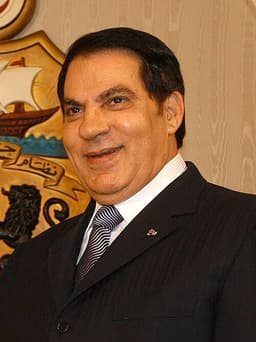
Essam Sharaf
Politician · Modern
44.0Total

Napoleon Bonaparte
General · Modern
70.9Total
Basic Information
Born
1952
1769
Died
—
1821
Era
Modern
Modern
Nationality
Egypt
France
Occupation
Politician
General
Civilization
Middle Eastern
Western
Score Comparison
Military (10%)
50.0
94.0
Political (20%)
39.4
72.0
Influence (20%)
51.0
40.0
Legacy (20%)
39.2
80.0
Leadership (15%)
41.5
78.0
Strategy (15%)
42.8
90.0
TOTAL
44.0
70.9
Essam Sharaf — Complete Timeline
2011 AD
Appointment as Prime Minister of EgyptPolitical Action◆ Major
Essam Sharaf was appointed Prime Minister by the Supreme Council of the Armed Forces in March 2011, following the resignation of Ahmed Shafik. His appointment came during the 2011 Egyptian revolution, and he was seen as a reformist figure.
Prime MinisterRevolutionEgypt
Impact: nationalconstructive
Resignation amid political crisisPolitical Action◆ Major
Sharaf resigned as Prime Minister in November 2011 after months of protests against the military's handling of the transition. His resignation followed violent clashes between security forces and demonstrators in Tahrir Square.
ResignationProtestsEgypt
Impact: nationaltragic
Napoleon Bonaparte — Complete Timeline
1799 AD
Coup of 18 BrumaireOther◆ Major
Napoleon Bonaparte, with support from his brother Lucien and key political figures, overthrew the Directory in a bloodless coup. He established the Consulate with himself as First Consul, effectively becoming the ruler of France. This event ended the French Revolution's most unstable period.
French RevolutionCoupRise to Power
Impact: regional
1804 AD
Promulgation of the Napoleonic CodeOther◆ Major
Napoleon enacted the Civil Code of the French, known as the Napoleonic Code, a comprehensive set of laws that replaced the fragmented feudal legal systems. The code established legal equality, protected property rights, and secularized law. It became the basis for legal systems in many European and world countries.
Legal ReformNapoleonic CodeCivil Law
Impact: globalconstructive
1805 AD
Battle of AusterlitzWar◆ Major
Napoleon's Grande Arm
Napoleonic WarsBattleDecisive Victory
Impact: global
1812 AD
Invasion of RussiaWar◆ Major
Napoleon led the Grande Arm
Napoleonic WarsInvasionDisaster
Impact: globaldestructive
1815 AD
Battle of WaterlooWar◆ Major
Napoleon's French army was defeated by the combined forces of the Duke of Wellington's Anglo-Allied army and Gebhard Leberecht von Bl
Napoleonic WarsBattleFinal Defeat
Impact: globaldestructive
Expert Analysis
essam-sharaf-vs-napoleon-bonaparte
# The Emperor and the Engineer
On a June morning in 1815, Napoleon Bonaparte watched his Imperial Guard march up the muddy slope of Mont-Saint-Jean, their bearskin caps and blue coats a final, desperate gamble against Wellington’s red-coated lines. Less than two centuries later, in the spring of 2011, a different man stood in Cairo’s Tahrir Square, a civilian engineer turned prime minister, trying to hold together a nation that had just toppled its own tyrant. One commanded the most formidable army in Europe; the other could barely command a cabinet. Yet both men, in their separate ages, faced the same fundamental question: what does it mean to lead a people in crisis? The answers they gave, and the worlds they inhabited, could not have been more different.
Origins
Napoleon Bonaparte was born in 1769 on the island of Corsica, a land recently annexed by France. His family was minor nobility, poor but proud. At nine, he entered a military academy in mainland France, where his thick Corsican accent and modest means made him an outsider. This early alienation forged a will of iron. He devoured history and military strategy, and by sixteen he was a second lieutenant. The French Revolution, erupting when he was twenty, shattered the old aristocratic order and opened paths that talent—not birth—could climb.
Essam Sharaf was born in 1952 in Giza, Egypt, a country that had just overthrown its monarchy and was trying to define itself under Gamal Abdel Nasser. Sharaf’s path was academic, not military. He earned a Ph.D. in civil engineering from Purdue University in Indiana and became a professor at Cairo University. For decades, he served as Egypt’s Minister of Transport under President Hosni Mubarak—a technocrat in a system that prized loyalty over innovation. Where Napoleon was forged in revolution’s fire, Sharaf was shaped by the cautious, bureaucratic stability of an authoritarian state.
Rise to Power
Napoleon’s ascent was meteoric. In 1793, at twenty-four, he recaptured the port of Toulon from British and royalist forces with a brilliant artillery plan. By 1796, he was commanding the Army of Italy, where he won a string of stunning victories against Austria. His 1798 Egyptian campaign—though a strategic failure—made him a legend. Returning to France in 1799, he overthrew the Directory in a coup and became First Consul. By 1804, he crowned himself Emperor. Each step was a gamble, each victory a stepping stone.
Sharaf’s rise was a product of collapse. In January 2011, mass protests erupted across Egypt, demanding the end of Mubarak’s thirty-year rule. When Mubarak fell in February, the military took control. Searching for a civilian face to calm the streets, they turned to Sharaf—a man with no political base, no party, no ambition for power. He was appointed Prime Minister in March 2011, his only credential being that he was not tainted by the old regime. Where Napoleon seized power with a sword, Sharaf accepted it as a burden.
Leadership & Governance
Napoleon governed with the same energy he commanded armies. He centralized the French state, established the Bank of France, and most famously, codified French law into the Napoleonic Code—a system that influenced legal frameworks across Europe and the world. He built roads, reformed education, and negotiated the Concordat with the Pope. But his genius for military strategy—his 93.0 score in that domain—often overwhelmed his political wisdom. He conquered Spain, only to bleed there in a guerrilla war. He defeated Austria and Prussia, but his Continental System to blockade Britain backfired, alienating allies and hurting his own economy.
Sharaf, by contrast, had almost no power to govern. The Supreme Council of the Armed Forces (SCAF) held real authority. His 54.1 political score reflected his predicament: he was a mediator, not a ruler. He tried to satisfy both the protesters demanding democratic reform and the generals clinging to privilege. He promised elections, but the military delayed them. He condemned violence against protesters, but the security forces answered to the army. A leader who cannot command is not a leader at all. Sharaf’s tenure was a study in frustration—a man trying to steer a ship whose rudder was held by others.
Triumph & Tragedy
Napoleon’s greatest triumph was the Battle of Austerlitz in 1805, where he crushed a combined Russian and Austrian army, ending the Third Coalition. It was a masterpiece of deception, speed, and decisive force. His greatest tragedy came in 1812: the invasion of Russia. He marched 600,000 men into the vastness of the Russian winter; fewer than 100,000 returned. That disaster shattered his aura of invincibility. In 1814, he was forced to abdicate and exiled to Elba. He escaped in 1815, raised another army, and met his final defeat at Waterloo—a battle he might have won if his subordinates had been quicker or the rain had stopped earlier.
Sharaf’s triumph was more modest: he became a symbol of the revolution’s hope. In his first weeks, many Egyptians believed a civilian engineer could steer the transition. His tragedy came in November 2011, when months of protests against military rule culminated in the Maspero massacre and street battles that left dozens dead. Sharaf offered his resignation; the military refused it, then accepted it weeks later. He left office in December 2011, his name already fading. Where Napoleon fell in glory and exile, Sharaf fell into obscurity.
Character & Destiny
Napoleon was driven by an insatiable hunger for glory. “I live only for posterity,” he once said. His 80.0 leadership score reflects a man who inspired fierce loyalty but also demanded absolute control. He could not stop conquering, even when peace was possible. His character—ambitious, brilliant, arrogant—shaped his destiny. The same qualities that raised him to empire brought him to ruin.
Sharaf was driven by duty, not ambition. His 42.4 leadership score reflects a man who was decent, honest, and out of his depth. He lacked the ruthlessness to confront the military or the charisma to rally the streets. His character—cautious, academic, conciliatory—shaped his destiny. He was a good man in a bad position, and history did not remember him.
Legacy
Napoleon’s legacy is immense. The Napoleonic Code, the metric system, the modern structure of the French state—these endure. He is remembered as a military genius and a tyrant, a liberator and a conqueror. His 78.0 legacy score reflects a figure who still sparks debate, two centuries after his death.
Essam Sharaf’s legacy is a footnote. He is remembered, if at all, as a placeholder in Egypt’s turbulent transition—a man who tried to serve his country but was crushed by forces he could not control. His 51.2 legacy score is a measure of his obscurity.
Conclusion
Napoleon and Sharaf stand at opposite ends of the spectrum of leadership. One was a titan who reshaped the world; the other was a caretaker who could not reshape his own cabinet. Yet both are cautionary tales. Napoleon shows us that even the greatest genius cannot conquer his own ambition. Sharaf shows us that even the purest intentions cannot overcome a lack of power. In the end, history does not ask whether a leader was good or brilliant. It asks only what they did—and what they left behind.
Rankings
🥇
Napoleon BonaparteLeader
Mil: 94.0Pol: 72.0Inf: 40.0
70.9
🥈
Essam Sharaf
Mil: 50.0Pol: 39.4Inf: 51.0
44.0
+26.9 behind
How This Comparison Works
Algorithm
Each figure is scored on 6 dimensions (0—100 scale) based on structured historical data: Military (10%), Political (20%), Influence (20%), Legacy (20%), Leadership (15%), Strategy (15%). The weighted total produces the final ranking.
Data Sources
Scores are computed from structured sub-indicators in the database. Scale factors adjust for era (Ancient ×0.85, Modern ×1.0) and civilization size (Eastern ×1.05, Other ×0.80) to account for differences in population and military scale.
Maximum 3 Figures
Comparisons are limited to 2—3 figures to ensure readability and statistical meaningfulness.
Error Margins
±5 points per dimension — Sub-scores are derived from historical records with inherent uncertainty. Two figures within 5 points on a dimension should be considered roughly equivalent in that area.
Total Score Accuracy
±3 points overall — The weighted combination of 6 dimensions produces a total score with approximately ±3 points of uncertainty. Differences of less than 3 points are not statistically significant— the figures are effectively tied.
Known Limitations
- Historical records are incomplete and uneven across civilizations
- Figures from oral-tradition societies may be underrepresented
- Occupation labels can misclassify multi-role figures
- Scores measure capability and impact, not moral character
- Quantitative scoring is a comparison tool, not absolute truth
Capability Radar
Military (10%) — Battles & Warfare
Battles
22
95
Win Rate
26
90
Expansion
29
95
Political (20%) — Governance & Reform
Reform
40
95
Diplomacy
35
80
Economy
15
85
Influence (20%) — Cultural & Global Reach
Cultural
15
85
Global
20
90
Legacy (20%) — Historical Impact
Historical
25
95
Longevity
10
90
Leadership (15%) — Power & Stability
Tenure
20
85
Stability
10
70
Strategy (15%) — Tactics & Innovation
Strategy
32
95
Tactics
33
98
Reform
36
92
Similar Comparisons
Comments & Discussion
CAVALIER CRITIC6/17/2026
Napoleon is a fraud next to a true leader like Sharaf. Sharaf brought Egypt's first democratic government after 60 years of military rule—he didn't conquer, he consulted. Napoleon's Waterloo cost 50,000 lives and he surrendered two days later. Sharaf stepped down quietly to save his country from civil war. That's real courage, not strutting around in a bicorne hat.
WATERLOO WIZARD6/17/2026
You can't compare a tactical genius to a traffic cop. Sharaf's brief 7-month term was a footnote in Egyptian history, while Napoleon reshaped Europe: the Napoleonic Code still governs 40% of the world's legal systems. Sharaf managed Tahrir graffiti; Napoleon managed 600,000 men across the Alps in winter. One man built an empire, the other couldn't secure his own cabinet colleagues from being beaten in the streets.
铁血参谋长6/17/2026
拿破仑是战争机器,谢拉夫只是政治摆设。1805年奥斯特里茨战役,拿破仑用不到7万人粉碎了8.5万俄奥联军,三天内迫使奥地利投降。而谢拉夫在2011年3月上台后,军方打死800名抗议者,他连军队都指挥不动。拿破仑至少敢亲率近卫军冲锋——谢拉夫连个行政命令都发不出,这也能叫“领导危机”?
沙丘考古学家6/17/2026
别把工程师和皇帝放一起谈。拿破仑在1799年雾月政变中单枪匹马解散议会时,才30岁——而谢拉夫那年才47岁,还在美国当教授。拿破仑用15年重建了法国教育、法律、行政体系,谢拉夫连埃及垃圾回收都没搞定。更不用说拿破仑在埃及战役中建立了开罗研究院,研究了75种作物——谢拉夫只在天安门广场式的抗议中拍了几张自拍。