Loading...
This comparison has not been analyzed yet.
One-time AI generation (~1 minute). Scores and timeline are already available below.
Eumenes II of Pergamon vs Postumus
Eumenes II of Pergamon leads by 8.1 pts · 2 figures compared
…
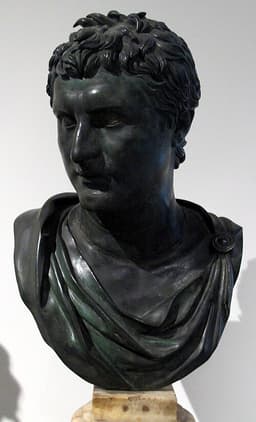
Eumenes II of Pergamon
Emperor · Ancient
63.6Total
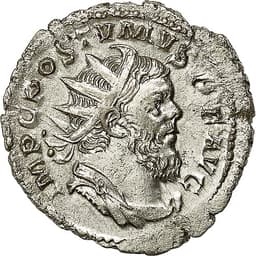
Postumus
Emperor · Ancient
55.5Total
Basic Information
Born
-221
220
Died
-159
269
Era
Ancient
Ancient
Nationality
Pergamon
Gallic Empire
Occupation
Emperor
Emperor
Civilization
Western
Western
Score Comparison
Military (10%)
70.0
60.0
Political (20%)
60.0
68.0
Influence (20%)
72.0
48.6
Legacy (20%)
58.0
42.5
Leadership (15%)
66.0
70.0
Strategy (15%)
52.5
60.0
TOTAL
63.6
55.5
Eumenes II of Pergamon — Complete Timeline
190 BC
Battle of MagnesiaWar◆ Major
Eumenes II fought alongside the Romans at the Battle of Magnesia, where the Seleucid king Antiochus III was defeated. This victory secured Roman dominance in Asia Minor and expanded Pergamon's territory, making it a key Roman ally.
Roman-Seleucid WarAllianceTerritorial Expansion
Impact: regionalconstructive
188 BC
Treaty of ApameaPolitical Action◆ Major
Eumenes II benefited from the Treaty of Apamea, which ended the war with Antiochus III. Pergamon received large territories in Asia Minor, including Phrygia and Lydia, greatly increasing its wealth and influence.
TreatyTerritorial GainRoman Alliance
Impact: regionalconstructive
180 BC
Construction of the Pergamon AltarCultural◆ Major
Eumenes II commissioned the Great Altar of Pergamon, a monumental structure adorned with a frieze depicting the Gigantomachy. This masterpiece of Hellenistic art symbolized the Attalid dynasty's power and cultural patronage.
Hellenistic ArtArchitecturePatronage
Impact: regionalconstructive
Postumus — Complete Timeline
260 AD
Proclaimed emperor in Gaul after Valerian's capturePolitical Action
Following the capture of Emperor Valerian by the Sassanids, Postumus was proclaimed emperor by his troops in Gaul. He established the Gallic Empire, a breakaway state comprising Gaul, Britain, and Hispania, with its capital at Colonia Agrippina.
Gallic EmpireUsurpationCrisis of the Third Century
Impact: regional
261 AD
Defeated Gallienus at the Battle of MursaWar◆ Major
Postumus repelled an invasion by Emperor Gallienus, defeating him at the Battle of Mursa. This victory secured the Gallic Empire's independence and forced Gallienus to abandon attempts to reconquer the western provinces.
BattleGallic EmpireRoman Civil War
Impact: regional
269 AD
Stabilized the Gallic Empire for nine yearsPolitical Action◆ Major
Postumus successfully defended the Gallic Empire against both internal usurpers and external Germanic invasions for nine years. His reign provided stability to the western provinces during the Crisis of the Third Century, with effective administration and coinage.
Gallic EmpireStabilityAdministration
Impact: regionalconstructive
Killed by his own troops after refusing to sack MainzPolitical Action◆ Major
After defeating the usurper Laelianus at Mainz, Postumus refused to allow his troops to sack the city. His soldiers mutinied and killed him, ending his reign. His death led to a period of instability in the Gallic Empire.
MutinyDeathGallic Empire
Impact: regionaltragic
This comparison has not been analyzed yet.
One-time AI generation (~1 minute). Scores and timeline are already available below.
Rankings
🥇
Eumenes II of PergamonLeader
Mil: 70.0Pol: 60.0Inf: 72.0
63.6
🥈
Postumus
Mil: 60.0Pol: 68.0Inf: 48.6
55.5
+8.1 behind
How This Comparison Works
Algorithm
Each figure is scored on 6 dimensions (0—100 scale) based on structured historical data: Military (10%), Political (20%), Influence (20%), Legacy (20%), Leadership (15%), Strategy (15%). The weighted total produces the final ranking.
Data Sources
Scores are computed from structured sub-indicators in the database. Scale factors adjust for era (Ancient ×0.85, Modern ×1.0) and civilization size (Eastern ×1.05, Other ×0.80) to account for differences in population and military scale.
Maximum 3 Figures
Comparisons are limited to 2—3 figures to ensure readability and statistical meaningfulness.
Error Margins
±5 points per dimension — Sub-scores are derived from historical records with inherent uncertainty. Two figures within 5 points on a dimension should be considered roughly equivalent in that area.
Total Score Accuracy
±3 points overall — The weighted combination of 6 dimensions produces a total score with approximately ±3 points of uncertainty. Differences of less than 3 points are not statistically significant— the figures are effectively tied.
Known Limitations
- Historical records are incomplete and uneven across civilizations
- Figures from oral-tradition societies may be underrepresented
- Occupation labels can misclassify multi-role figures
- Scores measure capability and impact, not moral character
- Quantitative scoring is a comparison tool, not absolute truth
Capability Radar
Military (10%) — Battles & Warfare
Battles
55
55
Win Rate
60
60
Expansion
50
45
Political (20%) — Governance & Reform
Reform
65
40
Diplomacy
75
45
Economy
70
50
Influence (20%) — Cultural & Global Reach
Cultural
75
30
Global
60
20
Legacy (20%) — Historical Impact
Historical
70
35
Longevity
65
30
Leadership (15%) — Power & Stability
Tenure
70
60
Stability
65
55
Strategy (15%) — Tactics & Innovation
Strategy
60
55
Tactics
55
50
Reform
40
30
Similar Comparisons
Comments & Discussion
No comments yet. Be the first to share your thoughts!