Loading...
Eumenes II of Pergamon vs Qin Shi Huang
Qin Shi Huang leads by 21.6 pts · 2 figures compared
…
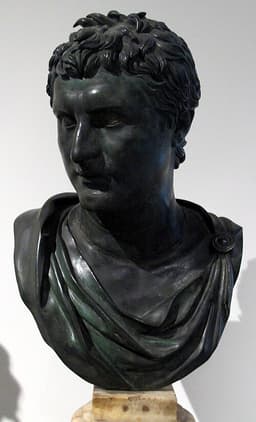
Eumenes II of Pergamon
Emperor · Ancient
63.6Total
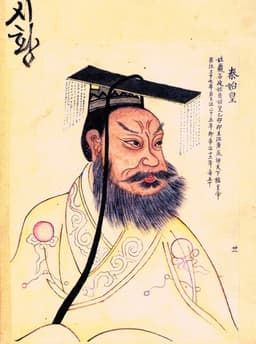
Qin Shi Huang
Emperor · Ancient
85.2Total
Basic Information
Born
-221
-259
Died
-159
-210
Era
Ancient
Ancient
Nationality
Pergamon
China
Occupation
Emperor
Emperor
Civilization
Western
Eastern
Score Comparison
Military (10%)
70.0
80.0
Political (20%)
60.0
90.0
Influence (20%)
72.0
85.0
Legacy (20%)
58.0
90.0
Leadership (15%)
66.0
78.0
Strategy (15%)
52.5
82.0
TOTAL
63.6
85.2
Eumenes II of Pergamon — Complete Timeline
190 BC
Battle of MagnesiaWar◆ Major
Eumenes II fought alongside the Romans at the Battle of Magnesia, where the Seleucid king Antiochus III was defeated. This victory secured Roman dominance in Asia Minor and expanded Pergamon's territory, making it a key Roman ally.
Roman-Seleucid WarAllianceTerritorial Expansion
Impact: regionalconstructive
188 BC
Treaty of ApameaPolitical Action◆ Major
Eumenes II benefited from the Treaty of Apamea, which ended the war with Antiochus III. Pergamon received large territories in Asia Minor, including Phrygia and Lydia, greatly increasing its wealth and influence.
TreatyTerritorial GainRoman Alliance
Impact: regionalconstructive
180 BC
Construction of the Pergamon AltarCultural◆ Major
Eumenes II commissioned the Great Altar of Pergamon, a monumental structure adorned with a frieze depicting the Gigantomachy. This masterpiece of Hellenistic art symbolized the Attalid dynasty's power and cultural patronage.
Hellenistic ArtArchitecturePatronage
Impact: regionalconstructive
Qin Shi Huang — Complete Timeline
246 BC
Construction of the Mausoleum and Terracotta ArmyOther◆ Major
Qin Shi Huang commissioned a vast mausoleum complex near Xi'an, guarded by thousands of life-sized terracotta soldiers, horses, and chariots. The project employed hundreds of thousands of workers and reflected his obsession with immortality and imperial power.
Impact: global
230 BC
Conquest of the Six Warring StatesWar
From 230 to 221 BCE, Ying Zheng led the Qin state in a series of campaigns that conquered the Han, Zhao, Wei, Chu, Yan, and Qi states. This unified China under a single ruler for the first time, ending the Warring States period.
Impact: global
221 BC
Standardization of Writing, Currency, and MeasurementsReform◆ Major
Qin Shi Huang ordered the standardization of Chinese script, currency, and weights and measures across the unified empire. This facilitated administration, trade, and cultural integration, laying a foundation for future dynasties.
Impact: globalconstructive
Proclamation of the Qin DynastyPolitical Action
After conquering the last independent state, Ying Zheng declared himself Shi Huangdi (First Emperor), founding the Qin Dynasty. He adopted a new title to signify his supreme authority and initiated centralized imperial rule.
Impact: global
214 BC
Initiation of the Great Wall ConstructionOther◆ Major
Qin Shi Huang ordered the connection and extension of existing northern fortifications to create a unified defensive wall against nomadic Xiongnu raids. This project involved massive conscripted labor and became the precursor to the later Great Wall.
Impact: regional
213 BC
Burning of Books and Burying of ScholarsPolitical Action◆ Major
On the advice of Li Si, Qin Shi Huang ordered the burning of historical records and philosophical texts not aligned with Legalist doctrine. He also had 460 Confucian scholars buried alive to suppress dissent and consolidate ideological control.
Impact: nationaldestructive
Expert Analysis
eumenes-ii-of-pergamon-vs-qin-shi-huang
# The First Emperor and the Hellenistic King: Two Paths to Power in the Ancient World
On a spring morning in 221 BC, Ying Zheng stood before the gates of the last independent Chinese kingdom, the armies of Qin arrayed behind him in perfect formation. He was thirty-eight years old, and in a few hours, he would declare himself Shi Huangdi—the First Emperor—a title never before used in Chinese history. Half a world away, in the same decade, a young prince named Eumenes II ascended the throne of Pergamon, a small but wealthy kingdom on the coast of Asia Minor. Both men would reshape their worlds, yet their fates could not have been more different. One would forge an empire that haunted the Chinese imagination for two millennia; the other would build a cultural jewel that Rome itself would later covet and consume.
Origins
Qin Shi Huang was born into a world of war. The Warring States period had raged for over two centuries, with seven major kingdoms locked in a brutal struggle for supremacy. His father was a king, but the boy grew up in the shadow of treachery and assassination—his own father had been a hostage in another state before claiming the throne. By the time Ying Zheng became king of Qin at age thirteen, he had learned that power was a weapon to be wielded without mercy.
Eumenes II, by contrast, inherited a kingdom that had already found its patron. Pergamon was a Hellenistic state, born from the fragments of Alexander the Great’s empire, and its rulers had long understood that survival meant playing the great powers against each other. Eumenes’ father, Attalus I, had famously refused to pay tribute to the Galatians and had allied with Rome against Macedon. The young king grew up in a court where diplomacy was as valued as military might, and where Greek culture was the currency of legitimacy.
Their eras shaped them profoundly. Qin Shi Huang lived in a time when China’s philosophical schools—Confucianism, Legalism, Daoism—were competing for the soul of civilization, and the Legalist philosophy that dominated Qin offered a cold, efficient answer to chaos: total state control. Eumenes II lived in a world where Rome was rising but had not yet swallowed the Mediterranean, where a clever king could still navigate between empires and carve out a space for his own ambitions.
Rise to Power
Qin Shi Huang’s path was forged in blood. From 230 to 221 BC, he unleashed a series of campaigns that historians still study for their speed and brutality. His generals, following the Legalist principles of reward and punishment, drove armies through the kingdoms of Han, Zhao, Wei, Chu, Yan, and finally Qi. Each conquest was methodical: spies and bribes softened the enemy, then the Qin war machine crushed them. When the last king surrendered, Ying Zheng did not simply add a new territory—he erased the old order entirely.
Eumenes II rose through alliance. His father had already positioned Pergamon as Rome’s friend, and when Antiochus III of the Seleucid Empire threatened to recreate Alexander’s domain, Eumenes threw his kingdom behind the Roman legions. At the Battle of Magnesia in 190 BC, he fought alongside the consul Lucius Cornelius Scipio, commanding the Pergamene cavalry that turned the Seleucid flank. The victory was decisive, and the Treaty of Apamea in 188 BC rewarded Pergamon with vast territories in Asia Minor. Eumenes had not conquered an empire—he had been granted one by Rome.
The contrast is stark: one man seized power through total war, the other through calculated partnership. Qin Shi Huang’s rise was a revolution; Eumenes II’s was a transaction.
Leadership and Governance
Qin Shi Huang governed like a machine. He standardized writing, currency, and measurements across his new empire, forcing unity on a land that had known only division. He ordered the connection of northern fortifications into what would become the Great Wall, a project that consumed hundreds of thousands of lives. His Legalist minister, Li Si, advised the burning of historical records and the burying of scholars who resisted the new order—an act of intellectual terror that still echoes in Chinese memory. The First Emperor believed that the past had to be destroyed to create the future.
Eumenes II governed like a patron. He poured Pergamon’s wealth into culture, commissioning the Great Altar of Pergamon—a masterpiece of Hellenistic art whose frieze of the Gigantomachy (the battle of gods and giants) symbolized his kingdom’s triumph over barbarism. He built a library that rivaled Alexandria’s, attracted artists and philosophers, and transformed Pergamon into a beacon of Greek civilization. His military strategy was defensive and diplomatic; he knew that his army could never match Rome’s, so he made himself indispensable as a friend.
Their reforms reflect their worlds: Qin Shi Huang sought to control his subjects through uniformity and fear; Eumenes II sought to inspire loyalty through beauty and prosperity.
Triumph and Tragedy
Qin Shi Huang’s greatest triumph was also his tragedy. He had unified China, but his obsession with immortality led him to consume mercury pills prescribed by alchemists, and he died at forty-nine while on a tour of his empire. His mausoleum, guarded by thousands of life-sized terracotta soldiers, remains one of the world’s great archaeological wonders—a monument to his power and his paranoia. Within four years of his death, the Qin Dynasty collapsed, destroyed by rebellions that his harsh rule had provoked.
Eumenes II’s triumph was more subtle. He died peacefully in 159 BC after a reign of thirty-eight years, having made Pergamon a cultural capital that would influence Roman art for centuries. But his tragedy was that his kingdom could not survive without Rome. His son Attalus III, lacking his father’s political skill, bequeathed Pergamon to the Roman Republic in 133 BC, ending the dynasty. The Pergamon Altar itself was later taken to Berlin, a trophy of a fallen civilization.
Character and Destiny
Qin Shi Huang was driven by fear—fear of death, fear of chaos, fear of the past. His personality was autocratic and suspicious; he trusted no one, not even his own sons. This paranoia led him to centralize power so completely that his empire became brittle, unable to survive his death.
Eumenes II was driven by ambition, but a different kind. He wanted not to destroy the old world but to build a new one within the cracks of the great powers. His personality was diplomatic and cultured; he understood that influence could be more lasting than conquest. And yet, his very success made Pergamon dependent on Rome, a dependency that ultimately erased his kingdom from the map.
Legacy
Qin Shi Huang’s legacy is the idea of China itself. Every Chinese emperor who followed, from the Han to the Qing, ruled in the shadow of the First Emperor’s unification. The Great Wall, the standardized script, the bureaucratic system—all trace back to his reign. He is remembered as both a tyrant and a founder, a man who burned books but built a nation.
Eumenes II’s legacy is more fragile but no less significant. The Pergamon Altar, now in Berlin’s Pergamon Museum, stands as a testament to Hellenistic art at its peak. His library and his patronage of learning helped preserve Greek culture for the Roman world and, through it, for the Renaissance. But his kingdom is a footnote in history, remembered only by specialists.
Conclusion
Two kings, two worlds. One built an empire that lasted in memory if not in fact; the other built a cultural legacy that outlasted his kingdom. Qin Shi Huang’s story is one of raw power and its limits—a warning that even the mightiest empire can crumble when built on fear. Eumenes II’s story is one of cleverness and fragility—a reminder that even the most brilliant ally can become a client, then a memory. Their lives, separated by continents and cultures, ask the same question: What does it mean to build something that lasts? The First Emperor answered with walls and laws; the King of Pergamon answered with art and alliance. History, in its infinite ambiguity, has not yet decided which answer was wiser.
Rankings
🥇
Qin Shi HuangLeader
Mil: 80.0Pol: 90.0Inf: 85.0
85.2
🥈
Eumenes II of Pergamon
Mil: 70.0Pol: 60.0Inf: 72.0
63.6
+21.6 behind
How This Comparison Works
Algorithm
Each figure is scored on 6 dimensions (0—100 scale) based on structured historical data: Military (10%), Political (20%), Influence (20%), Legacy (20%), Leadership (15%), Strategy (15%). The weighted total produces the final ranking.
Data Sources
Scores are computed from structured sub-indicators in the database. Scale factors adjust for era (Ancient ×0.85, Modern ×1.0) and civilization size (Eastern ×1.05, Other ×0.80) to account for differences in population and military scale.
Maximum 3 Figures
Comparisons are limited to 2—3 figures to ensure readability and statistical meaningfulness.
Error Margins
±5 points per dimension — Sub-scores are derived from historical records with inherent uncertainty. Two figures within 5 points on a dimension should be considered roughly equivalent in that area.
Total Score Accuracy
±3 points overall — The weighted combination of 6 dimensions produces a total score with approximately ±3 points of uncertainty. Differences of less than 3 points are not statistically significant— the figures are effectively tied.
Known Limitations
- Historical records are incomplete and uneven across civilizations
- Figures from oral-tradition societies may be underrepresented
- Occupation labels can misclassify multi-role figures
- Scores measure capability and impact, not moral character
- Quantitative scoring is a comparison tool, not absolute truth
Capability Radar
Military (10%) — Battles & Warfare
Battles
55
85
Win Rate
60
90
Expansion
50
90
Political (20%) — Governance & Reform
Reform
65
95
Diplomacy
75
75
Economy
70
90
Influence (20%) — Cultural & Global Reach
Cultural
75
95
Global
60
85
Legacy (20%) — Historical Impact
Historical
70
95
Longevity
65
95
Leadership (15%) — Power & Stability
Tenure
70
70
Stability
65
65
Strategy (15%) — Tactics & Innovation
Strategy
60
85
Tactics
55
80
Reform
40
95
Similar Comparisons
Comments & Discussion
Shield-Biter of Gao6/17/2026
Here's the hard truth no one wants to admit: Qin Shi Huang wasn't a visionary — he was just a lucky warlord who won the Warring States lottery, while Eumenes II actually *earned* his legacy by building a rival library to Alexandria and backing Rome against the Seleucids in the Battle of Magnesia (190 BC). If geography had swapped, Qin's brutal Legalism would've crumbled inside a generation in the Greek world's competitive chaos. Noodle over that.
战车碾过史官6/17/2026
少来那套“东方专制君主”的老调。秦始皇统一度量衡、修驰道、建灵渠,哪一项不是千年工程?你们知道吗,他连铜车马都是实物大小的四分之一比例铸造的——这才是真正的标准化量产思维。而那个帕加马的二世只会跪舔罗马人,最后连自己的图书馆都被安东尼送给埃及了。谁更有影响力,一目了然。
Realpolitik Myrmidon6/17/2026
Classic case of overhyping a library builder. Eumenes II's claim to fame is the Pergamon Altar, sure, but that's just flashy propaganda to distract from his total military dependence on Rome as a client king. Meanwhile, Qin Shi Huang didn't need foreign legions — he forged his own with iron weapons, crossbows, and a centralized state that could mobilize 700,000 workers on the Great Wall without asking anyone's permission. One man built a machine; the other begged for a ride.
焚书坑儒没意思6/17/2026
你们这群西方中心论者能不能把书读全了再喷?秦始皇确实焚了百家书,但那是为了粉碎周代封建制的政治根基——和你们罗马人烧迦太基的逻辑一模一样,只不过规模大十倍。而Eumenes II呢?他建图书馆时还搞“羊皮纸垄断”,用贸易保护主义搞文化霸权,说到底还是个商人政权的暴发户。谁更虚伪?
Terra Cotta Realist6/17/2026
Let's be blunt: comparing these two is like comparing a bulldozer to a Renaissance patron. Qin Shi Huang's unifiers — script, axle-width, law codes — were *operational systems* that made his empire run. Eumenes II built an altar and a library, both of which became tourist attractions for Romans within 50 years of his death. When the Qin tomb guards faced their final silence, they took 8,000 soldiers and real bronze weapons with them. Pergamon's legacy? An empty pedestal for Augustus to stand on.
亚历山大阴影下的二世6/17/2026
说实话,Eumenes II在军事上就是个弟弟。他唯一拿得出手的胜仗是马格尼西亚,但他自己连统帅都不是——那是罗马军团和帕加马同盟军的联合胜利。而秦始皇亲自指挥了灭楚之战,用60