Loading...
Ferdinand III of Castile vs Napoleon Bonaparte
Napoleon Bonaparte leads by 14.3 pts · 2 figures compared
…
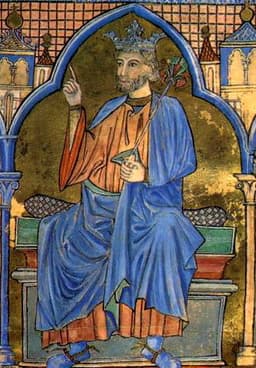
Ferdinand III of Castile
Emperor · Medieval
56.6Total

Napoleon Bonaparte
General · Modern
70.9Total
Basic Information
Born
1199
1769
Died
1252
1821
Era
Medieval
Modern
Nationality
Castile
France
Occupation
Emperor
General
Civilization
Western
Western
Score Comparison
Military (10%)
60.0
94.0
Political (20%)
45.0
72.0
Influence (20%)
58.3
40.0
Legacy (20%)
52.0
80.0
Leadership (15%)
72.0
78.0
Strategy (15%)
55.0
90.0
TOTAL
56.6
70.9
Ferdinand III of Castile — Complete Timeline
1230 AD
Union of Leon and CastilePolitical Action
Ferdinand III inherited the Kingdom of Castile from his mother and the Kingdom of Leon from his father, permanently uniting the two crowns. This union created the largest Christian kingdom in Iberia and strengthened the Reconquista.
UnionLeonCastileReconquista
Impact: regionalconstructive
1236 AD
Conquest of CordobaWar◆ Major
Ferdinand III captured the city of Cordoba, the former capital of the Umayyad Caliphate, after a long siege. The conquest brought the Great Mosque of Cordoba under Christian control and was a major symbolic victory in the Reconquista.
ReconquistaConquestCordoba
Impact: regionalconstructive
1248 AD
Conquest of SevilleWar◆ Major
Ferdinand III besieged and captured Seville, the largest city in Moorish Iberia, with the aid of a Castilian fleet. The conquest gave Castile control of the Guadalquivir River and a major port for trade and naval operations.
ReconquistaConquestSeville
Impact: regionalconstructive
Napoleon Bonaparte — Complete Timeline
1799 AD
Coup of 18 BrumaireOther◆ Major
Napoleon Bonaparte, with support from his brother Lucien and key political figures, overthrew the Directory in a bloodless coup. He established the Consulate with himself as First Consul, effectively becoming the ruler of France. This event ended the French Revolution's most unstable period.
French RevolutionCoupRise to Power
Impact: regional
1804 AD
Promulgation of the Napoleonic CodeOther◆ Major
Napoleon enacted the Civil Code of the French, known as the Napoleonic Code, a comprehensive set of laws that replaced the fragmented feudal legal systems. The code established legal equality, protected property rights, and secularized law. It became the basis for legal systems in many European and world countries.
Legal ReformNapoleonic CodeCivil Law
Impact: globalconstructive
1805 AD
Battle of AusterlitzWar◆ Major
Napoleon's Grande Arm
Napoleonic WarsBattleDecisive Victory
Impact: global
1812 AD
Invasion of RussiaWar◆ Major
Napoleon led the Grande Arm
Napoleonic WarsInvasionDisaster
Impact: globaldestructive
1815 AD
Battle of WaterlooWar◆ Major
Napoleon's French army was defeated by the combined forces of the Duke of Wellington's Anglo-Allied army and Gebhard Leberecht von Bl
Napoleonic WarsBattleFinal Defeat
Impact: globaldestructive
Expert Analysis
ferdinand-iii-of-castile-vs-napoleon-bonaparte
# The Saint and the Emperor: Ferdinand III of Castile and Napoleon Bonaparte
On a scorching July morning in 1212, a young prince watched as Christian knights stormed the walls of Las Navas de Tolosa, a battle that would shatter Almohad power in Iberia. Six centuries later, on a cold December day in 1805, a short Corsican general stood on a hill overlooking the frozen battlefield of Austerlitz, watching his Grande Armée destroy the combined forces of Russia and Austria. Both men would reshape their worlds. One became a saint. The other became a legend—and a cautionary tale. What separates a ruler who builds an enduring legacy from one who builds an empire of ash?
Origins
Ferdinand III was born in 1199 into a world of fractured kingdoms and holy war. His father, Alfonso IX of León, and his mother, Berenguela of Castile, were locked in dynastic rivalry. The boy grew up in the shadow of the Reconquista, the centuries-long Christian reconquest of Iberia from Muslim rule. His education was monastic, his worldview shaped by the Crusading ethos of the age. He learned that kingship was a sacred duty, not a personal ambition.
Napoleon Bonaparte entered the world in 1769 on the island of Corsica, barely a year after France had purchased it from Genoa. His family was minor nobility, but his world was the Enlightenment—a time of revolution, reason, and ruthless ambition. He was educated at French military academies, where he absorbed mathematics and artillery tactics, not theology. For Napoleon, the universe was a machine to be mastered, not a kingdom to be served.
Rise to Power
Ferdinand’s ascent was a product of inheritance and marriage. In 1230, his father died, and Ferdinand claimed the Kingdom of León, uniting it with Castile, which he had inherited from his mother. This was no dramatic coup—it was a legal, political consolidation. He spent the next two decades methodically pushing southward, capturing Cordoba in 1236 after a long siege, and Seville in 1248 with the aid of a Castilian fleet. Each conquest was a step in a patient, divinely sanctioned campaign.
Napoleon’s rise was a revolution in miniature. A young artillery officer during the French Revolution, he seized his moment in 1795 by suppressing a royalist uprising in Paris. By 1799, he had staged a coup d’état, becoming First Consul. He crowned himself Emperor in 1804. Where Ferdinand inherited a throne, Napoleon forged one from cannon fire and political cunning. Ferdinand’s path was vertical—steady, sanctioned, sacred. Napoleon’s was horizontal—wide, risky, and utterly modern.
Leadership & Governance
Ferdinand ruled as a medieval king, but his governance was surprisingly effective. He established the *Cortes* (parliaments) in both Castile and León, codified laws, and promoted the translation of Arabic scientific texts into Latin. His leadership was personal: he led his armies from the front, but his strategy was patient, focused on sieges and alliances rather than pitched battles. His military score of 66.4 reflects competence, not genius.
Napoleon was a military titan—his score of 94.0 speaks to his revolutionary tactics: rapid marches, massed artillery, and the destruction of enemy armies in a single decisive battle. His Napoleonic Code reformed French law, spreading ideals of equality and meritocracy across Europe. But his governance was imperial and centralizing. He created a bureaucracy, but he also created a police state. Ferdinand built institutions to serve God and kingdom; Napoleon built them to serve himself.
Triumph & Tragedy
Ferdinand’s greatest moment was the conquest of Seville in 1248, the largest city in Moorish Iberia. It was a triumph of persistence, not brilliance. His tragedy was personal: he died in 1252, reportedly of a fever, before he could complete the Reconquista. Yet his work endured. His son, Alfonso X, continued the campaign. Ferdinand was canonized as a saint in 1671, recognized for his piety and his role in the Christian reconquest.
Napoleon’s triumph was Austerlitz in 1805, where he destroyed the armies of Austria and Russia. His tragedy was the invasion of Russia in 1812. The Grande Armée of 600,000 men marched east; fewer than 100,000 returned. He was exiled to Elba, escaped, and met final defeat at Waterloo in 1815. He died in exile on Saint Helena in 1821, a prisoner of the British. Ferdinand’s tragedy was a quiet end; Napoleon’s was a spectacular fall.
Character & Destiny
Ferdinand was pious, patient, and disciplined. He reportedly said, “I fear the prayers of the poor more than the armies of the Moors.” His character was shaped by faith and duty. He believed his destiny was to serve God and his people.
Napoleon was ambitious, brilliant, and restless. He once declared, “Impossible is a word to be found only in the dictionary of fools.” His character was shaped by will and reason. He believed his destiny was to remake the world. Ferdinand’s humility preserved his legacy; Napoleon’s hubris destroyed it.
Legacy
Ferdinand III is remembered as a saint, a unifier, and a king who expanded Christian Iberia. His legacy is spiritual and institutional—the union of Castile and León, the foundations of Spanish law. Napoleon is remembered as a military genius, a reformer, and a tyrant. His legacy is the Napoleonic Code, the modern nation-state, and the romantic image of the self-made emperor.
Conclusion
Ferdinand and Napoleon both conquered, both reformed, both shaped history. But Ferdinand built a kingdom that lasted; Napoleon built an empire that collapsed. The difference lies not in their abilities—both were brilliant—but in their purposes. Ferdinand ruled for something beyond himself; Napoleon ruled for himself. One became a saint; the other became a warning. History remembers both, but it is the saint who reminds us that power, without humility, is merely a fire waiting to burn out.
Rankings
🥇
Napoleon BonaparteLeader
Mil: 94.0Pol: 72.0Inf: 40.0
70.9
🥈
Ferdinand III of Castile
Mil: 60.0Pol: 45.0Inf: 58.3
56.6
+14.3 behind
How This Comparison Works
Algorithm
Each figure is scored on 6 dimensions (0—100 scale) based on structured historical data: Military (10%), Political (20%), Influence (20%), Legacy (20%), Leadership (15%), Strategy (15%). The weighted total produces the final ranking.
Data Sources
Scores are computed from structured sub-indicators in the database. Scale factors adjust for era (Ancient ×0.85, Modern ×1.0) and civilization size (Eastern ×1.05, Other ×0.80) to account for differences in population and military scale.
Maximum 3 Figures
Comparisons are limited to 2—3 figures to ensure readability and statistical meaningfulness.
Error Margins
±5 points per dimension — Sub-scores are derived from historical records with inherent uncertainty. Two figures within 5 points on a dimension should be considered roughly equivalent in that area.
Total Score Accuracy
±3 points overall — The weighted combination of 6 dimensions produces a total score with approximately ±3 points of uncertainty. Differences of less than 3 points are not statistically significant— the figures are effectively tied.
Known Limitations
- Historical records are incomplete and uneven across civilizations
- Figures from oral-tradition societies may be underrepresented
- Occupation labels can misclassify multi-role figures
- Scores measure capability and impact, not moral character
- Quantitative scoring is a comparison tool, not absolute truth
Capability Radar
Military (10%) — Battles & Warfare
Battles
65
95
Win Rate
70
90
Expansion
75
95
Political (20%) — Governance & Reform
Reform
70
95
Diplomacy
65
80
Economy
60
85
Influence (20%) — Cultural & Global Reach
Cultural
65
85
Global
55
90
Legacy (20%) — Historical Impact
Historical
70
95
Longevity
65
90
Leadership (15%) — Power & Stability
Tenure
75
85
Stability
70
70
Strategy (15%) — Tactics & Innovation
Strategy
70
95
Tactics
60
98
Reform
55
92
Similar Comparisons
Comments & Discussion
数据解剖师6/17/2026
比统帅力?拿破仑在奥斯特里茨以7.3万人击溃9万俄奥联军,自身伤亡仅1350人。费迪南三世呢?他那场决定性战役——1212年的纳瓦斯德托洛萨——联军战损比例其实更高,还不是全军撤退,而是穆斯林自行崩溃。但关键在于战后统治:拿破仑十八年搞垮法兰西,先死50万在大陆封锁,又丧40万在征俄。费迪南三十五年在位,卡斯提尔版图从一片混乱变成稳固基督教强国。战役赢家不等于治国高手,数据最诚实。
古典吹哨人6/17/2026
拿破仑那套把戏,说白了就是现代版的凯撒野心,但缺了凯撒的政治智慧。费迪南三世才像真正的奥古斯都——懂得收敛与整合。拿破仑把半个欧洲当试验田推行《法典》,却激发民族主义反噬;费迪南征服穆尔西亚、塞维利亚后,反给穆斯林工匠和犹太学者保留自治权,造出阿尔卡萨尔那种文化奇迹。一个炸碎旧秩序,一个缝合新边界。结果呢?波旁复辟、欧洲协调——拿破仑遗产全打脸。费迪南的卡斯提尔,却变成西班牙帝国的基石。
Historian7836/17/2026
The real tragedy is how we glorify conquerors based on body counts and battle narratives. Napoleon's 1812 disaster killed more people than Ferdinand fought in his entire reign. Yet we call Ferdinand a saint and Napoleon a genius. They were both empire-builders whose subjects paid the price for glory. Ferdinand's forced conversions and confiscation of mosques in captured cities foreshadowed religious intolerance; Napoleon's Italian and
Historian4236/17/2026
Comparing a canonized king to a self-crowned emperor is like contrasting cathedral stone with volcanic ash. Ferdinand built his legacy on the systematic Reconquista—siege by siege, kingdom by kingdom, culminating in the capture of Seville in 1248. Napoleon's 1812 retreat from Moscow erased over 400,000 lives in months. One slowly integrated his conquests; the other created a disaster of logistics and an inflated sense of destiny. Hand me a map of 13th century Iberia over a faded Grande Armée cas
Historian2806/17/2026
You miss the spiritual dimension entirely. Ferdinand III wasn't just a conqueror—he was the only medieval Spanish king canonized while still reigning, his body still incorrupt in Seville Cathedral. Napoleon built an empire on artillery; Ferdinand built Christendom on relics and prayer, personally carrying the Virgin of the Battles into combat. Even his death mirrored his life: he died wearing a hairshirt and a bishop’s stole, not a marshal’s uniform. This isn't about tactics; it's about two radi