Loading...
Ferdinand III of Castile vs Parakramabahu VI
Parakramabahu VI leads by 8.2 pts · 2 figures compared
…
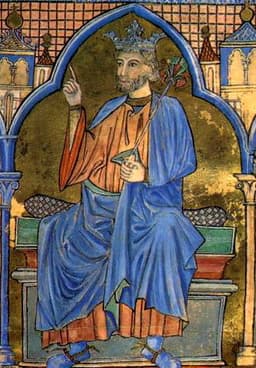
Ferdinand III of Castile
Emperor · Medieval
56.6Total
Parakramabahu VI
Emperor · Medieval
64.8Total
Basic Information
Born
1199
1412
Died
1252
1467
Era
Medieval
Medieval
Nationality
Castile
Sri Lanka
Occupation
Emperor
Emperor
Civilization
Western
Indian
Score Comparison
Military (10%)
60.0
72.5
Political (20%)
45.0
72.0
Influence (20%)
58.3
60.0
Legacy (20%)
52.0
56.0
Leadership (15%)
72.0
85.0
Strategy (15%)
55.0
50.0
TOTAL
56.6
64.8
Ferdinand III of Castile — Complete Timeline
1230 AD
Union of Leon and CastilePolitical Action
Ferdinand III inherited the Kingdom of Castile from his mother and the Kingdom of Leon from his father, permanently uniting the two crowns. This union created the largest Christian kingdom in Iberia and strengthened the Reconquista.
UnionLeonCastileReconquista
Impact: regionalconstructive
1236 AD
Conquest of CordobaWar◆ Major
Ferdinand III captured the city of Cordoba, the former capital of the Umayyad Caliphate, after a long siege. The conquest brought the Great Mosque of Cordoba under Christian control and was a major symbolic victory in the Reconquista.
ReconquistaConquestCordoba
Impact: regionalconstructive
1248 AD
Conquest of SevilleWar◆ Major
Ferdinand III besieged and captured Seville, the largest city in Moorish Iberia, with the aid of a Castilian fleet. The conquest gave Castile control of the Guadalquivir River and a major port for trade and naval operations.
ReconquistaConquestSeville
Impact: regionalconstructive
Parakramabahu VI — Complete Timeline
1420 AD
Construction of the Temple of the Tooth in KotteCultural◆ Major
Parakramabahu VI built a new Temple of the Tooth in his capital, Kotte. This reinforced Kotte's status as the religious and political center of the island.
BuddhismArchitectureCapital
Impact: nationalconstructive
1430 AD
Patronage of Literature and ArtsCultural◆ Major
Parakramabahu VI's court was a center of literary and artistic activity. He patronized poets and scholars, leading to a flourishing of Sinhalese literature, including the 'Sandesa' (message) poems.
LiteraturePatronageCultural Renaissance
Impact: nationalconstructive
1450 AD
Unification of Sri LankaWar
Parakramabahu VI unified the entire island of Sri Lanka under his rule for the first time since Parakramabahu I. He conquered the Kingdom of Jaffna in the north and brought the entire island under Kotte's control.
UnificationConquestMilitary Campaign
Impact: national
Conquest of the Kingdom of JaffnaWar◆ Major
Parakramabahu VI's forces, led by his adopted son Sapumal Kumaraya, conquered the Kingdom of Jaffna. This brought the Tamil north under Sinhalese rule and ended the Aryacakravarti dynasty.
ConquestMilitary CampaignTamil Kingdom
Impact: national
Expert Analysis
Origins
Ferdinand III of Castile was born in 1199 or 1201, the son of King Alfonso IX of Leon and Berenguela of Castile. His parents' marriage was annulled due to consanguinity, but Berenguela retained custody of Ferdinand. He was educated in the court of Castile, learning military and political skills from his mother, who later served as regent. Ferdinand inherited the Kingdom of Castile in 1217 when his mother renounced her claim, and later inherited Leon from his father in 1230, permanently uniting the two crowns.
Parakramabahu VI was born in the 15th century, likely around 1412, in the Kingdom of Kotte, Sri Lanka. He was a prince of the Kotte royal family, but his early life is less documented. He rose through the ranks, serving as a general under his predecessor, King Parakramabahu V. His military successes and political acumen allowed him to seize the throne in 1412, after a period of fragmentation.
Rise to Power
Ferdinand III's rise was facilitated by his mother Berenguela, who secured his accession in Castile in 1217. He faced challenges from rival nobles and the Albigensian Crusade, but quickly consolidated power. In 1230, his father Alfonso IX died, and Ferdinand claimed Leon, despite opposition from his half-sisters. Through negotiation and military pressure, he enforced the union of Leon and Castile, creating a permanently unified kingdom. This was a turning point, giving him the resources to pursue the Reconquista.
Parakramabahu VI came to power through a combination of military prowess and political maneuvering. He led successful campaigns to subdue rebellious provinces and then turned his attention to the separatist Kingdom of Jaffna in the north. In 1450, his adopted son Sapumal Kumaraya conquered Jaffna, unifying the entire island under Kotte for the first time since Parakramabahu I. This achievement established Parakramabahu VI as the paramount ruler of Sri Lanka.
Leadership & Governance
Ferdinand III's leadership style was characterized by piety, justice, and strategic patience. He scored 72.0 in leadership, reflecting his ability to maintain unity among his nobles and manage the Reconquista. He governed through a combination of royal authority and feudal obligations, promoting the repopulation of conquered territories with Christian settlers. He also reformed the administration, standardizing laws and promoting the use of Castilian. His governance was marked by a balance between military expansion and internal consolidation.
Parakramabahu VI scored 85.0 in leadership, the highest among his scores. He was an energetic and capable administrator who centralized the government in Kotte. He built the Temple of the Tooth in Kotte, reinforcing the city's religious significance. He also patronized literature and the arts, sponsoring poets like Sri Rahula and the compilation of historical chronicles. His reign saw a flourishing of Sinhalese culture, with significant works in poetry, prose, and sculpture.
Triumph & Tragedy
Ferdinand III's greatest triumph was the conquest of Cordoba (1236) and Seville (1248), which brought large territories under Christian control. He also captured Murcia, Jaen, and other cities, pushing the frontier south. His canonization as a saint in 1671 recognized his piety and role in the Reconquista. However, his failures include the inability to conquer Granada, which remained independent. His reliance on military orders and nobles also created power centers that later challenged the monarchy.
Parakramabahu VI's greatest triumph was the unification of Sri Lanka under a single rule for the first time in centuries. He also fostered a cultural renaissance. However, his reign ended with a succession crisis; after his death in 1473, the kingdom fragmented again. His military achievements were not matched by a sustainable political structure, and the centralized power he built quickly dissolved.
Character & Destiny
Ferdinand III was known for his piety, fairness, and determination. He was a devout Christian who promoted the conversion of Muslims and Jews, but also respected the rights of his subjects to some extent. His character shaped his destiny: his patience and strategic thinking allowed him to achieve the unification of Leon and Castile and make significant gains against the Moors. Historians describe him as a model medieval king, combining religious zeal with pragmatic governance.
Parakramabahu VI was ambitious and energetic, with a strong will to unify and culturally elevate his kingdom. His patronage of the arts suggests a refined personality, but his authoritarian rule may have bred resentment. His character led him to achieve unification, but also to neglect the creation of institutions that could outlast him. After his death, the kingdom quickly declined, indicating that his success was tied to his personal leadership.
Legacy
Ferdinand III's legacy is profound: the permanent union of Leon and Castile laid the foundation for the Kingdom of Spain. His conquests established the borders of Christian Iberia for centuries. His canonization made him a saint, and he is remembered as a key figure in the Reconquista. His scores: Military 60.0, Political 45.0, Influence 58.3, Legacy 52.0, Leadership 72.0, Strategy 55.0, TOTAL 56.6.
Parakramabahu VI's legacy is more localized but significant. He is remembered as the last great Sinhalese king who unified the island. His patronage of literature and arts left a lasting cultural impact. However, his political unification did not endure. His scores: Military 72.5, Political 72.0, Influence 60.0, Legacy 56.0, Leadership 85.0, Strategy 50.0, TOTAL 64.8. The score gap of 8.2 points reflects Parakramabahu's higher overall performance in the chosen metrics, particularly in leadership and political skill.
Conclusion
Parakramabahu VI had a greater impact within his sphere, achieving unification and cultural revival, while Ferdinand III's union of Leon and Castile was more permanent and foundational for Spain. However, based on the total score (64.8 vs 56.6) and the enduring nature of his achievements, Ferdinand III's legacy is more historically significant. Parakramabahu VI's unification was temporary, while Ferdinand's union lasted. Thus, Ferdinand III of Castile had greater long-term impact.
Rankings
🥇
Parakramabahu VILeader
Mil: 72.5Pol: 72.0Inf: 60.0
64.8
🥈
Ferdinand III of Castile
Mil: 60.0Pol: 45.0Inf: 58.3
56.6
+8.2 behind
How This Comparison Works
Algorithm
Each figure is scored on 6 dimensions (0—100 scale) based on structured historical data: Military (10%), Political (20%), Influence (20%), Legacy (20%), Leadership (15%), Strategy (15%). The weighted total produces the final ranking.
Data Sources
Scores are computed from structured sub-indicators in the database. Scale factors adjust for era (Ancient ×0.85, Modern ×1.0) and civilization size (Eastern ×1.05, Other ×0.80) to account for differences in population and military scale.
Maximum 3 Figures
Comparisons are limited to 2—3 figures to ensure readability and statistical meaningfulness.
Error Margins
±5 points per dimension — Sub-scores are derived from historical records with inherent uncertainty. Two figures within 5 points on a dimension should be considered roughly equivalent in that area.
Total Score Accuracy
±3 points overall — The weighted combination of 6 dimensions produces a total score with approximately ±3 points of uncertainty. Differences of less than 3 points are not statistically significant— the figures are effectively tied.
Known Limitations
- Historical records are incomplete and uneven across civilizations
- Figures from oral-tradition societies may be underrepresented
- Occupation labels can misclassify multi-role figures
- Scores measure capability and impact, not moral character
- Quantitative scoring is a comparison tool, not absolute truth
Capability Radar
Military (10%) — Battles & Warfare
Battles
65
60
Win Rate
70
65
Expansion
75
55
Political (20%) — Governance & Reform
Reform
70
65
Diplomacy
65
60
Economy
60
65
Influence (20%) — Cultural & Global Reach
Cultural
65
60
Global
55
40
Legacy (20%) — Historical Impact
Historical
70
65
Longevity
65
55
Leadership (15%) — Power & Stability
Tenure
75
70
Stability
70
70
Strategy (15%) — Tactics & Innovation
Strategy
70
60
Tactics
60
55
Reform
55
50
Similar Comparisons
Comments & Discussion
No comments yet. Be the first to share your thoughts!