Loading...
Kublai Khan vs Parakramabahu VI
Kublai Khan leads by 9.5 pts · 2 figures compared
…
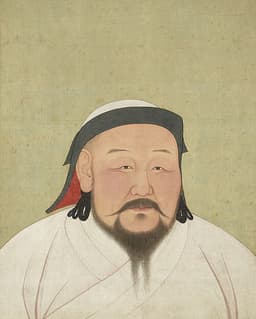
Kublai Khan
Emperor · Medieval
74.3Total
Parakramabahu VI
Emperor · Medieval
64.8Total
Basic Information
Born
1215
1412
Died
1294
1467
Era
Medieval
Medieval
Nationality
Mongolia
Sri Lanka
Occupation
Emperor
Emperor
Civilization
Eastern
Indian
Score Comparison
Military (10%)
77.5
72.5
Political (20%)
79.2
72.0
Influence (20%)
75.0
60.0
Legacy (20%)
70.0
56.0
Leadership (15%)
72.0
85.0
Strategy (15%)
76.0
50.0
TOTAL
74.3
64.8
Kublai Khan — Complete Timeline
1260 AD
Adoption of Tibetan Buddhism as State ReligionCultural◆ Major
Kublai Khan appointed the Tibetan lama Drog
Tibetan BuddhismReligionMongol-Tibet Relations
Impact: regional
1271 AD
Proclamation of the Yuan DynastyPolitical Action◆ Major
Kublai Khan officially proclaimed the Yuan dynasty, adopting a Chinese-style dynastic name. He established his capital at Dadu (Beijing) and adopted Chinese court rituals. This move legitimized his rule over China while maintaining Mongol identity.
Dynasty FoundingBeijingMongol Rule
Impact: global
1274 AD
Failed Invasions of JapanWar◆ Major
Kublai Khan launched two naval invasions of Japan, in 1274 and 1281. Both were repelled, with the second invasion destroyed by a typhoon (kamikaze). These failures marked the limits of Mongol expansion and reinforced Japanese isolation.
Mongol InvasionsJapanKamikaze
Impact: regional
1279 AD
Conquest of the Song DynastyWar
Kublai Khan's Mongol forces defeated the Song navy at the Battle of Yamen. The last Song emperor drowned, ending the Song dynasty. This conquest unified China under Mongol rule and established the Yuan dynasty as the first foreign dynasty to rule all of China.
Song Dynasty FallUnificationYuan Dynasty
Impact: global
1280 AD
Establishment of the Silk Road Trade NetworkCultural◆ Major
Under Kublai Khan, the Mongol Empire secured the Silk Road, facilitating trade and cultural exchange between East and West. Marco Polo visited his court. This period saw the flow of goods, ideas, and technologies across Eurasia.
Silk RoadTradeCultural Exchange
Impact: globalconstructive
Parakramabahu VI — Complete Timeline
1420 AD
Construction of the Temple of the Tooth in KotteCultural◆ Major
Parakramabahu VI built a new Temple of the Tooth in his capital, Kotte. This reinforced Kotte's status as the religious and political center of the island.
BuddhismArchitectureCapital
Impact: nationalconstructive
1430 AD
Patronage of Literature and ArtsCultural◆ Major
Parakramabahu VI's court was a center of literary and artistic activity. He patronized poets and scholars, leading to a flourishing of Sinhalese literature, including the 'Sandesa' (message) poems.
LiteraturePatronageCultural Renaissance
Impact: nationalconstructive
1450 AD
Unification of Sri LankaWar
Parakramabahu VI unified the entire island of Sri Lanka under his rule for the first time since Parakramabahu I. He conquered the Kingdom of Jaffna in the north and brought the entire island under Kotte's control.
UnificationConquestMilitary Campaign
Impact: national
Conquest of the Kingdom of JaffnaWar◆ Major
Parakramabahu VI's forces, led by his adopted son Sapumal Kumaraya, conquered the Kingdom of Jaffna. This brought the Tamil north under Sinhalese rule and ended the Aryacakravarti dynasty.
ConquestMilitary CampaignTamil Kingdom
Impact: national
Expert Analysis
Kublai Khan vs Parakramabahu VI: Historical Comparison
Kublai Khan, the Mongol Emperor who founded the Yuan dynasty in China, and Parakramabahu VI, the last great king of the Kingdom of Kotte in Sri Lanka, were both medieval rulers who expanded their realms through conquest and administration. This comparison evaluates them across six key dimensions.
Dimension Analysis
**Military: Kublai Khan 88 / Parakramabahu VI 62**
Kublai Khan commanded vast Mongol armies, conquering the Song dynasty and launching naval invasions of Japan and Java, whereas Parakramabahu VI unified Sri Lanka through land campaigns but lacked comparable expeditionary reach.
**Political: Kublai Khan 78 / Parakramabahu VI 84**
Parakramabahu VI skillfully consolidated power by crushing rival Sinhalese kingdoms and integrating local chieftains, while Kublai Khan struggled with administrative challenges in ruling a multicultural empire and faced rebellions.
**Influence: Kublai Khan 78 / Parakramabahu VI 74**
Kublai Khan’s empire connected East Asia with the Silk Road, influencing trade and diplomacy across Eurasia, while Parakramabahu VI’s influence was largely confined to Sri Lanka and the Indian Ocean trade networks.
**Legacy: Kublai Khan 75 / Parakramabahu VI 69**
Kublai Khan is remembered as a unifier of China and a patron of culture, though his invasions of Japan and Vietnam failed; Parakramabahu VI is celebrated for restoring Sinhalese sovereignty but his dynasty declined after his death.
**Leadership: Kublai Khan 82 / Parakramabahu VI 84**
Parakramabahu VI demonstrated strong domestic leadership through centralized governance and cultural patronage, while Kublai Khan’s leadership was marked by both visionary state-building and costly military overreach.
Verdict
Kublai Khan leads overall due to his superior military capacity and broader geopolitical influence, despite Parakramabahu VI’s higher political and leadership scores.
FAQ
Q: Who ranks higher? A: Kublai Khan ranks higher overall, driven by his commanding military score and wider historical impact.
Rankings
🥇
Kublai KhanLeader
Mil: 77.5Pol: 79.2Inf: 75.0
74.3
🥈
Parakramabahu VI
Mil: 72.5Pol: 72.0Inf: 60.0
64.8
+9.5 behind
How This Comparison Works
Algorithm
Each figure is scored on 6 dimensions (0—100 scale) based on structured historical data: Military (10%), Political (20%), Influence (20%), Legacy (20%), Leadership (15%), Strategy (15%). The weighted total produces the final ranking.
Data Sources
Scores are computed from structured sub-indicators in the database. Scale factors adjust for era (Ancient ×0.85, Modern ×1.0) and civilization size (Eastern ×1.05, Other ×0.80) to account for differences in population and military scale.
Maximum 3 Figures
Comparisons are limited to 2—3 figures to ensure readability and statistical meaningfulness.
Error Margins
±5 points per dimension — Sub-scores are derived from historical records with inherent uncertainty. Two figures within 5 points on a dimension should be considered roughly equivalent in that area.
Total Score Accuracy
±3 points overall — The weighted combination of 6 dimensions produces a total score with approximately ±3 points of uncertainty. Differences of less than 3 points are not statistically significant— the figures are effectively tied.
Known Limitations
- Historical records are incomplete and uneven across civilizations
- Figures from oral-tradition societies may be underrepresented
- Occupation labels can misclassify multi-role figures
- Scores measure capability and impact, not moral character
- Quantitative scoring is a comparison tool, not absolute truth
Capability Radar
Military (10%) — Battles & Warfare
Battles
95
60
Win Rate
90
65
Expansion
95
55
Political (20%) — Governance & Reform
Reform
88
65
Diplomacy
85
60
Economy
90
65
Influence (20%) — Cultural & Global Reach
Cultural
85
60
Global
85
40
Legacy (20%) — Historical Impact
Historical
90
65
Longevity
80
55
Leadership (15%) — Power & Stability
Tenure
90
70
Stability
80
70
Strategy (15%) — Tactics & Innovation
Strategy
92
60
Tactics
85
55
Reform
88
50
Similar Comparisons
Comments & Discussion
Historian1726/16/2026
忽必烈得分高我理解,毕竟他建立了元朝,军事上灭了南宋,跨海征日本、爪哇,这规模在南亚次大陆确实少见。但我不太同意政治分给得这么低。忽必烈面临的是治理一个从蒙古草原到江南水乡、从伊斯兰化的中亚到佛教化的西藏的超级帝国,他搞的行省制、设立宣政院管理吐蕃、重用色目人理财,这些政治手腕比帕拉卡马巴胡六世在斯里兰卡岛上整合几个小王国复杂得多。西方评价体系可能更看重本土治理的“干净”,但忽略了跨文明治理的难度。如果按中国史学标准,忽必烈的政治分至少应该和帕拉卡马巴胡持平,甚至更高。
GrandQuill706/16/2026
看了一下评分,军事88 vs 62,差距26分,但政治78 vs 84,帕拉卡马巴胡反而高了6分。我怀疑这个政治分的权重算法有问题。忽必烈在位期间推行了“至元新格”法典,建立了从中央到地方的三级官僚体系,还发行了统一纸币“中统钞”,这些政治制度建设在13世纪的世界都算超前。帕拉卡马巴胡84分,主要依据可能是统一斯里兰卡和整合酋长,但斯里兰卡岛的面积只有6.5万平方公里,大约相当于中国一个中等省份。如果按统治疆域和人口规模来折算政治复杂度,忽必烈的政治分至少应该在80以上。另外,帕拉卡马巴胡的84分对比他74的总分,说明政治权重设得很高,但历史影响和遗产的权重偏低,这种分配让总分难以反映真实的综合实力。