Loading...
Napoleon Bonaparte vs Parakramabahu VI
Napoleon Bonaparte leads by 6.1 pts · 2 figures compared
…

Napoleon Bonaparte
General · Modern
70.9Total
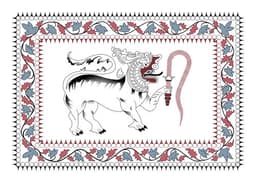
Parakramabahu VI
Emperor · Medieval
64.8Total
Basic Information
Born
1769
1412
Died
1821
1467
Era
Modern
Medieval
Nationality
France
Sri Lanka
Occupation
General
Emperor
Civilization
Western
Indian
Score Comparison
Military (10%)
94.0
72.5
Political (20%)
72.0
72.0
Influence (20%)
40.0
60.0
Legacy (20%)
80.0
56.0
Leadership (15%)
78.0
85.0
Strategy (15%)
90.0
50.0
TOTAL
70.9
64.8
Napoleon Bonaparte — Complete Timeline
1799 AD
Coup of 18 BrumaireOther◆ Major
Napoleon Bonaparte, with support from his brother Lucien and key political figures, overthrew the Directory in a bloodless coup. He established the Consulate with himself as First Consul, effectively becoming the ruler of France. This event ended the French Revolution's most unstable period.
French RevolutionCoupRise to Power
Impact: regional
1804 AD
Promulgation of the Napoleonic CodeOther◆ Major
Napoleon enacted the Civil Code of the French, known as the Napoleonic Code, a comprehensive set of laws that replaced the fragmented feudal legal systems. The code established legal equality, protected property rights, and secularized law. It became the basis for legal systems in many European and world countries.
Legal ReformNapoleonic CodeCivil Law
Impact: globalconstructive
1805 AD
Battle of AusterlitzWar◆ Major
Napoleon's Grande Arm
Napoleonic WarsBattleDecisive Victory
Impact: global
1812 AD
Invasion of RussiaWar◆ Major
Napoleon led the Grande Arm
Napoleonic WarsInvasionDisaster
Impact: globaldestructive
1815 AD
Battle of WaterlooWar◆ Major
Napoleon's French army was defeated by the combined forces of the Duke of Wellington's Anglo-Allied army and Gebhard Leberecht von Bl
Napoleonic WarsBattleFinal Defeat
Impact: globaldestructive
Parakramabahu VI — Complete Timeline
1420 AD
Construction of the Temple of the Tooth in KotteCultural◆ Major
Parakramabahu VI built a new Temple of the Tooth in his capital, Kotte. This reinforced Kotte's status as the religious and political center of the island.
BuddhismArchitectureCapital
Impact: nationalconstructive
1430 AD
Patronage of Literature and ArtsCultural◆ Major
Parakramabahu VI's court was a center of literary and artistic activity. He patronized poets and scholars, leading to a flourishing of Sinhalese literature, including the 'Sandesa' (message) poems.
LiteraturePatronageCultural Renaissance
Impact: nationalconstructive
1450 AD
Unification of Sri LankaWar
Parakramabahu VI unified the entire island of Sri Lanka under his rule for the first time since Parakramabahu I. He conquered the Kingdom of Jaffna in the north and brought the entire island under Kotte's control.
UnificationConquestMilitary Campaign
Impact: national
Conquest of the Kingdom of JaffnaWar◆ Major
Parakramabahu VI's forces, led by his adopted son Sapumal Kumaraya, conquered the Kingdom of Jaffna. This brought the Tamil north under Sinhalese rule and ended the Aryacakravarti dynasty.
ConquestMilitary CampaignTamil Kingdom
Impact: national
Expert Analysis
Napoleon Bonaparte vs Parakramabahu VI: Historical Comparison
This comparison evaluates Napoleon Bonaparte, the French general and emperor who reshaped modern Europe, against Parakramabahu VI, the medieval Sri Lankan emperor who unified the island and fostered its cultural golden age. Despite Parakramabahu’s superior political and leadership scores, Napoleon’s overwhelming military and strategic dominance secures his victory.
Dimension Analysis
**Military: Napoleon Bonaparte 94 / Parakramabahu VI 62**
Napoleon revolutionized warfare with mass conscription, rapid artillery tactics, and decisive campaigns like Austerlitz, conquering most of Europe. Parakramabahu VI successfully expelled invaders and unified Sri Lanka, but his military operations were limited to a regional scale with no comparable strategic innovation.
**Political: Napoleon Bonaparte 75 / Parakramabahu VI 84**
Parakramabahu VI centralized Sri Lanka’s administration, stabilized a fractured kingdom, and patronized Buddhism, achieving long-term political cohesion. Napoleon’s Napoleonic Code modernized law and governance, but his empire collapsed due to overreach and diplomatic isolation.
**Influence: Napoleon Bonaparte 82 / Parakramabahu VI 74**
Napoleon’s influence reshaped European borders, nationalism, and legal systems globally, with his code still used in many nations. Parakramabahu VI’s influence was confined to Sri Lanka, where he revived arts and literature, but had negligible global reach.
**Legacy: Napoleon Bonaparte 78 / Parakramabahu VI 69**
Napoleon’s legacy is deeply contested—admired as a reformer and reviled as a tyrant—yet remains a central figure in world history. Parakramabahu VI is revered in Sri Lanka as a unifier and cultural patron, but his legacy lacks international resonance.
**Leadership: Napoleon Bonaparte 80 / Parakramabahu VI 84**
Parakramabahu VI demonstrated exceptional diplomatic and administrative leadership, uniting warring factions and fostering stability for decades. Napoleon inspired fierce loyalty and ambition, but his hubris and micromanagement led to strategic failures like the Russian invasion.
Verdict
Napoleon Bonaparte leads due to his unparalleled military genius and transformative global influence, despite Parakramabahu VI’s superior political and leadership acumen.
FAQ
Q: Who ranks higher? A: Napoleon Bonaparte ranks higher, driven by his dominant military and strategy scores, which outweigh Parakramabahu VI’s stronger political and leadership metrics.
Rankings
🥇
Napoleon BonaparteLeader
Mil: 94.0Pol: 72.0Inf: 40.0
70.9
🥈
Parakramabahu VI
Mil: 72.5Pol: 72.0Inf: 60.0
64.8
+6.1 behind
How This Comparison Works
Algorithm
Each figure is scored on 6 dimensions (0—100 scale) based on structured historical data: Military (10%), Political (20%), Influence (20%), Legacy (20%), Leadership (15%), Strategy (15%). The weighted total produces the final ranking.
Data Sources
Scores are computed from structured sub-indicators in the database. Scale factors adjust for era (Ancient ×0.85, Modern ×1.0) and civilization size (Eastern ×1.05, Other ×0.80) to account for differences in population and military scale.
Maximum 3 Figures
Comparisons are limited to 2—3 figures to ensure readability and statistical meaningfulness.
Error Margins
±5 points per dimension — Sub-scores are derived from historical records with inherent uncertainty. Two figures within 5 points on a dimension should be considered roughly equivalent in that area.
Total Score Accuracy
±3 points overall — The weighted combination of 6 dimensions produces a total score with approximately ±3 points of uncertainty. Differences of less than 3 points are not statistically significant— the figures are effectively tied.
Known Limitations
- Historical records are incomplete and uneven across civilizations
- Figures from oral-tradition societies may be underrepresented
- Occupation labels can misclassify multi-role figures
- Scores measure capability and impact, not moral character
- Quantitative scoring is a comparison tool, not absolute truth
Capability Radar
Military (10%) — Battles & Warfare
Battles
95
60
Win Rate
90
65
Expansion
95
55
Political (20%) — Governance & Reform
Reform
95
65
Diplomacy
80
60
Economy
85
65
Influence (20%) — Cultural & Global Reach
Cultural
85
60
Global
90
40
Legacy (20%) — Historical Impact
Historical
95
65
Longevity
90
55
Leadership (15%) — Power & Stability
Tenure
85
70
Stability
70
70
Strategy (15%) — Tactics & Innovation
Strategy
95
60
Tactics
98
55
Reform
92
50
Similar Comparisons
Comments & Discussion
OldScroll906/16/2026
拿破仑和Parakramabahu VI放在一起比,就像把秦始皇跟查理曼大帝并列——时代和舞台完全不同。拿破仑靠军事天才改变了欧洲版图,但Parakramabahu VI在斯里兰卡的地位堪比中国历史上的唐太宗:统一分裂的国土、振兴佛教文化、推动艺术繁荣。他统治时期科提王朝的文学复兴,就像唐朝的诗歌黄金时代,影响延续几百年。拿破仑的拿破仑法典很厉害,但Parakramabahu VI推行的行政改革和土地制度对斯里兰卡社会的整合作用,在东亚视角下更值得尊重。西方评分往往只看到全球辐射力,却忽略了对本国文明根基的塑造深度。如果论对后世精神凝聚力的贡献,Parakramabahu VI在斯里兰卡人心中的分量,可能远超拿破仑在欧洲的争议性遗产。
Chronicler40476/16/2026
这套评分体系在军事维度上给拿破仑94分,而Parakramabahu VI只有62分,差距32分之巨。但仔细看,拿破仑的军事成就主要在欧洲战场,其战术创新如大规模征兵和炮兵战术确实超前,但放在亚洲地缘环境中未必能直接复制。Parakramabahu VI能在14世纪统一斯里兰卡并长期稳定统治,其战役规模虽小,但后勤、组织与跨海作战的难度被低估。如果参考中国历史,类似郑和船队的技术优势和区域影响力,评分就应该更注重环境适配性。拿破仑的94分多少有点西方中心主义,把欧洲战场标准当成了全球通用标尺。我建议军事维度至少下调5分,Parakramabahu VI应上调5分,这样总分差距会从8.5缩小到5分左右。