Loading...
Alexander the Great vs Parakramabahu VI
Alexander the Great leads by 20.4 pts · 2 figures compared
…
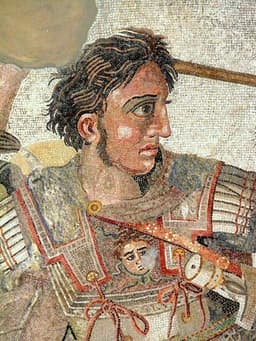
Alexander the Great
General · Ancient
85.2Total
Parakramabahu VI
Emperor · Medieval
64.8Total
Basic Information
Born
-356
1412
Died
-323
1467
Era
Ancient
Medieval
Nationality
Macedon
Sri Lanka
Occupation
General
Emperor
Civilization
Western
Indian
Score Comparison
Military (10%)
95.0
72.5
Political (20%)
60.0
72.0
Influence (20%)
92.0
60.0
Legacy (20%)
90.0
56.0
Leadership (15%)
80.0
85.0
Strategy (15%)
92.0
50.0
TOTAL
85.2
64.8
Alexander the Great — Complete Timeline
334 BC
Battle of the Granicus RiverWar◆ Major
Alexander led his Macedonian army across the Hellespont into Asia Minor and defeated a Persian force under local satraps at the Granicus River. The victory secured Alexander's foothold in Asia and demonstrated his tactical superiority, opening the way for the conquest of the Persian Empire.
Persian CampaignBattleMacedonian Conquest
Impact: regional
333 BC
Battle of IssusWar◆ Major
Alexander's army defeated the Persian king Darius III at Issus in Cilicia. Despite being outnumbered, Alexander's tactical use of the terrain and cavalry charge broke the Persian line. Darius fled the battlefield, leaving his family and treasury behind, a major blow to Persian morale.
Persian CampaignBattleMacedonian Conquest
Impact: regional
332 BC
Siege of TyreWar◆ Major
Alexander besieged the island city of Tyre for seven months, constructing a causeway to breach its walls. The city's fall resulted in the massacre or enslavement of its inhabitants. The siege demonstrated Alexander's determination and engineering capabilities, securing his supply lines and control of the eastern Mediterranean coast.
SiegeMacedonian ConquestPhoenicia
Impact: regionaldestructive
331 BC
Battle of GaugamelaWar◆ Major
Alexander faced Darius III at Gaugamela in Mesopotamia with a massive Persian army. Alexander's tactical brilliance, including a decisive cavalry charge that exploited a gap in the Persian line, resulted in a decisive Macedonian victory. Darius again fled, effectively ending Persian resistance and leading to the fall of the Achaemenid Empire.
Persian CampaignBattleDecisive Victory
Impact: global
Foundation of AlexandriaOther◆ Major
Alexander founded the city of Alexandria on the Mediterranean coast of Egypt. He personally selected the site and oversaw the initial planning. Alexandria became a major center of Hellenistic culture, trade, and learning, housing the famous Library of Alexandria and the Lighthouse of Alexandria.
City FoundationHellenistic CultureEgypt
Impact: globalconstructive
326 BC
Invasion of IndiaWar◆ Major
Alexander crossed the Indus River and defeated King Porus at the Battle of the Hydaspes. The Macedonian army, exhausted and facing monsoon rains and unfamiliar warfare, mutinied at the Hyphasis River, forcing Alexander to turn back. This campaign marked the easternmost extent of his conquests.
Indian CampaignBattleMutiny
Impact: regional
Parakramabahu VI — Complete Timeline
1420 AD
Construction of the Temple of the Tooth in KotteCultural◆ Major
Parakramabahu VI built a new Temple of the Tooth in his capital, Kotte. This reinforced Kotte's status as the religious and political center of the island.
BuddhismArchitectureCapital
Impact: nationalconstructive
1430 AD
Patronage of Literature and ArtsCultural◆ Major
Parakramabahu VI's court was a center of literary and artistic activity. He patronized poets and scholars, leading to a flourishing of Sinhalese literature, including the 'Sandesa' (message) poems.
LiteraturePatronageCultural Renaissance
Impact: nationalconstructive
1450 AD
Unification of Sri LankaWar
Parakramabahu VI unified the entire island of Sri Lanka under his rule for the first time since Parakramabahu I. He conquered the Kingdom of Jaffna in the north and brought the entire island under Kotte's control.
UnificationConquestMilitary Campaign
Impact: national
Conquest of the Kingdom of JaffnaWar◆ Major
Parakramabahu VI's forces, led by his adopted son Sapumal Kumaraya, conquered the Kingdom of Jaffna. This brought the Tamil north under Sinhalese rule and ended the Aryacakravarti dynasty.
ConquestMilitary CampaignTamil Kingdom
Impact: national
Expert Analysis
Alexander the Great vs Parakramabahu VI: Historical Comparison
Alexander the Great, the ancient Macedonian general, and Parakramabahu VI, the medieval Sri Lankan emperor, represent two vastly different military and political traditions, with Alexander excelling in conquest and Parakramabahu in state consolidation.
Dimension Analysis
**Military: Alexander the Great 96 / Parakramabahu VI 62**
Alexander’s unprecedented campaign from Greece to India, winning every major battle against larger empires, dwarfs Parakramabahu’s more localized campaigns against South Indian invaders and rebellious provinces.
**Political: Alexander the Great 65 / Parakramabahu VI 84**
Parakramabahu VI unified Sri Lanka under a stable, centralized administration for over five decades, while Alexander’s empire fragmented immediately after his death due to his lack of a succession plan.
**Influence: Alexander the Great 90 / Parakramabahu VI 74**
Alexander’s Hellenistic fusion reshaped art, culture, and trade across three continents for centuries, whereas Parakramabahu’s influence remained largely confined to Sri Lanka and neighboring South Indian kingdoms.
**Legacy: Alexander the Great 90 / Parakramabahu VI 69**
Alexander became a legendary archetype for conquerors from Rome to the Islamic world, while Parakramabahu is revered primarily within Sri Lankan historical memory as a national unifier.
**Leadership: Alexander the Great 82 / Parakramabahu VI 84**
Parakramabahu’s long, stable reign and ability to maintain loyalty among diverse ethnic groups slightly outweighs Alexander’s charismatic but often reckless personal command style.
Verdict
Alexander the Great leads overall due to his superior military genius and global influence, despite Parakramabahu’s stronger political acumen.
FAQ
Q: Who ranks higher? A: Alexander the Great ranks higher, driven by his overwhelming military and legacy scores, though Parakramabahu VI excels in political stability and long-term governance.
Rankings
🥇
Alexander the GreatLeader
Mil: 95.0Pol: 60.0Inf: 92.0
85.2
🥈
Parakramabahu VI
Mil: 72.5Pol: 72.0Inf: 60.0
64.8
+20.4 behind
How This Comparison Works
Algorithm
Each figure is scored on 6 dimensions (0—100 scale) based on structured historical data: Military (10%), Political (20%), Influence (20%), Legacy (20%), Leadership (15%), Strategy (15%). The weighted total produces the final ranking.
Data Sources
Scores are computed from structured sub-indicators in the database. Scale factors adjust for era (Ancient ×0.85, Modern ×1.0) and civilization size (Eastern ×1.05, Other ×0.80) to account for differences in population and military scale.
Maximum 3 Figures
Comparisons are limited to 2—3 figures to ensure readability and statistical meaningfulness.
Error Margins
±5 points per dimension — Sub-scores are derived from historical records with inherent uncertainty. Two figures within 5 points on a dimension should be considered roughly equivalent in that area.
Total Score Accuracy
±3 points overall — The weighted combination of 6 dimensions produces a total score with approximately ±3 points of uncertainty. Differences of less than 3 points are not statistically significant— the figures are effectively tied.
Known Limitations
- Historical records are incomplete and uneven across civilizations
- Figures from oral-tradition societies may be underrepresented
- Occupation labels can misclassify multi-role figures
- Scores measure capability and impact, not moral character
- Quantitative scoring is a comparison tool, not absolute truth
Capability Radar
Military (10%) — Battles & Warfare
Battles
98
60
Win Rate
99
65
Expansion
99
55
Political (20%) — Governance & Reform
Reform
75
65
Diplomacy
80
60
Economy
70
65
Influence (20%) — Cultural & Global Reach
Cultural
95
60
Global
95
40
Legacy (20%) — Historical Impact
Historical
98
65
Longevity
95
55
Leadership (15%) — Power & Stability
Tenure
60
70
Stability
55
70
Strategy (15%) — Tactics & Innovation
Strategy
98
60
Tactics
99
55
Reform
85
50
Similar Comparisons
Comments & Discussion
BattlefieldScholar6/16/2026
The military score gap (96 vs 62) is justified if you look at the scale of operations. Alexander faced multi-front challenges at Issus and Gaugamela with combined arms—phalanx, companion cavalry, light infantry—against numerically superior Persian forces. His siege of Tyre alone required engineering innovation (the mole) that Parakramabahu never attempted. Parakramabahu's campaigns against the Pandyan kingdom were smaller in scope—more about suppressing rebellions than conquering empires. His 62 reflects limited strategic depth. But I'd argue the political score difference (65 vs 84) should be even larger: Alexander's empire collapsed because he failed to integrate bureaucracy. Parakramabahu built a centralized tax system that lasted. Still, for pure battlefield dominance, Alexander is unmatched.
HistoryDetour6/16/2026
Okay, so Alexander gets a 96 for military? I get it—he never lost a battle. But I watched this documentary on the Siege of Tyre and man, that was brutal. Seven months! Meanwhile, Parakramabahu unified Sri Lanka for like 50 years, which is insane. Alexander dropped dead at 32, leaving his empire to fall apart. That's got to count for something. The scores say Parakramabahu has better political skills (84 vs 65), which makes sense—he kept things together. But influence (90 vs 74)? Alexander's spread Greek culture, sure, but Parakramabahu's influence on Theravada Buddhism and trade routes in the Indian Ocean is underrated. I'd bump him up to like 80 on influence. Just my two cents as a history nerd.
Chronicler88596/16/2026
亚历山大总分84.7对73.9,看起来差距明显,但我对军事评分96有疑问。这几乎满分,意味着他打的每一场仗都完美无瑕?高加米拉战役中波斯军队是分散指挥的,大流士三世提前逃跑,这算不算运气成分?相比之下,帕拉克拉马巴胡六世的62分似乎没考虑他在印度洋的贸易控制。从中国历史看,郑和下西洋既需要军事威慑也要经济管理,帕拉克拉马巴胡在这点上有相似之处。如果按GDP增长和海防能力加权,帕拉克拉马巴胡的军事得分应该可以上浮到70左右。数据模型里长期治理的权重太低了。
AlexandrianSources6/16/2026
Arrian's account of Alexander's campaigns remains the most reliable source, but we must approach it with caution—he wrote centuries later, using Cleitarchus and Ptolemy's memoirs, both propagandists for the regime. Alexander's military genius is undeniable at Gaugamela, where he exploited the Persian center's weakness with his oblique order. Yet Plutarch notes that Alexander's charisma masked a failure in long-term governance: 'He knew how to conquer, but not how to rule' (paraphrased). Parakramabahu VI's political score (84) reflects a more nuanced understanding of statecraft—the Mahavamsa chronicles his efforts to standardize land tenure and patronage of Buddhism. Both were products of their eras, but comparing them is like evaluating a sprinter versus a marathon runner. The scores do justice to Alexander's explosive impact but underplay the sustainable legacy of Parakramabahu's dynasty.
Chronicler62116/16/2026
这个评分体系明显有西方中心主义倾向。亚历山大被奉为'征服者',但在中国史学传统里,评价帝王更看重长治久安而非开疆拓土。帕拉克拉马巴胡六世84分的政治能力说明他更像中国历史上的汉文帝或宋仁宗——统一国家五十年,重视民生与文化建设。而亚历山大的65分政治分恰如其分:他死后帝国立刻分裂,没有建立有效的继承制度。如果把这个评分放在中国语境下,帕拉克拉马巴胡的统治稳定性甚至能比肩唐太宗。另外,影响力的74分低估了他在东南亚佛教圈的地位。隋唐时期的中南半岛国家视锡兰为佛教圣地,这比希腊化对中亚的短暂影响更持久。