Loading...
Ferdinand III of Castile vs Yuri Dolgorukiy
Ferdinand III of Castile leads by 6.3 pts · 2 figures compared
…
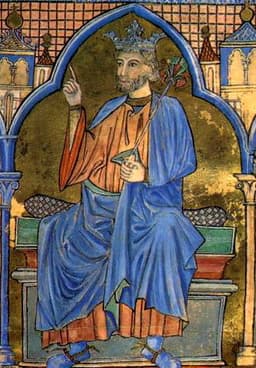
Ferdinand III of Castile
Emperor · Medieval
56.6Total
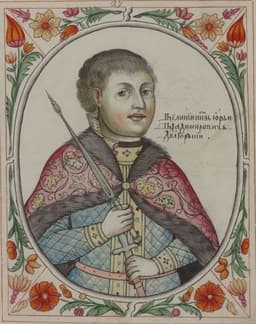
Yuri Dolgorukiy
Emperor · Medieval
50.3Total
Basic Information
Born
1199
1099
Died
1252
1157
Era
Medieval
Medieval
Nationality
Castile
Kievan Rus
Occupation
Emperor
Emperor
Civilization
Western
Western
Score Comparison
Military (10%)
60.0
10.0
Political (20%)
45.0
37.9
Influence (20%)
58.3
61.0
Legacy (20%)
52.0
58.0
Leadership (15%)
72.0
58.8
Strategy (15%)
55.0
50.0
TOTAL
56.6
50.3
Ferdinand III of Castile — Complete Timeline
1230 AD
Union of Leon and CastilePolitical Action
Ferdinand III inherited the Kingdom of Castile from his mother and the Kingdom of Leon from his father, permanently uniting the two crowns. This union created the largest Christian kingdom in Iberia and strengthened the Reconquista.
UnionLeonCastileReconquista
Impact: regionalconstructive
1236 AD
Conquest of CordobaWar◆ Major
Ferdinand III captured the city of Cordoba, the former capital of the Umayyad Caliphate, after a long siege. The conquest brought the Great Mosque of Cordoba under Christian control and was a major symbolic victory in the Reconquista.
ReconquistaConquestCordoba
Impact: regionalconstructive
1248 AD
Conquest of SevilleWar◆ Major
Ferdinand III besieged and captured Seville, the largest city in Moorish Iberia, with the aid of a Castilian fleet. The conquest gave Castile control of the Guadalquivir River and a major port for trade and naval operations.
ReconquistaConquestSeville
Impact: regionalconstructive
Yuri Dolgorukiy — Complete Timeline
1147 AD
Founding of MoscowPolitical Action
Yuri Dolgorukiy invited Prince Sviatoslav Olgovich to a meeting at a place called 'Moscow' in the chronicles. This first written mention of Moscow is traditionally considered the founding date of the city.
FoundingCityMoscow
Impact: regionalconstructive
1149 AD
Struggle for the Throne of KievWar◆ Major
Yuri Dolgorukiy launched a campaign to seize the throne of Kiev from his nephew Iziaslav. He captured Kiev in 1149 and ruled briefly, but was expelled in 1151. He finally secured Kiev in 1155, ruling until his death.
Civil WarKievPower Struggle
Impact: national
1156 AD
Construction of the First Kremlin in MoscowCultural◆ Major
Yuri Dolgorukiy ordered the construction of a wooden fortress (kremlin) on Borovitsky Hill in Moscow. This fortification became the nucleus of the future Moscow Kremlin and the city's defensive core.
FortificationKremlinMoscow
Impact: regionalconstructive
1157 AD
Death by PoisoningPolitical Action
Yuri Dolgorukiy died suddenly after a feast in Kiev, suspected of being poisoned by the Kievan boyars. His death ended his rule and led to a revolt against his administration in Kiev.
AssassinationPoisoningBoyar Revolt
Impact: nationaltragic
Expert Analysis
Origins
Ferdinand III of Castile was born in 1199 or 1201, the son of Alfonso IX of Leon and Berenguela of Castile. His parents' marriage was annulled by the Pope, but Ferdinand was raised at the Castilian court under his mother's guidance. He inherited Castile from his mother in 1217 and Leon from his father in 1230, uniting the two crowns permanently. His early education emphasized military skills and religious piety, setting the stage for his role in the Reconquista.
Yuri Dolgorukiy, born in the 1090s, was a prince of the Rurik dynasty, the sixth son of Vladimir Monomakh of Kiev. He grew up in the turbulent world of Kievan Rus' princely politics. His appanage was the remote northeastern region of Rostov-Suzdal, where he spent his early years consolidating power. Unlike Ferdinand, Yuri's path was shaped by the fragmented feudal system of Rus', where succession disputes were common.
Rise to Power
Ferdinand III became King of Castile at age 18 after his mother Berenguela renounced her claim in his favor. In 1230, upon his father's death, he claimed the throne of Leon despite opposition from his half-sisters. Through the Treaty of Benavente, he secured Leon peacefully, creating the unified Kingdom of Castile and Leon. This union was a turning point, giving him a consolidated base for the Reconquista.
Yuri Dolgorukiy rose to prominence by expanding his northeastern territories. He founded several towns, including Moscow in 1147, when he invited Prince Sviatoslav to a meeting at 'Moscow.' His ambition for the Kievan throne drove him into conflict with his nephew Iziaslav. He captured Kiev in 1149 but was expelled twice. He finally seized Kiev in 1155, only to be poisoned in 1157. His rise was marked by constant warfare and strategic marriages.
Leadership & Governance
Ferdinand III's leadership was characterized by military prowess and administrative consolidation. He led campaigns that captured Cordoba (1236), Jaen (1246), and Seville (1248), using siege tactics and naval support. He repopulated conquered lands with Christians and promoted the use of Castilian as the official language, replacing Latin in many documents. His governance was efficient, maintaining law and order while respecting local customs. He scored 72.0 in leadership, reflecting his ability to command loyalty and achieve strategic goals.
Yuri Dolgorukiy's leadership was more focused on territorial expansion and securing his dynasty. He built fortified settlements, including the first wooden Kremlin in Moscow, which became the nucleus of the future Russian state. He engaged in constant power struggles, often switching alliances. His political score of 37.9 indicates limited success in building stable institutions. He failed to hold Kiev for long, and his governance was reactive rather than visionary.
Triumph & Tragedy
Ferdinand III's greatest triumph was the conquest of Seville in 1248, the largest Moorish city, which gave Castile control over the Guadalquivir valley. He also achieved the permanent union of Castile and Leon, a feat that outlasted his reign. His canonization in 1671 recognized his piety and role in the Reconquista. However, his military campaigns were costly, and he left a kingdom heavily indebted to the Church and military orders. His death in 1252 occurred before completing the conquest of Granada.
Yuri Dolgorukiy's greatest triumph was the founding of Moscow, which would become the capital of Russia. His construction of the Kremlin provided a strategic stronghold. His tragedy was his inability to secure lasting power in Kiev. His death by poisoning after a feast (likely orchestrated by boyars) led to a revolt that expelled his son. His ambition for Kiev overshadowed his achievements in the northeast.
Character & Destiny
Ferdinand III was known for his piety, justice, and strategic patience. He was a devout Catholic who prayed before battles and promoted religious tolerance in conquered lands. His character aligned with his destiny as a saint-king, unifying Spain and advancing the Reconquista. He scored 55.0 in strategy, reflecting methodical planning.
Yuri Dolgorukiy was ambitious and expansionist, often described as restless and quarrelsome. His nickname 'Dolgorukiy' (Long-armed) suggests his reach for power. His character drove him to pursue the Kievan throne, but his lack of diplomatic finesse led to his downfall. His destiny was to be remembered as the founder of Moscow, not as a great ruler of Kiev.
Legacy
Ferdinand III's legacy is the enduring union of Castile and Leon, the foundation of modern Spain. His conquests accelerated the Reconquista, and his policies shaped Spanish culture and language. He is venerated as a saint, with a feast day on May 30. His military score of 60.0 and influence of 58.3 reflect his lasting impact.
Yuri Dolgorukiy's legacy is the founding of Moscow, a city that grew into the political and cultural center of Russia. His construction of the Kremlin set the stage for Moscow's rise. However, his personal rule was ephemeral. His influence score of 61.0 is high due to Moscow's importance, but his total score of 50.3 is lower than Ferdinand's 56.6.
Conclusion
Ferdinand III of Castile had a greater impact than Yuri Dolgorukiy. His unification of Castile and Leon created a powerful kingdom that dominated Iberia, while his conquests reshaped the religious and political landscape. Yuri's founding of Moscow was significant, but his immediate achievements were limited. Ferdinand's total score of 56.6 surpasses Yuri's 50.3, and his leadership score of 72.0 is markedly higher. Ferdinand's legacy as a saint-king and unifier is more enduring and consequential.
Rankings
🥇
Ferdinand III of CastileLeader
Mil: 60.0Pol: 45.0Inf: 58.3
56.6
🥈
Yuri Dolgorukiy
Mil: 10.0Pol: 37.9Inf: 61.0
50.3
+6.3 behind
How This Comparison Works
Algorithm
Each figure is scored on 6 dimensions (0—100 scale) based on structured historical data: Military (10%), Political (20%), Influence (20%), Legacy (20%), Leadership (15%), Strategy (15%). The weighted total produces the final ranking.
Data Sources
Scores are computed from structured sub-indicators in the database. Scale factors adjust for era (Ancient ×0.85, Modern ×1.0) and civilization size (Eastern ×1.05, Other ×0.80) to account for differences in population and military scale.
Maximum 3 Figures
Comparisons are limited to 2—3 figures to ensure readability and statistical meaningfulness.
Error Margins
±5 points per dimension — Sub-scores are derived from historical records with inherent uncertainty. Two figures within 5 points on a dimension should be considered roughly equivalent in that area.
Total Score Accuracy
±3 points overall — The weighted combination of 6 dimensions produces a total score with approximately ±3 points of uncertainty. Differences of less than 3 points are not statistically significant— the figures are effectively tied.
Known Limitations
- Historical records are incomplete and uneven across civilizations
- Figures from oral-tradition societies may be underrepresented
- Occupation labels can misclassify multi-role figures
- Scores measure capability and impact, not moral character
- Quantitative scoring is a comparison tool, not absolute truth
Capability Radar
Military (10%) — Battles & Warfare
Battles
65
35
Win Rate
70
40
Expansion
75
45
Political (20%) — Governance & Reform
Reform
70
30
Diplomacy
65
40
Economy
60
30
Influence (20%) — Cultural & Global Reach
Cultural
65
55
Global
55
50
Legacy (20%) — Historical Impact
Historical
70
60
Longevity
65
65
Leadership (15%) — Power & Stability
Tenure
75
50
Stability
70
25
Strategy (15%) — Tactics & Innovation
Strategy
70
35
Tactics
60
30
Reform
55
20
Similar Comparisons
Comments & Discussion
No comments yet. Be the first to share your thoughts!