Loading...
John III of Cleves vs Yuri Dolgorukiy
John III of Cleves leads by 0.3 pts · 2 figures compared
…
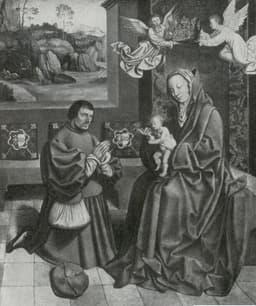
John III of Cleves
Emperor · Medieval
50.6Total
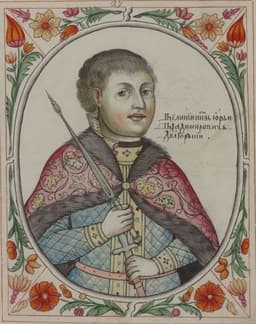
Yuri Dolgorukiy
Emperor · Medieval
50.3Total
Basic Information
Born
1490
1099
Died
1539
1157
Era
Medieval
Medieval
Nationality
Cleves
Kievan Rus
Occupation
Emperor
Emperor
Civilization
Western
Western
Score Comparison
Military (10%)
25.9
10.0
Political (20%)
68.0
37.9
Influence (20%)
50.2
61.0
Legacy (20%)
40.0
58.0
Leadership (15%)
72.0
58.8
Strategy (15%)
45.0
50.0
TOTAL
50.6
50.3
John III of Cleves — Complete Timeline
1490 AD
Inherited the Duchy of ClevesPolitical Action◆ Major
John III inherited the Duchy of Cleves upon the death of his father, John II. This succession placed him as ruler of a strategically important territory in the Lower Rhine region, setting the stage for his later territorial acquisitions.
SuccessionCleves
Impact: regional
1510 AD
Marriage to Maria of Jülich-BergPolitical Action◆ Major
John III married Maria, daughter of William IV of J
MarriageDynastic UnionTerritorial Expansion
Impact: regionalconstructive
1521 AD
Inherited the Duchies of Jülich and BergPolitical Action
Upon the death of his father-in-law, William IV, John III inherited the Duchies of J
InheritanceTerritorial MergerJülich-Berg
Impact: regionalconstructive
1532 AD
Issued the Cleves Church OrdinanceReform◆ Major
John III issued a church ordinance for the Duchy of Cleves, introducing moderate Protestant reforms while maintaining a degree of Catholic structure. This ordinance aimed to regulate religious practice and assert ducal authority over the church.
Religious ReformChurch OrdinanceProtestantism
Impact: regionalconstructive
Yuri Dolgorukiy — Complete Timeline
1147 AD
Founding of MoscowPolitical Action
Yuri Dolgorukiy invited Prince Sviatoslav Olgovich to a meeting at a place called 'Moscow' in the chronicles. This first written mention of Moscow is traditionally considered the founding date of the city.
FoundingCityMoscow
Impact: regionalconstructive
1149 AD
Struggle for the Throne of KievWar◆ Major
Yuri Dolgorukiy launched a campaign to seize the throne of Kiev from his nephew Iziaslav. He captured Kiev in 1149 and ruled briefly, but was expelled in 1151. He finally secured Kiev in 1155, ruling until his death.
Civil WarKievPower Struggle
Impact: national
1156 AD
Construction of the First Kremlin in MoscowCultural◆ Major
Yuri Dolgorukiy ordered the construction of a wooden fortress (kremlin) on Borovitsky Hill in Moscow. This fortification became the nucleus of the future Moscow Kremlin and the city's defensive core.
FortificationKremlinMoscow
Impact: regionalconstructive
1157 AD
Death by PoisoningPolitical Action
Yuri Dolgorukiy died suddenly after a feast in Kiev, suspected of being poisoned by the Kievan boyars. His death ended his rule and led to a revolt against his administration in Kiev.
AssassinationPoisoningBoyar Revolt
Impact: nationaltragic
Expert Analysis
Origins
John III of Cleves was born in 1490 into the House of La Marck, ruling the Duchy of Cleves since the 14th century. His father, John II, was a capable but conventional ruler. John III was educated in the traditions of the Holy Roman Empire, preparing him for a life of dynastic politics. His marriage to Maria of Jülich-Berg in 1510 was arranged to secure a territorial merger.
Yuri Dolgorukiy (c. 1099-1157) was a prince of the Rurik dynasty, son of Vladimir Monomakh, Grand Prince of Kiev. He grew up amid the fractious politics of Kievan Rus, where princely succession was contested. His early career involved governing the Rostov-Suzdal region, a northeastern frontier that he would develop into a power base.
Rise to Power
John III inherited the Duchy of Cleves in 1521 upon his father's death. His major turning point came in 1521 when his father-in-law, William IV of Jülich-Berg, died without male heirs. John III inherited Jülich and Berg through his wife Maria, formally merging these territories with Cleves. This created a substantial middle-Rhenish state, the United Duchies of Jülich-Cleves-Berg. John III's political score of 68.0 reflects his adept use of marriage alliances.
Yuri Dolgorukiy rose by consolidating power in the northeast. He founded the fortress of Moscow in 1147, inviting Prince Sviatoslav Olgovich to a meeting—the first written mention of Moscow. He built a wooden Kremlin in 1156. His struggle for the throne of Kiev consumed much of his career: he captured Kiev in 1149 but was expelled, then retook it in 1155. His military score of 10.0 indicates limited success in these campaigns.
Leadership & Governance
John III governed his united duchies with a focus on religious moderation. In 1532 he issued the Cleves Church Ordinance, introducing Protestant reforms while preserving Catholic structures. This balanced approach avoided the religious turmoil seen elsewhere. His leadership score of 72.0 reflects stable governance.
Yuri Dolgorukiy's leadership was typical of Kievan princes: he prioritized expansion and control of Kiev. He founded towns like Pereslavl-Zalessky and Yuryev-Polsky, but his governance was marked by constant warfare. His leadership score of 58.8 indicates moderate effectiveness.
Triumph & Tragedy
John III's greatest triumph was the peaceful merger of Cleves, Jülich, and Berg, creating a state that lasted until 1609. His moderate church ordinance allowed religious peace. His tragedy was that his son, William V, later faced a succession crisis that led to the War of the Jülich Succession. John III's legacy score of 40.0 reflects the temporary nature of his union.
Yuri's greatest triumph was founding Moscow, which became the nucleus of Russia. His tragedy was his obsession with Kiev: he finally secured the throne in 1155 but was poisoned in 1157, likely by boyars. His death triggered a revolt against his rule in Kiev. His influence score of 61.0 acknowledges Moscow's future importance.
Character & Destiny
John III was cautious and diplomatic, earning the epithet 'the Peaceful.' He avoided conflict, focusing on dynastic consolidation. His political score of 68.0 and strategy of 45.0 show he was more administrator than warrior. His destiny was to create a state that, while powerful, could not survive the next generation due to lack of male heirs.
Yuri was ambitious and aggressive, constantly seeking the Kiev throne. His military score of 10.0 and strategy of 50.0 suggest his campaigns were poorly planned. His character led to his poisoning—his heavy-handed rule alienated the Kievan elite. His greatest legacy, Moscow, was incidental to his main goals.
Legacy
John III's united duchies lasted only until 1609, but his administrative and religious policies influenced the region. The Cleves Church Ordinance was a model of compromise. However, his state fragmented after his grandson died without issue.
Yuri's legacy is immense: Moscow became the capital of Russia. The Kremlin he built was the seed of a world power. His total score of 50.3 versus John's 50.6 is nearly equal, but Yuri's influence score of 61.0 is higher than John's 50.2, reflecting Moscow's enduring importance.
Conclusion
While John III of Cleves has a slightly higher total score (50.6 vs 50.3), Yuri Dolgorukiy had greater long-term impact. John's merger was a temporary political arrangement, while Yuri's founding of Moscow shaped a nation. Yuri's influence score of 61.0 and legacy of 58.0 outweigh John's political and leadership strengths. Yuri Dolgorukiy, despite his military failures, is the more consequential figure.
Rankings
🥇
John III of ClevesLeader
Mil: 25.9Pol: 68.0Inf: 50.2
50.6
🥈
Yuri Dolgorukiy
Mil: 10.0Pol: 37.9Inf: 61.0
50.3
+0.3 behind
How This Comparison Works
Algorithm
Each figure is scored on 6 dimensions (0—100 scale) based on structured historical data: Military (10%), Political (20%), Influence (20%), Legacy (20%), Leadership (15%), Strategy (15%). The weighted total produces the final ranking.
Data Sources
Scores are computed from structured sub-indicators in the database. Scale factors adjust for era (Ancient ×0.85, Modern ×1.0) and civilization size (Eastern ×1.05, Other ×0.80) to account for differences in population and military scale.
Maximum 3 Figures
Comparisons are limited to 2—3 figures to ensure readability and statistical meaningfulness.
Error Margins
±5 points per dimension — Sub-scores are derived from historical records with inherent uncertainty. Two figures within 5 points on a dimension should be considered roughly equivalent in that area.
Total Score Accuracy
±3 points overall — The weighted combination of 6 dimensions produces a total score with approximately ±3 points of uncertainty. Differences of less than 3 points are not statistically significant— the figures are effectively tied.
Known Limitations
- Historical records are incomplete and uneven across civilizations
- Figures from oral-tradition societies may be underrepresented
- Occupation labels can misclassify multi-role figures
- Scores measure capability and impact, not moral character
- Quantitative scoring is a comparison tool, not absolute truth
Capability Radar
Military (10%) — Battles & Warfare
Battles
10
35
Win Rate
10
40
Expansion
20
45
Political (20%) — Governance & Reform
Reform
40
30
Diplomacy
60
40
Economy
50
30
Influence (20%) — Cultural & Global Reach
Cultural
30
55
Global
10
50
Legacy (20%) — Historical Impact
Historical
30
60
Longevity
20
65
Leadership (15%) — Power & Stability
Tenure
60
50
Stability
60
25
Strategy (15%) — Tactics & Innovation
Strategy
10
35
Tactics
10
30
Reform
10
20
Similar Comparisons
Comments & Discussion
No comments yet. Be the first to share your thoughts!