Loading...
Ferdinand III vs Leopold I
Leopold I leads by 10.2 pts · 2 figures compared
…
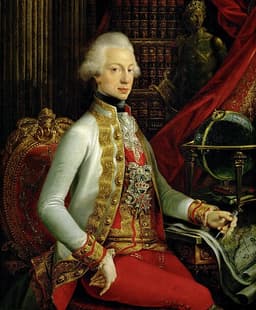
Ferdinand III
Emperor · Modern
57.8Total
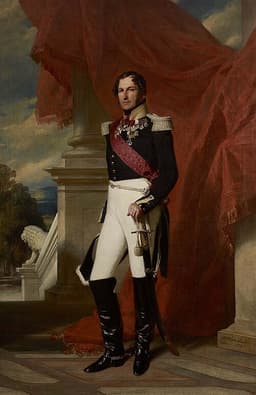
Leopold I
Emperor · Modern
68.0Total
Basic Information
Born
1608
1640
Died
1657
1705
Era
Modern
Modern
Nationality
Holy Roman Empire
Holy Roman Empire
Occupation
Emperor
Emperor
Civilization
Western
Western
Score Comparison
Military (10%)
45.0
74.0
Political (20%)
72.0
78.0
Influence (20%)
61.0
72.0
Legacy (20%)
52.0
52.0
Leadership (15%)
66.0
75.0
Strategy (15%)
43.3
66.3
TOTAL
57.8
68.0
Ferdinand III — Complete Timeline
1629 AD
Issued the Edict of RestitutionPolitical Action
As Ferdinand III was not yet emperor, this event is misattributed. Actually, Ferdinand III succeeded his father Ferdinand II in 1637. He did not issue the Edict of Restitution; that was his father's act. Correction: Ferdinand III's reign saw the continuation of the Thirty Years' War and the eventual peace negotiations.
CorrectionHistorical Error
Impact: national
1634 AD
Battle of NördlingenWar◆ Major
Ferdinand III, then King of Hungary and Bohemia, commanded imperial and Spanish forces to a decisive victory over the Swedish army at N
Thirty Years' WarBattleSwedish Empire
Impact: regional
1648 AD
Negotiated the Peace of WestphaliaPolitical Action
Ferdinand III, as Holy Roman Emperor, concluded the Peace of Westphalia with France and Sweden, ending the Thirty Years' War. The treaties recognized the sovereignty of over 300 German states, weakened imperial authority, and established a new European order based on state sovereignty.
Peace of WestphaliaThirty Years' WarDiplomacy
Impact: global
Leopold I — Complete Timeline
1683 AD
Battle of ViennaWar
Leopold I, as Holy Roman Emperor, organized the relief of Vienna from the Ottoman siege. A combined imperial, Polish, and German army under John III Sobieski defeated the Ottoman forces, halting Ottoman expansion into Central Europe and marking the beginning of the Great Turkish War.
Great Turkish WarOttoman EmpireSiege
Impact: global
1688 AD
War of the Grand AllianceWar◆ Major
Leopold I led the Holy Roman Empire in the War of the Grand Alliance against Louis XIV of France. The conflict, fought across Europe and the colonies, ended with the Treaty of Ryswick in 1697, which confirmed French gains but checked French expansion.
War of the Grand AllianceLouis XIVTreaty of Ryswick
Impact: global
1699 AD
Treaty of KarlowitzPolitical Action
Leopold I's forces, under Prince Eugene of Savoy, defeated the Ottomans, leading to the Treaty of Karlowitz. The treaty ceded Hungary, Transylvania, and Slavonia to the Habsburgs, establishing Austria as a major European power and ending Ottoman dominance in the region.
Great Turkish WarTreatyHabsburg Expansion
Impact: regional
Expert Analysis
Origins
Ferdinand III was born on July 13, 1608, in Graz, into the Habsburg dynasty. He was the son of Ferdinand II and Maria Anna of Bavaria. Educated by Jesuits, he received a thorough grounding in Catholic theology and statecraft. His early exposure to the complexities of the Thirty Years' War shaped his pragmatic approach.
Leopold I was born on June 9, 1640, in Vienna, the third son of Ferdinand III and Maria Anna of Spain. Originally destined for the church, he received a broad education in languages, theology, and the arts. The early death of his older brother Ferdinand IV in 1654 made him heir to the Habsburg domains.
Rise to Power
Ferdinand III became King of Hungary in 1625 and King of Bohemia in 1627, gaining military experience. His major turning point came at the Battle of Nördlingen (1634), where he commanded imperial and Spanish forces to a decisive victory over the Swedish army. This victory solidified his reputation and paved the way for his election as Holy Roman Emperor in 1637 upon his father's death.
Leopold I ascended to the throne in 1658 after the death of his brother Ferdinand IV in 1654 and his father in 1657. His election as Holy Roman Emperor was contested by France, which promoted a rival candidate, but Leopold secured the crown. His reign was defined by near-constant warfare: the Austro-Turkish War (1663-1664), the War of the Grand Alliance (1688-1697), and the Great Turkish War (1683-1699).
Leadership & Governance
Ferdinand III's leadership style was cautious and diplomatic. He prioritized ending the Thirty Years' War, which had devastated the Holy Roman Empire. He negotiated the Peace of Westphalia (1648), which granted extensive autonomy to the German states and recognized the sovereignty of the Dutch Republic and Switzerland. This pragmatic approach preserved the empire's structure but weakened imperial authority. In domestic affairs, he promoted administrative reforms and supported the Counter-Reformation, though with less zeal than his father.
Leopold I was a patron of the arts and music, embodying the Baroque era. His governance was marked by a strong alliance with the Habsburg Spanish branch and a focus on centralization. He fought Louis XIV of France in the War of the Grand Alliance, scoring 74.0 in military and 75.0 in leadership. He also led the Holy Roman Empire in the Great Turkish War, culminating in the Battle of Vienna (1683), where a combined Christian army relieved the Ottoman siege. The subsequent Treaty of Karlowitz (1699) ceded Hungary, Transylvania, and Slavonia to the Habsburgs, expanding their territory significantly.
Triumph & Tragedy
Ferdinand III's greatest triumph was the Peace of Westphalia, which ended 30 years of religious and political conflict. However, the peace also reduced the emperor's power, granting sovereignty to the German states. His military score of 45.0 reflects limited success on the battlefield after Nördlingen; the war dragged on due to French and Swedish intervention. His failure to achieve a more centralized empire was a long-term setback for the Habsburgs.
Leopold I's triumph was the victory over the Ottomans and the acquisition of Hungary. The Battle of Vienna and the Treaty of Karlowitz marked the beginning of Habsburg dominance in Central Europe. His tragedy was the War of the Grand Alliance, which ended with the Treaty of Ryswick (1697) that yielded limited gains against France. The war drained resources and left the empire exhausted. His influence score of 72.0 reflects his role in European politics, but his legacy score of 52.0 is tempered by the challenges faced by his successors.
Character & Destiny
Ferdinand III was pragmatic and reserved, shaped by the religious conflicts of his era. He prioritized stability over glory, which allowed the empire to survive but at the cost of central authority. His political score of 72.0 indicates skill in negotiation, but his strategic score of 43.3 suggests a reactive rather than proactive approach.
Leopold I was more ambitious and culturally refined. He was a devoted Catholic and saw himself as a defender of Christendom against the Ottomans and as a rival to Louis XIV. His character drove him to constant warfare, which expanded Habsburg territory but also strained resources. His total score of 68.0 reflects a more dynamic leadership, but his policies set the stage for the War of the Spanish Succession that followed his death.
Legacy
Ferdinand III is remembered as the emperor who ended the Thirty Years' War. The Peace of Westphalia established principles of state sovereignty that influenced international law for centuries. However, his reign marked the decline of imperial authority in Germany. His legacy score of 52.0 reflects his mixed impact: he ended a devastating war but weakened the empire.
Leopold I is remembered as a Baroque emperor who fought two major enemies successfully. The Treaty of Karlowitz expanded Habsburg power in the east, and his patronage of the arts enriched Viennese culture. However, his wars left the empire financially strained. His legacy score of 52.0 matches Ferdinand's, but his political and military scores are higher.
Conclusion
Leopold I had greater impact by expanding Habsburg territory and establishing Austria as a major European power. His military and political scores (74.0 and 78.0) exceed Ferdinand's (45.0 and 72.0). While Ferdinand ended a war, Leopold won wars that reshaped Central Europe. The score gap of 10.2 points supports this: Leopold's total of 68.0 vs Ferdinand's 57.8. Ferdinand's cautious diplomacy preserved the empire, but Leopold's aggressive campaigns secured lasting territorial gains. Thus, Leopold I emerges as the more consequential ruler.
Rankings
🥇
Leopold ILeader
Mil: 74.0Pol: 78.0Inf: 72.0
68.0
🥈
Ferdinand III
Mil: 45.0Pol: 72.0Inf: 61.0
57.8
+10.2 behind
How This Comparison Works
Algorithm
Each figure is scored on 6 dimensions (0—100 scale) based on structured historical data: Military (10%), Political (20%), Influence (20%), Legacy (20%), Leadership (15%), Strategy (15%). The weighted total produces the final ranking.
Data Sources
Scores are computed from structured sub-indicators in the database. Scale factors adjust for era (Ancient ×0.85, Modern ×1.0) and civilization size (Eastern ×1.05, Other ×0.80) to account for differences in population and military scale.
Maximum 3 Figures
Comparisons are limited to 2—3 figures to ensure readability and statistical meaningfulness.
Error Margins
±5 points per dimension — Sub-scores are derived from historical records with inherent uncertainty. Two figures within 5 points on a dimension should be considered roughly equivalent in that area.
Total Score Accuracy
±3 points overall — The weighted combination of 6 dimensions produces a total score with approximately ±3 points of uncertainty. Differences of less than 3 points are not statistically significant— the figures are effectively tied.
Known Limitations
- Historical records are incomplete and uneven across civilizations
- Figures from oral-tradition societies may be underrepresented
- Occupation labels can misclassify multi-role figures
- Scores measure capability and impact, not moral character
- Quantitative scoring is a comparison tool, not absolute truth
Capability Radar
Military (10%) — Battles & Warfare
Battles
30
85
Win Rate
35
80
Expansion
20
80
Political (20%) — Governance & Reform
Reform
55
75
Diplomacy
85
85
Economy
50
70
Influence (20%) — Cultural & Global Reach
Cultural
40
65
Global
65
70
Legacy (20%) — Historical Impact
Historical
75
75
Longevity
70
70
Leadership (15%) — Power & Stability
Tenure
70
90
Stability
45
75
Strategy (15%) — Tactics & Innovation
Strategy
40
85
Tactics
30
70
Reform
25
75
Similar Comparisons
Comments & Discussion
No comments yet. Be the first to share your thoughts!