Loading...
This comparison has not been analyzed yet.
One-time AI generation (~1 minute). Scores and timeline are already available below.
Filipp Golikov vs Maeda Toshiie
Maeda Toshiie leads by 14.4 pts · 2 figures compared
…

Filipp Golikov
General · Modern
45.7Total
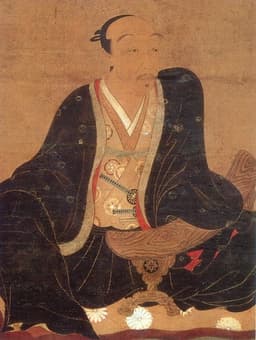
Maeda Toshiie
General · Modern
60.1Total
Basic Information
Born
1900
1538
Died
1980
1599
Era
Modern
Modern
Nationality
USSR
Japan
Occupation
General
General
Civilization
Western
Eastern
Score Comparison
Military (10%)
55.0
70.0
Political (20%)
35.1
68.0
Influence (20%)
48.6
56.4
Legacy (20%)
40.0
49.2
Leadership (15%)
57.6
72.0
Strategy (15%)
41.7
57.5
TOTAL
45.7
60.1
Filipp Golikov — Complete Timeline
1940 AD
Appointment as Chief of the GRUPolitical Action◆ Major
Golikov was appointed Chief of the GRU (Soviet military intelligence). He oversaw intelligence gathering before Operation Barbarossa, but failed to accurately assess German intentions, contributing to Soviet unpreparedness.
IntelligenceGRUBarbarossa
Impact: nationaltragic
1941 AD
Battle of MoscowWar
Golikov commanded the 10th Army during the Battle of Moscow. His forces participated in the counteroffensive that pushed German troops back from the capital, though with heavy losses.
World War IIMoscowCounteroffensive
Impact: regional
1942 AD
Command of the Voronezh FrontWar◆ Major
Golikov commanded the Voronezh Front during the German advance on Stalingrad. His forces failed to hold Voronezh, which was captured by the Germans, leading to his relief from command.
World War IIVoronezhDefeat
Impact: regionaltragic
1945 AD
Post-war diplomatic missionsPolitical Action
After the war, Golikov served as head of the Soviet Repatriation Commission, overseeing the return of Soviet prisoners of war and displaced persons. Many were sent to labor camps upon return.
Post-WarRepatriationPOWs
Impact: nationaltragic
Maeda Toshiie — Complete Timeline
1583 AD
Battle of ShizugatakeWar◆ Major
Maeda Toshiie fought for Toyotomi Hideyoshi against Shibata Katsuie at the Battle of Shizugatake. His performance contributed to Hideyoshi's victory, which solidified Hideyoshi's control over Japan after the death of Oda Nobunaga.
Sengoku periodBattle
Impact: national
1590 AD
Siege of OdawaraWar
Maeda Toshiie participated in Toyotomi Hideyoshi's campaign against the Hojo clan at Odawara Castle. The siege ended with the Hojo surrender, leading to the unification of Japan under Hideyoshi.
Unification of JapanCampaign
Impact: national
1598 AD
Appointed as one of the Five EldersPolitical Action◆ Major
Toyotomi Hideyoshi appointed Maeda Toshiie as one of the Five Elders to govern Japan during the minority of his son Hideyori. This placed Toshiie among the highest-ranking officials in the Toyotomi administration, responsible for collective rule.
Toyotomi administrationRegency
Impact: national
1599 AD
Conflict with Tokugawa IeyasuPolitical Action◆ Major
After Hideyoshi's death, Maeda Toshiie opposed Tokugawa Ieyasu's growing influence. Tensions escalated, but Toshiie died before open conflict erupted. His death removed a key obstacle to Ieyasu's rise.
Power struggleTokugawa
Impact: national
This comparison has not been analyzed yet.
One-time AI generation (~1 minute). Scores and timeline are already available below.
Rankings
🥇
Maeda ToshiieLeader
Mil: 70.0Pol: 68.0Inf: 56.4
60.1
🥈
Filipp Golikov
Mil: 55.0Pol: 35.1Inf: 48.6
45.7
+14.4 behind
How This Comparison Works
Algorithm
Each figure is scored on 6 dimensions (0—100 scale) based on structured historical data: Military (10%), Political (20%), Influence (20%), Legacy (20%), Leadership (15%), Strategy (15%). The weighted total produces the final ranking.
Data Sources
Scores are computed from structured sub-indicators in the database. Scale factors adjust for era (Ancient ×0.85, Modern ×1.0) and civilization size (Eastern ×1.05, Other ×0.80) to account for differences in population and military scale.
Maximum 3 Figures
Comparisons are limited to 2—3 figures to ensure readability and statistical meaningfulness.
Error Margins
±5 points per dimension — Sub-scores are derived from historical records with inherent uncertainty. Two figures within 5 points on a dimension should be considered roughly equivalent in that area.
Total Score Accuracy
±3 points overall — The weighted combination of 6 dimensions produces a total score with approximately ±3 points of uncertainty. Differences of less than 3 points are not statistically significant— the figures are effectively tied.
Known Limitations
- Historical records are incomplete and uneven across civilizations
- Figures from oral-tradition societies may be underrepresented
- Occupation labels can misclassify multi-role figures
- Scores measure capability and impact, not moral character
- Quantitative scoring is a comparison tool, not absolute truth
Capability Radar
Military (10%) — Battles & Warfare
Battles
35
65
Win Rate
30
60
Expansion
15
50
Political (20%) — Governance & Reform
Reform
20
30
Diplomacy
25
50
Economy
15
40
Influence (20%) — Cultural & Global Reach
Cultural
10
40
Global
10
30
Legacy (20%) — Historical Impact
Historical
25
45
Longevity
15
40
Leadership (15%) — Power & Stability
Tenure
40
55
Stability
20
45
Strategy (15%) — Tactics & Innovation
Strategy
30
60
Tactics
25
55
Reform
20
30
Similar Comparisons
Comments & Discussion
No comments yet. Be the first to share your thoughts!