Loading...
Maeda Toshiie vs Xue Yue
Maeda Toshiie leads by 4.4 pts · 2 figures compared
…
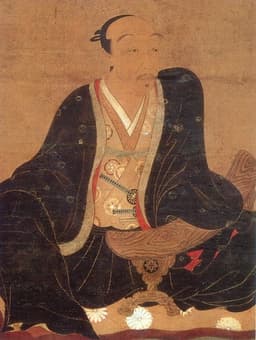
Maeda Toshiie
General · Modern
60.1Total

Xue Yue
General · Modern
55.7Total
Basic Information
Born
1538
1896
Died
1599
1998
Era
Modern
Modern
Nationality
Japan
China
Occupation
General
General
Civilization
Eastern
Eastern
Score Comparison
Military (10%)
70.0
70.0
Political (20%)
68.0
37.9
Influence (20%)
56.4
58.0
Legacy (20%)
49.2
50.0
Leadership (15%)
72.0
68.0
Strategy (15%)
57.5
58.0
TOTAL
60.1
55.7
Maeda Toshiie — Complete Timeline
1583 AD
Battle of ShizugatakeWar◆ Major
Maeda Toshiie fought for Toyotomi Hideyoshi against Shibata Katsuie at the Battle of Shizugatake. His performance contributed to Hideyoshi's victory, which solidified Hideyoshi's control over Japan after the death of Oda Nobunaga.
Sengoku periodBattle
Impact: national
1590 AD
Siege of OdawaraWar
Maeda Toshiie participated in Toyotomi Hideyoshi's campaign against the Hojo clan at Odawara Castle. The siege ended with the Hojo surrender, leading to the unification of Japan under Hideyoshi.
Unification of JapanCampaign
Impact: national
1598 AD
Appointed as one of the Five EldersPolitical Action◆ Major
Toyotomi Hideyoshi appointed Maeda Toshiie as one of the Five Elders to govern Japan during the minority of his son Hideyori. This placed Toshiie among the highest-ranking officials in the Toyotomi administration, responsible for collective rule.
Toyotomi administrationRegency
Impact: national
1599 AD
Conflict with Tokugawa IeyasuPolitical Action◆ Major
After Hideyoshi's death, Maeda Toshiie opposed Tokugawa Ieyasu's growing influence. Tensions escalated, but Toshiie died before open conflict erupted. His death removed a key obstacle to Ieyasu's rise.
Power struggleTokugawa
Impact: national
Xue Yue — Complete Timeline
1939 AD
Commanded the Battle of Changsha (1939)War◆ Major
Xue Yue commanded Chinese forces in the First Battle of Changsha, successfully defending the city against a Japanese offensive. The victory boosted Chinese morale and marked the first major Japanese defeat in the war.
Second Sino-Japanese WarVictory
Impact: regionalconstructive
Commander of the 9th War ZonePolitical Action◆ Major
Xue Yue was appointed commander of the 9th War Zone, responsible for defending Hunan and Jiangxi provinces. He held this command through multiple battles, becoming one of the most effective Nationalist commanders.
Military CommandWorld War II
Impact: regional
1941 AD
Commanded the Battle of Changsha (1941)War◆ Major
Xue Yue led Chinese forces to victory in the Third Battle of Changsha, repelling a Japanese offensive. The battle resulted in heavy Japanese casualties and was one of the largest Chinese victories of the war.
Second Sino-Japanese WarVictory
Impact: regionalconstructive
1944 AD
Defeated at the Battle of Changsha (1944)War◆ Major
Xue Yue's forces were defeated in the Fourth Battle of Changsha during Operation Ichigo. Japanese forces captured the city, and Xue Yue's command was criticized for its failure to hold the strategic position.
Second Sino-Japanese WarDefeat
Impact: regionaltragic
Expert Analysis
Origins
Maeda Toshiie was born in 1539 in the Owari Province to a samurai family serving the Oda clan. His early years were spent as a page for Oda Nobunaga, where he earned a reputation for fierce loyalty and martial prowess. Toshiie's formative experiences included participating in Nobunaga's campaigns, which honed his military skills and forged connections with other future leaders like Toyotomi Hideyoshi.
Xue Yue was born on December 26, 1896, in Guangdong Province, China, into a family of modest means. He attended the Baoding Military Academy and later the Whampoa Military Academy, where he was influenced by nationalist ideals. His early career involved participation in the Northern Expedition and campaigns against warlords, shaping his tactical acumen and commitment to the Kuomintang.
Rise to Power
Maeda Toshiie rose to prominence through his service under Oda Nobunaga and later Toyotomi Hideyoshi. His key turning point was the Battle of Shizugatake in 1583, where he fought for Hideyoshi against Shibata Katsuie. Toshiie's performance earned him the Kaga Domain, one of the largest fiefs in Japan, with a revenue of over 1 million koku. He became one of Hideyoshi's most trusted generals, eventually appointed as one of the Five Elders in 1598 to govern during Hideyori's minority.
Xue Yue's rise began during the Northern Expedition (1926-1928), where he commanded successful operations against warlords. His major breakthrough came in the Second Sino-Japanese War, when he was appointed commander of the 9th War Zone in 1938. The First Battle of Changsha in 1939, where he repelled a Japanese offensive, cemented his reputation as a capable defensive commander. By 1941, he was celebrated as a national hero after the Third Battle of Changsha.
Leadership & Governance
Maeda Toshiie's leadership style was characterized by pragmatic governance and alliance-building. As daimyo of Kaga, he implemented efficient tax collection and maintained a stable domain, focusing on economic development rather than aggressive expansion. He scored 72.0 in leadership and 68.0 in political acumen, reflecting his ability to navigate the treacherous Sengoku politics. Toshiie's governance contrasted with Xue Yue's: he prioritized internal consolidation and loyalty to the Toyotomi regime, while Xue Yue focused on military command with limited political influence (score 37.9).
Xue Yue's leadership was defined by his defensive tactics and morale-boosting. He emphasized training and fortifications, as seen in the Changsha campaigns. His political score was low because he remained a military commander without significant political power within the KMT hierarchy. Xue Yue's governance approach was constrained by the war effort; he lacked the autonomy Toshiie had as a daimyo.
Triumph & Tragedy
Maeda Toshiie's greatest success was securing the Kaga Domain and becoming one of the Five Elders, positioning his clan as a major power. He successfully navigated the power transition after Hideyoshi's death, opposing Tokugawa Ieyasu without open conflict. His tragedy was his death in 1599 at age 60, before the decisive showdown with Ieyasu. His son Toshinaga eventually sided with Ieyasu, but Toshiie's opposition foreshadowed the Sekigahara conflict.
Xue Yue's triumphs were his victories at the First and Third Battles of Changsha (1939, 1941), where Chinese forces inflicted heavy casualties on the Japanese. These victories boosted Chinese morale and international prestige. However, his tragedy came in 1944 during Operation Ichigo, when his forces were defeated and Changsha fell. Xue Yue's command was compromised, and he was criticized for his handling of the battle. After the war, he retreated to Taiwan and faded from prominence.
Character & Destiny
Maeda Toshiie was known for his loyalty and caution. He avoided unnecessary risks, as seen in his hesitant confrontation with Ieyasu. His character was shaped by the Sengoku code of bushido, valuing honor and obligation. This led to his appointment as an elder but also prevented him from taking decisive action against Ieyasu. Historians assess him as a capable administrator and general, but not a visionary.
Xue Yue was determined and resilient, earning the nickname "Tiger of Changsha." He was a strict disciplinarian but could be inflexible. His defensive strategies were effective against the Japanese, but his failure in 1944 highlighted his inability to adapt to new Japanese tactics. His fate was tied to the KMT's decline; after the Communist victory, his career ended in obscurity.
Legacy
Maeda Toshiie's legacy endures through the Maeda clan's continued prominence in Japanese history. The Kaga Domain prospered, and his descendants became important figures. He is remembered as a loyal retainer of Hideyoshi, but his overall impact on Japan's unification was limited compared to Oda or Tokugawa. His legacy score is 49.2.
Xue Yue is celebrated in China as a national hero for his Changsha victories. His defensive tactics are studied in military academies. However, his defeat in 1944 and association with the KMT regime diminished his post-war legacy. His influence score is 58.0, reflecting his symbolic importance.
Conclusion
Maeda Toshiie and Xue Yue represent different eras and contexts. Toshiie, with an overall score of 60.1, had greater political influence and stability, while Xue Yue (55.7) was a tactical commander in a losing war. Toshiie's impact on Japan's feudal structure was more enduring, as his domain thrived. Xue Yue's victories were temporary and did not alter the war's outcome. Therefore, Maeda Toshiie had a greater overall impact due to his sustained political and military influence in a period of national consolidation.
Rankings
🥇
Maeda ToshiieLeader
Mil: 70.0Pol: 68.0Inf: 56.4
60.1
🥈
Xue Yue
Mil: 70.0Pol: 37.9Inf: 58.0
55.7
+4.4 behind
How This Comparison Works
Algorithm
Each figure is scored on 6 dimensions (0—100 scale) based on structured historical data: Military (10%), Political (20%), Influence (20%), Legacy (20%), Leadership (15%), Strategy (15%). The weighted total produces the final ranking.
Data Sources
Scores are computed from structured sub-indicators in the database. Scale factors adjust for era (Ancient ×0.85, Modern ×1.0) and civilization size (Eastern ×1.05, Other ×0.80) to account for differences in population and military scale.
Maximum 3 Figures
Comparisons are limited to 2—3 figures to ensure readability and statistical meaningfulness.
Error Margins
±5 points per dimension — Sub-scores are derived from historical records with inherent uncertainty. Two figures within 5 points on a dimension should be considered roughly equivalent in that area.
Total Score Accuracy
±3 points overall — The weighted combination of 6 dimensions produces a total score with approximately ±3 points of uncertainty. Differences of less than 3 points are not statistically significant— the figures are effectively tied.
Known Limitations
- Historical records are incomplete and uneven across civilizations
- Figures from oral-tradition societies may be underrepresented
- Occupation labels can misclassify multi-role figures
- Scores measure capability and impact, not moral character
- Quantitative scoring is a comparison tool, not absolute truth
Capability Radar
Military (10%) — Battles & Warfare
Battles
65
75
Win Rate
60
70
Expansion
50
30
Political (20%) — Governance & Reform
Reform
30
20
Diplomacy
50
30
Economy
40
20
Influence (20%) — Cultural & Global Reach
Cultural
40
30
Global
30
30
Legacy (20%) — Historical Impact
Historical
45
55
Longevity
40
30
Leadership (15%) — Power & Stability
Tenure
55
50
Stability
45
25
Strategy (15%) — Tactics & Innovation
Strategy
60
75
Tactics
55
80
Reform
30
40
Similar Comparisons
Comments & Discussion
No comments yet. Be the first to share your thoughts!