Loading...
This comparison has not been analyzed yet.
One-time AI generation (~1 minute). Scores and timeline are already available below.
Firuz Shah Tughlaq vs Gwangjong of Goryeo
Firuz Shah Tughlaq leads by 0.4 pts · 2 figures compared
…
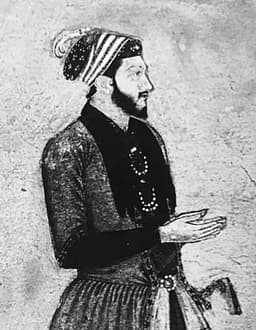
Firuz Shah Tughlaq
Emperor · Medieval
55.3Total

Gwangjong of Goryeo
Emperor · Medieval
54.9Total
Basic Information
Born
1309
925
Died
1388
975
Era
Medieval
Medieval
Nationality
India
Korea
Occupation
Emperor
Emperor
Civilization
Indian
Eastern
Score Comparison
Military (10%)
45.0
38.3
Political (20%)
72.0
59.3
Influence (20%)
56.4
55.7
Legacy (20%)
47.5
52.0
Leadership (15%)
68.0
62.0
Strategy (15%)
38.6
60.0
TOTAL
55.3
54.9
Firuz Shah Tughlaq — Complete Timeline
1354 AD
Construction of the Firuz Shah KotlaCultural◆ Major
Firuz Shah Tughlaq founded the city of Firuzabad and built the Firuz Shah Kotla fortress in Delhi. The complex included a palace, a mosque, and a pillar of Ashoka brought from Topra. It became a major administrative center.
Fort BuildingUrban PlanningArchitecture
constructive
1355 AD
Establishment of the Diwan-i-KhairatReform
Firuz Shah Tughlaq established the Diwan-i-Khairat, a department for charity and welfare. It provided financial assistance to the poor, widows, and orphans. This institutionalized state-sponsored social welfare in the Delhi Sultanate.
WelfareSocial ReformAdministration
Impact: nationalconstructive
1360 AD
Construction of Canals and Irrigation SystemsReform◆ Major
Firuz Shah Tughlaq oversaw the construction of five major canals from the Yamuna and Sutlej rivers to irrigate fields in the Delhi region. These canals improved agricultural productivity and reduced famine risk. They were a key public works achievement.
IrrigationAgriculturePublic Works
Impact: regionalconstructive
1365 AD
Imposition of Jizya on BrahminsPolitical Action◆ Major
Firuz Shah Tughlaq imposed the jizya tax on Brahmins, who had previously been exempt. This policy was based on his interpretation of Islamic law and caused resentment among Hindus. It marked a departure from earlier, more tolerant policies.
TaxationReligious PolicyHindu-Muslim Relations
Impact: nationaldestructive
Gwangjong of Goryeo — Complete Timeline
956 AD
Promulgation of the Slave Emancipation DecreeReform
King Gwangjong issued a decree freeing thousands of slaves and commoners who had been unjustly enslaved. This reform weakened the power of the aristocratic clans, strengthened the central monarchy, and increased the tax-paying population of Goryeo.
Social ReformSlaveryGoryeo
Impact: nationalprogressive
958 AD
Implementation of the Civil Service Examination SystemReform
Gwangjong introduced a Chinese-style civil service examination (gwageo) to select government officials based on merit rather than birth. This reform reduced the influence of the entrenched aristocracy and promoted a more centralized, bureaucratic state.
Bureaucratic ReformMeritocracyGoryeo
Impact: nationalprogressive
960 AD
Purge of the Aristocratic FactionsPolitical Action◆ Major
King Gwangjong ordered the execution or exile of numerous powerful nobles and their families, including many who had opposed his reforms. This violent purge eliminated opposition to his centralization policies but created a climate of fear and resentment among the elite.
PurgePolitical RepressionGoryeo
Impact: nationaldestructive
This comparison has not been analyzed yet.
One-time AI generation (~1 minute). Scores and timeline are already available below.
Rankings
🥇
Firuz Shah TughlaqLeader
Mil: 45.0Pol: 72.0Inf: 56.4
55.3
🥈
Gwangjong of Goryeo
Mil: 38.3Pol: 59.3Inf: 55.7
54.9
+0.4 behind
How This Comparison Works
Algorithm
Each figure is scored on 6 dimensions (0—100 scale) based on structured historical data: Military (10%), Political (20%), Influence (20%), Legacy (20%), Leadership (15%), Strategy (15%). The weighted total produces the final ranking.
Data Sources
Scores are computed from structured sub-indicators in the database. Scale factors adjust for era (Ancient ×0.85, Modern ×1.0) and civilization size (Eastern ×1.05, Other ×0.80) to account for differences in population and military scale.
Maximum 3 Figures
Comparisons are limited to 2—3 figures to ensure readability and statistical meaningfulness.
Error Margins
±5 points per dimension — Sub-scores are derived from historical records with inherent uncertainty. Two figures within 5 points on a dimension should be considered roughly equivalent in that area.
Total Score Accuracy
±3 points overall — The weighted combination of 6 dimensions produces a total score with approximately ±3 points of uncertainty. Differences of less than 3 points are not statistically significant— the figures are effectively tied.
Known Limitations
- Historical records are incomplete and uneven across civilizations
- Figures from oral-tradition societies may be underrepresented
- Occupation labels can misclassify multi-role figures
- Scores measure capability and impact, not moral character
- Quantitative scoring is a comparison tool, not absolute truth
Capability Radar
Military (10%) — Battles & Warfare
Battles
30
30
Win Rate
35
40
Expansion
10
30
Political (20%) — Governance & Reform
Reform
75
85
Diplomacy
60
60
Economy
65
65
Influence (20%) — Cultural & Global Reach
Cultural
50
45
Global
30
30
Legacy (20%) — Historical Impact
Historical
45
60
Longevity
40
50
Leadership (15%) — Power & Stability
Tenure
70
70
Stability
55
55
Strategy (15%) — Tactics & Innovation
Strategy
20
40
Tactics
25
35
Reform
15
50
Similar Comparisons
Comments & Discussion
No comments yet. Be the first to share your thoughts!