Loading...
Francisco Largo Caballero vs Napoleon Bonaparte
Napoleon Bonaparte leads by 18.4 pts · 2 figures compared
…
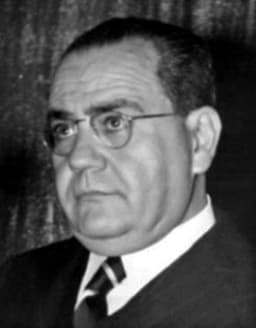
Francisco Largo Caballero
Politician · Modern
52.5Total

Napoleon Bonaparte
General · Modern
70.9Total
Basic Information
Born
1869
1769
Died
1946
1821
Era
Modern
Modern
Nationality
Spain
France
Occupation
Politician
General
Civilization
Western
Western
Score Comparison
Military (10%)
39.9
94.0
Political (20%)
54.7
72.0
Influence (20%)
54.9
40.0
Legacy (20%)
45.0
80.0
Leadership (15%)
65.7
78.0
Strategy (15%)
54.3
90.0
TOTAL
52.5
70.9
Francisco Largo Caballero — Complete Timeline
1936 AD
Organized the Defense of MadridWar◆ Major
As prime minister, Largo Caballero directed the organization of the defense of Madrid against the Nationalist assault in November 1936. He mobilized militias and the International Brigades, leading to the successful resistance that prevented the city's fall.
Defense of MadridCivil WarMilitary Strategy
Impact: nationalconstructive
Became Prime Minister of the RepublicPolitical Action◆ Major
Largo Caballero was appointed prime minister of the Second Spanish Republic on September 4, 1936, during the Spanish Civil War. He formed a government that included socialists, communists, and republicans, and oversaw the defense of Madrid against Nationalist forces.
Prime MinisterCivil WarRepublican Government
Impact: national
1937 AD
Resigned as Prime MinisterPolitical Action◆ Major
Largo Caballero resigned as prime minister on May 17, 1937, following the May Days in Barcelona, where internal conflicts between anarchists and communists erupted. His resignation marked the end of his leadership and the rise of Juan Negrin's more communist-aligned government.
ResignationInternal ConflictCivil War
Impact: nationaltragic
1942 AD
Exiled and Imprisoned by the NazisPolitical Action◆ Major
After the Republican defeat, Largo Caballero went into exile in France. He was arrested by the Gestapo in 1942 and deported to the Sachsenhausen concentration camp. He survived the war but was released in 1945, having suffered severe hardship.
ExileConcentration CampWorld War II
Impact: nationaltragic
Napoleon Bonaparte — Complete Timeline
1799 AD
Coup of 18 BrumaireOther◆ Major
Napoleon Bonaparte, with support from his brother Lucien and key political figures, overthrew the Directory in a bloodless coup. He established the Consulate with himself as First Consul, effectively becoming the ruler of France. This event ended the French Revolution's most unstable period.
French RevolutionCoupRise to Power
Impact: regional
1804 AD
Promulgation of the Napoleonic CodeOther◆ Major
Napoleon enacted the Civil Code of the French, known as the Napoleonic Code, a comprehensive set of laws that replaced the fragmented feudal legal systems. The code established legal equality, protected property rights, and secularized law. It became the basis for legal systems in many European and world countries.
Legal ReformNapoleonic CodeCivil Law
Impact: globalconstructive
1805 AD
Battle of AusterlitzWar◆ Major
Napoleon's Grande Arm
Napoleonic WarsBattleDecisive Victory
Impact: global
1812 AD
Invasion of RussiaWar◆ Major
Napoleon led the Grande Arm
Napoleonic WarsInvasionDisaster
Impact: globaldestructive
1815 AD
Battle of WaterlooWar◆ Major
Napoleon's French army was defeated by the combined forces of the Duke of Wellington's Anglo-Allied army and Gebhard Leberecht von Bl
Napoleonic WarsBattleFinal Defeat
Impact: globaldestructive
Expert Analysis
francisco-largo-caballero-vs-napoleon-bonaparte
# The Emperor and the Revolutionary: Two Paths Through Modernity’s Storm
On a June morning in 1815, Napoleon Bonaparte stood on a muddy field near Waterloo, watching his Imperial Guard crumble under British fire. Less than a century later, in September 1936, Francisco Largo Caballero entered the prime minister’s office in Madrid, facing a very different kind of collapse—his own nation tearing itself apart in civil war. Both men inherited revolutionary movements. Both believed they could reshape history. One built an empire that stretched from Madrid to Moscow; the other presided over a republic that would drown in its own blood. What separates them is not merely talent, but the gravity of the moment each was born into, and the nature of the forces they tried to command.
Origins
Napoleon Bonaparte was born in 1769 on Corsica, an island that had just become French. He was a provincial outsider in a kingdom obsessed with rank and birth. His family was minor nobility, poor enough to hunger for advancement. The French Revolution, erupting when he was twenty, shattered the old world and opened every door to talent. Napoleon walked through them with a sword in one hand and a book of Enlightenment philosophy in the other. He was the son of the Revolution, shaped by its chaos and its promise.
Francisco Largo Caballero was born in 1869 in Madrid, the son of a carpenter. He never attended university; he worked as a plasterer, then as a union organizer. While Napoleon studied military strategy at the royal academy, Largo Caballero learned politics in the streets and meeting halls of Spain’s socialist movement. He rose through the ranks of the Spanish Socialist Workers’ Party and the trade unions, becoming a minister of labor in the 1930s. His world was not the battlefield but the bargaining table, the strike, the party congress. Where Napoleon inherited the Revolution’s fire, Largo Caballero inherited its bureaucracy and its bitter factionalism.
Rise to Power
Napoleon’s ascent was meteoric. At twenty-four, he crushed a royalist uprising in Paris with a “whiff of grapeshot.” At twenty-six, he led an army into Italy and defeated the Austrians in a campaign that remains a textbook of maneuver and speed. He seized power in a coup in 1799, crowned himself emperor in 1804, and by 1807, he was master of continental Europe. Every step was a gamble, every victory a leap forward. He understood that in revolutionary France, legitimacy came from success.
Largo Caballero’s rise was slower, more patient, and ultimately more fragile. For decades, he was a labor leader, a builder of institutions, a man who believed in gradual change through strikes and legislation. But Spain’s monarchy collapsed in 1931, and the Second Republic was born. Largo Caballero became minister of labor, pushing through reforms for workers. Yet his radicalism grew as the Republic’s enemies grew bolder. By 1934, he was calling for revolution, earning the nickname “the Spanish Lenin.” When the military rebelled in July 1936, his moment came: on September 4, 1936, he became prime minister, tasked with saving the Republic from General Franco’s Nationalist uprising.
Leadership & Governance
Napoleon governed like he fought: with speed, clarity, and overwhelming force. He centralized the French state, created the Napoleonic Code—a legal system that enshrined equality before the law and property rights—and reformed education, banking, and public administration. He was a military genius, with a strategic rating of 93, and he understood that war was politics by other means. His leadership score of 80 reflects his ability to inspire men, but also his fatal arrogance: he could not compromise, could not share power, could not stop conquering.
Largo Caballero governed in chaos. The Republic was under siege from within and without. He had to coordinate a coalition of communists, anarchists, socialists, and regional separatists—groups that distrusted each other more than they trusted him. His military score of 36 and strategy score of 43 reveal his weakness: he was not a general. He organized the defense of Madrid in November 1936, but the real military decisions were made by others. His leadership score of 87.7 is telling: he was a man who could unite, but not command. He believed in the power of the working class, but the working class was armed and divided. The May Days of 1937 in Barcelona, where anarchists and communists fought each other in the streets, broke his government. He resigned on May 17, 1937, unable to hold the coalition together.
Triumph & Tragedy
Napoleon’s greatest moment was Austerlitz in 1805, where he destroyed the Russian and Austrian armies with a perfect trap. It was the summit of his strategic genius. His tragedy was the invasion of Russia in 1812, where he lost half a million men to winter, hunger, and guerrilla attacks. He was exiled to Elba, returned, and was finally defeated at Waterloo in 1815. His fall was as dramatic as his rise, a lesson in the limits of ambition.
Largo Caballero’s triumph was the defense of Madrid in November 1936, when the Republic held against Franco’s assault. It was a moment of unity and courage. His tragedy unfolded in exile. After the Republic fell in 1939, he fled to France. In 1942, the Gestapo arrested him and deported him to the Sachsenhausen concentration camp. He survived, but was broken. He died in 1946, a forgotten man in a Paris hospital. His republic had been crushed by fascism, and he had been crushed by history.
Character & Destiny
Napoleon was a man of will and vision. He believed he could remake the world in his image. “Impossible is a word to be found only in the dictionary of fools,” he said. His personality drove him to conquer, but also to overreach. He could not stop because he could not imagine limits. His destiny was to be the great destroyer and creator of the old order.
Largo Caballero was a man of conviction and patience, but also of dogma. He believed in the socialist revolution, but he could not adapt to the speed of war. He was a union leader in a time of tanks and bombers. His destiny was to be a symbol of a lost cause—a man who fought for justice but was crushed by forces he could not control. Where Napoleon’s ambition was his downfall, Largo Caballero’s loyalty to his ideals was both his strength and his prison.
Legacy
Napoleon’s legacy is enormous. The Napoleonic Code influenced legal systems across Europe and the world. He redrew the map of Europe, spread nationalism and liberalism, and inspired generations of leaders and revolutionaries. His military campaigns are still studied in war colleges. His legacy score of 78 reflects his enduring impact, but also his contradictions: he was a liberator and a tyrant, a reformer and a conqueror.
Largo Caballero’s legacy is smaller, but no less significant. He represents the tragedy of the Spanish Republic—the hope for a democratic, socialist Spain that was destroyed by civil war and dictatorship. His political score of 71.2 and influence score of 74.6 show that he was a major figure in Spanish history, but his name is little known outside Spain. He is remembered as a man of integrity who failed because the forces against him were too strong, and because he was not the man for that hour.
Conclusion
Napoleon and Largo Caballero are both children of revolution, but they lived in different worlds. Napoleon’s revolution was young, fluid, and full of opportunity. He could ride its wave to the top of Europe. Largo Caballero’s revolution was old, fractured, and besieged. He could only try to hold the pieces together as the storm broke over him. One built an empire; the other tried to save a republic. Their fates remind us that history does not only reward the greatest talent, but also the right moment. Napoleon was the man of his century; Largo Caballero was the man of his hour—and the hour was too short.
Rankings
🥇
Napoleon BonaparteLeader
Mil: 94.0Pol: 72.0Inf: 40.0
70.9
🥈
Francisco Largo Caballero
Mil: 39.9Pol: 54.7Inf: 54.9
52.5
+18.4 behind
How This Comparison Works
Algorithm
Each figure is scored on 6 dimensions (0—100 scale) based on structured historical data: Military (10%), Political (20%), Influence (20%), Legacy (20%), Leadership (15%), Strategy (15%). The weighted total produces the final ranking.
Data Sources
Scores are computed from structured sub-indicators in the database. Scale factors adjust for era (Ancient ×0.85, Modern ×1.0) and civilization size (Eastern ×1.05, Other ×0.80) to account for differences in population and military scale.
Maximum 3 Figures
Comparisons are limited to 2—3 figures to ensure readability and statistical meaningfulness.
Error Margins
±5 points per dimension — Sub-scores are derived from historical records with inherent uncertainty. Two figures within 5 points on a dimension should be considered roughly equivalent in that area.
Total Score Accuracy
±3 points overall — The weighted combination of 6 dimensions produces a total score with approximately ±3 points of uncertainty. Differences of less than 3 points are not statistically significant— the figures are effectively tied.
Known Limitations
- Historical records are incomplete and uneven across civilizations
- Figures from oral-tradition societies may be underrepresented
- Occupation labels can misclassify multi-role figures
- Scores measure capability and impact, not moral character
- Quantitative scoring is a comparison tool, not absolute truth
Capability Radar
Military (10%) — Battles & Warfare
Battles
5
95
Win Rate
5
90
Expansion
5
95
Political (20%) — Governance & Reform
Reform
60
95
Diplomacy
30
80
Economy
20
85
Influence (20%) — Cultural & Global Reach
Cultural
30
85
Global
30
90
Legacy (20%) — Historical Impact
Historical
40
95
Longevity
20
90
Leadership (15%) — Power & Stability
Tenure
55
85
Stability
10
70
Strategy (15%) — Tactics & Innovation
Strategy
10
95
Tactics
5
98
Reform
15
92
Similar Comparisons
Comments & Discussion
CorsicanThunder6/17/2026
Let’s be real: comparing Napoleon to Largo Caballero is like comparing a lion to a housecat. Napoleon conquered half of Europe and rewrote its legal codes—Largo Caballero couldn’t even hold Madrid. The Spanish Civil War was a tragedy, sure, but the guy’s “leadership” was basically just watching his own coalition implode while Franco marched in. History remembers Napoleon because he changed the game. Largo Caballero? He’s a footnote for a reason.
火药桶上的木匠6/17/2026
说句难听的,拿破仑能打仗、能立法、能称帝——而拉戈·卡瓦列罗呢?他最后的上场就是看着西班牙共和国像纸糊的一样塌掉。别拿小规模内战和拿破仑战争相提并论。一个是建立现代欧洲的巨人,一个是搞不定自己军队的工会头子。他俩根本不在一个层级,强行比较只是在自我感动。
DictatorData6/17/2026
Military historians love sweeping narratives, but look at the numbers. Napoleon commanded armies of hundreds of thousands across continental logistics; Largo Caballero barely held together 250,000 militia with Soviet advisors. Napoleon’s 1810 army had 40% more troops than Spain’s entire population in 1936. The scale alone disqualifies this comparison—it’s like comparing a supernova to a matchstick. Largo was a good union man, but on Napoleon’s battlefield he’d have been rolled over in a week.
古典学暴君6/17/2026
拿破仑是古典英雄叙事最后的闪耀——他读着普鲁塔克长大,用理性重建法律,把革命的暴烈铸成帝国的秩序。而拉戈·卡瓦列罗,他的“革命”只是无政府主义者、斯大林派和各类派系的混战,连自己的防线都整理不清。拿破仑死在圣赫勒拿仍能定义一代人;拉戈死在巴黎流亡中有多少人还记得?这就是天才和平庸的分野。
RevisionistReckoning6/17/2026
Actually, the comparison works—but not for the reasons fans think. Both men were products of revolutionary chaos, but Largo Caballero faced a worse hand: international isolation, intervention by fascist powers, and internal sabotage from communists. Napoleon rode a wave of European exhaustion; Largo rode a wave of European aggression. If we’re grading on difficulty, Largo’s failure is more honorable than Napoleon’s many victories. Put Napoleon in 1936 Spain without a Grande Armée; he’d fold just