Loading...
Francois-Michel Le Tellier de Louvois vs Napoleon Bonaparte
Napoleon Bonaparte leads by 10.4 pts · 2 figures compared
…
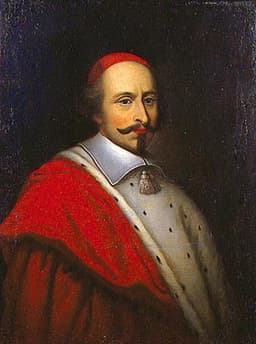
Francois-Michel Le Tellier de Louvois
Politician · Modern
60.5Total

Napoleon Bonaparte
General · Modern
70.9Total
Basic Information
Born
1641
1769
Died
1691
1821
Era
Modern
Modern
Nationality
France
France
Occupation
Politician
General
Civilization
Western
Western
Score Comparison
Military (10%)
47.5
94.0
Political (20%)
65.0
72.0
Influence (20%)
55.0
40.0
Legacy (20%)
55.0
80.0
Leadership (15%)
80.0
78.0
Strategy (15%)
65.4
90.0
TOTAL
60.5
70.9
Francois-Michel Le Tellier de Louvois — Complete Timeline
1666 AD
Appointed Secretary of State for WarPolitical Action◆ Major
Louvois was appointed Secretary of State for War under Louis XIV. He became the king's principal military administrator, overseeing the army's organization, logistics, and discipline for over two decades.
French ArmyLouis XIVMilitary Administration
Impact: national
1668 AD
Reformed the French ArmyReform◆ Major
Louvois implemented major army reforms, including standardizing uniforms, improving supply systems, and establishing military hospitals. He also introduced a system of military intendants to ensure discipline and loyalty.
Military ReformFrench ArmyLouis XIV
Impact: nationalconstructive
1670 AD
Established the Hôtel des InvalidesReform
Louvois oversaw the creation of the H
Military WelfareSocial ReformFrench Army
Impact: nationalconstructive
1689 AD
Organized the Devastation of the PalatinateWar◆ Major
Louvois ordered the systematic destruction of the Palatinate region in Germany during the Nine Years' War. French troops burned towns, villages, and crops to deny resources to enemy forces, causing widespread suffering.
Nine Years' WarScorched EarthWar Crimes
Impact: regionaldestructive
Napoleon Bonaparte — Complete Timeline
1799 AD
Coup of 18 BrumaireOther◆ Major
Napoleon Bonaparte, with support from his brother Lucien and key political figures, overthrew the Directory in a bloodless coup. He established the Consulate with himself as First Consul, effectively becoming the ruler of France. This event ended the French Revolution's most unstable period.
French RevolutionCoupRise to Power
Impact: regional
1804 AD
Promulgation of the Napoleonic CodeOther◆ Major
Napoleon enacted the Civil Code of the French, known as the Napoleonic Code, a comprehensive set of laws that replaced the fragmented feudal legal systems. The code established legal equality, protected property rights, and secularized law. It became the basis for legal systems in many European and world countries.
Legal ReformNapoleonic CodeCivil Law
Impact: globalconstructive
1805 AD
Battle of AusterlitzWar◆ Major
Napoleon's Grande Arm
Napoleonic WarsBattleDecisive Victory
Impact: global
1812 AD
Invasion of RussiaWar◆ Major
Napoleon led the Grande Arm
Napoleonic WarsInvasionDisaster
Impact: globaldestructive
1815 AD
Battle of WaterlooWar◆ Major
Napoleon's French army was defeated by the combined forces of the Duke of Wellington's Anglo-Allied army and Gebhard Leberecht von Bl
Napoleonic WarsBattleFinal Defeat
Impact: globaldestructive
Expert Analysis
francois-michel-le-tellier-de-louvois-vs-napoleon-bonaparte
# The Architect and the Conqueror: Two Paths to French Military Glory
In the winter of 1691, as François-Michel Le Tellier de Louvois lay dying in his Paris mansion, he could take grim satisfaction in having transformed the French army into the most formidable fighting force in Europe. A century later, a young artillery officer from Corsica would take that instrument and bend the continent to his will. Louvois built the machine; Napoleon Bonaparte rode it to glory and ruin. Their lives, separated by just eighty years, tell the story of how military power is created, wielded, and ultimately consumed by the ambitions it serves.
Origins
Corsica in 1769 was a conquered island, its brief independence crushed by French forces the year Napoleon was born. His father, Carlo Buonaparte, was a minor noble who had fought for Corsican freedom before pragmatically switching allegiances to France. The young Napoleon grew up speaking Italian-accented French, acutely aware of being an outsider. This sense of displacement—of having something to prove—would fuel his relentless ambition.
Louvois, by contrast, was born into the very heart of French power. His father, Michel Le Tellier, was Louis XIV's Secretary of State for War, a position he deftly passed to his son in 1666. The young Louvois grew up in the corridors of Versailles, learning the art of administration alongside the Sun King's rising glory. Where Napoleon would conquer through charisma and audacity, Louvois would dominate through paperwork and logistics.
Rise to Power
Napoleon's ascent was meteoric. At age twenty-four, he captured Toulon from the British in 1793, earning promotion to brigadier general. By twenty-six, he was commanding the Army of Italy, where his lightning campaign of 1796-1797 stunned Europe. "I see only a spark of genius," one French general wrote after watching him plan a battle. "He will go far." Within eight years of Toulon, Napoleon was Emperor of the French.
Louvois rose more methodically. Appointed Secretary of State for War at twenty-five, he spent decades modernizing the army from behind a desk. His key reforms—standardizing uniforms, establishing the Hôtel des Invalides in 1670 for wounded veterans, creating a reliable supply system—took years to implement. While Napoleon seized power through the coup of 18 Brumaire in 1799, Louvois accumulated influence through bureaucratic mastery, becoming Louis XIV's indispensable administrator.
Leadership & Governance
Napoleon commanded from the front, his presence on the battlefield worth 40,000 men, as his enemies often admitted. At Austerlitz in 1805, he crushed the combined armies of Russia and Austria through a masterful deception, luring them into attacking his deliberately weakened right flank before smashing their center. His political genius was equally remarkable: the Napoleonic Code, which he personally helped draft, standardized French law and influenced legal systems from Latin America to Japan.
Louvois never commanded troops in battle. His military score of 62.7 reflects this, while Napoleon's 94.0 speaks to his tactical brilliance. Yet Louvois's political score of 79.9 edges Napoleon's 75.0, because he understood something the emperor never fully grasped: armies are sustained by administration, not glory. Louvois organized the devastating scorched-earth tactics in the Palatinate in 1689, a brutal but effective strategy that showed his willingness to destroy in order to win.
Triumph & Tragedy
Napoleon's triumph was continental Europe itself. By 1812, he ruled an empire stretching from Spain to Poland, his family placed on thrones across the continent. His tragedy was Russia. The Grande Armée of 600,000 men that crossed the Niemen River in June 1812 was reduced to fewer than 100,000 by December. "From the sublime to the ridiculous," Napoleon later reflected, "there is but one step." Waterloo in 1815 was the final step into the abyss.
Louvois's triumph was the army he built. When he took office in 1666, French troops were poorly equipped, ill-disciplined, and unreliable. By his death in 1691, they were Europe's finest. His tragedy was personal: he died suddenly at age fifty, possibly from overwork or poisoning, just as the Nine Years' War was reaching its climax. Unlike Napoleon, who spent his final years in lonely exile on Saint Helena, Louvois was buried with honors, his work complete but his ambition unfulfilled.
Character & Destiny
Napoleon was a force of nature: restless, brilliant, incapable of moderation. "Power is my mistress," he once said. His character drove him to conquer, but also to overreach. He could not stop, could not share power, could not accept limits. This made him extraordinary—and ultimately defeated him.
Louvois was a creature of the court: calculating, patient, ruthless within established bounds. He served a king who set the limits of his ambition. Where Napoleon would have overthrown Louis XIV, Louvois served him faithfully. Their different fates reflect this fundamental difference: the conqueror burns bright and fast; the builder endures.
Legacy
Napoleon's legacy is everywhere. His legal code, his administrative reforms, his military tactics are still studied. His influence score of 82.0 reflects this enduring impact. Yet his legacy is also a warning: the pursuit of glory can consume everything it touches.
Louvois's legacy is quieter but no less real. Every modern army that feeds its soldiers, uniforms them, and cares for its wounded owes something to his reforms. The Hôtel des Invalides still stands in Paris, a monument to the idea that soldiers deserve dignity. His total score of 71.9 seems modest next to Napoleon's 82.4, but it represents something Napoleon never fully achieved: a system that outlasts its creator.
Conclusion
Standing before the golden dome of the Invalides today, a visitor sees both men's graves: Napoleon's grand sarcophagus in the center, Louvois's modest tomb nearby. The conqueror draws the crowds, his name echoing through history like a trumpet blast. The administrator lies in relative obscurity, his work woven into the fabric of modern military life. Perhaps this is the deeper truth: glory fades, but systems endure. Napoleon conquered Europe; Louvois built the army that made it possible. Both were necessary, both were French, and both remind us that the greatest achievements require both the visionary and the bureaucrat—the man who dreams of empires and the man who feeds the soldiers who will win them.
Rankings
🥇
Napoleon BonaparteLeader
Mil: 94.0Pol: 72.0Inf: 40.0
70.9
🥈
Francois-Michel Le Tellier de Louvois
Mil: 47.5Pol: 65.0Inf: 55.0
60.5
+10.4 behind
How This Comparison Works
Algorithm
Each figure is scored on 6 dimensions (0—100 scale) based on structured historical data: Military (10%), Political (20%), Influence (20%), Legacy (20%), Leadership (15%), Strategy (15%). The weighted total produces the final ranking.
Data Sources
Scores are computed from structured sub-indicators in the database. Scale factors adjust for era (Ancient ×0.85, Modern ×1.0) and civilization size (Eastern ×1.05, Other ×0.80) to account for differences in population and military scale.
Maximum 3 Figures
Comparisons are limited to 2—3 figures to ensure readability and statistical meaningfulness.
Error Margins
±5 points per dimension — Sub-scores are derived from historical records with inherent uncertainty. Two figures within 5 points on a dimension should be considered roughly equivalent in that area.
Total Score Accuracy
±3 points overall — The weighted combination of 6 dimensions produces a total score with approximately ±3 points of uncertainty. Differences of less than 3 points are not statistically significant— the figures are effectively tied.
Known Limitations
- Historical records are incomplete and uneven across civilizations
- Figures from oral-tradition societies may be underrepresented
- Occupation labels can misclassify multi-role figures
- Scores measure capability and impact, not moral character
- Quantitative scoring is a comparison tool, not absolute truth
Capability Radar
Military (10%) — Battles & Warfare
Battles
40
95
Win Rate
45
90
Expansion
70
95
Political (20%) — Governance & Reform
Reform
90
95
Diplomacy
60
80
Economy
55
85
Influence (20%) — Cultural & Global Reach
Cultural
55
85
Global
60
90
Legacy (20%) — Historical Impact
Historical
75
95
Longevity
70
90
Leadership (15%) — Power & Stability
Tenure
85
85
Stability
70
70
Strategy (15%) — Tactics & Innovation
Strategy
60
95
Tactics
55
98
Reform
95
92
Similar Comparisons
Comments & Discussion
No comments yet. Be the first to share your thoughts!