Loading...
Franklin D. Roosevelt vs Yelu Abaoji
Yelu Abaoji leads by 3.6 pts · 2 figures compared
…
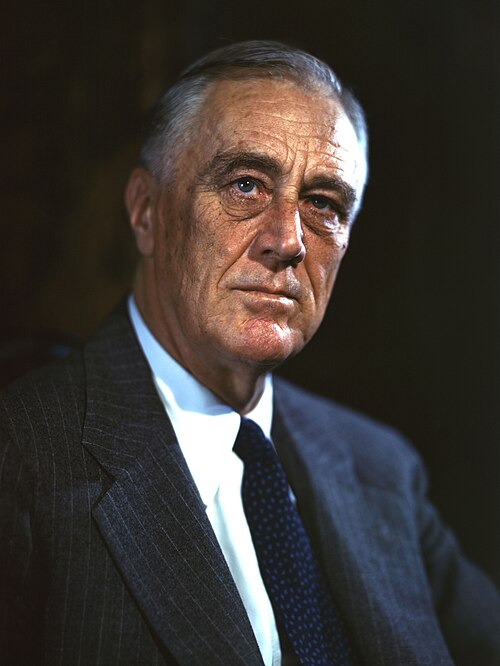
Franklin D. Roosevelt
Politician · Modern
75.7Total
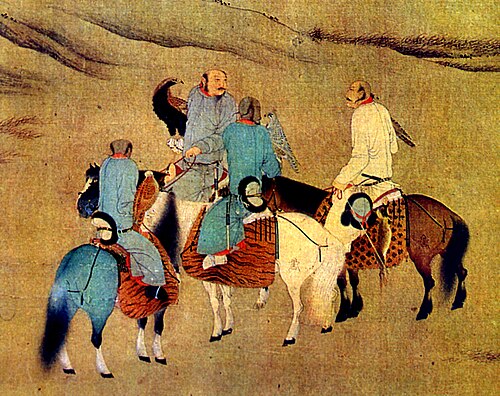
Yelu Abaoji
Emperor · Medieval
79.3Total
Basic Information
Born
1882
872
Died
1945
926
Era
Modern
Medieval
Nationality
United States
China
Occupation
Politician
Emperor
Civilization
Western
Eastern
Score Comparison
Military (10%)
60.0
73.3
Political (20%)
85.0
90.0
Influence (20%)
72.0
72.3
Legacy (20%)
75.0
70.8
Leadership (15%)
85.0
89.2
Strategy (15%)
70.0
80.1
TOTAL
75.7
79.3
Rankings
🥇
Yelu AbaojiLeader
Mil: 73.3Pol: 90.0Inf: 72.3
79.3
🥈
Franklin D. Roosevelt
Mil: 60.0Pol: 85.0Inf: 72.0
75.7
+3.6 behind
How This Comparison Works
Algorithm
Each figure is scored on 6 dimensions (0—100 scale) based on structured historical data: Military (10%), Political (20%), Influence (20%), Legacy (20%), Leadership (15%), Strategy (15%). The weighted total produces the final ranking.
Data Sources
Scores are computed from structured sub-indicators in the database. Scale factors adjust for era (Ancient ×0.85, Modern ×1.0) and civilization size (Eastern ×1.05, Other ×0.80) to account for differences in population and military scale.
Maximum 3 Figures
Comparisons are limited to 2—3 figures to ensure readability and statistical meaningfulness.
Error Margins
±5 points per dimension — Sub-scores are derived from historical records with inherent uncertainty. Two figures within 5 points on a dimension should be considered roughly equivalent in that area.
Total Score Accuracy
±3 points overall — The weighted combination of 6 dimensions produces a total score with approximately ±3 points of uncertainty. Differences of less than 3 points are not statistically significant— the figures are effectively tied.
Known Limitations
- Historical records are incomplete and uneven across civilizations
- Figures from oral-tradition societies may be underrepresented
- Occupation labels can misclassify multi-role figures
- Scores measure capability and impact, not moral character
- Quantitative scoring is a comparison tool, not absolute truth
Capability Radar
Military (10%) — Battles & Warfare
Battles
10
75
Win Rate
10
80
Expansion
10
82
Political (20%) — Governance & Reform
Reform
95
88
Diplomacy
90
75
Economy
95
70
Influence (20%) — Cultural & Global Reach
Cultural
80
60
Global
90
55
Legacy (20%) — Historical Impact
Historical
90
70
Longevity
85
65
Leadership (15%) — Power & Stability
Tenure
90
72
Stability
75
65
Strategy (15%) — Tactics & Innovation
Strategy
65
78
Tactics
10
70
Reform
70
85
Expert Analysis
Yelu Abaoji vs Franklin D. Roosevelt: Historical Comparison
Yelu Abaoji, the founding emperor of the Liao dynasty in medieval China, and Franklin D. Roosevelt, the 32nd president of the United States during the Great Depression and World War II, were transformative leaders in vastly different contexts. While Abaoji built a nomadic empire through military conquest and political innovation, Roosevelt reshaped modern governance and global order through crisis management and institutional reform.
Dimension Analysis
**Military: Yelu Abaoji 73 / Franklin D. Roosevelt 60**
Abaoji personally led campaigns that unified Khitan tribes and expanded into northern China, establishing a dual-administration system for nomadic and sedentary peoples. Roosevelt, as Commander-in-Chief, oversaw Allied strategy in WWII but relied heavily on military advisors and never directly commanded troops.
**Political: Yelu Abaoji 90 / Franklin D. Roosevelt 85**
Abaoji created a hybrid political system blending tribal chieftainship with Chinese bureaucratic models, enabling stable rule over diverse populations. Roosevelt pioneered the New Deal coalition, expanded federal power, and navigated isolationist Congress to pass landmark legislation, though his court-packing attempt failed.
**Influence: Yelu Abaoji 72 / Franklin D. Roosevelt 72**
Abaoji’s Liao dynasty shaped East Asian geopolitics for two centuries, influencing later conquest dynasties like the Yuan. Roosevelt’s leadership during the Depression and WWII established the US as a superpower and embedded social safety nets globally, but his influence waned post-war.
**Legacy: Yelu Abaoji 71 / Franklin D. Roosevelt 75**
Abaoji is revered as a founder of Khitan statehood but is less known outside Chinese historiography. Roosevelt’s legacy endures through the New Deal, the UN, and the Atlantic Charter, though his internment of Japanese Americans remains controversial.
**Leadership: Yelu Abaoji 89 / Franklin D. Roosevelt 85**
Both were charismatic crisis leaders. Abaoji united fractious tribes through personal valor and strategic marriages, while Roosevelt inspired a nation through radio addresses and wartime resolve. Abaoji’s autocratic decisiveness slightly edges FDR’s consensus-building style.
Verdict
Yelu Abaoji leads overall due to his higher scores in military, political, and strategic dimensions, reflecting his foundational role in state-building from scratch.
FAQ
Q: Who ranks higher? A: Yelu Abaoji, based on a composite score of 79 to 76, driven by his superior military and strategic achievements as a medieval emperor.
Similar Comparisons
Comments & Discussion
No comments yet. Be the first to share your thoughts!