Loading...
Frederick Henry Prince of Orange vs Qin Shi Huang
Qin Shi Huang leads by 14.7 pts · 2 figures compared
…

Frederick Henry Prince of Orange
General · Modern
70.5Total
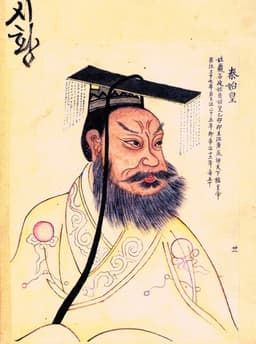
Qin Shi Huang
Emperor · Ancient
85.2Total
Basic Information
Born
1584
-259
Died
1647
-210
Era
Modern
Ancient
Nationality
Netherlands
China
Occupation
General
Emperor
Civilization
Western
Eastern
Score Comparison
Military (10%)
76.0
80.0
Political (20%)
72.0
90.0
Influence (20%)
82.0
85.0
Legacy (20%)
52.0
90.0
Leadership (15%)
77.2
78.0
Strategy (15%)
70.0
82.0
TOTAL
70.5
85.2
Frederick Henry Prince of Orange — Complete Timeline
1629 AD
Siege of 's-HertogenboschWar◆ Major
Frederick Henry led the Dutch army in the siege of 's-Hertogenbosch, a heavily fortified city held by Spanish forces. After a three-month siege, the city surrendered, marking a major victory for the Dutch Republic and demonstrating Frederick Henry's military skill.
SiegeEighty Years' WarDutch Republic
Impact: regional
1632 AD
Siege of MaastrichtWar◆ Major
Frederick Henry captured Maastricht after a two-month siege, using innovative siege tactics. The victory secured Dutch control over the Meuse River and strengthened the Republic's position in the Eighty Years' War.
SiegeEighty Years' WarMilitary Campaign
Impact: regional
1648 AD
Treaty of MünsterPolitical Action◆ Major
Frederick Henry died before the Treaty of M
TreatyIndependenceEighty Years' War
Impact: regionalconstructive
Qin Shi Huang — Complete Timeline
246 BC
Construction of the Mausoleum and Terracotta ArmyOther◆ Major
Qin Shi Huang commissioned a vast mausoleum complex near Xi'an, guarded by thousands of life-sized terracotta soldiers, horses, and chariots. The project employed hundreds of thousands of workers and reflected his obsession with immortality and imperial power.
Impact: global
230 BC
Conquest of the Six Warring StatesWar
From 230 to 221 BCE, Ying Zheng led the Qin state in a series of campaigns that conquered the Han, Zhao, Wei, Chu, Yan, and Qi states. This unified China under a single ruler for the first time, ending the Warring States period.
Impact: global
221 BC
Standardization of Writing, Currency, and MeasurementsReform◆ Major
Qin Shi Huang ordered the standardization of Chinese script, currency, and weights and measures across the unified empire. This facilitated administration, trade, and cultural integration, laying a foundation for future dynasties.
Impact: globalconstructive
Proclamation of the Qin DynastyPolitical Action
After conquering the last independent state, Ying Zheng declared himself Shi Huangdi (First Emperor), founding the Qin Dynasty. He adopted a new title to signify his supreme authority and initiated centralized imperial rule.
Impact: global
214 BC
Initiation of the Great Wall ConstructionOther◆ Major
Qin Shi Huang ordered the connection and extension of existing northern fortifications to create a unified defensive wall against nomadic Xiongnu raids. This project involved massive conscripted labor and became the precursor to the later Great Wall.
Impact: regional
213 BC
Burning of Books and Burying of ScholarsPolitical Action◆ Major
On the advice of Li Si, Qin Shi Huang ordered the burning of historical records and philosophical texts not aligned with Legalist doctrine. He also had 460 Confucian scholars buried alive to suppress dissent and consolidate ideological control.
Impact: nationaldestructive
Expert Analysis
frederick-henry-prince-of-orange-vs-qin-shi-huang
# The Emperor and the Stadtholder: Two Visions of Power
On a spring morning in 221 BC, a young king stood before the walls of a conquered city and declared himself the First Emperor of all China. Two thousand years later and half a world away, a Dutch prince watched his engineers dig trenches around a Spanish fortress, knowing that each captured city brought his republic closer to survival. Both men were masters of war and statecraft. Yet one built an empire that would define civilization for millennia, while the other fought to preserve a republic that would ultimately outgrow him. What drove these two figures—the First Emperor of Qin and Frederick Henry of Orange—to such different destinies?
Origins
Ying Zheng was born in 259 BC into a world of chaos. The Warring States period had torn China apart for two centuries, with seven kingdoms locked in endless conflict. His father was a Qin prince, his mother a former concubine, and his childhood was spent as a hostage in a rival court. From the beginning, he learned that power was a weapon to be seized, not inherited. The Legalist philosophy of the Qin state, which taught that human nature was inherently selfish and required strict laws and harsh punishments, shaped every lesson he absorbed.
Frederick Henry of Orange, born in 1584, entered a world of rebellion. His father, William the Silent, had led the Dutch revolt against Spanish rule—and had been assassinated when Frederick Henry was just six months old. The Dutch Republic was a fragile experiment, a confederation of provinces fighting for their very existence against the mightiest empire in Europe. Unlike the young Qin prince, Frederick Henry grew up in a world of committees, estates, and stadtholders—a system where no single man held absolute power. His education was military and diplomatic, his inheritance not a throne but a cause.
Rise to Power
Ying Zheng’s path was swift and brutal. At thirteen, he became king of Qin. At twenty-two, he crushed a coup by his own chancellor. Then, in 230 BC, he launched the campaigns that would reshape the world. Over nine years, his armies conquered the Han, Zhao, Wei, Chu, Yan, and Qi states—each a civilization in its own right. By 221 BC, at the age of thirty-eight, he stood unchallenged. He took a new title: Shi Huangdi, the First Emperor. There would be no second, he declared; his dynasty would rule for ten thousand generations.
Frederick Henry’s rise was slower, more negotiated. He became Stadtholder of Holland, Zeeland, Utrecht, and Overijssel in 1625, after the death of his brother Maurice. But the Dutch Republic was not a monarchy. Frederick Henry had to balance the demands of the States General, the wealthy merchant regents, and the Calvinist clergy. His power came from military success, not divine right. Every victory had to be sold to skeptical politicians who controlled the purse strings. He was, in essence, a general who had to beg for his bullets.
Leadership & Governance
Qin Shi Huang governed through terror and genius. He standardized writing, currency, and measurements across his empire—reforms that would outlast his dynasty by two thousand years. He built roads, canals, and a defensive wall along the northern frontier. But he also burned books that contradicted his ideology and buried scholars alive who resisted. His Legalist philosophy demanded absolute obedience. The state was everything; the individual, nothing. When he died in 210 BC, his empire collapsed within three years, but the administrative blueprint he had created—centralized bureaucracy, uniform law, a common script—became the foundation of every Chinese dynasty that followed.
Frederick Henry governed through persuasion and siegecraft. He never commanded a great field army; his genius was in the slow, methodical reduction of fortified cities. His nickname, “Stedendwinger” or City Forcer, captured his method perfectly. In 1629, he took ’s-Hertogenbosch after a siege that lasted months, using canals to drain the marshes around the city. In 1632, he captured Maastricht through what contemporaries called “the most perfect siege of the age.” Each victory was a political as well as a military achievement—it proved to the Dutch regents that their republic could survive, and to the Spanish that their empire could bleed. He died in 1647, just one year before the Treaty of Münster finally recognized Dutch independence.
Triumph & Tragedy
The First Emperor’s greatest triumph was also his greatest tragedy. He unified China, but at a terrible cost. The Great Wall was built on the bones of conscripted laborers. The Terracotta Army, commissioned in 246 BC, was a monument to his obsession with immortality. Thousands of life-sized soldiers, each with a unique face, stood guard over his tomb—a silent army for a dead emperor who had tried everything to avoid death. He sent expeditions to find the elixir of life, consumed mercury in toxic doses, and built a mausoleum that rivaled his empire. In the end, he died alone, his dynasty already crumbling.
Frederick Henry’s triumph was survival. The Dutch Republic, when he took command, was still fighting for its existence. When he died, it was the dominant naval and commercial power in Europe. But his tragedy was that he never saw the peace he had fought for. The Treaty of Münster, signed in 1648, would have been his crowning achievement. Instead, he died with the Spanish flag still flying over the last Dutch fortresses, his work unfinished.
Character & Destiny
Qin Shi Huang was a man of absolute vision and absolute cruelty. He believed that history began with him—that the past was a threat to his new order. His destruction of historical records was not just censorship; it was a declaration that he alone would define what was true. This arrogance, born of total power, became his undoing. He could not imagine that his empire might fall, because he could not imagine a world without him.
Frederick Henry was a man of calculation and patience. He understood that power in a republic was limited, that victories had to be won not just on battlefields but in council chambers. His character was shaped by the constraints of his position—he could not command; he could only persuade. This made him less dramatic than the First Emperor, but also more enduring. The Dutch Republic did not collapse when he died; it continued to thrive for another century.
Legacy
The First Emperor’s legacy is written in the very bones of China. The script he standardized is still used, the Great Wall he initiated still stands, and the title “Emperor” he invented was used for two thousand years. But his legacy is also a warning. His tyranny was so complete that it provoked a backlash that shaped Chinese political thought for centuries—Confucianism, which he tried to destroy, became the state ideology of every dynasty that followed.
Frederick Henry’s legacy is less visible but no less real. He proved that a republic could fight and win against an empire. His sieges became textbooks for military engineers across Europe. And the Dutch Republic he helped preserve became the laboratory for modern capitalism, religious tolerance, and scientific innovation. The merchants and regents who limited his power created a society that outlasted every monarchy of its age.
Conclusion
Standing at the distance of centuries, these two figures reveal the deepest currents of their civilizations. Qin Shi Huang embodied the Chinese dream of unity—the belief that a single emperor, wielding absolute power, could create order from chaos. Frederick Henry embodied the Dutch dream of liberty—the belief that free men, working together, could resist tyranny. Both dreams were real. Both required immense violence to achieve. But the First Emperor’s empire, for all its grandeur, collapsed with his death, while the republic Frederick Henry served outlived him by generations. Perhaps that is the final lesson: that power built on fear dies with the one who wields it, but power built on consent endures.
Rankings
🥇
Qin Shi HuangLeader
Mil: 80.0Pol: 90.0Inf: 85.0
85.2
🥈
Frederick Henry Prince of Orange
Mil: 76.0Pol: 72.0Inf: 82.0
70.5
+14.7 behind
How This Comparison Works
Algorithm
Each figure is scored on 6 dimensions (0—100 scale) based on structured historical data: Military (10%), Political (20%), Influence (20%), Legacy (20%), Leadership (15%), Strategy (15%). The weighted total produces the final ranking.
Data Sources
Scores are computed from structured sub-indicators in the database. Scale factors adjust for era (Ancient ×0.85, Modern ×1.0) and civilization size (Eastern ×1.05, Other ×0.80) to account for differences in population and military scale.
Maximum 3 Figures
Comparisons are limited to 2—3 figures to ensure readability and statistical meaningfulness.
Error Margins
±5 points per dimension — Sub-scores are derived from historical records with inherent uncertainty. Two figures within 5 points on a dimension should be considered roughly equivalent in that area.
Total Score Accuracy
±3 points overall — The weighted combination of 6 dimensions produces a total score with approximately ±3 points of uncertainty. Differences of less than 3 points are not statistically significant— the figures are effectively tied.
Known Limitations
- Historical records are incomplete and uneven across civilizations
- Figures from oral-tradition societies may be underrepresented
- Occupation labels can misclassify multi-role figures
- Scores measure capability and impact, not moral character
- Quantitative scoring is a comparison tool, not absolute truth
Capability Radar
Military (10%) — Battles & Warfare
Battles
75
85
Win Rate
80
90
Expansion
75
90
Political (20%) — Governance & Reform
Reform
65
95
Diplomacy
75
75
Economy
70
90
Influence (20%) — Cultural & Global Reach
Cultural
55
95
Global
55
85
Legacy (20%) — Historical Impact
Historical
65
95
Longevity
60
95
Leadership (15%) — Power & Stability
Tenure
70
70
Stability
65
65
Strategy (15%) — Tactics & Innovation
Strategy
80
85
Tactics
85
80
Reform
70
95
Similar Comparisons
Comments & Discussion
CannonBalls&Codex6/17/2026
Frederick Henry was a competent general for his time, but let's stop pretending he's in Qin Shi Huang's league. The prince never unified a continent, standardized a writing system, or built roads that lasted centuries. His siegecraft was tactical brilliance, sure—but the First Emperor's military campaigns reshaped the genetic and cultural landscape of East Asia. One built a kingdom, the other built the blueprint for a civilization. That's not a comparison, it's a gulf.
攻城匠人6/17/2026
比什么比?弗雷德里克·亨利就是个守成的工程师,搞点壕沟和围城战就封神了?秦始皇光是统一度量衡和文字这一项,就让他甩开荷兰王子几条街。你建个防线,人家修了个万里长城;你守个共和国,人家灭六国缔造帝国。不是一个量级的事。别拿战术家当帝国奠基人来吹。
DataDrill6/17/2026
Here's the cold hard numbers: Qin Shi Huang unified seven warring states into one empire covering over 2 million square kilometers with a population of roughly 20-30 million. Frederick Henry captured maybe 30-40 Dutch cities from the Spanish during the Eighty Years' War, with his republic maxing out at about 1.5 million people. That's a factor of 10-20 difference in scale. You can call me reductionist all you want, but when the legacy markers are that skewed, the argument ends.
简史控6/17/2026
别烦我扯什么数据,就一句话:秦始皇一个朝代的制度延续了两千年,多少个王朝抄他的作业?弗雷德里克·亨利呢?共和国没了他照样转,连个稳定的世袭都没混上。你让荷兰人在长江以北建个长城试试?人家的工程组织和行政野心,根本不是一个维度的。不要拿地方性的成就和文明级的影响力比。
RevisionistEagle6/17/2026
The real scandal here is how we romanticize Qin Shi Huang's brutality. Sure, he unified China—by burning books, burying scholars alive, and enslaving millions to build his Great Wall and mausoleum. Frederick Henry at least fought for a republic with representative institutions, however flawed. The First Emperor built a totalitarian machine that inspired centuries of autocratic rule. Let's stop pretending that raw power projection is the same as enlightened statecraft.
旧史新眼6/17/2026
你们都在吹秦始皇的规模,我就问一句:他死后几年秦朝就崩了,尸骨未寒天下大乱,这叫伟大?弗雷德里克·亨利打的仗是为一个至少能开会投票的共和国,不是为一己之私修坟造城。你统一了文字,身后却被说成暴君;他守的城没了,但荷兰的议会精神活了三百年。规模大不等于对,别再用砖头和血当尺子量