Loading...
Frederick I of Denmark vs Parakramabahu I
Parakramabahu I leads by 17.1 pts · 2 figures compared
…

Frederick I of Denmark
Emperor · Medieval
49.0Total
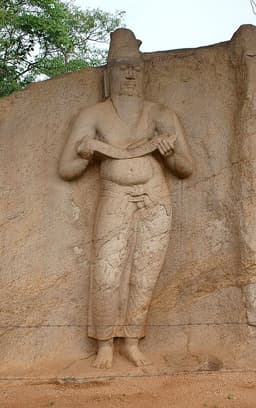
Parakramabahu I
Emperor · Medieval
66.1Total
Basic Information
Born
1471
1123
Died
1533
1186
Era
Medieval
Medieval
Nationality
Denmark
Sri Lanka
Occupation
Emperor
Emperor
Civilization
Western
Indian
Score Comparison
Military (10%)
14.9
82.0
Political (20%)
68.0
72.0
Influence (20%)
58.0
61.0
Legacy (20%)
49.2
52.0
Leadership (15%)
40.0
82.0
Strategy (15%)
45.0
65.4
TOTAL
49.0
66.1
Frederick I of Denmark — Complete Timeline
1523 AD
Siege of CopenhagenWar
Frederick I besieged Copenhagen, which remained loyal to the deposed Christian II. The city surrendered after a blockade, consolidating Frederick's control over Denmark and ending the immediate threat from his predecessor.
Civil WarSiege
Impact: national
Accession as King of Denmark and NorwayPolitical Action◆ Major
Frederick I was elected king after his nephew Christian II was deposed by the Danish nobility. His reign marked the end of the Kalmar Union and the beginning of a period of religious and political change.
AccessionKalmar Union
Impact: national
1526 AD
Introduction of LutheranismReform◆ Major
Frederick I allowed Lutheran preaching in Denmark, protecting reformers like Hans Tausen. He did not formally break with the Catholic Church but permitted the spread of Reformation ideas, laying the groundwork for state Lutheranism.
ReformationLutheranism
Impact: nationalprogressive
1530 AD
Conflict with the Catholic BishopsPolitical Action
Frederick I faced opposition from Catholic bishops who resisted his pro-Reformation policies. He convened a meeting in Copenhagen where Lutheran and Catholic representatives debated, but no resolution was reached, escalating tensions.
Religious ConflictReformation
Impact: national
Parakramabahu I — Complete Timeline
1153 AD
Unification of Sri LankaWar
Parakramabahu I unified the entire island of Sri Lanka under his rule after a series of military campaigns. He defeated the rulers of Ruhuna and other regional kingdoms, ending a period of fragmentation.
Impact: national
1160 AD
Construction of Parakrama SamudraOther◆ Major
Parakramabahu I constructed the Parakrama Samudra, a massive man-made sea of interconnected tanks and canals near Polonnaruwa. This irrigation system, covering over 5,000 acres, was a major engineering achievement.
Impact: regionalconstructive
1165 AD
Invasion of BurmaWar◆ Major
Parakramabahu I launched a naval invasion of Burma (Pagan Kingdom) in retaliation for a trade dispute. The Sinhalese fleet captured the port of Kusumiya and sacked the city, demonstrating Sri Lanka's naval power.
Impact: regional
Reform of the Buddhist SanghaReform◆ Major
Parakramabahu I convened a council to purify the Buddhist Sangha. He expelled corrupt monks and re-established discipline, strengthening Theravada Buddhism in Sri Lanka.
Impact: nationalconstructive
1170 AD
Construction of Polonnaruwa VatadageCultural◆ Major
Parakramabahu I built the Polonnaruwa Vatadage, a circular relic house for the Tooth Relic of the Buddha. This structure is considered a masterpiece of Sinhalese architecture.
Impact: nationalconstructive
Expert Analysis
Origins
Frederick I of Denmark was born in 1471 as the son of King Christian I and Dorothea of Brandenburg. He was raised in the courts of Denmark and Norway, receiving education in governance and military affairs. His early life was marked by the political instability of the Kalmar Union, which united Denmark, Norway, and Sweden under a single monarch. Frederick's older brother, John, became king, and Frederick was made Duke of Schleswig and Holstein, where he gained administrative experience.
Parakramabahu I was born in 1123 in the Kingdom of Polonnaruwa, Sri Lanka, as a prince of the royal bloodline. His father was King Vikramabahu I, but his early life was shadowed by civil war and fragmentation of the island. He was educated in Buddhist scriptures and military strategy, preparing him for his future role as a unifier. His formative years were spent in the southern region of Ruhuna, where he built a power base.
Rise to Power
Frederick I rose to power after his nephew, Christian II, was deposed by the Danish nobility in 1523 due to his autocratic rule and the Stockholm Bloodbath. Frederick was elected king by the Danish Council of the Realm, and his accession marked the end of the Kalmar Union. He secured his position by promising to respect the nobility's privileges and to maintain the Catholic Church's authority, though he secretly supported Lutheran reforms.
Parakramabahu I's rise began in 1140 when he became ruler of Ruhuna. He then launched a series of campaigns to unify Sri Lanka, defeating the rulers of Dakkhinadesa and Rajarata. By 1153, he had captured Polonnaruwa and was crowned king of all Sri Lanka. His key turning point was the siege of Polonnaruwa, where he overcame the forces of King Gajabahu II.
Leadership & Governance
Frederick I's leadership was cautious and pragmatic. He allowed Lutheran preaching and protected reformers like Hans Tausen, scoring 40.0 in leadership. He convened a meeting in Copenhagen in 1530 where Lutheran and Catholic representatives debated, but he avoided a formal break with Rome. His political score of 68.0 reflects his ability to balance noble factions and religious tensions. He introduced Lutheranism gradually, laying the groundwork for his son Christian III's full Reformation.
Parakramabahu I's leadership was decisive and expansionist. He scored 82.0 in leadership and 65.4 in strategy. He reformed the Buddhist Sangha by expelling corrupt monks and re-establishing discipline through a council. He also commissioned massive irrigation projects, such as the Parakrama Samudra, a man-made sea of 2,500 hectares that boosted agriculture. His governance unified the island under a central administration.
Triumph & Tragedy
Frederick I's greatest success was introducing Lutheranism to Denmark, which eventually led to the state's conversion. His greatest failure was the continued conflict with Catholic bishops and the exiled Christian II, who besieged Copenhagen in 1532. Frederick's inability to fully secure his reign led to ongoing instability.
Parakramabahu I's triumph was the unification of Sri Lanka and the construction of the Parakrama Samudra, which ensured water security for centuries. His tragedy was the invasion of Burma in 1164, which, though initially successful, overextended his resources and led to a costly war with the Pagan Kingdom. The campaign scored 82.0 in military but drained the treasury.
Character & Destiny
Frederick I was a cautious and calculating ruler, often described as indecisive. His character shaped his destiny: his reluctance to fully embrace Lutheranism allowed him to maintain power but also left his reforms incomplete. Historical assessments note his political skill but lack of boldness.
Parakramabahu I was ambitious and determined, with a strong vision for a unified Sri Lanka. His character drove him to undertake massive projects and campaigns, but his overconfidence led to the Burmese disaster. He is often called the greatest Sinhalese king, with a total score of 66.1.
Legacy
Frederick I's legacy is the introduction of Lutheranism to Denmark, which became the state religion under his son. His reign marked the end of the Kalmar Union and the beginning of Denmark's Reformation. He scored 58.0 in influence and 49.2 in legacy.
Parakramabahu I's legacy is enduring: the Parakrama Samudra still irrigates farmland, and the Polonnaruwa Vatadage remains a symbol of Sinhalese architecture. His unification of Sri Lanka set a precedent for centralized rule. He scored 61.0 in influence and 52.0 in legacy.
Conclusion
Parakramabahu I had greater impact than Frederick I, as evidenced by his higher total score of 66.1 versus 49.0. While Frederick introduced religious change to a small kingdom, Parakramabahu unified an entire island, built infrastructure that lasted centuries, and reformed Buddhism. His military and leadership scores far exceed Frederick's. The data supports that Parakramabahu I is the more significant historical figure.
Rankings
🥇
Parakramabahu ILeader
Mil: 82.0Pol: 72.0Inf: 61.0
66.1
🥈
Frederick I of Denmark
Mil: 14.9Pol: 68.0Inf: 58.0
49.0
+17.1 behind
How This Comparison Works
Algorithm
Each figure is scored on 6 dimensions (0—100 scale) based on structured historical data: Military (10%), Political (20%), Influence (20%), Legacy (20%), Leadership (15%), Strategy (15%). The weighted total produces the final ranking.
Data Sources
Scores are computed from structured sub-indicators in the database. Scale factors adjust for era (Ancient ×0.85, Modern ×1.0) and civilization size (Eastern ×1.05, Other ×0.80) to account for differences in population and military scale.
Maximum 3 Figures
Comparisons are limited to 2—3 figures to ensure readability and statistical meaningfulness.
Error Margins
±5 points per dimension — Sub-scores are derived from historical records with inherent uncertainty. Two figures within 5 points on a dimension should be considered roughly equivalent in that area.
Total Score Accuracy
±3 points overall — The weighted combination of 6 dimensions produces a total score with approximately ±3 points of uncertainty. Differences of less than 3 points are not statistically significant— the figures are effectively tied.
Known Limitations
- Historical records are incomplete and uneven across civilizations
- Figures from oral-tradition societies may be underrepresented
- Occupation labels can misclassify multi-role figures
- Scores measure capability and impact, not moral character
- Quantitative scoring is a comparison tool, not absolute truth
Capability Radar
Military (10%) — Battles & Warfare
Battles
10
75
Win Rate
10
80
Expansion
10
70
Political (20%) — Governance & Reform
Reform
60
80
Diplomacy
55
70
Economy
40
75
Influence (20%) — Cultural & Global Reach
Cultural
50
65
Global
40
40
Legacy (20%) — Historical Impact
Historical
55
70
Longevity
50
60
Leadership (15%) — Power & Stability
Tenure
50
85
Stability
45
80
Strategy (15%) — Tactics & Innovation
Strategy
10
75
Tactics
10
70
Reform
10
65
Similar Comparisons
Comments & Discussion
No comments yet. Be the first to share your thoughts!