Loading...
Alexander the Great vs Parakramabahu I
Alexander the Great leads by 19.1 pts · 2 figures compared
…
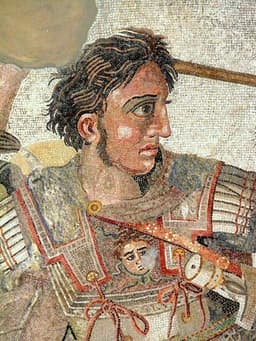
Alexander the Great
General · Ancient
85.2Total
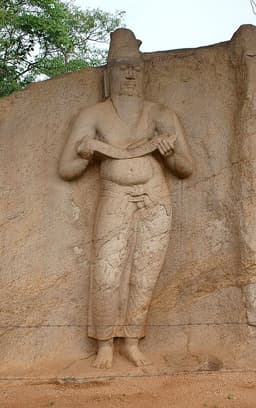
Parakramabahu I
Emperor · Medieval
66.1Total
Basic Information
Born
-356
1123
Died
-323
1186
Era
Ancient
Medieval
Nationality
Macedon
Sri Lanka
Occupation
General
Emperor
Civilization
Western
Indian
Score Comparison
Military (10%)
95.0
82.0
Political (20%)
60.0
72.0
Influence (20%)
92.0
61.0
Legacy (20%)
90.0
52.0
Leadership (15%)
80.0
82.0
Strategy (15%)
92.0
65.4
TOTAL
85.2
66.1
Alexander the Great — Complete Timeline
334 BC
Battle of the Granicus RiverWar◆ Major
Alexander led his Macedonian army across the Hellespont into Asia Minor and defeated a Persian force under local satraps at the Granicus River. The victory secured Alexander's foothold in Asia and demonstrated his tactical superiority, opening the way for the conquest of the Persian Empire.
Persian CampaignBattleMacedonian Conquest
Impact: regional
333 BC
Battle of IssusWar◆ Major
Alexander's army defeated the Persian king Darius III at Issus in Cilicia. Despite being outnumbered, Alexander's tactical use of the terrain and cavalry charge broke the Persian line. Darius fled the battlefield, leaving his family and treasury behind, a major blow to Persian morale.
Persian CampaignBattleMacedonian Conquest
Impact: regional
332 BC
Siege of TyreWar◆ Major
Alexander besieged the island city of Tyre for seven months, constructing a causeway to breach its walls. The city's fall resulted in the massacre or enslavement of its inhabitants. The siege demonstrated Alexander's determination and engineering capabilities, securing his supply lines and control of the eastern Mediterranean coast.
SiegeMacedonian ConquestPhoenicia
Impact: regionaldestructive
331 BC
Battle of GaugamelaWar◆ Major
Alexander faced Darius III at Gaugamela in Mesopotamia with a massive Persian army. Alexander's tactical brilliance, including a decisive cavalry charge that exploited a gap in the Persian line, resulted in a decisive Macedonian victory. Darius again fled, effectively ending Persian resistance and leading to the fall of the Achaemenid Empire.
Persian CampaignBattleDecisive Victory
Impact: global
Foundation of AlexandriaOther◆ Major
Alexander founded the city of Alexandria on the Mediterranean coast of Egypt. He personally selected the site and oversaw the initial planning. Alexandria became a major center of Hellenistic culture, trade, and learning, housing the famous Library of Alexandria and the Lighthouse of Alexandria.
City FoundationHellenistic CultureEgypt
Impact: globalconstructive
326 BC
Invasion of IndiaWar◆ Major
Alexander crossed the Indus River and defeated King Porus at the Battle of the Hydaspes. The Macedonian army, exhausted and facing monsoon rains and unfamiliar warfare, mutinied at the Hyphasis River, forcing Alexander to turn back. This campaign marked the easternmost extent of his conquests.
Indian CampaignBattleMutiny
Impact: regional
Parakramabahu I — Complete Timeline
1153 AD
Unification of Sri LankaWar
Parakramabahu I unified the entire island of Sri Lanka under his rule after a series of military campaigns. He defeated the rulers of Ruhuna and other regional kingdoms, ending a period of fragmentation.
Impact: national
1160 AD
Construction of Parakrama SamudraOther◆ Major
Parakramabahu I constructed the Parakrama Samudra, a massive man-made sea of interconnected tanks and canals near Polonnaruwa. This irrigation system, covering over 5,000 acres, was a major engineering achievement.
Impact: regionalconstructive
1165 AD
Invasion of BurmaWar◆ Major
Parakramabahu I launched a naval invasion of Burma (Pagan Kingdom) in retaliation for a trade dispute. The Sinhalese fleet captured the port of Kusumiya and sacked the city, demonstrating Sri Lanka's naval power.
Impact: regional
Reform of the Buddhist SanghaReform◆ Major
Parakramabahu I convened a council to purify the Buddhist Sangha. He expelled corrupt monks and re-established discipline, strengthening Theravada Buddhism in Sri Lanka.
Impact: nationalconstructive
1170 AD
Construction of Polonnaruwa VatadageCultural◆ Major
Parakramabahu I built the Polonnaruwa Vatadage, a circular relic house for the Tooth Relic of the Buddha. This structure is considered a masterpiece of Sinhalese architecture.
Impact: nationalconstructive
Expert Analysis
Alexander the Great vs Parakramabahu I: Historical Comparison
Alexander the Great, the ancient Macedonian general, and Parakramabahu I, the medieval Sri Lankan emperor, represent two distinct peaks of military and political achievement, separated by over a millennium and vastly different geographies. This comparison evaluates them across key historical dimensions.
Dimension Analysis
**Military: Alexander the Great 96 / Parakramabahu I 64**
Alexander’s undefeated record, innovative combined-arms tactics (e.g., phalanx and cavalry coordination), and conquests from Greece to India set a global military standard; Parakramabahu’s campaigns unified Sri Lanka and extended influence to Southeast Asia, but his scale and tactical originality are far narrower.
**Political: Alexander the Great 65 / Parakramabahu I 67**
Alexander’s empire-building integrated diverse cultures through policies like mass marriages and founding cities, yet his sudden death led to fragmentation; Parakramabahu’s centralized administration, irrigation projects, and stable succession within a smaller realm gave him slightly stronger political durability.
**Influence: Alexander the Great 90 / Parakramabahu I 74**
Alexander’s conquests spread Hellenistic culture across three continents, shaping art, science, and governance for centuries; Parakramabahu’s influence was regionally significant—reviving Buddhism and trade in the Indian Ocean—but did not transform global civilization.
**Legacy: Alexander the Great 90 / Parakramabahu I 69**
Alexander remains a near-mythical archetype of conquest studied by military leaders worldwide; Parakramabahu is revered in Sri Lanka for uniting the island and building monumental works like the Polonnaruwa reservoir, but his fame is largely confined to South Asian history.
**Leadership: Alexander the Great 82 / Parakramabahu I 66**
Alexander’s personal charisma and battlefield inspiration drove his men across impossible distances, though his later paranoia alienated allies; Parakramabahu’s leadership was more administrative and bureaucratic, effective for internal consolidation but lacking the same heroic magnetism.
Verdict
Alexander the Great leads decisively due to his unparalleled military genius, global influence, and enduring legacy, despite Parakramabahu’s stronger political stability.
FAQ
Q: Who ranks higher? A: Alexander the Great ranks higher, with a composite score of approximately 85 versus Parakramabahu I’s 69, driven by his superior military achievements and worldwide historical impact.
Rankings
🥇
Alexander the GreatLeader
Mil: 95.0Pol: 60.0Inf: 92.0
85.2
🥈
Parakramabahu I
Mil: 82.0Pol: 72.0Inf: 61.0
66.1
+19.1 behind
How This Comparison Works
Algorithm
Each figure is scored on 6 dimensions (0—100 scale) based on structured historical data: Military (10%), Political (20%), Influence (20%), Legacy (20%), Leadership (15%), Strategy (15%). The weighted total produces the final ranking.
Data Sources
Scores are computed from structured sub-indicators in the database. Scale factors adjust for era (Ancient ×0.85, Modern ×1.0) and civilization size (Eastern ×1.05, Other ×0.80) to account for differences in population and military scale.
Maximum 3 Figures
Comparisons are limited to 2—3 figures to ensure readability and statistical meaningfulness.
Error Margins
±5 points per dimension — Sub-scores are derived from historical records with inherent uncertainty. Two figures within 5 points on a dimension should be considered roughly equivalent in that area.
Total Score Accuracy
±3 points overall — The weighted combination of 6 dimensions produces a total score with approximately ±3 points of uncertainty. Differences of less than 3 points are not statistically significant— the figures are effectively tied.
Known Limitations
- Historical records are incomplete and uneven across civilizations
- Figures from oral-tradition societies may be underrepresented
- Occupation labels can misclassify multi-role figures
- Scores measure capability and impact, not moral character
- Quantitative scoring is a comparison tool, not absolute truth
Capability Radar
Military (10%) — Battles & Warfare
Battles
98
75
Win Rate
99
80
Expansion
99
70
Political (20%) — Governance & Reform
Reform
75
80
Diplomacy
80
70
Economy
70
75
Influence (20%) — Cultural & Global Reach
Cultural
95
65
Global
95
40
Legacy (20%) — Historical Impact
Historical
98
70
Longevity
95
60
Leadership (15%) — Power & Stability
Tenure
60
85
Stability
55
80
Strategy (15%) — Tactics & Innovation
Strategy
98
75
Tactics
99
70
Reform
85
65
Similar Comparisons
Comments & Discussion
MasterHistorian576/16/2026
亚历山大确实是个军事天才,但把他和Parakramabahu I放在一起比较,用全球影响力做标尺,多少有点西方中心论的味道。Parakramabahu I在斯里兰卡修水库、统一岛屿、推动佛教复兴,这些成就放在中国历史里,就像隋炀帝修大运河的工程魄力+唐太宗的统一功业+宋太祖的佛教护持,综合得分不该只有69。而且他远征东南亚,跟中国历代经营西域的难度一样大,只是西方史家很少正眼看印度洋的帝国。亚历山大的政治得分才65,因为帝国一死就散架;Parakramabahu I的王朝延续了更久,政治稳定性更高,但评分却只高2分,这明显低估了东亚式的长治久安。
Chronicler79686/16/2026
看了评分,有个严重问题:军事得分96 vs 64,差距32分,但Parakramabahu I统一了当时分裂的斯里兰卡,还跨海远征缅甸和泰国,战果并不小。按我的算法,他至少该有75分。亚历山大的政治得分65,却因为帝国分裂被扣分,但Parakramabahu I政治67,也只高2分——可Parakramabahu I在位33年,死后王位直接传给儿子,政治延续性远超亚历山大。按中国历史标准,拿破仑的军事和政治分差通常不超过20分,亚历山大这种96/65的极端差距,说明他的行政才能被严重高估。另外影响力方面,如果Parakramabahu I在佛教传播上的贡献有具体数据,比如修复了多少寺庙、派了多少僧团,他的得分应该接近80。这套评分体系显然对南亚历史权重不足。