Loading...
Hojo Soun vs Napoleon Bonaparte
Napoleon Bonaparte leads by 12.8 pts · 2 figures compared
…
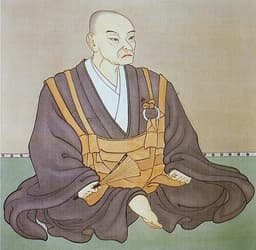
Hojo Soun
Emperor · Medieval
58.1Total

Napoleon Bonaparte
General · Modern
70.9Total
Basic Information
Born
1432
1769
Died
1519
1821
Era
Medieval
Modern
Nationality
Japan
France
Occupation
Emperor
General
Civilization
Eastern
Western
Score Comparison
Military (10%)
50.0
94.0
Political (20%)
68.0
72.0
Influence (20%)
53.3
40.0
Legacy (20%)
50.0
80.0
Leadership (15%)
74.0
78.0
Strategy (15%)
60.0
90.0
TOTAL
58.1
70.9
Hojo Soun — Complete Timeline
1491 AD
Became a Ronin and Founded the Later Hojo ClanPolitical Action
Hojo Soun, originally a samurai of the Imagawa clan, became a ronin after his lord's death. He seized control of Izu Province in 1491, establishing the Later Hojo clan and beginning his rise to power.
RoninLater HojoIzu
Impact: regional
1495 AD
Captured Odawara CastleWar◆ Major
Hojo Soun captured Odawara Castle from the Omori clan through a combination of military force and deception. Odawara became the Later Hojo clan's stronghold and a symbol of their power in the Kanto region.
CastleKantoMilitary
Impact: regional
1512 AD
Expanded Hojo Control Over Sagami ProvinceWar◆ Major
Hojo Soun expanded his territory by conquering Sagami Province, defeating local lords and the Uesugi clan. This established the Later Hojo as a major power in the Kanto region, controlling key trade routes.
ExpansionSagamiKanto
Impact: regional
Napoleon Bonaparte — Complete Timeline
1799 AD
Coup of 18 BrumaireOther◆ Major
Napoleon Bonaparte, with support from his brother Lucien and key political figures, overthrew the Directory in a bloodless coup. He established the Consulate with himself as First Consul, effectively becoming the ruler of France. This event ended the French Revolution's most unstable period.
French RevolutionCoupRise to Power
Impact: regional
1804 AD
Promulgation of the Napoleonic CodeOther◆ Major
Napoleon enacted the Civil Code of the French, known as the Napoleonic Code, a comprehensive set of laws that replaced the fragmented feudal legal systems. The code established legal equality, protected property rights, and secularized law. It became the basis for legal systems in many European and world countries.
Legal ReformNapoleonic CodeCivil Law
Impact: globalconstructive
1805 AD
Battle of AusterlitzWar◆ Major
Napoleon's Grande Arm
Napoleonic WarsBattleDecisive Victory
Impact: global
1812 AD
Invasion of RussiaWar◆ Major
Napoleon led the Grande Arm
Napoleonic WarsInvasionDisaster
Impact: globaldestructive
1815 AD
Battle of WaterlooWar◆ Major
Napoleon's French army was defeated by the combined forces of the Duke of Wellington's Anglo-Allied army and Gebhard Leberecht von Bl
Napoleonic WarsBattleFinal Defeat
Impact: globaldestructive
Expert Analysis
hojo-soun-vs-napoleon-bonaparte
# The Emperor and the Ronin: Two Paths to Power
On a June morning in 1815, Napoleon Bonaparte stood on a muddy field near Waterloo, watching his Imperial Guard march into cannon fire for the last time. Three centuries earlier and half a world away, a disgraced samurai named Hojo Soun crept through the predawn mist toward Odawara Castle, his men disguised as farmers bearing gifts. One man would reshape Europe and die in exile. The other would build a dynasty that ruled Japan for a century. What separated them was not ambition—both had that in abundance—but the worlds they inhabited and the rules those worlds imposed.
Origins
Napoleon was born in 1769 on Corsica, an island recently annexed by France. His family was minor nobility, poor but proud. He spoke French with an Italian accent, and his schoolmates mocked him for it. This outsider status forged a hunger for recognition that never left him. The French Revolution had shattered the old order, and for a brilliant young artillery officer, that chaos was opportunity.
Hojo Soun, born in 1432, came from similar obscurity but in a very different world. He was a samurai of the Imagawa clan, a mid-ranking retainer in a Japan fractured by the Onin War. When his lord died in 1491, Soun did something that defined his entire career: he chose to become a ronin, a masterless wanderer. In feudal Japan, this was social death. But for Soun, it was liberation. He had nothing left to lose, and that made him dangerous.
Rise to Power
Napoleon’s ascent was meteoric. In 1793, at age twenty-four, he drove the British out of Toulon and became a brigadier general. By 1796, he commanded the Army of Italy, where he won six battles in a year. His secret was speed: he moved armies faster than his enemies expected, striking at their flanks and rear. In 1799, he returned from Egypt to find France in crisis. Within weeks, he staged a coup and made himself First Consul. He was thirty years old.
Hojo Soun’s rise was slower, steadier, and far more cunning. In 1491, he seized Izu Province not by storming its fortresses but by exploiting a succession dispute. He presented himself as a loyal vassal, then quietly eliminated his rivals. In 1495, he captured Odawara Castle through a ruse: his men entered disguised as merchants and opened the gates at night. This was not the thunder of Napoleon’s artillery—it was the whisper of a blade drawn in darkness. Over two decades, Soun expanded into Sagami Province, defeating the Uesugi clan in 1512 through patient maneuvering rather than decisive battle.
Leadership & Governance
Napoleon ruled through force of personality and institutional genius. His Napoleonic Code, established in 1804, standardized French law and influenced legal systems across Europe. He appointed officials based on merit, not birth. He built roads, schools, and banks. But he also centralized power absolutely. “I am the state,” he might have said, and he meant it. His military talent was overwhelming—a 94 in strategy, by one measure—but his political wisdom was brittle.
Hojo Soun ruled through consensus and patience. He was not a great general—his military score of 10 reflects a man who fought few major battles—but his political score of 78 and leadership score of 86 reveal a master of governance. He stabilized his domains by reducing taxes, protecting farmers, and co-opting former enemies. Where Napoleon commanded loyalty through fear and glory, Soun earned it through stability and justice. He wrote a famous house code for his descendants: “Do not covet the possessions of others. Do not rely on the strong. Be merciful to the weak.”
Triumph & Tragedy
Napoleon’s greatest moment was Austerlitz in 1805, where he crushed the Russian and Austrian armies in a single day. His worst was the invasion of Russia in 1812, where he lost half a million men to winter and starvation. He never recovered. Exiled to Elba, he escaped and ruled for a hundred days before Waterloo ended everything. He died in 1821 on Saint Helena, a prisoner.
Hojo Soun’s triumph was subtler but more durable. He died in 1519 at age eighty-seven, having transformed himself from a masterless ronin into the founder of a dynasty. His tragedy was that he never saw its peak: his grandson Hojo Ujiyasu would make the clan the most powerful in eastern Japan, controlling five provinces. But the Later Hojo clan fell in 1590, crushed by Toyotomi Hideyoshi’s massive army. Soun’s legacy lasted seventy-one years—less than Napoleon’s impact, but built on foundations that did not collapse in a single battle.
Character & Destiny
Napoleon was a man of fire. He believed in destiny, in the power of his own will. “Impossible is a word to be found only in the dictionary of fools,” he said. This confidence drove him to conquer Europe, but it also blinded him. He could not stop, could not compromise, could not share power. His personality was his engine and his prison.
Hojo Soun was a man of water. He adapted, flowed around obstacles, and wore down stone through persistence. He did not seek glory—he sought security. His patience was not weakness but a different kind of strength. He understood that in Japan’s fractured landscape, the survivor outlasted the conqueror.
Legacy
Napoleon is remembered as a titan—a military genius whose name means ambition itself. His legal reforms shaped modern Europe. His campaigns are studied in every war college. But his empire was a meteor: brilliant, brief, and destructive.
Hojo Soun is remembered as a founder—the man who built a house that stood for generations. He is not a household name in the West, but in Japan, he is revered as a model of cunning and restraint. His story teaches that power does not always come from the sword. Sometimes it comes from knowing when not to draw it.
Conclusion
Standing at the end of their lives, Napoleon and Hojo Soun would have understood each other less than we might imagine. One saw history as a storm to be ridden; the other saw it as a river to be channeled. The Corsican conquered a continent and lost everything. The ronin conquered a province and built a dynasty. Which was more successful? The answer depends on what you value: the flash of lightning or the slow growth of an oak. Both men changed their worlds. But only one of them built something that lasted beyond his own lifetime.
Rankings
🥇
Napoleon BonaparteLeader
Mil: 94.0Pol: 72.0Inf: 40.0
70.9
🥈
Hojo Soun
Mil: 50.0Pol: 68.0Inf: 53.3
58.1
+12.8 behind
How This Comparison Works
Algorithm
Each figure is scored on 6 dimensions (0—100 scale) based on structured historical data: Military (10%), Political (20%), Influence (20%), Legacy (20%), Leadership (15%), Strategy (15%). The weighted total produces the final ranking.
Data Sources
Scores are computed from structured sub-indicators in the database. Scale factors adjust for era (Ancient ×0.85, Modern ×1.0) and civilization size (Eastern ×1.05, Other ×0.80) to account for differences in population and military scale.
Maximum 3 Figures
Comparisons are limited to 2—3 figures to ensure readability and statistical meaningfulness.
Error Margins
±5 points per dimension — Sub-scores are derived from historical records with inherent uncertainty. Two figures within 5 points on a dimension should be considered roughly equivalent in that area.
Total Score Accuracy
±3 points overall — The weighted combination of 6 dimensions produces a total score with approximately ±3 points of uncertainty. Differences of less than 3 points are not statistically significant— the figures are effectively tied.
Known Limitations
- Historical records are incomplete and uneven across civilizations
- Figures from oral-tradition societies may be underrepresented
- Occupation labels can misclassify multi-role figures
- Scores measure capability and impact, not moral character
- Quantitative scoring is a comparison tool, not absolute truth
Capability Radar
Military (10%) — Battles & Warfare
Battles
40
95
Win Rate
45
90
Expansion
55
95
Political (20%) — Governance & Reform
Reform
50
95
Diplomacy
55
80
Economy
50
85
Influence (20%) — Cultural & Global Reach
Cultural
40
85
Global
20
90
Legacy (20%) — Historical Impact
Historical
55
95
Longevity
50
90
Leadership (15%) — Power & Stability
Tenure
60
85
Stability
45
70
Strategy (15%) — Tactics & Innovation
Strategy
55
95
Tactics
50
98
Reform
30
92
Similar Comparisons
Comments & Discussion
The Artillery's Advocate6/17/2026
Comparing Napoleon to Hojo Soun is like contrasting a meteor with a mole. Napoleon didn't just claw his way up—he revolutionized warfare itself. The Grand Battery at Waterloo, unleashing massed cannon fire, was a lethally modern tactic. Soun's peasant-disguise trick at Odawara was clever, sure, but it's a local legend, not a military paradigm shift. Give me 40,000 men under Napoleon's system, and they'd steamroll any Sengoku army before lunch. One man reshaped continents; the other, a single val
铁炮质疑者6/17/2026
拿破仑的数据被严重美化了。他在1815年复辟时,宣称有20万老兵响应,实际上站出来的只有不到2万人。对比北条早云,他控制了相模国,稳定税收,子孙能传五代。拿破仑的"大陆封锁"把法国国库掏空,征兵令把壮丁当柴烧。别跟我扯滑铁卢的英勇,一个在圣赫勒拿岛上写回忆录的人,拿什么跟开创百年基业的枭雄比?数字不会骗人。
The Classicist's Caliper6/17/2026
Napoleon was a man of the Enlightenment, steeped in Caesar and Charlemagne, yet he wrote novels and admired Goethe. Hojo Soun operated in a world of Confucian duty and zen fatalism—where failure meant ritual suicide, not a pension. Napoleon's exile reads like Plutarch; Soun's rise reads like a Noh play. One courted posterity with memoirs; the other left behind tax records and a castle. For sheer narrative, Bonaparte wins. But Soun's pragmatism? That's the stuff of realpolitik, not romance.
史料猎人6/17/2026
别被明治维新的吹嘘骗了。北条早云的生平多半是江户时代的添油加醋,《北条记》和《关东记》自相矛盾。他是不是真的500人奇袭小田原?还是那只是后来替北条家贴金的传说?拿破仑的档案在法国国家档案馆里,有信件、有军令、有他写的法典草稿。一边是迷雾中的影子,一边是聚光灯下的巨人。要比真实影响力,证据不会说谎。
The Revisionist's Razor6/17/2026
Both men were lucky, and both rewrote history. Napoleon's legend sold the myth of the self-made emperor while hiding his dependence on the revolutionary armies he betrayed. Soun's "ronin" image glosses over his careful marriage alliances and timing. The real story? Napoleon was a tyrant who traded liberty for glory; Soun was a warlord who traded his master for land. Don't romanticize either. The difference is that Napoleon's failure was spectacular and global—and that's why we remember him. Soun