Loading...
Emperor Gaozong of Tang vs King Seongdeok
Emperor Gaozong of Tang leads by 1.5 pts · 2 figures compared
…
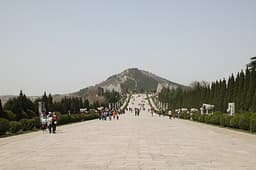
Emperor Gaozong of Tang
Emperor · Medieval
60.4Total
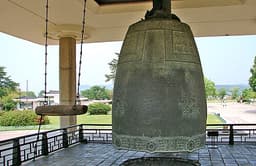
King Seongdeok
Emperor · Medieval
58.9Total
Basic Information
Born
628
691
Died
683
737
Era
Medieval
Medieval
Nationality
China
Korea
Occupation
Emperor
Emperor
Civilization
Eastern
Eastern
Score Comparison
Military (10%)
72.5
50.0
Political (20%)
62.7
68.0
Influence (20%)
61.0
62.0
Legacy (20%)
50.0
52.0
Leadership (15%)
68.0
72.0
Strategy (15%)
57.5
43.7
TOTAL
60.4
58.9
Emperor Gaozong of Tang — Complete Timeline
657 AD
Conquest of the Western TurksWar◆ Major
Emperor Gaozong's general Su Dingfang defeated the Western Turkic Khaganate, bringing Central Asia under Tang control. This established Tang hegemony over the Silk Road and extended the empire's influence to the Caspian Sea.
ConquestExpansion
Impact: globalconstructive
660 AD
Illness and Regency of Wu ZetianPolitical Action
Emperor Gaozong suffered a stroke that left him partially incapacitated. His wife, Empress Wu Zetian, began to take an active role in governance, eventually becoming the de facto ruler. This marked the beginning of Wu Zetian's rise to power.
SuccessionRegency
Impact: regional
663 AD
Battle of BaekgangWar◆ Major
Tang and Silla forces defeated a combined Baekje-Yamato Japanese fleet at the Battle of Baekgang in Korea. This victory secured Tang control over the Korean peninsula and ended Japanese ambitions in Korea for centuries.
Naval BattleConquest
Impact: regionalconstructive
668 AD
Conquest of GoguryeoWar◆ Major
Emperor Gaozong, with the help of the Silla kingdom, conquered the Korean kingdom of Goguryeo. This victory expanded Tang territory into Manchuria and Korea, establishing a Tang protectorate over the region.
ConquestExpansion
Impact: regionalconstructive
King Seongdeok — Complete Timeline
702 AD
Ascended to the Throne of SillaPolitical Action◆ Major
Seongdeok became king of Unified Silla. His reign is considered a golden age of Silla culture and Buddhism.
AccessionSillaKorea
Impact: regional
720 AD
Promoted Astronomy and ScienceCultural
Seongdeok supported scientific advancements, including the construction of the Cheomseongdae astronomical observatory. This reflected the kingdom's interest in science and calendar-making.
ScienceAstronomySilla
Impact: regionalconstructive
Expert Analysis
Origins
Emperor Gaozong of Tang (born 628 CE) was the ninth son of Emperor Taizong, the second ruler of the Tang dynasty. His mother was Empress Zhangsun. Gaozong received a thorough Confucian education and was designated crown prince in 643 after a succession struggle. He ascended the throne in 649 at age 21. His early reign was guided by his father's capable ministers.
King Seongdeok of Silla (born 691 CE) was the 33rd monarch of Unified Silla, succeeding his father King Sinmun. He belonged to the Kim clan, the ruling house of Silla. Seongdeok's reign began in 702 and lasted until 737. He grew up in a period of relative peace after Silla's unification of the Korean peninsula, allowing focus on cultural and religious development.
Rise to Power
Gaozong became emperor at 21 after Taizong's death. He initially relied on advisors like Zhangsun Wuji and Chu Suiliang, but soon asserted his own authority. His rise was not marked by dramatic conquest but by steady consolidation. He deposed his first empress in 655 to elevate Wu Zetian, a former concubine, which reshaped the court.
Seongdeok ascended the throne peacefully in 702. His reign saw no major wars; Silla was already unified. He focused on strengthening royal authority and promoting Buddhism. He appointed capable officials and supported the aristocracy, maintaining stability.
Leadership & Governance
Gaozong's leadership was characterized by territorial expansion through capable generals. He scored 68.0 in leadership and 57.5 in strategy. He delegated military campaigns to Su Dingfang and others, resulting in the conquest of the Western Turks in 657 and Goguryeo in 668. However, his governance was increasingly influenced by Wu Zetian after his stroke in 660. She dominated court decisions, reducing Gaozong's direct control. His political score of 62.7 reflects this mixed record.
Seongdeok scored 72.0 in leadership and 68.0 in politics. He governed as a patron of culture and religion. He commissioned the construction of Bulguksa Temple (completed in 774, after his death) and the Seokguram Grotto, both UNESCO World Heritage sites. He also promoted astronomy, building the Cheomseongdae observatory. His governance emphasized stability and cultural flourishing rather than military expansion.
Triumph & Tragedy
Gaozong's greatest triumph was the conquest of Goguryeo (668), ending centuries of Korean resistance. He also defeated the Western Turks (657) and secured Tang hegemony over Central Asia. The Battle of Baekgang (663) destroyed Japanese ambitions in Korea. However, his greatest failure was his incapacitating stroke, which allowed Wu Zetian to seize power. She eventually deposed his sons and established her own Zhou dynasty, tarnishing Gaozong's legacy.
Seongdeok's triumph was the cultural golden age of Silla, symbolized by Bulguksa and Seokguram. These structures remain masterpieces of Buddhist art. He also advanced science, with Cheomseongdae built around 647, before his reign, but he supported such endeavors. His tragedy was the lack of military achievements; Silla faced no major threats, but his reign saw no expansion. His total score of 58.9 is lower than Gaozong's 60.4.
Character & Destiny
Gaozong was intelligent but physically weak. His character was shaped by his father's shadow and his wife's ambition. He made crucial decisions, such as elevating Wu Zetian, but later became a figurehead. Historians often view him as a transitional figure between Taizong's vigor and Wu Zetian's domination.
Seongdeok was devoutly Buddhist and culturally inclined. He focused on peaceful development, avoiding conflict. His destiny was to be remembered as a builder and patron, not a conqueror. His leadership score of 72.0 reflects his effective governance in a stable era.
Legacy
Gaozong's legacy is mixed. He expanded Tang territory to its greatest extent, but his reign ended with the rise of Wu Zetian, who disrupted the dynasty. The conquest of Goguryeo weakened Silla, but Tang's influence in Korea waned after his death. His military score of 72.5 is high, but his influence score of 61.0 and legacy score of 50.0 are moderate due to subsequent events.
Seongdeok's legacy is cultural. Bulguksa and Seokguram are iconic symbols of Korean Buddhism and attract millions of visitors. His support for science and astronomy helped Silla's intellectual life. His influence score of 62.0 and legacy score of 52.0 reflect his enduring cultural impact, though less geopolitical.
Conclusion
Emperor Gaozong of Tang had greater impact due to his military conquests that reshaped East Asia. His total score of 60.4 exceeds Seongdeok's 58.9. Gaozong's campaigns conquered Goguryeo and the Western Turks, expanding Tang control over Manchuria and Central Asia. Seongdeok's cultural achievements, while significant, did not alter the balance of power. Gaozong's failures, including Wu Zetian's takeover, do not erase his territorial gains. Thus, Gaozong is the more consequential figure.
Rankings
🥇
Emperor Gaozong of TangLeader
Mil: 72.5Pol: 62.7Inf: 61.0
60.4
🥈
King Seongdeok
Mil: 50.0Pol: 68.0Inf: 62.0
58.9
+1.5 behind
How This Comparison Works
Algorithm
Each figure is scored on 6 dimensions (0—100 scale) based on structured historical data: Military (10%), Political (20%), Influence (20%), Legacy (20%), Leadership (15%), Strategy (15%). The weighted total produces the final ranking.
Data Sources
Scores are computed from structured sub-indicators in the database. Scale factors adjust for era (Ancient ×0.85, Modern ×1.0) and civilization size (Eastern ×1.05, Other ×0.80) to account for differences in population and military scale.
Maximum 3 Figures
Comparisons are limited to 2—3 figures to ensure readability and statistical meaningfulness.
Error Margins
±5 points per dimension — Sub-scores are derived from historical records with inherent uncertainty. Two figures within 5 points on a dimension should be considered roughly equivalent in that area.
Total Score Accuracy
±3 points overall — The weighted combination of 6 dimensions produces a total score with approximately ±3 points of uncertainty. Differences of less than 3 points are not statistically significant— the figures are effectively tied.
Known Limitations
- Historical records are incomplete and uneven across civilizations
- Figures from oral-tradition societies may be underrepresented
- Occupation labels can misclassify multi-role figures
- Scores measure capability and impact, not moral character
- Quantitative scoring is a comparison tool, not absolute truth
Capability Radar
Military (10%) — Battles & Warfare
Battles
55
20
Win Rate
60
25
Expansion
65
15
Political (20%) — Governance & Reform
Reform
60
55
Diplomacy
65
60
Economy
60
60
Influence (20%) — Cultural & Global Reach
Cultural
50
70
Global
45
40
Legacy (20%) — Historical Impact
Historical
55
65
Longevity
50
70
Leadership (15%) — Power & Stability
Tenure
70
65
Stability
55
65
Strategy (15%) — Tactics & Innovation
Strategy
55
20
Tactics
50
20
Reform
40
15
Similar Comparisons
Comments & Discussion
No comments yet. Be the first to share your thoughts!