Loading...
Frederick IV of Denmark vs Prithvi Narayan Shah
Prithvi Narayan Shah leads by 10.7 pts · 2 figures compared
…

Frederick IV of Denmark
Emperor · Modern
51.2Total
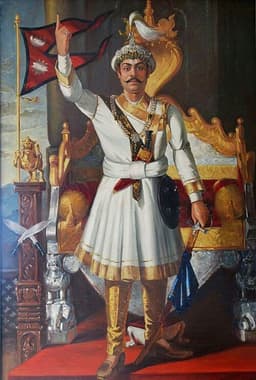
Prithvi Narayan Shah
Emperor · Modern
61.9Total
Basic Information
Born
1671
1723
Died
1730
1775
Era
Modern
Modern
Nationality
Denmark
Nepal
Occupation
Emperor
Emperor
Civilization
Western
Indian
Score Comparison
Military (10%)
55.0
70.0
Political (20%)
68.0
72.0
Influence (20%)
52.5
55.0
Legacy (20%)
45.0
58.0
Leadership (15%)
40.0
72.0
Strategy (15%)
51.7
51.0
TOTAL
51.2
61.9
Frederick IV of Denmark — Complete Timeline
1700 AD
Participation in the Great Northern WarWar◆ Major
Frederick IV joined the Great Northern War against Sweden, forming an alliance with Russia and Saxony. Denmark's early campaigns failed, leading to the Treaty of Travendal in 1700, which temporarily removed Denmark from the war.
Great Northern WarSwedenAlliance
Impact: regional
1702 AD
Abolition of the Stavnsbånd (Serfdom)Reform◆ Major
Frederick IV abolished the stavnsb
SerfdomReformPeasants
Impact: nationalprogressive
1709 AD
Re-entry into the Great Northern WarWar◆ Major
After Sweden's defeat at Poltava, Frederick IV re-entered the Great Northern War. Danish forces invaded Scania but were repelled at the Battle of Helsingborg in 1710, failing to regain lost territories.
Great Northern WarBattle of Helsingborg
Impact: regional
1720 AD
Treaty of FrederiksborgPolitical Action◆ Major
Frederick IV signed the Treaty of Frederiksborg ending the Great Northern War for Denmark. Denmark gained the Duchy of Schleswig but failed to recover Scania, and Sweden paid a war indemnity.
TreatyPeaceGreat Northern War
Impact: regional
Prithvi Narayan Shah — Complete Timeline
1767 AD
Battle of KirtipurWar◆ Major
Prithvi Narayan Shah's forces captured the strategic town of Kirtipur after a prolonged siege. The victory was crucial for controlling the Kathmandu Valley and demonstrated his military strategy, though it involved heavy casualties on both sides.
SiegeMilitary CampaignGorkha Conquest
Impact: regional
1768 AD
Unification of NepalWar
Prithvi Narayan Shah conquered the Kathmandu Valley, defeating the Malla kingdoms of Kathmandu, Patan, and Bhaktapur. This victory unified the valley under his rule and marked the foundation of the modern state of Nepal.
ConquestUnificationKathmandu Valley
Impact: regionalconstructive
1769 AD
Proclamation of the Kingdom of NepalPolitical Action
After unifying the Kathmandu Valley, Prithvi Narayan Shah proclaimed the Kingdom of Nepal, with Kathmandu as its capital. He established the Shah dynasty, which ruled Nepal until 2008, and laid the administrative foundations of the state.
Foundation of NepalShah DynastyState Formation
Impact: regionalconstructive
1774 AD
Divyopadesh (Divine Counsel)Cultural◆ Major
Prithvi Narayan Shah delivered the Divyopadesh, a set of political and strategic instructions to his successors. The counsel emphasized nationalism, self-reliance, and the importance of maintaining Nepal's independence from British India and China.
Political TestamentNationalismForeign Policy
Impact: nationalconstructive
Expert Analysis
Origins
Frederick IV of Denmark was born on October 11, 1671, in Copenhagen, the son of King Christian V and Charlotte Amalie of Hesse-Kassel. He received a princely education focused on military and statecraft, but his early life was overshadowed by Denmark's diminished status after the Scanian War. Frederick ascended the throne in 1699 at age 28, inheriting a kingdom struggling to recover from territorial losses and economic stagnation.
Prithvi Narayan Shah was born on January 7, 1723, in Gorkha, a small hill principality in present-day Nepal. He was the eldest son of King Nara Bhupal Shah and Queen Kaushalyavati. From childhood, he was exposed to stories of Nepal's former glory and the decline of the Malla kingdoms. His education included military tactics, diplomacy, and Hindu scriptures, shaping his vision of unifying the fractured Himalayan states.
Rise to Power
Frederick IV's rise was straightforward as hereditary monarch, but his early reign was marked by the Great Northern War (1700-1721). In 1700, he allied with Peter the Great of Russia and Augustus II of Saxony to challenge Swedish dominance. However, Charles XII of Sweden swiftly forced Denmark out of the war with the Peace of Travendal in 1700, humiliating Frederick. Denmark re-entered only after Sweden's defeat at Poltava in 1709, but Frederick's invasion of Scania was repelled at the Battle of Helsingborg in 1710. His military score of 55.0 reflects these failures.
Prithvi Narayan Shah's rise was a calculated campaign of conquest. He became king of Gorkha in 1743 at age 20. His first major military action was the Battle of Kirtipur in 1757, where his forces captured the strategic town after a prolonged siege. This victory opened the path to the Kathmandu Valley. In 1769, he conquered the three Malla kingdoms—Kathmandu, Patan, and Bhaktapur—unifying the valley. His political score of 72.0 reflects his strategic alliances and diplomatic maneuvering.
Leadership & Governance
Frederick IV's leadership was inconsistent. Domestically, he enacted progressive reforms, most notably the abolition of the stavnsbånd (serfdom) in 1702, which freed peasants from being tied to the land. He also promoted trade and built the Frederiksberg Palace. However, his foreign policy was reactive and often unsuccessful. His leadership score of 40.0 reflects his inability to assert Danish power against Sweden.
Prithvi Narayan Shah was a visionary leader who combined military conquest with state-building. After unifying Nepal, he established a centralized administration, appointed loyal governors, and promoted trade with Tibet and India. He also delivered the Divyopadesh (Divine Counsel), a set of instructions emphasizing nationalism, self-reliance, and defense against British colonialism. His leadership score of 72.0 underscores his effective governance.
Triumph & Tragedy
Frederick IV's greatest success was the abolition of serfdom, a landmark reform that modernized Danish society. He also secured the Duchy of Schleswig in the Treaty of Frederiksborg (1720), ending the Great Northern War for Denmark. However, his failures included the early defeat in 1700 and the failed invasion of Scania. Denmark's overall military score of 55.0 reflects these mixed results.
Prithvi Narayan Shah's triumph was the unification of Nepal, a feat that created a sovereign state resistant to British colonization. His military score of 70.0 reflects his effective campaigns. However, his reign also saw harsh treatment of conquered peoples, and his death in 1775 left the new kingdom vulnerable. His legacy score of 58.0 shows enduring impact but also challenges.
Character & Destiny
Frederick IV was known for his piety and interest in absolutist reform, but he lacked strategic consistency. His character—cautious but occasionally bold—led to Denmark's mixed outcomes. Historians note his genuine concern for peasant welfare but criticize his military judgment.
Prithvi Narayan Shah was determined, shrewd, and ruthless. His single-minded focus on unification drove his success but also created enemies. He was a master of diplomacy, using alliances and trade to strengthen Gorkha. His character shaped Nepal's destiny as a unified state.
Legacy
Frederick IV's legacy is mixed: he is remembered for abolishing serfdom, but Denmark's military decline continued. His reforms laid groundwork for later absolutist modernization. Today, he is a minor figure in Danish history.
Prithvi Narayan Shah is revered as the father of the nation in Nepal. The Shah dynasty ruled until 2008, and his Divyopadesh remains a touchstone for Nepali nationalism. His unification prevented Nepal from being colonized by the British.
Conclusion
Prithvi Narayan Shah had greater impact. His unification of Nepal created a lasting nation-state, while Frederick IV's reforms were significant but his military failures limited Denmark's power. Shah's total score of 61.9 versus Frederick's 51.2 reflects this gap. Shah's legacy as a unifier and founder outweighs Frederick's as a reformer.
Rankings
🥇
Prithvi Narayan ShahLeader
Mil: 70.0Pol: 72.0Inf: 55.0
61.9
🥈
Frederick IV of Denmark
Mil: 55.0Pol: 68.0Inf: 52.5
51.2
+10.7 behind
How This Comparison Works
Algorithm
Each figure is scored on 6 dimensions (0—100 scale) based on structured historical data: Military (10%), Political (20%), Influence (20%), Legacy (20%), Leadership (15%), Strategy (15%). The weighted total produces the final ranking.
Data Sources
Scores are computed from structured sub-indicators in the database. Scale factors adjust for era (Ancient ×0.85, Modern ×1.0) and civilization size (Eastern ×1.05, Other ×0.80) to account for differences in population and military scale.
Maximum 3 Figures
Comparisons are limited to 2—3 figures to ensure readability and statistical meaningfulness.
Error Margins
±5 points per dimension — Sub-scores are derived from historical records with inherent uncertainty. Two figures within 5 points on a dimension should be considered roughly equivalent in that area.
Total Score Accuracy
±3 points overall — The weighted combination of 6 dimensions produces a total score with approximately ±3 points of uncertainty. Differences of less than 3 points are not statistically significant— the figures are effectively tied.
Known Limitations
- Historical records are incomplete and uneven across civilizations
- Figures from oral-tradition societies may be underrepresented
- Occupation labels can misclassify multi-role figures
- Scores measure capability and impact, not moral character
- Quantitative scoring is a comparison tool, not absolute truth
Capability Radar
Military (10%) — Battles & Warfare
Battles
45
55
Win Rate
35
60
Expansion
25
60
Political (20%) — Governance & Reform
Reform
50
60
Diplomacy
40
65
Economy
45
50
Influence (20%) — Cultural & Global Reach
Cultural
30
60
Global
25
45
Legacy (20%) — Historical Impact
Historical
40
65
Longevity
30
60
Leadership (15%) — Power & Stability
Tenure
60
55
Stability
35
55
Strategy (15%) — Tactics & Innovation
Strategy
40
65
Tactics
40
58
Reform
30
50
Similar Comparisons
Comments & Discussion
No comments yet. Be the first to share your thoughts!