Loading...
Fruzhin vs Napoleon Bonaparte
Napoleon Bonaparte leads by 29.1 pts · 2 figures compared
…
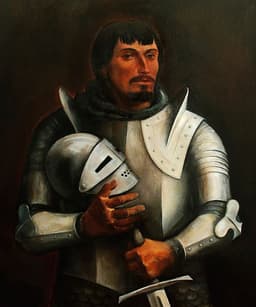
Fruzhin
Emperor · Medieval
41.8Total

Napoleon Bonaparte
General · Modern
70.9Total
Basic Information
Born
1380
1769
Died
1460
1821
Era
Medieval
Modern
Nationality
Bulgaria
France
Occupation
Emperor
General
Civilization
Western
Western
Score Comparison
Military (10%)
50.0
94.0
Political (20%)
29.3
72.0
Influence (20%)
49.4
40.0
Legacy (20%)
39.2
80.0
Leadership (15%)
39.0
78.0
Strategy (15%)
43.7
90.0
TOTAL
41.8
70.9
Fruzhin — Complete Timeline
1404 AD
Leadership of the Uprising of Konstantin and FruzhinWar◆ Major
Fruzhin, son of Tsar Ivan Shishman, led an anti-Ottoman uprising in Bulgaria along with his cousin Konstantin. The rebellion aimed to restore the Bulgarian Empire but was ultimately suppressed by the Ottomans.
UprisingOttoman WarsBulgarian Resistance
Impact: regionaltragic
1408 AD
Exile and service in the Kingdom of HungaryPolitical Action
After the failure of the uprising, Fruzhin fled to the Kingdom of Hungary, where he served as a military commander. He participated in campaigns against the Ottoman Empire, seeking to liberate Bulgaria.
ExileHungaryAnti-Ottoman Resistance
Impact: regional
1444 AD
Participation in the Crusade of Varna (1444)War◆ Major
Fruzhin joined the Crusade of Varna, a combined Christian effort to drive the Ottomans from the Balkans. The crusade ended in defeat at the Battle of Varna, where Fruzhin's hopes for Bulgarian liberation were dashed.
CrusadeOttoman WarsBulgarian Resistance
Impact: regionaltragic
Napoleon Bonaparte — Complete Timeline
1799 AD
Coup of 18 BrumaireOther◆ Major
Napoleon Bonaparte, with support from his brother Lucien and key political figures, overthrew the Directory in a bloodless coup. He established the Consulate with himself as First Consul, effectively becoming the ruler of France. This event ended the French Revolution's most unstable period.
French RevolutionCoupRise to Power
Impact: regional
1804 AD
Promulgation of the Napoleonic CodeOther◆ Major
Napoleon enacted the Civil Code of the French, known as the Napoleonic Code, a comprehensive set of laws that replaced the fragmented feudal legal systems. The code established legal equality, protected property rights, and secularized law. It became the basis for legal systems in many European and world countries.
Legal ReformNapoleonic CodeCivil Law
Impact: globalconstructive
1805 AD
Battle of AusterlitzWar◆ Major
Napoleon's Grande Arm
Napoleonic WarsBattleDecisive Victory
Impact: global
1812 AD
Invasion of RussiaWar◆ Major
Napoleon led the Grande Arm
Napoleonic WarsInvasionDisaster
Impact: globaldestructive
1815 AD
Battle of WaterlooWar◆ Major
Napoleon's French army was defeated by the combined forces of the Duke of Wellington's Anglo-Allied army and Gebhard Leberecht von Bl
Napoleonic WarsBattleFinal Defeat
Impact: globaldestructive
Expert Analysis
fruzhin-vs-napoleon-bonaparte
# Two Men Who Would Be Emperor
On a June morning in 1815, Napoleon Bonaparte watched his dreams shatter on a muddy field near Waterloo, the sun breaking through clouds to illuminate the ruin of an empire he had built from nothing. Four centuries earlier, another prince had watched his own hopes dissolve into the dust of the Balkan hills, fleeing into exile as Ottoman soldiers crushed the last chance for a free Bulgaria. Both men sought to restore glory to their peoples. One reshaped the world; the other was swallowed by it. What separated them was not ambition—both had that in abundance—but the stage upon which history allowed them to perform.
Origins
Napoleon Bonaparte entered the world in 1769 on the Mediterranean island of Corsica, a place that had just become French by conquest. His family was minor nobility, poor enough that young Napoleon wore shabby clothes to military school, rich enough in lineage to gain admission at all. The French Revolution, erupting when he was twenty, cracked open a society where talent—not birth—could ascend. He was short, intense, awkward in society, but inside that restless frame burned a mind that could calculate artillery trajectories and political alliances with equal precision.
Fruzhin was born in 1380 into a world already collapsing. His father, Tsar Ivan Shishman, ruled a Bulgaria that had been shrinking for decades under Ottoman pressure. The medieval Bulgarian Empire, which once stretched from the Black Sea to the Adriatic, had fragmented into feuding kingdoms. Young Fruzhin grew up watching his father pay tribute to sultans, surrender fortresses, and ultimately lose his head to Ottoman executioners in 1395. Where Napoleon inherited a revolution, Fruzhin inherited a funeral.
Rise to Power
Napoleon’s ascent was a story of perfect timing. In 1793, at age twenty-four, he drove British forces from the port of Toulon with a brilliant artillery plan. By 1796 he commanded the Army of Italy, where he defeated larger Austrian armies through speed and audacity, marching his men so fast they sometimes fought without shoes. In 1799, sensing the corrupt Directory’s weakness, he staged a coup and made himself First Consul. Five years later, in 1804, he crowned himself Emperor in Notre Dame, taking the crown from the Pope’s hands and placing it on his own head—a gesture that said everything about his belief in self-made destiny.
Fruzhin’s path was narrower. After his father’s execution, he fled to the Kingdom of Hungary, where he became a military commander in Christian service. His great chance came in 1404, when he and his cousin Konstantin led an uprising against Ottoman rule in Bulgaria. The rebels seized several fortresses and seemed to revive Bulgarian independence. But the Ottoman Sultan Bayezid I, who had crushed the last great Christian coalition at Nicopolis in 1396, dispatched his forces. The rebellion collapsed within months. Fruzhin escaped back to Hungary, a prince without a country.
Leadership & Governance
Napoleon governed as he fought—with relentless energy and total control. He reformed French law through the Napoleonic Code, which abolished feudal privileges, protected property rights, and established secular legal principles that still influence half the world’s legal systems. He created the Bank of France, stabilized the currency, built roads and canals, and reorganized education into state-run lycées. His military score of 94 reflects genius: at Austerlitz in 1805, he lured the Russian and Austrian armies into a trap so perfect that it became a textbook example of strategic deception. His political score of 75 captures a leader who understood power but could not stop grasping for more.
Fruzhin’s governance was the governance of exile. He could not reform a kingdom he did not hold. His military score of 22 reflects a man who led small forces against overwhelming odds and never won a major battle. Yet his leadership score of 77 hints at something else: the ability to hold together a cause across decades of disappointment. In 1444, nearly forty years after his failed uprising, the sixty-four-year-old Fruzhin joined the Crusade of Varna, a combined Christian army marching to drive the Ottomans from Europe. The crusade ended in disaster at the Battle of Varna, where the Polish king Władysław was killed and the Christian forces scattered. Fruzhin survived, but the dream died again.
Triumph & Tragedy
Napoleon’s triumph was absolute and his tragedy operatic. He conquered from Madrid to Moscow, placed his brothers on thrones, and dictated terms to emperors and kings. His defeat came from the same qualities that made him great: an inability to stop. In 1812, he invaded Russia with 600,000 men; less than 100,000 returned. In 1813, he refused peace terms at Leipzig that might have saved his throne. In 1815, he escaped exile from Elba, raised another army, and charged into Waterloo, where the Duke of Wellington and Prussian Field Marshal Blücher finally broke him. He died in 1821 on the remote island of Saint Helena, exiled by the British, dictating memoirs that would make him a legend.
Fruzhin’s triumph was never more than a flicker. His tragedy was that he fought for a cause that history had already decided against. The Ottoman Empire was rising; the Balkan Christian kingdoms were falling. He died around 1460, somewhere in Hungary or perhaps Wallachia, the exact place unknown. He left behind no code, no empire, no decisive battle—only the memory of a prince who would not surrender.
Character & Destiny
Napoleon’s character was his destiny. His supreme confidence, his contempt for obstacles, his belief that will could reshape reality—these drove him to the pinnacle and then over the edge. He once said, “Impossible is a word to be found only in the dictionary of fools.” He meant it. That conviction conquered Europe and then destroyed him.
Fruzhin’s character was shaped by endurance. He did not have Napoleon’s genius, but he had something perhaps rarer: the capacity to persist without reward. He led a failed rebellion at twenty-four, served foreign kings for decades, joined a doomed crusade at sixty-four, and died in obscurity. His total score of 57.4 against Napoleon’s 82.4 is not a measure of worth—it is a measure of historical fortune.
Legacy
Napoleon’s legacy is everywhere. The Napoleonic Code governs legal systems from France to Louisiana to Egypt. Modern warfare bears his imprint: mass conscription, rapid movement, the destruction of entire armies. He is remembered as both tyrant and reformer, conqueror and lawgiver. His influence score of 82 reflects a man whose shadow still falls across two centuries.
Fruzhin’s legacy is a footnote in Bulgarian history, a name in medieval chronicles, a statue in some forgotten square. His legacy score of 51.6 suggests a figure half-remembered, a prince who tried and failed. But in the Balkans, where empires have risen and fallen like waves, the memory of resistance matters. He is honored not for winning, but for refusing to accept defeat.
Conclusion
History, it turns out, is not a meritocracy. It rewards not just talent but timing, not just courage but the size of the stage. Napoleon arrived when France was ready for a master; Fruzhin arrived when Bulgaria was ready for a tombstone. Both men fought with everything they had. One reshaped the world; the other was forgotten by it. And yet, reading their stories side by side, one wonders: how many Fruzhins have been lost to history, princes of failed causes whose only crime was being born on the wrong side of fate? Napoleon’s greatness is undeniable. But Fruzhin’s persistence, against odds that would have crushed most men, carries its own kind of terrible dignity.
Rankings
🥇
Napoleon BonaparteLeader
Mil: 94.0Pol: 72.0Inf: 40.0
70.9
🥈
Fruzhin
Mil: 50.0Pol: 29.3Inf: 49.4
41.8
+29.1 behind
How This Comparison Works
Algorithm
Each figure is scored on 6 dimensions (0—100 scale) based on structured historical data: Military (10%), Political (20%), Influence (20%), Legacy (20%), Leadership (15%), Strategy (15%). The weighted total produces the final ranking.
Data Sources
Scores are computed from structured sub-indicators in the database. Scale factors adjust for era (Ancient ×0.85, Modern ×1.0) and civilization size (Eastern ×1.05, Other ×0.80) to account for differences in population and military scale.
Maximum 3 Figures
Comparisons are limited to 2—3 figures to ensure readability and statistical meaningfulness.
Error Margins
±5 points per dimension — Sub-scores are derived from historical records with inherent uncertainty. Two figures within 5 points on a dimension should be considered roughly equivalent in that area.
Total Score Accuracy
±3 points overall — The weighted combination of 6 dimensions produces a total score with approximately ±3 points of uncertainty. Differences of less than 3 points are not statistically significant— the figures are effectively tied.
Known Limitations
- Historical records are incomplete and uneven across civilizations
- Figures from oral-tradition societies may be underrepresented
- Occupation labels can misclassify multi-role figures
- Scores measure capability and impact, not moral character
- Quantitative scoring is a comparison tool, not absolute truth
Capability Radar
Military (10%) — Battles & Warfare
Battles
20
95
Win Rate
15
90
Expansion
10
95
Political (20%) — Governance & Reform
Reform
10
95
Diplomacy
20
80
Economy
10
85
Influence (20%) — Cultural & Global Reach
Cultural
15
85
Global
10
90
Legacy (20%) — Historical Impact
Historical
20
95
Longevity
15
90
Leadership (15%) — Power & Stability
Tenure
15
85
Stability
10
70
Strategy (15%) — Tactics & Innovation
Strategy
20
95
Tactics
25
98
Reform
10
92
Similar Comparisons
Comments & Discussion
CorsicanCalculator6/17/2026
The combat math here is brutal but clear. Napoleon fought 60+ battles; Fruzhin’s entire career was a single doomed coalition with one recorded skirmish. You can’t compare an artillery genius who dominated Europe for two decades to a prince who spent most of his life wandering courts begging for crusades. It’s like comparing a grandmaster to a pawn that barely moved. Fruzhin’s tragedy is real—his ambition wasn’t backed by armies, geography, or luck.
历史虚无克星6/17/2026
数据对比是最大的诚实:拿破仑从土伦到滑铁卢参与过七十余场战役,战术手册至今被西点军校背诵;弗鲁任呢?他唯一的战绩是1430年联合瓦拉几亚的失败突袭。这不是贬低,是正视。历史爱好者爱美化悲剧,但巴尔干的尘埃和欧洲的皇冠从来不在一个量级。弗鲁任的悲剧不是生错了时代——是他生在了一个注定被遗忘的地理夹缝里。
LibertyCannon6/17/2026
A true military historian sees one man who made history happen and another who let history happen to him. Napoleon seized a revolution, wrote his own code of laws, and created a meritocracy that shattered feudal Europe. Fruzhin begged the Pope, Venice, and Poland for scraps of support—and got nothing. Leadership isn’t just having a vision; it’s forging the institutions to realize it. Napoleon built an empire from a bankrupt republic; Fruzhin couldn’t hold a fragment of a failing kingdom.
符号学老汉6/17/2026
重点从来不在战役胜负,而在符号穿透力。拿破仑成了“改变世界”的超级符号,出现在俄国文学、德国音乐、法国法典里;弗鲁任呢?他连保加利亚历史教科书都只占三行备注。不是因为保加利亚人不爱国,而是因为失败者的悲情符号只能感动本民族,而赢家的符号能穿透文明边界。弗鲁任是保加利亚博物馆的灰烬;拿破仑是巴黎荣军院的黄金穹顶。
EmpireBuildersClub6/17/2026
What separates them isn’t talent—both were ambitious and capable. But Napoleon understood power’s mechanics: control the army, control the narrative, control the law. Fruzhin understood only the old playbook of dynastic loyalty and papal favor. In 1805, Napoleon crushed Austria at Austerlitz with a battle plan he designed in two days. In 1400s, Fruzhin spent years traveling just to get denied audiences. The difference is one man mastered the game; the other never broke into the game at all.
边缘记忆记录员6/17/2026
我反对用胜负定英雄。拿破仑改变了欧洲但带来了百万死亡;弗鲁任没有造成大规模灾难,只是守着一面裂开的旗帜倒下。如果我们