Loading...
Fruzhin vs Rudolf I of Germany
Rudolf I of Germany leads by 14.2 pts · 2 figures compared
…
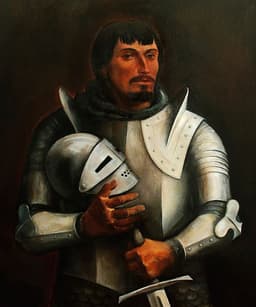
Fruzhin
Emperor · Medieval
41.8Total
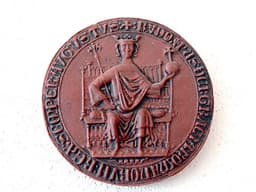
Rudolf I of Germany
Emperor · Medieval
56.0Total
Basic Information
Born
1380
1218
Died
1460
1291
Era
Medieval
Medieval
Nationality
Bulgaria
Holy Roman Empire
Occupation
Emperor
Emperor
Civilization
Western
Western
Score Comparison
Military (10%)
50.0
55.0
Political (20%)
29.3
68.0
Influence (20%)
49.4
61.0
Legacy (20%)
39.2
52.0
Leadership (15%)
39.0
40.0
Strategy (15%)
43.7
60.0
TOTAL
41.8
56.0
Fruzhin — Complete Timeline
1404 AD
Leadership of the Uprising of Konstantin and FruzhinWar◆ Major
Fruzhin, son of Tsar Ivan Shishman, led an anti-Ottoman uprising in Bulgaria along with his cousin Konstantin. The rebellion aimed to restore the Bulgarian Empire but was ultimately suppressed by the Ottomans.
UprisingOttoman WarsBulgarian Resistance
Impact: regionaltragic
1408 AD
Exile and service in the Kingdom of HungaryPolitical Action
After the failure of the uprising, Fruzhin fled to the Kingdom of Hungary, where he served as a military commander. He participated in campaigns against the Ottoman Empire, seeking to liberate Bulgaria.
ExileHungaryAnti-Ottoman Resistance
Impact: regional
1444 AD
Participation in the Crusade of Varna (1444)War◆ Major
Fruzhin joined the Crusade of Varna, a combined Christian effort to drive the Ottomans from the Balkans. The crusade ended in defeat at the Battle of Varna, where Fruzhin's hopes for Bulgarian liberation were dashed.
CrusadeOttoman WarsBulgarian Resistance
Impact: regionaltragic
Rudolf I of Germany — Complete Timeline
1273 AD
Election as King of GermanyPolitical Action
Rudolf I was elected King of Germany by the prince-electors, ending the Great Interregnum. He was the first Habsburg to hold the German throne. His election restored stability to the Holy Roman Empire after a period of civil war and weak central authority.
ElectionHabsburgInterregnum
Impact: regionalconstructive
1274 AD
Recognition of Papal AuthorityPolitical Action
Rudolf I formally renounced all imperial claims to the Papal States and recognized the temporal authority of the Pope. He also agreed to lead a crusade (which never materialized). This improved relations with the papacy and secured papal support for his rule.
PapacyImperial-Papal RelationsCrusade
Impact: regionalconstructive
1278 AD
Battle on the MarchfeldWar◆ Major
Rudolf I defeated King Ottokar II of Bohemia at the Battle on the Marchfeld in Austria. Ottokar was killed in the battle. Rudolf then secured the duchies of Austria, Styria, and Carniola for the Habsburg dynasty, laying the foundation for their future power.
BattleHabsburgAustria
Impact: regional
1282 AD
Grant of Austria to His SonsPolitical Action◆ Major
Rudolf I formally enfeoffed his sons Albert and Rudolf with the duchies of Austria and Styria at the Diet of Augsburg. This established the Habsburgs as a major territorial power in Central Europe. The grant was later confirmed by the imperial princes.
Territorial GrantHabsburgAustria
Impact: regionalconstructive
Expert Analysis
Origins
Fruzhin was a Bulgarian prince, born around the 1380s as the son of Tsar Ivan Shishman of Bulgaria. His early life was overshadowed by the Ottoman conquest of Bulgaria in 1393-1396. After the fall of Tarnovo, Fruzhin fled to the Kingdom of Hungary, where he received refuge at the court of King Sigismund. He grew up in exile, with a burning desire to liberate his homeland.
Rudolf I of Germany was born on May 1, 1218, at Limburg Castle, the son of Count Albert IV of Habsburg and Hedwig of Kyburg. The Habsburgs were a minor noble family in Swabia. Rudolf inherited the family lands in Alsace and Swabia and gradually expanded them through marriage and purchase. He was educated in knightly skills and governance, but lacked the prestige of a royal lineage.
Rise to Power
Fruzhin's rise came through his leadership of the Uprising of Konstantin and Fruzhin in 1404 (or 1408, sources vary). He, along with his cousin Konstantin (son of Tsar Ivan Sratsimir), organized a rebellion in northwestern Bulgaria, exploiting Ottoman weakness after the Battle of Ankara (1402). The uprising initially succeeded in liberating some areas, but by 1413, the Ottomans under Musa Çelebi and later Mehmed I crushed the revolt. Fruzhin escaped to Hungary, where he became a military commander in the service of King Sigismund.
Rudolf I's rise began with his election as King of Germany on October 1, 1273, at Frankfurt, ending the Great Interregnum (1254-1273). The prince-electors chose him as a compromise candidate, expecting him to be weak. Rudolf, however, moved swiftly to consolidate power. He secured recognition from Pope Gregory X by renouncing claims to the Papal States and promising a crusade. His decisive moment came in 1278 at the Battle on the Marchfeld, where he defeated King Ottokar II of Bohemia. This victory allowed him to seize Austria, Styria, and Carinthia, which he granted to his sons, laying the foundation for Habsburg power.
Leadership & Governance
Fruzhin's leadership was characterized by military command and diplomatic maneuvering in exile. He participated in the Crusade of Varna (1444), serving under King Władysław III of Poland and Hungary. His military score of 50.0 reflects his ability to lead troops, but his political score of 29.3 shows his limited success in rallying lasting support. He relied on foreign powers like Hungary and the Papacy, but their interests often diverged from Bulgarian liberation.
Rudolf I's governance was pragmatic and centralizing. He focused on restoring royal authority after the Interregnum. He used feudal law to bring unruly nobles to heel, and he expanded the Habsburg domains through marriage and inheritance. His political score of 68.0 indicates his effectiveness in statecraft. He also recognized papal authority to secure legitimacy, but he did not hesitate to assert his power over the German princes. His leadership score of 40.0 is moderate, reflecting his cautious and legalistic approach rather than charismatic command.
Triumph & Tragedy
Fruzhin's greatest success was igniting a major anti-Ottoman uprising that challenged Ottoman control in the Balkans. The rebellion, though ultimately crushed, demonstrated that resistance was possible. His participation in the Crusade of Varna also showed his commitment to the Christian cause. However, his tragedy was the failure of the uprising and the loss of any real chance to restore the Bulgarian Empire. He died in exile, probably in Hungary, around 1460, without seeing his homeland liberated.
Rudolf I's triumph was the Battle on the Marchfeld (1278), which eliminated his main rival and secured Austria for his family. He also successfully reestablished the monarchy after decades of chaos. His tragedy, however, was that his reign was marked by constant conflict with the German princes and the ongoing struggle to secure the election of his son Albert as successor. He died on July 15, 1291, in Speyer, before fully consolidating Habsburg rule over Germany.
Character & Destiny
Fruzhin appears as a determined but ultimately tragic figure. His character was shaped by exile and a relentless drive to reclaim his heritage. His military score (50.0) and strategy score (43.7) suggest competent but not exceptional military skill. His political score (29.3) indicates a weakness in building coalitions. His destiny was tied to the ebb and flow of Ottoman power, and he lacked the resources to succeed against a superior foe.
Rudolf I was cautious, legalistic, and ambitious. He understood the importance of legitimacy and worked within the feudal system to expand his power. His political score (68.0) and influence score (61.0) reflect his ability to navigate complex relationships. His military score (55.0) is adequate for a medieval king. His destiny was to found the Habsburg dynasty, which would dominate European politics for centuries. His legacy score of 52.0 is lower than one might expect, perhaps because his immediate successors struggled to maintain his gains.
Legacy
Fruzhin's legacy is that of a symbol of Bulgarian resistance. The Uprising of Konstantin and Fruzhin is remembered as a early attempt to throw off Ottoman rule. He is a national hero in Bulgaria, but his impact was limited. His legacy score of 39.2 reflects his minor role in history. He did not achieve lasting change.
Rudolf I's legacy is immense. He ended the Great Interregnum and founded the Habsburg monarchy. The grant of Austria to his sons in 1282 established the core of the Habsburg domains, which would later expand into a global empire. His recognition of papal authority set a precedent for future emperors. His legacy score of 52.0 is solid, but perhaps undervalues his role as the founder of a dynasty that shaped European history for 600 years.
Conclusion
Rudolf I had a greater impact than Fruzhin. His total score of 56.0 versus Fruzhin's 41.8 reflects a clear difference in effectiveness. Rudolf ended a period of chaos, established a dynasty, and secured territories that became the heart of a major power. Fruzhin, while a symbol of resistance, failed to achieve his goals and left no lasting political structure. Rudolf's influence is still felt in the history of Austria and the Holy Roman Empire, while Fruzhin's rebellion is a footnote. The data supports Rudolf I as the more significant historical figure.
Rankings
🥇
Rudolf I of GermanyLeader
Mil: 55.0Pol: 68.0Inf: 61.0
56.0
🥈
Fruzhin
Mil: 50.0Pol: 29.3Inf: 49.4
41.8
+14.2 behind
How This Comparison Works
Algorithm
Each figure is scored on 6 dimensions (0—100 scale) based on structured historical data: Military (10%), Political (20%), Influence (20%), Legacy (20%), Leadership (15%), Strategy (15%). The weighted total produces the final ranking.
Data Sources
Scores are computed from structured sub-indicators in the database. Scale factors adjust for era (Ancient ×0.85, Modern ×1.0) and civilization size (Eastern ×1.05, Other ×0.80) to account for differences in population and military scale.
Maximum 3 Figures
Comparisons are limited to 2—3 figures to ensure readability and statistical meaningfulness.
Error Margins
±5 points per dimension — Sub-scores are derived from historical records with inherent uncertainty. Two figures within 5 points on a dimension should be considered roughly equivalent in that area.
Total Score Accuracy
±3 points overall — The weighted combination of 6 dimensions produces a total score with approximately ±3 points of uncertainty. Differences of less than 3 points are not statistically significant— the figures are effectively tied.
Known Limitations
- Historical records are incomplete and uneven across civilizations
- Figures from oral-tradition societies may be underrepresented
- Occupation labels can misclassify multi-role figures
- Scores measure capability and impact, not moral character
- Quantitative scoring is a comparison tool, not absolute truth
Capability Radar
Military (10%) — Battles & Warfare
Battles
20
45
Win Rate
15
50
Expansion
10
50
Political (20%) — Governance & Reform
Reform
10
55
Diplomacy
20
65
Economy
10
50
Influence (20%) — Cultural & Global Reach
Cultural
15
40
Global
10
55
Legacy (20%) — Historical Impact
Historical
20
65
Longevity
15
70
Leadership (15%) — Power & Stability
Tenure
15
60
Stability
10
55
Strategy (15%) — Tactics & Innovation
Strategy
20
55
Tactics
25
40
Reform
10
30
Similar Comparisons
Comments & Discussion
No comments yet. Be the first to share your thoughts!