Loading...
King Wonjong of Goryeo vs Rudolf I of Germany
Rudolf I of Germany leads by 11.2 pts · 2 figures compared
…

King Wonjong of Goryeo
Emperor · Medieval
44.8Total
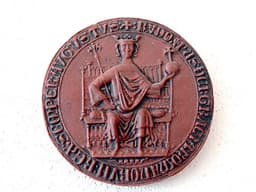
Rudolf I of Germany
Emperor · Medieval
56.0Total
Basic Information
Born
1219
1218
Died
1274
1291
Era
Medieval
Medieval
Nationality
Korea
Holy Roman Empire
Occupation
Emperor
Emperor
Civilization
Eastern
Western
Score Comparison
Military (10%)
21.2
55.0
Political (20%)
40.8
68.0
Influence (20%)
53.3
61.0
Legacy (20%)
45.0
52.0
Leadership (15%)
55.3
40.0
Strategy (15%)
36.8
60.0
TOTAL
44.8
56.0
King Wonjong of Goryeo — Complete Timeline
1259 AD
Accepted Mongol SuzeraintyPolitical Action
King Wonjong sent his son (future King Chungnyeol) as a hostage to the Mongol court and agreed to Goryeo becoming a vassal state of the Mongol Empire. This ended decades of military resistance and established a tributary relationship that lasted for nearly a century.
Mongol InvasionDiplomacyVassalage
Impact: national
Returned to Goryeo as KingPolitical Action◆ Major
After the death of King Gojong, Wonjong returned from the Mongol court where he had been held as a hostage. He was installed as king with Mongol approval, marking the beginning of direct Mongol influence over Goryeo's throne.
SuccessionMongol Influence
Impact: national
1270 AD
Suppressed Military RebellionWar◆ Major
King Wonjong ordered the dissolution of the Sambyeolcho, a elite military unit that resisted Mongol domination. The Sambyeolcho rebelled and held out on Jeju Island until 1273, when Mongol-Goryeo forces crushed them, ending organized military opposition to Mongol rule.
RebellionMongol CooperationMilitary
Impact: nationaldestructive
Rudolf I of Germany — Complete Timeline
1273 AD
Election as King of GermanyPolitical Action
Rudolf I was elected King of Germany by the prince-electors, ending the Great Interregnum. He was the first Habsburg to hold the German throne. His election restored stability to the Holy Roman Empire after a period of civil war and weak central authority.
ElectionHabsburgInterregnum
Impact: regionalconstructive
1274 AD
Recognition of Papal AuthorityPolitical Action
Rudolf I formally renounced all imperial claims to the Papal States and recognized the temporal authority of the Pope. He also agreed to lead a crusade (which never materialized). This improved relations with the papacy and secured papal support for his rule.
PapacyImperial-Papal RelationsCrusade
Impact: regionalconstructive
1278 AD
Battle on the MarchfeldWar◆ Major
Rudolf I defeated King Ottokar II of Bohemia at the Battle on the Marchfeld in Austria. Ottokar was killed in the battle. Rudolf then secured the duchies of Austria, Styria, and Carniola for the Habsburg dynasty, laying the foundation for their future power.
BattleHabsburgAustria
Impact: regional
1282 AD
Grant of Austria to His SonsPolitical Action◆ Major
Rudolf I formally enfeoffed his sons Albert and Rudolf with the duchies of Austria and Styria at the Diet of Augsburg. This established the Habsburgs as a major territorial power in Central Europe. The grant was later confirmed by the imperial princes.
Territorial GrantHabsburgAustria
Impact: regionalconstructive
Expert Analysis
Origins
King Wonjong of Goryeo (born 1219) was the 24th monarch of the Goryeo dynasty. His father, King Gojong, had resisted Mongol invasions through decades of war. Wonjong grew up during a period of intense pressure, with Goryeo's capital relocated to Ganghwa Island for defense. He was educated in Confucian classics and court traditions, but his formative years were shaped by military conflict and diplomatic crisis.
Rudolf I of Germany (born 1218) was born into the House of Habsburg, a minor noble family in Swabia. His father, Count Albert IV, died young, and Rudolf inherited small territories. He was raised in the courts of the Hohenstaufen and learned the arts of war and politics. Unlike Wonjong, Rudolf came from a modest background relative to other German princes, which fueled his ambition.
Rise to Power
Wonjong's rise was tied to the Mongol invasions. After King Gojong's death in 1259, Wonjong—who had been a hostage at the Mongol court—was allowed to return as king. The Mongols insisted on his installation, and he became the first Goryeo king to rule under Mongol suzerainty. His position was weak: domestic military factions opposed him, and the Mongols held his son hostage.
Rudolf's rise came through election. After the Great Interregnum (1250–1273), the German prince-electors sought a king strong enough to restore order but not powerful enough to threaten their autonomy. Rudolf, as a minor count, was elected King of Germany in 1273. He quickly moved to assert authority, defeating rival King Ottokar II of Bohemia at the Battle on the Marchfeld in 1278.
Leadership & Governance
Wonjong's governance was constrained by Mongol overlordship. He accepted the role of a vassal, sending tributes and hostages. His political score of 40.8 reflects his limited autonomy. He attempted to suppress internal dissent, notably ordering the dissolution of the Sambyeolcho, an elite military unit that resisted Mongol domination. The Sambyeolcho rebelled, and Wonjong relied on Mongol forces to crush them. His strategy score of 36.8 indicates a reliance on external power.
Rudolf governed as a pragmatic consolidator. With a political score of 68.0, he skillfully negotiated with the electors and the Pope. He recognized papal authority to secure legitimacy, renouncing imperial claims to the Papal States. He enfeoffed his sons with Austria and Styria at the Diet of Augsburg, laying the foundation for Habsburg power. His strategy score of 60.0 reflects his long-term planning.
Triumph & Tragedy
Wonjong's greatest success was preserving Goryeo's dynasty under Mongol domination. By accepting suzerainty, he avoided total destruction and kept the monarchy intact. His greatest failure was the loss of sovereignty: Goryeo became a Mongol vassal, and his son was a hostage. The Sambyeolcho rebellion ended in their destruction, weakening Goryeo's military.
Rudolf's triumph was ending the Great Interregnum and defeating Ottokar II. He secured Austria and Styria for his family, which became the core of the Habsburg empire. His tragedy was his inability to be crowned Holy Roman Emperor; Pope Gregory X refused, and Rudolf's successors had to wait centuries for the imperial crown. His leadership score of 40.0 reflects limited control over the German princes.
Character & Destiny
Wonjong was pragmatic and submissive, prioritizing survival over resistance. His character was shaped by years as a hostage, leading him to favor diplomacy over war. His military score of 21.2 reflects this. His destiny was to be a transitional figure between independent Goryeo and Mongol-dominated Korea.
Rudolf was ambitious and calculating, using marriage and war to elevate his family. He was known for his piety and generosity, but also for his determination. His character drove him to seize opportunities, and his destiny was to found the Habsburg dynasty that dominated Europe for centuries.
Legacy
Wonjong's legacy is mixed. He is remembered as the king who initiated Goryeo's vassalage to the Mongols, which lasted until the late 14th century. His influence score of 53.3 reflects his role in shaping Korea's history, but his policies led to long-term subjugation. His legacy score of 45.0 indicates a modest impact.
Rudolf's legacy is immense. He established the Habsburgs as a major European power. The duchies of Austria and Styria remained under Habsburg control until 1918. His election ended the Great Interregnum and restored the German monarchy. His influence score of 61.0 and legacy score of 52.0 reflect his foundational role.
Conclusion
Rudolf I of Germany had a greater impact than King Wonjong of Goryeo. With a total score of 56.0 versus 44.8, Rudolf's achievements in founding a dynasty that shaped European history for centuries outweigh Wonjong's preservation of a dynasty under foreign domination. Rudolf's political, strategic, and influence scores are all higher. While Wonjong faced more severe constraints, his submissive approach limited his legacy. Rudolf built a power base that lasted, while Wonjong's actions led to Goryeo's decline. The data supports Rudolf as the more consequential figure.
Rankings
🥇
Rudolf I of GermanyLeader
Mil: 55.0Pol: 68.0Inf: 61.0
56.0
🥈
King Wonjong of Goryeo
Mil: 21.2Pol: 40.8Inf: 53.3
44.8
+11.2 behind
How This Comparison Works
Algorithm
Each figure is scored on 6 dimensions (0—100 scale) based on structured historical data: Military (10%), Political (20%), Influence (20%), Legacy (20%), Leadership (15%), Strategy (15%). The weighted total produces the final ranking.
Data Sources
Scores are computed from structured sub-indicators in the database. Scale factors adjust for era (Ancient ×0.85, Modern ×1.0) and civilization size (Eastern ×1.05, Other ×0.80) to account for differences in population and military scale.
Maximum 3 Figures
Comparisons are limited to 2—3 figures to ensure readability and statistical meaningfulness.
Error Margins
±5 points per dimension — Sub-scores are derived from historical records with inherent uncertainty. Two figures within 5 points on a dimension should be considered roughly equivalent in that area.
Total Score Accuracy
±3 points overall — The weighted combination of 6 dimensions produces a total score with approximately ±3 points of uncertainty. Differences of less than 3 points are not statistically significant— the figures are effectively tied.
Known Limitations
- Historical records are incomplete and uneven across civilizations
- Figures from oral-tradition societies may be underrepresented
- Occupation labels can misclassify multi-role figures
- Scores measure capability and impact, not moral character
- Quantitative scoring is a comparison tool, not absolute truth
Capability Radar
Military (10%) — Battles & Warfare
Battles
10
45
Win Rate
10
50
Expansion
10
50
Political (20%) — Governance & Reform
Reform
30
55
Diplomacy
50
65
Economy
30
50
Influence (20%) — Cultural & Global Reach
Cultural
20
40
Global
30
55
Legacy (20%) — Historical Impact
Historical
40
65
Longevity
30
70
Leadership (15%) — Power & Stability
Tenure
40
60
Stability
30
55
Strategy (15%) — Tactics & Innovation
Strategy
10
55
Tactics
10
40
Reform
10
30
Similar Comparisons
Comments & Discussion
No comments yet. Be the first to share your thoughts!