Loading...
Alexios I Komnenos vs Rudolf I of Germany
Alexios I Komnenos leads by 22.4 pts · 2 figures compared
…
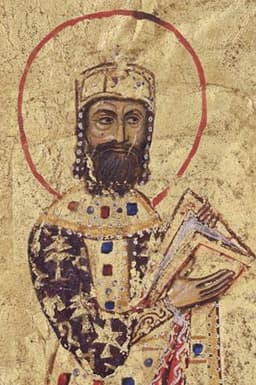
Alexios I Komnenos
Emperor · Medieval
78.4Total
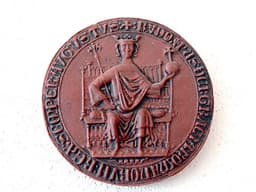
Rudolf I of Germany
Emperor · Medieval
56.0Total
Basic Information
Born
1048
1218
Died
1118
1291
Era
Medieval
Medieval
Nationality
Byzantine Empire
Holy Roman Empire
Occupation
Emperor
Emperor
Civilization
Western
Western
Score Comparison
Military (10%)
61.7
55.0
Political (20%)
78.0
68.0
Influence (20%)
88.0
61.0
Legacy (20%)
80.0
52.0
Leadership (15%)
78.0
40.0
Strategy (15%)
68.0
60.0
TOTAL
78.4
56.0
Alexios I Komnenos — Complete Timeline
1081 AD
Battle of DyrrhachiumWar◆ Major
Alexios I Komnenos was defeated by the Norman army under Robert Guiscard at Dyrrhachium. The Byzantine forces were routed, and Alexios barely escaped. This loss allowed the Normans to occupy much of the western Balkans, though Alexios later recovered some territory.
Norman InvasionDefeatBalkans
Impact: regionaltragic
1090 AD
Reforms of the Byzantine Military and EconomyReform◆ Major
Alexios I implemented a series of reforms to restore Byzantine power. He reorganized the army by relying more on foreign mercenaries, reformed the currency (the hyperpyron), and granted tax exemptions to the Church. These measures stabilized the empire after decades of decline.
Military ReformEconomic ReformKomnenian Restoration
Impact: nationalconstructive
1095 AD
Appeal to the West: Council of PiacenzaPolitical Action
Alexios I sent envoys to Pope Urban II at the Council of Piacenza, requesting military aid against the Seljuk Turks. This appeal contributed to Urban's call for the First Crusade at the Council of Clermont later that year, initiating the Crusader movement.
First CrusadePope Urban IISeljuk Turks
Impact: global
1097 AD
First Crusade: Siege of NicaeaWar◆ Major
Alexios I cooperated with the Crusader army to besiege and capture Nicaea from the Seljuk Turks. The city was surrendered to Byzantine control, and Alexios used the Crusaders to recover key territories in Anatolia, though tensions later arose over land claims.
First CrusadeNicaeaByzantine-Crusader Relations
Impact: regionalconstructive
Rudolf I of Germany — Complete Timeline
1273 AD
Election as King of GermanyPolitical Action
Rudolf I was elected King of Germany by the prince-electors, ending the Great Interregnum. He was the first Habsburg to hold the German throne. His election restored stability to the Holy Roman Empire after a period of civil war and weak central authority.
ElectionHabsburgInterregnum
Impact: regionalconstructive
1274 AD
Recognition of Papal AuthorityPolitical Action
Rudolf I formally renounced all imperial claims to the Papal States and recognized the temporal authority of the Pope. He also agreed to lead a crusade (which never materialized). This improved relations with the papacy and secured papal support for his rule.
PapacyImperial-Papal RelationsCrusade
Impact: regionalconstructive
1278 AD
Battle on the MarchfeldWar◆ Major
Rudolf I defeated King Ottokar II of Bohemia at the Battle on the Marchfeld in Austria. Ottokar was killed in the battle. Rudolf then secured the duchies of Austria, Styria, and Carniola for the Habsburg dynasty, laying the foundation for their future power.
BattleHabsburgAustria
Impact: regional
1282 AD
Grant of Austria to His SonsPolitical Action◆ Major
Rudolf I formally enfeoffed his sons Albert and Rudolf with the duchies of Austria and Styria at the Diet of Augsburg. This established the Habsburgs as a major territorial power in Central Europe. The grant was later confirmed by the imperial princes.
Territorial GrantHabsburgAustria
Impact: regionalconstructive
Expert Analysis
Origins
Alexios I Komnenos was born in 1048 into the Byzantine aristocratic Komnenos family. His father, John Komnenos, was a military commander, and his mother, Anna Dalassene, was a politically astute noblewoman. Alexios grew up during a period of decline for the Byzantine Empire, facing internal rebellions and external threats from Normans, Pechenegs, and Seljuk Turks. He served as a general under several emperors before seizing power.
Rudolf I of Germany was born in 1218 into the House of Habsburg, a minor noble family in Swabia. His father, Count Albert IV of Habsburg, died early, and Rudolf inherited the family lands. He grew up amid the chaos of the Great Interregnum, a period of weak central authority in the Holy Roman Empire. Rudolf expanded his territorial holdings through marriage and inheritance, laying the foundation for Habsburg power.
Rise to Power
Alexios I rose through military ranks, suppressing rebellions and defending the empire. In 1081, he overthrew Emperor Nikephoros III Botaneiates in a coup, becoming emperor at age 33. His rise was aided by his Komnenian family network and alliances with powerful military clans. Key turning point: he appealed to Pope Urban II at the Council of Piacenza in 1095 for military aid against the Seljuks, inadvertently sparking the First Crusade.
Rudolf I was elected King of Germany in 1273, ending the Great Interregnum. He was chosen by prince-electors who wanted a weak king, but Rudolf proved ambitious. He defeated his main rival, King Ottokar II of Bohemia, at the Battle on the Marchfeld in 1278, securing control over Austria and Styria. This victory established the Habsburgs as a major dynasty.
Leadership & Governance
Alexios I reorganized the Byzantine government after decades of decline. He reformed the military by relying on foreign mercenaries, such as Varangians and Crusaders, and created the pronoia system, granting land in exchange for military service. He also stabilized the currency and rebuilt the navy. However, his appeal to the West led to the Crusades, which he struggled to control. He scored 78.0 in political acumen, reflecting his diplomatic skill in manipulating Crusader leaders.
Rudolf I focused on consolidating imperial authority. He recognized papal supremacy, renouncing imperial claims to the Papal States, and agreed to lead a crusade (which never materialized). He granted Austria and Styria to his sons in 1282, establishing the Habsburg hereditary lands. His leadership score of 40.0 reflects his limited ability to exert control beyond his own territories. He failed to secure the imperial crown for his dynasty, as subsequent kings were elected from other houses.
Triumph & Tragedy
Alexios I's greatest success was restoring Byzantine power after the disaster of Manzikert. He recaptured Nicaea in 1097 with Crusader help and reasserted Byzantine authority in Anatolia. His reforms stabilized the empire for a century. His greatest failure was the unintended consequence of the First Crusade: Crusader states were established in the Levant, often ignoring Byzantine authority, and the Fourth Crusade would later sack Constantinople. His military score of 61.7 reflects mixed results against Normans and Pechenegs.
Rudolf I's triumph was defeating Ottokar II and acquiring Austria, which became the Habsburg heartland. He also restored peace to Germany after the Interregnum. His tragedy was his inability to secure the imperial succession for his son Albert, as the electors chose Adolf of Nassau in 1292. His legacy score of 52.0 indicates limited long-term influence beyond the Habsburg rise.
Character & Destiny
Alexios I was pragmatic and cunning, often using diplomacy over military force. He wrote his memoirs, the Alexiad, which portray him as a pious and clever ruler. His character allowed him to navigate the complex politics of the Crusades, but his reliance on foreign forces weakened the empire's military self-sufficiency. His total score of 78.4 reflects a transformative leader who set the stage for the Komnenian restoration.
Rudolf I was cautious and conciliatory, preferring negotiation to war. He accepted papal authority to gain legitimacy. His destiny was to found the Habsburg dynasty, but his personal ambition was limited by the constraints of the elective monarchy. His total score of 56.0 shows a competent but not exceptional ruler.
Legacy
Alexios I's legacy is profound: he initiated the Crusades, which reshaped medieval history. The Komnenian dynasty ruled until 1185, and his reforms allowed Byzantium to survive for another century. His political score of 78.0 and influence score of 88.0 reflect his lasting impact on East-West relations.
Rudolf I's legacy is the rise of the Habsburgs, who dominated European politics for centuries. However, his direct impact was limited: he ruled only 18 years and failed to make the crown hereditary. His influence score of 61.0 is modest compared to Alexios.
Conclusion
Alexios I Komnenos had a greater impact than Rudolf I. His total score of 78.4 versus 56.0 reflects his role in sparking the Crusades and restoring Byzantine power. While Rudolf I founded the Habsburg dynasty, his achievements were more regional and less transformative. Alexios's actions had continental and long-lasting consequences, making him the more significant historical figure.
Rankings
🥇
Alexios I KomnenosLeader
Mil: 61.7Pol: 78.0Inf: 88.0
78.4
🥈
Rudolf I of Germany
Mil: 55.0Pol: 68.0Inf: 61.0
56.0
+22.4 behind
How This Comparison Works
Algorithm
Each figure is scored on 6 dimensions (0—100 scale) based on structured historical data: Military (10%), Political (20%), Influence (20%), Legacy (20%), Leadership (15%), Strategy (15%). The weighted total produces the final ranking.
Data Sources
Scores are computed from structured sub-indicators in the database. Scale factors adjust for era (Ancient ×0.85, Modern ×1.0) and civilization size (Eastern ×1.05, Other ×0.80) to account for differences in population and military scale.
Maximum 3 Figures
Comparisons are limited to 2—3 figures to ensure readability and statistical meaningfulness.
Error Margins
±5 points per dimension — Sub-scores are derived from historical records with inherent uncertainty. Two figures within 5 points on a dimension should be considered roughly equivalent in that area.
Total Score Accuracy
±3 points overall — The weighted combination of 6 dimensions produces a total score with approximately ±3 points of uncertainty. Differences of less than 3 points are not statistically significant— the figures are effectively tied.
Known Limitations
- Historical records are incomplete and uneven across civilizations
- Figures from oral-tradition societies may be underrepresented
- Occupation labels can misclassify multi-role figures
- Scores measure capability and impact, not moral character
- Quantitative scoring is a comparison tool, not absolute truth
Capability Radar
Military (10%) — Battles & Warfare
Battles
75
45
Win Rate
70
50
Expansion
60
50
Political (20%) — Governance & Reform
Reform
85
55
Diplomacy
90
65
Economy
70
50
Influence (20%) — Cultural & Global Reach
Cultural
70
40
Global
75
55
Legacy (20%) — Historical Impact
Historical
85
65
Longevity
80
70
Leadership (15%) — Power & Stability
Tenure
80
60
Stability
75
55
Strategy (15%) — Tactics & Innovation
Strategy
85
55
Tactics
80
40
Reform
75
30
Similar Comparisons
Comments & Discussion
No comments yet. Be the first to share your thoughts!