Loading...
Fulk of Jerusalem vs Napoleon Bonaparte
Napoleon Bonaparte leads by 20.2 pts · 2 figures compared
…
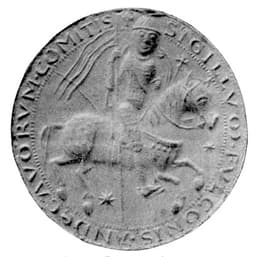
Fulk of Jerusalem
Emperor · Medieval
50.7Total

Napoleon Bonaparte
General · Modern
70.9Total
Basic Information
Born
1092
1769
Died
1143
1821
Era
Medieval
Modern
Nationality
Jerusalem
France
Occupation
Emperor
General
Civilization
Western
Western
Score Comparison
Military (10%)
40.0
94.0
Political (20%)
48.0
72.0
Influence (20%)
51.8
40.0
Legacy (20%)
43.3
80.0
Leadership (15%)
65.0
78.0
Strategy (15%)
60.0
90.0
TOTAL
50.7
70.9
Fulk of Jerusalem — Complete Timeline
1109 AD
Became Count of AnjouPolitical Action◆ Major
Fulk inherited the County of Anjou from his father Fulk IV. He became a powerful French noble, known for his military skill and political maneuvering.
InheritanceAnjou
Impact: regional
1129 AD
Married Melisende of JerusalemPolitical Action◆ Major
Fulk married Melisende, daughter of King Baldwin II of Jerusalem. The marriage made him heir to the Kingdom of Jerusalem and strengthened ties between the Crusader states and Europe.
MarriageCrusader States
Impact: globalconstructive
1131 AD
Crowned King of JerusalemPolitical Action◆ Major
Fulk was crowned King of Jerusalem alongside his wife Melisende. He became the ruler of the Crusader kingdom, facing threats from Muslim states to the north and east.
CoronationCrusader States
Impact: globalconstructive
1137 AD
Defended the Kingdom of JerusalemWar◆ Major
Fulk led campaigns against the Muslim ruler Zengi of Mosul. He successfully defended the kingdom's borders, but failed to capture key cities like Damascus.
DefenseCrusader States
Impact: regionalconstructive
1143 AD
Died in a hunting accidentOther◆ Major
Fulk died after falling from his horse during a hunting trip near Acre. His death left the kingdom in the hands of his wife Melisende and their son Baldwin III.
DeathAccident
Impact: regionaltragic
Napoleon Bonaparte — Complete Timeline
1799 AD
Coup of 18 BrumaireOther◆ Major
Napoleon Bonaparte, with support from his brother Lucien and key political figures, overthrew the Directory in a bloodless coup. He established the Consulate with himself as First Consul, effectively becoming the ruler of France. This event ended the French Revolution's most unstable period.
French RevolutionCoupRise to Power
Impact: regional
1804 AD
Promulgation of the Napoleonic CodeOther◆ Major
Napoleon enacted the Civil Code of the French, known as the Napoleonic Code, a comprehensive set of laws that replaced the fragmented feudal legal systems. The code established legal equality, protected property rights, and secularized law. It became the basis for legal systems in many European and world countries.
Legal ReformNapoleonic CodeCivil Law
Impact: globalconstructive
1805 AD
Battle of AusterlitzWar◆ Major
Napoleon's Grande Arm
Napoleonic WarsBattleDecisive Victory
Impact: global
1812 AD
Invasion of RussiaWar◆ Major
Napoleon led the Grande Arm
Napoleonic WarsInvasionDisaster
Impact: globaldestructive
1815 AD
Battle of WaterlooWar◆ Major
Napoleon's French army was defeated by the combined forces of the Duke of Wellington's Anglo-Allied army and Gebhard Leberecht von Bl
Napoleonic WarsBattleFinal Defeat
Impact: globaldestructive
Expert Analysis
fulk-of-jerusalem-vs-napoleon-bonaparte
# The Conqueror and the Crusader: Napoleon and Fulk of Jerusalem
On a June morning in 1815, Napoleon Bonaparte watched his veterans march toward the muddy slopes of Mont-Saint-Jean, confident that one final victory would restore his empire. Six hundred years earlier, in November 1143, King Fulk of Jerusalem lay dying near Acre, his neck broken in a hunting accident—a king brought down not by enemy swords but by his own horse. These two Western leaders, separated by centuries, both seized power through ambition and marriage, yet their fates could not have diverged more dramatically. One reshaped the map of Europe; the other struggled to hold a fragile kingdom together. Why did Napoleon become a colossus while Fulk remains a footnote? The answer lies not merely in talent but in the worlds that shaped them.
Origins
Napoleon was born in 1769 on Corsica, an island recently annexed by France. His family was minor nobility, but his father’s connections secured him a place at French military academies. There, the young Corsican devoured the works of Caesar and Alexander, dreaming of glory. He arrived in a France torn by revolution—a society in flux, where old hierarchies crumbled and a man of genius could rise. Napoleon’s era was one of upheaval, and upheaval was his fuel.
Fulk of Jerusalem, born in 1092, came from a very different world. He was Count of Anjou, a powerful French noble in an age defined by faith, feudalism, and the Crusades. His world was rigid: power came from birth, land, and the Church. In 1109, Fulk inherited Anjou from his father, Fulk IV, and became known for his military skill and political cunning. But unlike Napoleon, Fulk operated within a system where kings were chosen by God and bloodline, not by will and cannon.
Rise to Power
Napoleon’s ascent was meteoric. In 1793, at just twenty-four, he drove the British from Toulon and was promoted to brigadier general. By 1796, he commanded the Army of Italy, where his lightning campaigns stunned Austria and made him a national hero. In 1799, he overthrew the Directory in a coup and became First Consul. Five years later, he crowned himself Emperor of the French. His path was forged by war—each victory a stepping stone.
Fulk’s rise was slower and more diplomatic. In 1129, he married Melisende, daughter of King Baldwin II of Jerusalem. This was no love match; it was a strategic alliance that made Fulk heir to the Crusader kingdom. In 1131, he was crowned King of Jerusalem alongside his wife. Unlike Napoleon, who seized power, Fulk inherited it through marriage. His authority was shared, contested, and always fragile.
Leadership & Governance
Napoleon ruled with iron precision. He centralized the state, reformed education, and created the Napoleonic Code—a legal framework that still shapes much of Europe. He was a military genius, with a Strategy score of 93 and Military score of 94, winning battles at Austerlitz (1805) and Jena (1806). But his political score of 75 reflects his fatal flaw: he could conquer but not consolidate. He alienated allies, crowned his brothers as puppet kings, and invaded Russia in 1812—a catastrophe that cost half a million men.
Fulk governed differently. As King of Jerusalem, he faced constant threats from Muslim rulers like Zengi of Mosul. In 1137, he led campaigns to defend the kingdom’s borders. His Military score of 34.6 and Strategy of 44.2 reveal he was no Napoleon. Yet his Leadership score of 77.2 shows he held together a fractious court of barons, clergy, and Crusader knights. He fortified castles, negotiated truces, and maintained a precarious peace. His Political score of 60.2 reflects a ruler who survived through compromise, not conquest.
Triumph & Tragedy
Napoleon’s greatest moment came at Austerlitz in 1805, where he crushed the combined armies of Russia and Austria. His empire stretched from Spain to Poland. But his tragedy was hubris: the invasion of Russia, the defeat at Leipzig in 1813, and finally Waterloo in 1815. Exiled to Saint Helena, he died in 1821, a prisoner of his own ambition.
Fulk’s triumph was survival itself—keeping the Crusader kingdom intact against overwhelming odds. His tragedy was not defeat in battle but a mundane accident. In 1143, while hunting near Acre, his horse stumbled, and the king fell, dying days later. No epic battle, no grand betrayal—just a broken neck in the dust. His death left the kingdom in the hands of his wife Melisende, and within decades, Jerusalem fell to Saladin.
Character & Destiny
Napoleon was a force of nature: driven, brilliant, ruthless. He once said, “Impossible is a word to be found only in the dictionary of fools.” His personality—restless, egotistical, visionary—drove him to reshape Europe. But that same personality made enemies of every great power, ensuring his downfall.
Fulk was a survivor, not a visionary. He was pragmatic, cautious, and devout. His world demanded patience, not genius. He played the long game, but his destiny was determined not by his own choices but by the grinding forces of history: the Crusades were a doomed enterprise, and no king could change that.
Legacy
Napoleon’s legacy is immense. His Napoleonic Code influenced legal systems worldwide. His military tactics are still studied. He ranks with a total score of 82.4—a titan of history, for better and worse.
Fulk’s legacy is modest. His score of 58.9 reflects a competent but forgettable ruler. He is remembered, if at all, as a minor king in a brief kingdom, a footnote in the story of the Crusades. Yet he represents something Napoleon never understood: that leadership is sometimes measured not by how much you conquer, but by how long you endure.
Conclusion
Standing at Waterloo, Napoleon believed he was writing history. Fulk, falling from his horse, probably thought only of the pain. But both men were swept by currents larger than themselves. Napoleon’s age of revolution gave him the stage for greatness; Fulk’s age of faith gave him only a narrow ledge to hold. In the end, Napoleon changed the world and was destroyed by it. Fulk held his world steady for a moment, then vanished. Perhaps the difference is not in their talents but in what their eras demanded: one was asked to conquer, the other just to endure. And endurance, as Fulk’s forgotten grave reminds us, leaves no monuments.
Rankings
🥇
Napoleon BonaparteLeader
Mil: 94.0Pol: 72.0Inf: 40.0
70.9
🥈
Fulk of Jerusalem
Mil: 40.0Pol: 48.0Inf: 51.8
50.7
+20.2 behind
How This Comparison Works
Algorithm
Each figure is scored on 6 dimensions (0—100 scale) based on structured historical data: Military (10%), Political (20%), Influence (20%), Legacy (20%), Leadership (15%), Strategy (15%). The weighted total produces the final ranking.
Data Sources
Scores are computed from structured sub-indicators in the database. Scale factors adjust for era (Ancient ×0.85, Modern ×1.0) and civilization size (Eastern ×1.05, Other ×0.80) to account for differences in population and military scale.
Maximum 3 Figures
Comparisons are limited to 2—3 figures to ensure readability and statistical meaningfulness.
Error Margins
±5 points per dimension — Sub-scores are derived from historical records with inherent uncertainty. Two figures within 5 points on a dimension should be considered roughly equivalent in that area.
Total Score Accuracy
±3 points overall — The weighted combination of 6 dimensions produces a total score with approximately ±3 points of uncertainty. Differences of less than 3 points are not statistically significant— the figures are effectively tied.
Known Limitations
- Historical records are incomplete and uneven across civilizations
- Figures from oral-tradition societies may be underrepresented
- Occupation labels can misclassify multi-role figures
- Scores measure capability and impact, not moral character
- Quantitative scoring is a comparison tool, not absolute truth
Capability Radar
Military (10%) — Battles & Warfare
Battles
45
95
Win Rate
50
90
Expansion
40
95
Political (20%) — Governance & Reform
Reform
35
95
Diplomacy
60
80
Economy
40
85
Influence (20%) — Cultural & Global Reach
Cultural
30
85
Global
20
90
Legacy (20%) — Historical Impact
Historical
35
95
Longevity
25
90
Leadership (15%) — Power & Stability
Tenure
55
85
Stability
45
70
Strategy (15%) — Tactics & Innovation
Strategy
45
95
Tactics
40
98
Reform
30
92
Similar Comparisons
Comments & Discussion
Mont-St-Jean's Ghost6/17/2026
Calling Napoleon a "colossus" next to Fulk is like comparing a bonfire to a candle. Napoleon didn't just reshape maps—he rewrote military doctrine with artillery and speed. Fulk's claim to fame is marrying an heiress and falling off a horse. But here's the sting: Napoleon's ambition bled Europe dry for a decade, while Fulk's "fragile kingdom" held Jerusalem for nearly a century. Who really outlasted?
地图破碎者6/17/2026
拿那些军事学院的纸上谈兵,这场对比荒谬绝伦。福尔克不是在打猎,他在巩固十字军国家的根基——这是他每天面临的真刀真枪。拿破仑?他从来没守住过一场失败。滑铁卢的泥巴不是偶然,是他体系的崩解。一位炸毁了帝国,另一位用婚姻和剑守住了圣地。你们这叫历史?这叫粉丝滤镜。
Saladin's Ghost6/17/2026
Fulk a footnote? Tell that to the walls of Jerusalem he rebuilt after 1123, or the trade treaties that kept the kingdom solvent. Napoleon had the advantage of a revolutionary powder keg to ignite his talent; Fulk had a feudal structure with zero margin for error. One broke under his own weight, the other broke his neck trying to hold his kingdom together. Context matters, historians.
孤烟骑士6/17/2026
拿什么比?拿破仑的时代是火药、民族主义、动摇的王朝。福尔克的时代只有铁、信仰和鼠疫般的权力碎片。你见过安条克那个纸牌屋吗?福尔克每天面对的不是欧洲版图,而是萨拉丁的前辈们步步紧逼。拿破仑输了一次就退休,福尔克每场战役都是最后的晚餐。你们说他“持守脆弱”,那是你们从没在沙漠里摸过剑。