Loading...
Fumio Kishida vs Napoleon Bonaparte
Napoleon Bonaparte leads by 19.1 pts · 2 figures compared
…
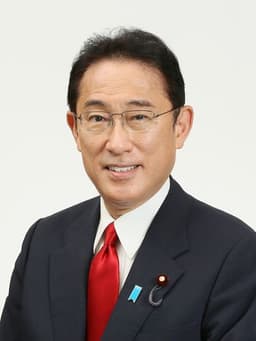
Fumio Kishida
Politician · Modern
51.8Total

Napoleon Bonaparte
General · Modern
70.9Total
Basic Information
Born
1957
1769
Died
—
1821
Era
Modern
Modern
Nationality
Japan
France
Occupation
Politician
General
Civilization
Eastern
Western
Score Comparison
Military (10%)
29.2
94.0
Political (20%)
68.0
72.0
Influence (20%)
53.3
40.0
Legacy (20%)
40.0
80.0
Leadership (15%)
64.0
78.0
Strategy (15%)
57.2
90.0
TOTAL
51.8
70.9
Fumio Kishida — Complete Timeline
2021 AD
Announced new capitalism policyReform◆ Major
Kishida unveiled a 'new capitalism' economic policy aiming to redistribute wealth and promote growth. The plan included raising wages, increasing investment in green technology, and addressing income inequality in Japan.
JapanEconomic PolicyNew Capitalism
Impact: nationalconstructive
Elected Prime Minister of JapanPolitical Action◆ Major
Kishida was elected as Prime Minister of Japan after winning the LDP leadership election. He succeeded Yoshihide Suga and formed a cabinet focused on economic recovery and COVID-19 response.
JapanPrime MinisterLDP
Impact: national
2022 AD
Assassination of Shinzo AbePolitical Action◆ Major
Former Prime Minister Shinzo Abe was assassinated during a campaign speech in Nara. Kishida, as sitting prime minister, led the government's response, including security reviews and a state funeral for Abe.
JapanAssassinationAbe
Impact: nationaltragic
Napoleon Bonaparte — Complete Timeline
1799 AD
Coup of 18 BrumaireOther◆ Major
Napoleon Bonaparte, with support from his brother Lucien and key political figures, overthrew the Directory in a bloodless coup. He established the Consulate with himself as First Consul, effectively becoming the ruler of France. This event ended the French Revolution's most unstable period.
French RevolutionCoupRise to Power
Impact: regional
1804 AD
Promulgation of the Napoleonic CodeOther◆ Major
Napoleon enacted the Civil Code of the French, known as the Napoleonic Code, a comprehensive set of laws that replaced the fragmented feudal legal systems. The code established legal equality, protected property rights, and secularized law. It became the basis for legal systems in many European and world countries.
Legal ReformNapoleonic CodeCivil Law
Impact: globalconstructive
1805 AD
Battle of AusterlitzWar◆ Major
Napoleon's Grande Arm
Napoleonic WarsBattleDecisive Victory
Impact: global
1812 AD
Invasion of RussiaWar◆ Major
Napoleon led the Grande Arm
Napoleonic WarsInvasionDisaster
Impact: globaldestructive
1815 AD
Battle of WaterlooWar◆ Major
Napoleon's French army was defeated by the combined forces of the Duke of Wellington's Anglo-Allied army and Gebhard Leberecht von Bl
Napoleonic WarsBattleFinal Defeat
Impact: globaldestructive
Expert Analysis
fumio-kishida-vs-napoleon-bonaparte
# The Emperor and the Conciliator
On a frozen December morning in 1805, Napoleon Bonaparte watched his Grande Armée shatter the combined forces of Austria and Russia at Austerlitz, cementing his legend as history's most dazzling military genius. Two centuries later, in September 2021, Fumio Kishida stood before the Japanese Diet, inheriting a nation exhausted by pandemic, economic stagnation, and the ghost of a murdered predecessor. One man conquered continents with cannon and cavalry; the other navigates boardrooms and backroom deals with quiet persistence. What separates these two figures—beyond the obvious chasm of time and geography—is not merely their circumstances but the very nature of power in their respective ages.
Origins
Napoleon was born in 1769 on Corsica, an island that had only just become French, into a minor noble family of modest means. His father’s death when Napoleon was fifteen thrust him into early responsibility, and the French Revolution soon after opened doors that aristocratic birth would have otherwise barred. He absorbed Enlightenment ideals—meritocracy, rational law, secular governance—while also inheriting the volcanic ambition of an outsider desperate to prove himself. The revolution’s chaos became his ladder.
Fumio Kishida, born in 1957 in Tokyo, emerged from an entirely different soil. His father was a diplomat, his grandfather a politician. He grew up in the corridors of Japanese power, attending elite schools and absorbing the culture of consensus, hierarchy, and patient negotiation that defines Japan’s Liberal Democratic Party. Where Napoleon learned to command armies, Kishida learned to build coalitions. Where Napoleon’s world was torn apart by revolution, Kishida’s was rebuilt by American occupation and economic miracle. The era of total war was over; the age of bureaucratic management had begun.
Rise to Power
Napoleon’s ascent was meteoric. At twenty-four, he drove the British out of Toulon. At twenty-six, he crushed a royalist uprising in Paris with a "whiff of grapeshot." By thirty, he had conquered Italy and Egypt. Each victory was a stepping stone, each campaign a referendum on his genius. He seized power in the 1799 coup of 18 Brumaire not because he was elected, but because he was indispensable. The French Directory was corrupt, the nation exhausted, and Napoleon offered order, glory, and the promise of revolutionary ideals wrapped in imperial ambition.
Kishida’s rise was glacial by comparison. He entered politics in 1993, winning a seat in Hiroshima. For nearly three decades, he climbed the LDP ladder—serving as deputy chief cabinet secretary, minister of state for Okinawa, and finally foreign minister from 2012 to 2017. He was competent but uncharismatic, a safe pair of hands. In 2021, when Prime Minister Yoshihide Suga resigned amid sinking approval ratings, Kishida won the party leadership by promising stability. He did not storm the gates of power; he waited for them to open.
Leadership & Governance
Napoleon governed through sheer force of will. His Napoleonic Code, enacted in 1804, standardized French law across Europe, abolished feudalism, and enshrined property rights and secular authority. He built roads, founded banks, reformed education. But his governance was inseparable from war. He ruled from a saddle, his empire expanding and contracting with each campaign. His political score of 75 reflects a man who was a brilliant administrator but an autocrat at heart—he centralized power, suppressed dissent, and crowned himself emperor.
Kishida governs through conciliation. His "New Capitalism," announced shortly after taking office, aimed to redistribute wealth and stimulate growth—a cautious response to decades of deflation and inequality. He increased defense spending in 2022 to 2% of GDP, a historic shift for pacifist Japan, driven by China’s rise and North Korea’s missiles. But his leadership score of 72.8 reflects a prime minister constrained by factional politics, a weak economy, and the shadow of Shinzo Abe, whose assassination in July 2022 forced Kishida into a role he never sought: national mourner-in-chief.
Triumph & Tragedy
Napoleon’s greatest triumph was Austerlitz, where he outmaneuvered two emperors in a single day. His greatest tragedy was the invasion of Russia in 1812, where 600,000 men crossed into the snow and only 100,000 returned. The disaster broke his aura of invincibility. Exiled to Elba in 1814, he returned for a Hundred Days, only to meet final defeat at Waterloo in 1815. His total score of 82.4 reflects a life of breathtaking highs and catastrophic lows.
Kishida’s triumphs are quieter. He navigated Japan through the aftermath of Abe’s assassination without civil unrest. He secured a G7 summit in Hiroshima in 2023, showcasing diplomacy. His tragedy is the slow erosion of Japanese vitality—an aging population, stagnant wages, and a political system that rewards caution over courage. He has no Waterloo, but no Austerlitz either. His legacy score of 56 reflects a leader whose greatest achievement may be avoiding disaster.
Character & Destiny
Napoleon was restless, arrogant, and inexhaustible. "Impossible is a word to be found only in the dictionary of fools," he said. His personality demanded conquest; peace bored him. This drive made him a titan but also doomed him. He could not stop, could not compromise, could not share power.
Kishida is the opposite. He is described as "listening" and "patient," a man who values harmony over glory. "Politics is about trust," he has said. His strategy score of 59.6 reveals a leader who reacts rather than initiates. He is a product of a system that punishes boldness and rewards survival. Where Napoleon shaped destiny, Kishida is shaped by it.
Legacy
Napoleon left a continent transformed. The Napoleonic Code, modern bureaucracy, the metric system, the redrawing of European borders—his shadow falls across the nineteenth century. He is remembered as both liberator and tyrant, genius and megalomaniac. His influence score of 82 endures in every French law court and every European nationalist movement.
Kishida will leave a Japan that survived its challenges but did not conquer them. Historians may note that he managed the transition after Abe, raised defense spending, and attempted economic reform. But in a nation that prizes collective achievement over individual brilliance, his legacy may be absorbed into the LDP’s long, gray history. His influence score of 74.8 is respectable, but it is the influence of a caretaker, not a conqueror.
Conclusion
Napoleon and Kishida are separated by more than two centuries. They represent two faces of leadership: the man who remakes the world through fire, and the man who steers the ship through fog. One believed the individual could bend history to his will; the other knows that history bends slowly, if at all. Neither is entirely right or wrong. Napoleon’s ambition built an empire and then destroyed it. Kishida’s caution may preserve a nation that no longer dreams of empire. In the end, the difference between them is not talent or luck—it is the age they were born into. Napoleon’s age demanded heroes. Kishida’s age demands managers. And the world, for better or worse, gets the leaders it deserves.
Rankings
🥇
Napoleon BonaparteLeader
Mil: 94.0Pol: 72.0Inf: 40.0
70.9
🥈
Fumio Kishida
Mil: 29.2Pol: 68.0Inf: 53.3
51.8
+19.1 behind
How This Comparison Works
Algorithm
Each figure is scored on 6 dimensions (0—100 scale) based on structured historical data: Military (10%), Political (20%), Influence (20%), Legacy (20%), Leadership (15%), Strategy (15%). The weighted total produces the final ranking.
Data Sources
Scores are computed from structured sub-indicators in the database. Scale factors adjust for era (Ancient ×0.85, Modern ×1.0) and civilization size (Eastern ×1.05, Other ×0.80) to account for differences in population and military scale.
Maximum 3 Figures
Comparisons are limited to 2—3 figures to ensure readability and statistical meaningfulness.
Error Margins
±5 points per dimension — Sub-scores are derived from historical records with inherent uncertainty. Two figures within 5 points on a dimension should be considered roughly equivalent in that area.
Total Score Accuracy
±3 points overall — The weighted combination of 6 dimensions produces a total score with approximately ±3 points of uncertainty. Differences of less than 3 points are not statistically significant— the figures are effectively tied.
Known Limitations
- Historical records are incomplete and uneven across civilizations
- Figures from oral-tradition societies may be underrepresented
- Occupation labels can misclassify multi-role figures
- Scores measure capability and impact, not moral character
- Quantitative scoring is a comparison tool, not absolute truth
Capability Radar
Military (10%) — Battles & Warfare
Battles
51
95
Win Rate
56
90
Expansion
57
95
Political (20%) — Governance & Reform
Reform
40
95
Diplomacy
55
80
Economy
45
85
Influence (20%) — Cultural & Global Reach
Cultural
20
85
Global
30
90
Legacy (20%) — Historical Impact
Historical
25
95
Longevity
15
90
Leadership (15%) — Power & Stability
Tenure
35
85
Stability
40
70
Strategy (15%) — Tactics & Innovation
Strategy
59
95
Tactics
63
98
Reform
69
92
Similar Comparisons
Comments & Discussion
ANGRIER_NAPOLEON6/17/2026
This "comparison" is an insult to Bonaparte. Kishida is a bureaucratic placeholder, a guy who got the job because nobody else wanted it and he didn't rock the boat. Napoleon took France from chaos and built an empire that rewrote the laws of Europe. Kishida took Japan from mild disquiet and kept it in quiet decline. Comparing them is like comparing a typhoon to a dripping faucet. One reshaped continents; the other is reshuffled cabinet members.
历史控李铁6/17/2026
拿波仑跟岸田比?这俩除了都是人类,没一点像的。拿破仑26岁就打赢意大利战役,岸田26岁还在政党小圈子里啃老本。拿破仑写了《拿破仑法典》,改写了欧洲司法;岸田连自己党内派阀都摆不平,最后落得个辞职的下场。非得说共同点,那就是他俩都活在权力游戏里——只不过一个是拿破仑时代的全球霸主,一个是令和时代的议会看客。这对比就像拿蒙娜丽莎跟便利店手绘卡通比,压根不是一个量级。