Loading...
Gadarat vs Napoleon Bonaparte
Napoleon Bonaparte leads by 32.7 pts · 2 figures compared
…
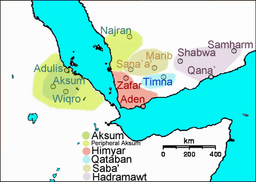
Gadarat
Emperor · Ancient
38.2Total

Napoleon Bonaparte
General · Modern
70.9Total
Basic Information
Born
200
1769
Died
230
1821
Era
Ancient
Modern
Nationality
Aksum
France
Occupation
Emperor
General
Civilization
Other
Western
Score Comparison
Military (10%)
50.0
94.0
Political (20%)
27.9
72.0
Influence (20%)
44.8
40.0
Legacy (20%)
35.8
80.0
Leadership (15%)
34.6
78.0
Strategy (15%)
36.8
90.0
TOTAL
38.2
70.9
Gadarat — Complete Timeline
200 AD
First Aksumite InscriptionsCultural◆ Major
Gadarat commissioned the earliest known inscriptions in the Ge'ez script, marking the beginning of recorded history in the Kingdom of Aksum. These inscriptions, found at sites like Adulis, document his reign and the early state's expansion.
Aksumite KingdomInscriptionsEarly History
Impact: regionalconstructive
Napoleon Bonaparte — Complete Timeline
1799 AD
Coup of 18 BrumaireOther◆ Major
Napoleon Bonaparte, with support from his brother Lucien and key political figures, overthrew the Directory in a bloodless coup. He established the Consulate with himself as First Consul, effectively becoming the ruler of France. This event ended the French Revolution's most unstable period.
French RevolutionCoupRise to Power
Impact: regional
1804 AD
Promulgation of the Napoleonic CodeOther◆ Major
Napoleon enacted the Civil Code of the French, known as the Napoleonic Code, a comprehensive set of laws that replaced the fragmented feudal legal systems. The code established legal equality, protected property rights, and secularized law. It became the basis for legal systems in many European and world countries.
Legal ReformNapoleonic CodeCivil Law
Impact: globalconstructive
1805 AD
Battle of AusterlitzWar◆ Major
Napoleon's Grande Arm
Napoleonic WarsBattleDecisive Victory
Impact: global
1812 AD
Invasion of RussiaWar◆ Major
Napoleon led the Grande Arm
Napoleonic WarsInvasionDisaster
Impact: globaldestructive
1815 AD
Battle of WaterlooWar◆ Major
Napoleon's French army was defeated by the combined forces of the Duke of Wellington's Anglo-Allied army and Gebhard Leberecht von Bl
Napoleonic WarsBattleFinal Defeat
Impact: globaldestructive
Expert Analysis
gadarat-vs-napoleon-bonaparte
# The Emperor and the Inscriber: Two Paths to Power in Worlds Apart
On a June morning in 1815, the fields near Waterloo turned into a slaughterhouse. Napoleon Bonaparte, master of Europe, watched his Imperial Guard crumble before British volleys. Fifteen hundred miles away and sixteen centuries earlier, another ruler—Gadarat of Aksum—ordered his scribes to carve words into stone, not to commemorate a battle, but to announce his kingdom’s existence to the world. One man shaped history with cannon and code; the other with chisel and alphabet. What drove them, and why did their fates diverge so utterly?
Origins
Napoleon was born in 1769 on the Mediterranean island of Corsica, a land recently annexed by France. His family were minor nobles, ambitious but poor. The French Revolution, which erupted when he was twenty, shattered the old order and opened doors that had been bolted for centuries. A young artillery officer with a hunger for glory, Napoleon breathed the air of a continent in upheaval—where talent mattered more than birth, and where war offered the fastest path to greatness.
Gadarat, by contrast, emerged from the highlands of northeast Africa around 200 AD. Aksum was a trading empire straddling the Red Sea, linking Rome, India, and Arabia. But it left few records. Gadarat’s Aksum was a world of oral tradition, where power was measured in caravans and tribute, not in written laws or standing armies. He inherited a throne that rested on commerce and custom, not conquest.
Rise to Power
Napoleon’s ascent was meteoric. In 1793, at age twenty-four, he drove British forces from the port of Toulon, earning promotion to brigadier general. By 1796, he commanded the Army of Italy, where his lightning campaigns humiliated the Austrians. Each victory was a stepping stone: Egypt in 1798, the coup of 18 Brumaire in 1799, and the title First Consul. He crowned himself Emperor in 1804. His path was one of relentless ambition, fed by a Europe that rewarded audacity.
Gadarat’s rise is shrouded in silence. No dramatic battles survive in the historical record. What we know is this: around 200 AD, he became king of Aksum and did something unprecedented—he commissioned inscriptions in South Arabian script, the Ge'ez alphabet. These texts, carved on stone thrones and monuments, proclaimed his name, his titles, and his control over trade routes. For Aksum, this was a revolution. Writing was power. Gadarat did not need to conquer a continent; he needed to make his kingdom legible to history.
Leadership & Governance
Napoleon governed with a blend of military genius and administrative brilliance. His 94.0 military score reflects his dominance on the battlefield: Austerlitz in 1805, Jena in 1806, and the crushing of Prussia. But his political score of 75.0 reveals a ruler who centralized power ruthlessly. The Napoleonic Code standardized French law, abolished feudalism, and spread ideals of equality—yet it also curtailed women’s rights and restored slavery in the colonies. He was a reformer and a tyrant, a liberator and a conqueror.
Gadarat’s scores—military 47.8, political 35.8, leadership 32.6—suggest a different kind of rule. He was not a warrior-king in the Napoleonic mold. Instead, his power lay in commerce and culture. By introducing writing, he stabilized administration, recorded treaties, and projected authority across the Red Sea. His leadership was subtle: he did not command armies to glory, but he gave his kingdom the tools to endure. Where Napoleon built an empire of steel, Gadarat built one of ink.
Triumph & Tragedy
Napoleon’s triumph was his empire. By 1810, he controlled most of Western and Central Europe, married an Austrian princess, and rewrote the continent’s laws. His tragedy was overreach. The invasion of Russia in 1812 destroyed his Grand Army; defeat at Leipzig in 1813 shattered his empire; Waterloo in 1815 ended his return. He died in exile on Saint Helena in 1821, a prisoner of the British, his dreams of glory reduced to bitter memories.
Gadarat’s triumph was quieter but more lasting. His inscriptions, discovered in modern Ethiopia and Yemen, are the earliest written records of Aksumite civilization. They mark the birth of a literate kingdom that would survive for centuries, eventually becoming Ethiopia—the only African nation never colonized. His tragedy is obscurity. We know almost nothing else about him: no battles, no speeches, no personal letters. He is a name on stone, a ghost in the historical record.
Character & Destiny
Napoleon was driven by an insatiable hunger for control. “I love power,” he once said. “But it is as an artist that I love it.” He saw history as a canvas to be painted with battles and decrees. His personality—restless, calculating, charismatic—propelled him to heights few have reached, but also blinded him to limits. He could not stop, and so he fell.
Gadarat’s character is harder to read. Why did he commission those inscriptions? Perhaps he wanted to secure his legacy, or to impress foreign traders, or to assert Aksum’s place among the great civilizations of his age. His decision to adopt writing suggests a ruler who thought beyond his own lifetime. He understood that power, to last, must be recorded. His destiny was not glory, but foundation.
Legacy
Napoleon’s legacy is immense. The Napoleonic Code influences legal systems worldwide. His military tactics are still studied. His name evokes both genius and catastrophe. But his empire crumbled within a decade of his death.
Gadarat’s legacy is more fragile. His inscriptions are the first pages of Ethiopian history, a thread connecting the Aksumite kingdom to the Solomonic dynasty and modern Ethiopia. Without him, the story of that civilization might have been lost entirely. His scores—influence 59.7, legacy 47.4—reflect a ruler who shaped not a continent, but a culture.
Conclusion
Napoleon and Gadarat never met, could not have met. They ruled worlds apart—one in the roar of cannon, the other in the scratch of a stylus. Yet both understood that power requires expression. Napoleon expressed it through conquest, Gadarat through words. One built an empire that collapsed; the other built a memory that endured. Perhaps the true measure of a ruler is not how many battles he wins, but whether his name outlasts the stone it is carved into. Gadarat’s has. Napoleon’s, too—but at a cost he could never have imagined.
Rankings
🥇
Napoleon BonaparteLeader
Mil: 94.0Pol: 72.0Inf: 40.0
70.9
🥈
Gadarat
Mil: 50.0Pol: 27.9Inf: 44.8
38.2
+32.7 behind
How This Comparison Works
Algorithm
Each figure is scored on 6 dimensions (0—100 scale) based on structured historical data: Military (10%), Political (20%), Influence (20%), Legacy (20%), Leadership (15%), Strategy (15%). The weighted total produces the final ranking.
Data Sources
Scores are computed from structured sub-indicators in the database. Scale factors adjust for era (Ancient ×0.85, Modern ×1.0) and civilization size (Eastern ×1.05, Other ×0.80) to account for differences in population and military scale.
Maximum 3 Figures
Comparisons are limited to 2—3 figures to ensure readability and statistical meaningfulness.
Error Margins
±5 points per dimension — Sub-scores are derived from historical records with inherent uncertainty. Two figures within 5 points on a dimension should be considered roughly equivalent in that area.
Total Score Accuracy
±3 points overall — The weighted combination of 6 dimensions produces a total score with approximately ±3 points of uncertainty. Differences of less than 3 points are not statistically significant— the figures are effectively tied.
Known Limitations
- Historical records are incomplete and uneven across civilizations
- Figures from oral-tradition societies may be underrepresented
- Occupation labels can misclassify multi-role figures
- Scores measure capability and impact, not moral character
- Quantitative scoring is a comparison tool, not absolute truth
Capability Radar
Military (10%) — Battles & Warfare
Battles
10
95
Win Rate
10
90
Expansion
15
95
Political (20%) — Governance & Reform
Reform
15
95
Diplomacy
15
80
Economy
15
85
Influence (20%) — Cultural & Global Reach
Cultural
15
85
Global
10
90
Legacy (20%) — Historical Impact
Historical
20
95
Longevity
15
90
Leadership (15%) — Power & Stability
Tenure
20
85
Stability
20
70
Strategy (15%) — Tactics & Innovation
Strategy
10
95
Tactics
10
98
Reform
10
92
Similar Comparisons
Comments & Discussion
GadaratTheGreat6/17/2026
Napoleon’s entire European career was built on a house of cards—mass mobilization and artillery could only take you so far before the British Navy and Russian winter shut you down. Gadarat, though? That guy carved his empire into stone and clay, literally inscribing Aksum’s trade deals with Rome and India for eternity. Napoleon’s legacy is a battlefield and a code of laws; Gadarat’s is the very Rosetta Stone of African civilization. Who really left a mark on history? The inscriber, not the canno
碑刻之王6/17/2026
拿坡仑?不过是个炮兵出身的暴发户,靠法国大革命的机会钻营上位,最后在滑铁卢败给威灵顿的方阵,还被英国人关在圣赫勒拿岛活活憋屈死。反观加达拉特,这位阿克苏姆君主在没有成文法律的时代,硬是发明了石刻铭文来记录税收和战功,比罗马人还早了半个世纪。你告诉我,谁才是真正理解永恒力量的人?拿坡仑的《拿破仑法典》尚且被改得面目全非,而加达拉特的沙巴文碑刻到现在还在埃塞俄比亚博物馆立着呢,这才是真·硬核遗产。
DataSkeptic6/17/2026
Hold up—comparing a guy whose entire life is documented in thousands of letters, battle reports, and propaganda with a ruler we only know from maybe ten surviving inscriptions? That’s like comparing a Google search history to a sticky note. Napoleon’s ambition is laid bare in census records, army muster rolls, and tax data from 1800 to 1815. Gadarat? We’re guessing his reign span based on pottery shards and vague mentions in a single Roman embassy report. Let’s not crown the “stone carver” king
RevisionistEyes6/17/2026
Everyone’s romanticizing Gadarat as this wise philosopher-king, but let’s get real: inscribing your name on rocks was the ancient equivalent of spray-painting your tag on a subway car. It’s cheap PR when you can’t conquer anything. Napoleon conquered half of Europe in a decade; Gadarat’s “empire” was basically a trade hub that never expanded beyond the Red Sea coast. The Aksumites were middlemen, not world-shapers. And that “stone legacy” argument? Egypt had obelisks for millennia before—Gadarat