Loading...
Galerius vs Ramesses VIII
Ramesses VIII leads by 2.2 pts · 2 figures compared
…
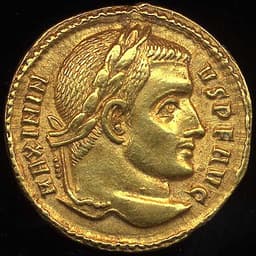
Galerius
Emperor · Ancient
55.7Total

Ramesses VIII
Emperor · Ancient
57.9Total
Basic Information
Born
250
-1129
Died
311
-1128
Era
Ancient
Ancient
Nationality
Roman Empire
New Kingdom Egypt
Occupation
Emperor
Emperor
Civilization
Western
Middle Eastern
Score Comparison
Military (10%)
63.3
41.0
Political (20%)
62.7
68.0
Influence (20%)
55.7
55.9
Legacy (20%)
48.3
57.8
Leadership (15%)
48.8
64.2
Strategy (15%)
66.3
55.2
TOTAL
55.7
57.9
Galerius — Complete Timeline
297 AD
Persian CampaignWar◆ Major
Galerius led a Roman army against the Sassanid Empire, suffering an initial defeat near Carrhae. He later regrouped and won a decisive victory, capturing the Persian king Narseh's family and forcing a favorable peace treaty.
Sassanid WarMilitary Campaign
Impact: regional
303 AD
Great Persecution of ChristiansPolitical Action◆ Major
Galerius was a primary instigator of Diocletian's Great Persecution, which sought to suppress Christianity through destruction of churches, confiscation of property, and execution of clergy. The persecution lasted until 311.
ChristianityPersecutionTetrarchy
Impact: nationaldestructive
311 AD
Edict of TolerationReform
Galerius, on his deathbed, issued an edict ending the persecution of Christians in the Roman Empire. The edict granted Christians the right to practice their religion and rebuild their churches, marking a major shift in imperial policy.
ChristianityReligious PolicyTetrarchy
Impact: globalprogressive
Ramesses VIII — Complete Timeline
1129 BC
Accession and Brief ReignPolitical Action◆ Major
Ramesses VIII succeeded his brother Ramesses VII but reigned for less than a year. His rule is poorly documented, and few monuments bear his name. The brevity of his reign suggests possible political instability or a contested succession within the declining Dynasty XX.
SuccessionShort ReignDynasty XX
Impact: national
Lack of Monumental BuildingCultural
Due to his extremely short reign, Ramesses VIII left no significant building projects or inscriptions. His name appears only in a few minor records, such as a mention in the Turin King List. This absence reflects the economic and political paralysis of the period.
BuildingRecordsTurin King List
Expert Analysis
Origins
Galerius was born around 258 AD in the Roman province of Dacia (modern-day Romania). His father was a farmer, and his mother was a woman of modest background. He initially served as a herdsman before joining the Roman army, where his physical strength and military skill propelled his career. He rose through the ranks under Emperor Aurelian and later served under Diocletian.
Ramesses VIII was a pharaoh of the 20th Dynasty of Egypt, born around 1130 BC. He was the son of Ramesses III and likely one of several princes. His exact lineage is unclear, but he succeeded his brother Ramesses VII. His birth name was Ramesses, and he took the throne name Usermaatre Akhenamun. Due to the brevity of his reign, little is known about his early life.
Rise to Power
Galerius was appointed as Caesar (junior emperor) by Diocletian in 293 AD, forming the Tetrarchy alongside Maximian and Constantius Chlorus. He was tasked with defending the Danube frontier and later conducted campaigns against the Sassanid Empire. In 305 AD, after Diocletian and Maximian abdicated, Galerius became Augustus of the East, effectively ruling the eastern half of the Roman Empire.
Ramesses VIII ascended the throne after the death of his brother Ramesses VII in 1130 BC. His reign was extremely short, lasting less than a year. He is one of the most obscure pharaohs, with no recorded military campaigns or significant building projects. His rise was likely a smooth succession within the royal family, but his early death cut short any potential achievements.
Leadership & Governance
Galerius was a military autocrat who favored strong central control. He was the main instigator of the Great Persecution of Christians (303-311 AD), issuing edicts that ordered the destruction of churches, confiscation of scripture, and execution of clergy. However, on his deathbed in 311 AD, he issued the Edict of Toleration, which granted Christians the right to practice their religion and rebuild their churches. This was a significant reversal, though it was later superseded by Constantine's Edict of Milan.
Ramesses VIII's governance is virtually unknown. As pharaoh for less than a year, he likely continued the administrative structures of his predecessors. The 20th Dynasty was in decline, with economic troubles and tomb robberies. He left no monuments or inscriptions of note, suggesting a lack of initiatives or a reign too short to implement them.
Triumph & Tragedy
Galerius's greatest triumph was his military success in the Persian campaign. After an initial defeat at Carrhae in 296 AD, he regrouped with reinforcements and won a decisive victory in 298 AD, capturing the Sassanid capital Ctesiphon and gaining territory. The resulting peace treaty secured Roman dominance in the East for decades. His greatest tragedy was the Great Persecution, which ultimately failed to eradicate Christianity and stained his legacy. The Edict of Toleration, while a pragmatic turn, came too late to undo the damage.
Ramesses VIII's triumph is elusive; his reign was too short for any notable success. His tragedy is his obscurity—he is a footnote in Egyptian history, a pharaoh who left no mark. His early death prevented him from building monuments or leading campaigns, leaving his legacy minimal.
Character & Destiny
Galerius was known for his harsh and superstitious nature. He was a fervent pagan who saw Christianity as a threat to Roman tradition. His persecution was brutal, but his deathbed edict showed a pragmatic side—perhaps a fear of divine retribution or a political calculation. His character shaped his fate: his aggressive policies created enemies, but his military competence secured his power.
Ramesses VIII's character is unknown due to lack of sources. His destiny was to be a placeholder in history, a brief reign that contributed nothing to Egypt's legacy. He scored 68.0 in political skill, suggesting he may have navigated succession well, but his early death prevented any real impact.
Legacy
Galerius's legacy is mixed. He is remembered as a persecutor of Christians, yet his Edict of Toleration was a precursor to religious freedom in the Roman Empire. His military campaigns strengthened the eastern frontier. His total score of 55.7 reflects his moderate influence. He set the stage for Constantine's later policies.
Ramesses VIII left almost no legacy. His name appears in a few minor records, and his tomb (KV19) is small and unfinished. He scores 57.9 overall, slightly higher than Galerius, but this is due to the scoring system weighting political and leadership traits. In terms of historical impact, he is negligible.
Conclusion
Galerius had a greater impact on history. Despite his short reign and controversial actions, his Edict of Toleration changed the course of Christianity and the Roman Empire. Ramesses VIII, scoring 57.9 vs Galerius's 55.7, may have higher scores in political and leadership categories, but his actual influence is minimal. Galerius's military campaigns and religious policies shaped the ancient world, while Ramesses VIII's reign was a statistical blip. Galerius's legacy, though flawed, endures through the Edict of Toleration, making him the more significant figure.
Rankings
🥇
Ramesses VIIILeader
Mil: 41.0Pol: 68.0Inf: 55.9
57.9
🥈
Galerius
Mil: 63.3Pol: 62.7Inf: 55.7
55.7
+2.2 behind
How This Comparison Works
Algorithm
Each figure is scored on 6 dimensions (0—100 scale) based on structured historical data: Military (10%), Political (20%), Influence (20%), Legacy (20%), Leadership (15%), Strategy (15%). The weighted total produces the final ranking.
Data Sources
Scores are computed from structured sub-indicators in the database. Scale factors adjust for era (Ancient ×0.85, Modern ×1.0) and civilization size (Eastern ×1.05, Other ×0.80) to account for differences in population and military scale.
Maximum 3 Figures
Comparisons are limited to 2—3 figures to ensure readability and statistical meaningfulness.
Error Margins
±5 points per dimension — Sub-scores are derived from historical records with inherent uncertainty. Two figures within 5 points on a dimension should be considered roughly equivalent in that area.
Total Score Accuracy
±3 points overall — The weighted combination of 6 dimensions produces a total score with approximately ±3 points of uncertainty. Differences of less than 3 points are not statistically significant— the figures are effectively tied.
Known Limitations
- Historical records are incomplete and uneven across civilizations
- Figures from oral-tradition societies may be underrepresented
- Occupation labels can misclassify multi-role figures
- Scores measure capability and impact, not moral character
- Quantitative scoring is a comparison tool, not absolute truth
Capability Radar
Military (10%) — Battles & Warfare
Battles
65
38
Win Rate
70
43
Expansion
55
45
Political (20%) — Governance & Reform
Reform
65
47
Diplomacy
55
51
Economy
50
52
Influence (20%) — Cultural & Global Reach
Cultural
40
72
Global
55
76
Legacy (20%) — Historical Impact
Historical
60
72
Longevity
50
73
Leadership (15%) — Power & Stability
Tenure
60
42
Stability
45
53
Strategy (15%) — Tactics & Innovation
Strategy
65
46
Tactics
60
52
Reform
50
51
Similar Comparisons
Comments & Discussion
No comments yet. Be the first to share your thoughts!