Loading...
Galerius vs Tuoba Tao
Tuoba Tao leads by 10.5 pts · 2 figures compared
…
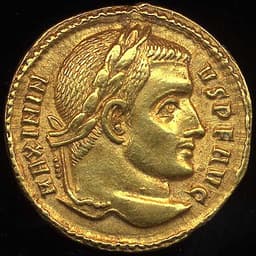
Galerius
Emperor · Ancient
55.7Total
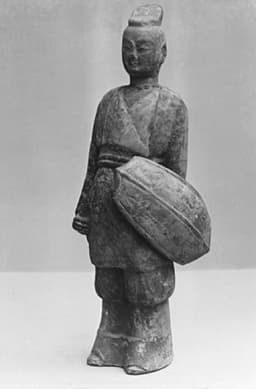
Tuoba Tao
Emperor · Ancient
66.2Total
Basic Information
Born
250
408
Died
311
452
Era
Ancient
Ancient
Nationality
Roman Empire
China
Occupation
Emperor
Emperor
Civilization
Western
Eastern
Score Comparison
Military (10%)
63.3
78.0
Political (20%)
62.7
70.0
Influence (20%)
55.7
59.0
Legacy (20%)
48.3
58.0
Leadership (15%)
48.8
78.0
Strategy (15%)
66.3
69.1
TOTAL
55.7
66.2
Galerius — Complete Timeline
297 AD
Persian CampaignWar◆ Major
Galerius led a Roman army against the Sassanid Empire, suffering an initial defeat near Carrhae. He later regrouped and won a decisive victory, capturing the Persian king Narseh's family and forcing a favorable peace treaty.
Sassanid WarMilitary Campaign
Impact: regional
303 AD
Great Persecution of ChristiansPolitical Action◆ Major
Galerius was a primary instigator of Diocletian's Great Persecution, which sought to suppress Christianity through destruction of churches, confiscation of property, and execution of clergy. The persecution lasted until 311.
ChristianityPersecutionTetrarchy
Impact: nationaldestructive
311 AD
Edict of TolerationReform
Galerius, on his deathbed, issued an edict ending the persecution of Christians in the Roman Empire. The edict granted Christians the right to practice their religion and rebuild their churches, marking a major shift in imperial policy.
ChristianityReligious PolicyTetrarchy
Impact: globalprogressive
Tuoba Tao — Complete Timeline
439 AD
Unification of northern China under Northern WeiWar
Emperor Taiwu of Northern Wei (Tuoba Tao) conquered the last rival state, Northern Liang, unifying all of northern China under the Northern Wei dynasty. This ended the Sixteen Kingdoms period and established Northern Wei as the dominant power in the north.
Northern WeiUnificationSixteen Kingdoms
Impact: regionalconstructive
446 AD
Suppression of BuddhismReform◆ Major
Emperor Taiwu issued an edict suppressing Buddhism, ordering the destruction of monasteries, scriptures, and images. He favored Daoism and sought to reduce Buddhist influence on state affairs. This was the first major persecution of Buddhism in Chinese history.
Northern WeiBuddhist PersecutionReligion
Impact: nationaldestructive
452 AD
Assassination by eunuch Zong AiPolitical Action◆ Major
Emperor Taiwu was assassinated by his eunuch Zong Ai, who feared punishment for his misdeeds. The assassination plunged Northern Wei into a succession crisis, but Zong Ai was soon killed by other officials, and a new emperor was installed.
Northern WeiAssassinationSuccession Crisis
Impact: nationaltragic
Expert Analysis
Origins
Galerius (c. 258-311 AD) was born to a humble family in the Roman province of Dacia (modern Romania). His father was a farmer, and Galerius initially worked as a herdsman before joining the Roman army. He rose through the ranks due to his military prowess, catching the attention of Emperor Diocletian, who appointed him as Caesar in 293 AD. Galerius married Diocletian's daughter Valeria, solidifying his position within the Tetrarchy.
Tuoba Tao (408-452 AD), posthumously known as Emperor Taiwu of Northern Wei, was born into the Tuoba clan of the Xianbei people. His grandfather, Emperor Daowu, founded the Northern Wei dynasty, and his father, Emperor Mingyuan, ruled briefly. Tuoba Tao became emperor at age 15 in 423 AD, inheriting a state that controlled much of northern China but faced threats from rival kingdoms and nomadic tribes.
Rise to Power
Galerius's rise was tied to the Tetrarchy system established by Diocletian. In 293 AD, he was appointed Caesar alongside Constantius Chlorus, tasked with defending the Danube frontier. His major breakthrough came during the Persian campaign: after an initial defeat at Carrhae in 296 AD, Galerius regrouped and defeated the Sassanid king Narseh in 298 AD, capturing the royal treasury and family. This victory earned him the title of Augustus in 305 AD, but his reign was marked by conflict with other Tetrarchs, notably Maxentius and Constantine.
Tuoba Tao ascended the throne at 15, with his chancellor Cui Hao serving as regent. He quickly asserted his authority, personally leading campaigns against the Rouran nomads to the north and the Xia dynasty in the south. In 427 AD, he captured the Xia capital Tongwan, and by 439 AD, he conquered the Northern Liang, unifying all of northern China under Northern Wei. His military successes were driven by his personal leadership and strategic acumen.
Leadership & Governance
Galerius's leadership style was autocratic and harsh. He was a primary instigator of the Great Persecution of Christians (303-311 AD), ordering the destruction of churches and scriptures. His governance focused on military security and enforcing religious uniformity. However, on his deathbed in 311 AD, he issued the Edict of Toleration, ending persecution and allowing Christians to practice freely. This contradictory act reflects his pragmatic approach to political stability.
Tuoba Tao ruled with a centralized, militaristic approach. He suppressed Buddhism in 446 AD, favoring Daoism, and destroyed monasteries and scriptures. He also implemented administrative reforms, including a census and land registration system. His governance prioritized military expansion and consolidation, but his harsh treatment of officials led to his assassination by the eunuch Zong Ai in 452 AD. His leadership score of 78.0 reflects his effective command, while Galerius's 48.8 indicates less successful governance.
Triumph & Tragedy
Galerius's greatest triumph was his victory over the Sassanids in 298 AD, which secured Rome's eastern frontier and resulted in territorial gains. His political achievement was the Edict of Toleration, which ended persecution of Christians. However, his tragedy was his role in the Great Persecution, which destabilized the empire and created martyrs. He died of a painful disease, possibly cancer, in 311 AD.
Tuoba Tao's triumph was the unification of northern China by 439 AD, ending centuries of division. He also defeated the Rouran, securing his northern border. His tragedy was his suppression of Buddhism, which alienated many subjects, and his assassination, which plunged the dynasty into a succession crisis. His military score of 78.0 and strategy of 69.1 highlight his effectiveness, but his political score of 70.0 reflects the costs of his methods.
Character & Destiny
Galerius was ambitious and ruthless, driven by a desire to restore traditional Roman religion. His persecution of Christians reflected his intolerance, but his final edict showed a capacity for pragmatism. His destiny was shaped by his inability to secure a stable succession, leading to civil wars after his death. Historians often view him as a transitional figure, bridging the era of persecution to the eventual Christianization of the empire.
Tuoba Tao was a warrior-emperor, personally leading troops and known for his discipline. His character combined strategic brilliance with cruelty, as seen in his suppression of Buddhism. His assassination by a trusted eunuch underscores the dangers of his authoritarian rule. His legacy is mixed: he unified northern China but left a divided court.
Legacy
Galerius's legacy is overshadowed by his persecution of Christians, but the Edict of Toleration paved the way for Constantine's Edict of Milan (313 AD). His military campaigns stabilized the eastern frontier. However, his overall influence score of 55.7 and legacy of 48.3 indicate limited long-term impact compared to other Roman emperors.
Tuoba Tao's legacy is more substantial. He unified northern China, setting the stage for the Sui and Tang dynasties. His administrative reforms influenced later Chinese governance. His suppression of Buddhism had lasting effects, but his military achievements are celebrated. His total score of 66.2 reflects a stronger impact than Galerius's 55.7.
Conclusion
Tuoba Tao had a greater impact than Galerius. While Galerius's Edict of Toleration was significant, his overall achievements were limited by his short reign and the instability of the Tetrarchy. Tuoba Tao unified northern China, a feat that reshaped Chinese history, and his military and leadership scores (78.0 and 78.0) far exceed Galerius's (63.3 and 48.8). The 10.5-point total score gap underscores this assessment. Tuoba Tao's unification directly enabled the later consolidation of China, whereas Galerius's legacy is tied to a failed persecution and a dying empire.
Rankings
🥇
Tuoba TaoLeader
Mil: 78.0Pol: 70.0Inf: 59.0
66.2
🥈
Galerius
Mil: 63.3Pol: 62.7Inf: 55.7
55.7
+10.5 behind
How This Comparison Works
Algorithm
Each figure is scored on 6 dimensions (0—100 scale) based on structured historical data: Military (10%), Political (20%), Influence (20%), Legacy (20%), Leadership (15%), Strategy (15%). The weighted total produces the final ranking.
Data Sources
Scores are computed from structured sub-indicators in the database. Scale factors adjust for era (Ancient ×0.85, Modern ×1.0) and civilization size (Eastern ×1.05, Other ×0.80) to account for differences in population and military scale.
Maximum 3 Figures
Comparisons are limited to 2—3 figures to ensure readability and statistical meaningfulness.
Error Margins
±5 points per dimension — Sub-scores are derived from historical records with inherent uncertainty. Two figures within 5 points on a dimension should be considered roughly equivalent in that area.
Total Score Accuracy
±3 points overall — The weighted combination of 6 dimensions produces a total score with approximately ±3 points of uncertainty. Differences of less than 3 points are not statistically significant— the figures are effectively tied.
Known Limitations
- Historical records are incomplete and uneven across civilizations
- Figures from oral-tradition societies may be underrepresented
- Occupation labels can misclassify multi-role figures
- Scores measure capability and impact, not moral character
- Quantitative scoring is a comparison tool, not absolute truth
Capability Radar
Military (10%) — Battles & Warfare
Battles
65
85
Win Rate
70
80
Expansion
55
85
Political (20%) — Governance & Reform
Reform
65
75
Diplomacy
55
70
Economy
50
70
Influence (20%) — Cultural & Global Reach
Cultural
40
60
Global
55
55
Legacy (20%) — Historical Impact
Historical
60
70
Longevity
50
65
Leadership (15%) — Power & Stability
Tenure
60
80
Stability
45
65
Strategy (15%) — Tactics & Innovation
Strategy
65
85
Tactics
60
75
Reform
50
70
Similar Comparisons
Comments & Discussion
No comments yet. Be the first to share your thoughts!