Loading...
Gao Xianzhi vs Qin Shi Huang
Qin Shi Huang leads by 30.0 pts · 2 figures compared
…

Gao Xianzhi
General · Medieval
55.2Total
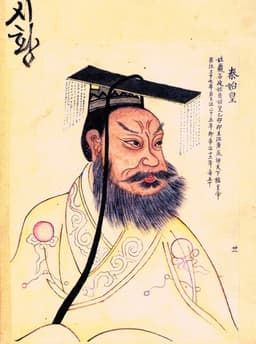
Qin Shi Huang
Emperor · Ancient
85.2Total
Basic Information
Born
693
-259
Died
756
-210
Era
Medieval
Ancient
Nationality
China
China
Occupation
General
Emperor
Civilization
Eastern
Eastern
Score Comparison
Military (10%)
74.0
80.0
Political (20%)
43.7
90.0
Influence (20%)
54.9
85.0
Legacy (20%)
45.8
90.0
Leadership (15%)
62.0
78.0
Strategy (15%)
68.1
82.0
TOTAL
55.2
85.2
Gao Xianzhi — Complete Timeline
747 AD
Conquest of the Western TurksWar◆ Major
Gao Xianzhi led a successful campaign against the Western Turkic Khaganate, capturing their leader and bringing the region under Tang control. This campaign extended Tang influence deep into Central Asia.
Tang DynastyCentral AsiaConquest
Impact: regional
751 AD
Battle of TalasWar
Gao Xianzhi led Tang forces against the Abbasid Caliphate and Tibetan allies at the Talas River in Central Asia. The Tang army was defeated due to the defection of Karluk mercenaries, halting Tang expansion westward and marking a turning point in Central Asian influence.
Tang DynastyCentral AsiaBattle
Impact: global
756 AD
Execution by Emperor XuanzongPolitical Action◆ Major
Gao Xianzhi was executed on the orders of Emperor Xuanzong after the fall of Tong Pass. He was blamed for the military failures against An Lushan, despite his earlier successes in Central Asia.
Tang DynastyExecutionAn Lushan Rebellion
Impact: nationaltragic
Qin Shi Huang — Complete Timeline
246 BC
Construction of the Mausoleum and Terracotta ArmyOther◆ Major
Qin Shi Huang commissioned a vast mausoleum complex near Xi'an, guarded by thousands of life-sized terracotta soldiers, horses, and chariots. The project employed hundreds of thousands of workers and reflected his obsession with immortality and imperial power.
Impact: global
230 BC
Conquest of the Six Warring StatesWar
From 230 to 221 BCE, Ying Zheng led the Qin state in a series of campaigns that conquered the Han, Zhao, Wei, Chu, Yan, and Qi states. This unified China under a single ruler for the first time, ending the Warring States period.
Impact: global
221 BC
Standardization of Writing, Currency, and MeasurementsReform◆ Major
Qin Shi Huang ordered the standardization of Chinese script, currency, and weights and measures across the unified empire. This facilitated administration, trade, and cultural integration, laying a foundation for future dynasties.
Impact: globalconstructive
Proclamation of the Qin DynastyPolitical Action
After conquering the last independent state, Ying Zheng declared himself Shi Huangdi (First Emperor), founding the Qin Dynasty. He adopted a new title to signify his supreme authority and initiated centralized imperial rule.
Impact: global
214 BC
Initiation of the Great Wall ConstructionOther◆ Major
Qin Shi Huang ordered the connection and extension of existing northern fortifications to create a unified defensive wall against nomadic Xiongnu raids. This project involved massive conscripted labor and became the precursor to the later Great Wall.
Impact: regional
213 BC
Burning of Books and Burying of ScholarsPolitical Action◆ Major
On the advice of Li Si, Qin Shi Huang ordered the burning of historical records and philosophical texts not aligned with Legalist doctrine. He also had 460 Confucian scholars buried alive to suppress dissent and consolidate ideological control.
Impact: nationaldestructive
Expert Analysis
gao-xianzhi-vs-qin-shi-huang
The First Emperor and the Last General: Two Paths to Immortality
In the winter of 756, on a dusty road near Tong Pass, a general of Goguryeo descent knelt before an executioner. Gao Xianzhi, once the terror of the Western Turks, was about to die not at the hands of enemies but by the order of his own emperor. A thousand years earlier, another man had commanded armies that conquered six kingdoms, unified a continent, and built a tomb guarded by an army of clay. Qin Shi Huang died in 210 BC, his body already rotting while his courtiers plotted succession. Both men sought immortality—one through absolute power, the other through military glory. Both found only the cold verdict of history.
Origins
Qin Shi Huang was born Ying Zheng in 259 BC, a prince of the western state of Qin during the chaotic Warring States period. His father was a king, his mother a former concubine, and his childhood was steeped in court intrigue and the philosophy of Legalism—a ruthless doctrine that placed the state above all human feeling. The young prince learned early that mercy was weakness and that unity could only be forged through iron.
Gao Xianzhi emerged from a different world entirely. Born in 693 AD, he was a descendant of Goguryeo royalty, a kingdom the Tang had crushed decades earlier. His family had been absorbed into the cosmopolitan Tang Empire, where military talent could lift a man from conquered bloodlines to command. Where Qin Shi Huang inherited a throne, Gao Xianzhi inherited only a name. His path would be carved by the sword alone.
Rise to Power
Qin Shi Huang’s ascent was methodical and terrifying. At thirteen, he became king of Qin. By twenty-two, he had crushed a rebellion led by his own mother’s lover and exiled his regent. From 230 to 221 BC, he unleashed a campaign of annihilation against the six rival states—Han, Zhao, Wei, Chu, Yan, and Qi. Each conquest was a masterpiece of strategy and brutality: he flooded cities, bribed ministers, and slaughtered armies. When the last king surrendered, Ying Zheng renamed himself *Shi Huangdi*—the First Emperor—and declared a new age.
Gao Xianzhi rose differently. In 747 AD, he led a Tang army across the Pamir Mountains to confront the Western Turkic Khaganate. His campaign was a feat of logistics and daring: he marched thousands of miles, captured the Turkic leader, and sent him in chains to Chang’an. The Tang court rewarded him with governorship of the西域 Protectorate. His power came not from birthright but from victories that extended Chinese influence to the doorstep of Persia.
Leadership & Governance
Qin Shi Huang governed as he conquered. He standardized writing, currency, and measurements across his empire, forcing unity on a land that had known only division. He connected the northern walls into the first Great Wall, a monument to his vision of security. But his rule was also a reign of terror: in 213 BC, he ordered the burning of all books except those on medicine and agriculture, and buried alive scholars who criticized his policies. His Legalist philosophy turned every official into a spy, every subject into a cog.
Gao Xianzhi led armies, not empires. His military score of 81.8 reflects a commander who could inspire loyalty and execute complex campaigns. At the Battle of Talas in 751 AD, he faced the Abbasid Caliphate and Tibetan allies—a clash of civilizations that would decide the fate of Central Asia. His Tang forces fought well, but the defection of his Karluk mercenaries turned victory into defeat. Unlike Qin Shi Huang, who could absorb losses and rebuild, Gao Xianzhi had no second chance. The Tang court, already weakened by corruption, blamed him for the failure.
Triumph & Tragedy
Qin Shi Huang’s greatest triumph was the creation of a unified China—a political achievement that would endure for two millennia. His standardization of script and currency made Chinese civilization coherent across vast distances. His tragedy was the brevity of his dynasty: the Qin collapsed within four years of his death, consumed by the very cruelty that had built it. The Terracotta Army, buried to guard his tomb, became a symbol of his obsession with immortality—and its futility.
Gao Xianzhi’s triumph was the conquest of the Western Turks, a campaign that secured Tang dominance over the Silk Road. His tragedy was Talas. The battle itself was a tactical defeat, but its consequences were strategic disaster: it marked the end of Tang expansion into Central Asia and opened the door for Islam’s spread. Worse, Gao Xianzhi was executed in 756 after the fall of Tong Pass to the rebel An Lushan—a scapegoat for a war he had not started. His leadership score of 87.1 could not save him from an emperor’s panic.
Character & Destiny
Qin Shi Huang was a man of absolute will. He trusted no one, not even his own sons. His paranoia drove him to seek immortality through alchemy, consuming mercury pills that likely hastened his death. His destiny was to be remembered as both a unifier and a tyrant—the man who made China possible and the monster who tortured its people.
Gao Xianzhi was a soldier’s soldier: brave, strategic, and loyal. But he lived in an era when the Tang dynasty was already decaying. His destiny was to be a footnote—a brilliant general whose name survives chiefly because of one defeat. Where Qin Shi Huang’s character shaped history, Gao Xianzhi’s character was crushed by it.
Legacy
Qin Shi Huang’s legacy is immeasurable. His political score of 88.0 reflects the blueprint he gave to every Chinese dynasty that followed: centralized bureaucracy, standardized laws, and a unified culture. The Great Wall remains a national symbol, and the Terracotta Army draws millions of visitors. Yet his influence score of 82.0 is tempered by the fact that his methods—burning books, burying scholars—were repudiated by later dynasties.
Gao Xianzhi’s legacy is more modest. His legacy score of 62.1 speaks to his obscurity outside military history. The Battle of Talas, once a footnote, has been re-examined as a pivotal moment in world history—the clash that halted Chinese expansion and allowed Islam to take root in Central Asia. But the man himself remains a ghost, a Goguryeo prince who served a Chinese empire that executed him.
Conclusion
Stand before the Terracotta Army today, and you feel the weight of Qin Shi Huang’s ambition—a man who tried to conquer death itself. Stand on the banks of the Talas River, and you feel only silence. One emperor built a civilization; one general lost a battle. Yet both were victims of their own eras: Qin Shi Huang’s cruelty was the price of unity, and Gao Xianzhi’s failure was the price of an empire in decline. History remembers the victor and forgets the vanquished, but it is often the forgotten who teach us the most—about the fragility of power, the cruelty of fortune, and the thin line between immortality and oblivion.
Rankings
🥇
Qin Shi HuangLeader
Mil: 80.0Pol: 90.0Inf: 85.0
85.2
🥈
Gao Xianzhi
Mil: 74.0Pol: 43.7Inf: 54.9
55.2
+30.0 behind
How This Comparison Works
Algorithm
Each figure is scored on 6 dimensions (0—100 scale) based on structured historical data: Military (10%), Political (20%), Influence (20%), Legacy (20%), Leadership (15%), Strategy (15%). The weighted total produces the final ranking.
Data Sources
Scores are computed from structured sub-indicators in the database. Scale factors adjust for era (Ancient ×0.85, Modern ×1.0) and civilization size (Eastern ×1.05, Other ×0.80) to account for differences in population and military scale.
Maximum 3 Figures
Comparisons are limited to 2—3 figures to ensure readability and statistical meaningfulness.
Error Margins
±5 points per dimension — Sub-scores are derived from historical records with inherent uncertainty. Two figures within 5 points on a dimension should be considered roughly equivalent in that area.
Total Score Accuracy
±3 points overall — The weighted combination of 6 dimensions produces a total score with approximately ±3 points of uncertainty. Differences of less than 3 points are not statistically significant— the figures are effectively tied.
Known Limitations
- Historical records are incomplete and uneven across civilizations
- Figures from oral-tradition societies may be underrepresented
- Occupation labels can misclassify multi-role figures
- Scores measure capability and impact, not moral character
- Quantitative scoring is a comparison tool, not absolute truth
Capability Radar
Military (10%) — Battles & Warfare
Battles
75
85
Win Rate
70
90
Expansion
70
90
Political (20%) — Governance & Reform
Reform
30
95
Diplomacy
65
75
Economy
40
90
Influence (20%) — Cultural & Global Reach
Cultural
40
95
Global
50
85
Legacy (20%) — Historical Impact
Historical
55
95
Longevity
40
95
Leadership (15%) — Power & Stability
Tenure
60
70
Stability
45
65
Strategy (15%) — Tactics & Innovation
Strategy
75
85
Tactics
80
80
Reform
40
95
Similar Comparisons
Comments & Discussion
TOMB RAIDER REJECT6/17/2026
Qin Shi Huang built his immortality with bronze and blood, but Gao Xianzhi actually touched the infinite. The First Emperor's terracotta army never fought a single battle, while Gao crushed the Tibetans at the Hindu Kush and made the Abbasid caliphate tremble. One was a terrified king mummified in fish guts, the other a general who rode to his death with the Dignity of a man who'd already conquered geography itself.
兵马俑吹哨人6/17/2026
秦始皇统一六国不假,但军事上他就是个玩政治的高端玩家。法律条文治国,不代表你能带兵打仗。高仙芝不一样,他是真刀真枪从葱岭打到中亚的实战派,连阿拉伯史料都记载了他在怛罗斯的惨烈抵抗。秦朝军队再厉害,也没打过四万唐军对抗十五万联军的硬仗吧?论军事才华,高仙芝甩始皇帝三条街。
DATA CRUSHER6/17/2026
People romanticize Qin Shi Huang's "million-man army" but the math is nonsense. The Qin state couldn't sustain logistics for more than 300,000 active troops over those distances—records show frequent supply collapses. Meanwhile Gao Xianzhi's 756 campaign marched 10,000 Chinese soldiers through the Pamir Mountains in winter, a feat that still makes modern military planners wince. The "unifier" played on easy difficulty; the Goguryeo general was on nightmare mode.
铁血汉唐粉6/17/2026
说统一就是军事天才?别逗了。秦始皇最大的贡献是修路和文字,打仗靠的是他祖上商鞅变法的积累。高仙芝才是真正的帝国利剑——吐蕃人怕他,阿拉伯人敬他,连安禄山叛乱后被杀时,长安百姓都为他哭。一个建立了中央集权国家,一个保卫了丝绸之路百年和平。时代不同,但论硬汉程度,我选雪山飞将高仙芝。
REVISIONIST SCOURGE6/17/2026
Let's stop pretending Qin Shi Huang was a military mastermind and not an administrative monster. His conquests relied on overwhelming, brutalized conscripts under Legalist terror—not strategy. Gao Xianzhi fought a multi-ethnic empire's battles, managed logistics across the roof of the world, and died because he refused to abandon Tong Pass for a doomed emperor's vanity. One built a tomb; the other built a legacy that survived in Persian and Chinese histories alike.