Loading...
Garcia I of Leon vs Wenceslaus IV of Bohemia
Wenceslaus IV of Bohemia leads by 6.1 pts · 2 figures compared
…
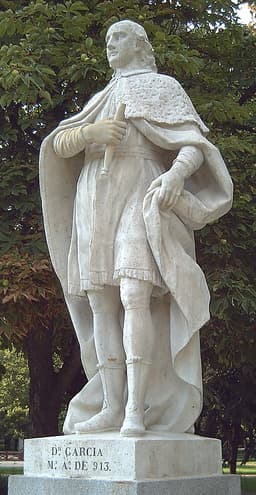
Garcia I of Leon
Emperor · Medieval
39.6Total
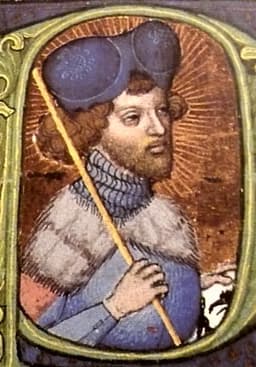
Wenceslaus IV of Bohemia
Emperor · Medieval
45.7Total
Basic Information
Born
871
1361
Died
914
1419
Era
Medieval
Medieval
Nationality
Leon
Bohemia
Occupation
Emperor
Emperor
Civilization
Western
Western
Score Comparison
Military (10%)
47.5
21.2
Political (20%)
27.9
33.6
Influence (20%)
46.3
54.9
Legacy (20%)
39.2
48.3
Leadership (15%)
38.1
58.8
Strategy (15%)
35.7
39.6
TOTAL
39.6
45.7
Garcia I of Leon — Complete Timeline
910 AD
First King of LeonPolitical Action◆ Major
Upon the deposition of his father Alfonso III, Garcia I became the first king of Leon, ruling the central portion of the divided Asturian kingdom. He established his court in the city of Leon, which became the capital of the new kingdom, marking the transition from Asturias to Leon as the dominant Christian power.
CoronationKingdom of LeonCapital
Impact: regionalconstructive
912 AD
Repopulation of the Duero ValleyReform◆ Major
Garcia I continued the repopulation of the Duero Valley, granting land and privileges to settlers from the north. He established fortified settlements at Roa, Osma, and San Esteban de Gormaz, strengthening the Leonese frontier against Muslim raids and consolidating control over the region.
RepopulationDuero ValleySettlement
Impact: regionalconstructive
914 AD
Death Without HeirPolitical Action◆ Major
Garcia I died without a legitimate heir, leading to a succession crisis. The throne passed to his brother Ordo
Succession CrisisDeathHeirless
Impact: nationaltragic
Wenceslaus IV of Bohemia — Complete Timeline
1402 AD
Conflict with the HussitesPolitical Action
Wenceslaus IV initially supported Jan Hus and the reform movement, but later opposed them under pressure from the Catholic Church. His inconsistent policies alienated both Hussites and Catholics, weakening his authority.
Religious ConflictJan HusPolitical Instability
Impact: national
1419 AD
Defenestration of PraguePolitical Action
Wenceslaus IV's refusal to release Hussite prisoners led to a mob storming the New Town Hall in Prague. The crowd threw the city councillors out of a window, triggering the Hussite Wars that would devastate Bohemia for decades.
Hussite WarsRebellionReligious Conflict
Impact: regionaldestructive
Death of Wenceslaus IVOther◆ Major
Wenceslaus IV died of a heart attack shortly after the Defenestration of Prague. His death left Bohemia without a strong ruler, allowing the Hussite movement to gain momentum and plunging the kingdom into civil war.
DeathSuccession CrisisHussite Wars
Impact: regionaltragic
Expert Analysis
Origins
**Garcia I of Leon** was born around 871, the eldest son of King Alfonso III of Asturias and Queen Jimena. He was raised in the court of Oviedo, receiving training in governance and military affairs. His family was deeply involved in the Christian Reconquista, and his father had expanded the kingdom significantly. Garcia's early life was shaped by the ongoing struggle against Muslim rule in Iberia.
**Wenceslaus IV of Bohemia** was born on February 26, 1361, in Nuremberg, the son of Emperor Charles IV and Anna of Schweidnitz. He grew up in the luxurious court of Prague, receiving a thorough education in politics and law. His father was one of the most powerful rulers in Europe, and Wenceslaus was groomed for kingship from an early age. He became King of Bohemia at 2 years old upon his father's death in 1378, though a regency governed until he came of age.
Rise to Power
Garcia I's rise came abruptly in 910 when his father Alfonso III was deposed by his own sons, including Garcia. The kingdom was divided: Garcia received the central part, becoming the first King of Leon, while his brothers Ordoño and Fruela ruled Galicia and Asturias respectively. This division was a turning point, establishing Leon as a separate Christian kingdom. Garcia's authority was initially limited, but he worked to consolidate control over the Duero Valley.
Wenceslaus IV inherited the throne of Bohemia and the title of King of the Romans (Holy Roman Emperor-elect) in 1378. His early reign was marked by conflict with the nobility, particularly the powerful House of Rosenberg. He was captured by rebels in 1394 and imprisoned for several months. His authority was further undermined by his half-brother Sigismund, who later became emperor. Wenceslaus's political score of 33.6 reflects his struggles with maintaining power.
Leadership & Governance
Garcia I focused on consolidating his new kingdom. He continued the repopulation of the Duero Valley, granting land and privileges to settlers from the north, establishing fortified settlements like Zamora and Toro. This policy strengthened Leon's frontier and increased agricultural production. His leadership style was pragmatic, relying on local nobles to administer territories. His political score of 27.9 indicates limited institutional innovation.
Wenceslaus IV's governance was inconsistent. He initially supported Jan Hus and the reform movement, but later opposed them under pressure from the Catholic Church, leading to the Hussite Wars. His indecisiveness eroded his support. He was often at odds with the Bohemian nobility and the Church, leading to his deposition as King of the Romans in 1400. His leadership score of 58.8 reflects some ability but poor execution.
Triumph & Tragedy
Garcia I's greatest triumph was establishing the Kingdom of Leon as a viable entity. The repopulation of the Duero Valley created a buffer zone against Muslim raids and laid the foundation for future Christian expansion. His tragedy was dying without a legitimate heir around 914, causing a succession crisis. The throne passed to his brother Ordoño II, reuniting the kingdoms temporarily. This lack of succession planning weakened Leon's stability.
Wenceslaus IV's triumph was his initial support for religious reform, which resonated with many Bohemians. However, his tragedy was the Defenestration of Prague in 1419, where his refusal to release Hussite prisoners led to a mob throwing city councillors out of a window. This event sparked the Hussite Wars, which devastated Bohemia. Wenceslaus died of a heart attack shortly after, leaving a chaotic legacy.
Character & Destiny
Garcia I was a capable administrator but not a military leader—his military score of 47.5 reflects moderate effectiveness. He prioritized consolidation over expansion, a cautious approach that secured Leon's existence but limited its growth. His death without an heir suggests a lack of foresight in dynastic planning.
Wenceslaus IV was intelligent but indecisive, often yielding to pressure. His political score of 33.6 and strategy score of 39.6 indicate poor decision-making. He failed to balance the demands of the Church, nobility, and reformers, leading to his downfall. His character—prone to procrastination and irresolution—contributed directly to the Hussite crisis.
Legacy
Garcia I's legacy is as the first King of Leon, a foundational figure in the history of León. The repopulation of the Duero Valley set a precedent for later Christian expansion. His influence score of 46.3 reflects moderate long-term impact, as Leon eventually became part of the unified Kingdom of Spain.
Wenceslaus IV's legacy is tied to the Hussite movement, which he inadvertently unleashed. His inconsistent policies contributed to the religious wars that shaped Bohemia for decades. His legacy score of 48.3 is higher than Garcia's, but largely negative. The Defenestration of Prague became a symbol of resistance.
Conclusion
Wenceslaus IV of Bohemia, with a total score of 45.7, had a greater impact on history than Garcia I of Leon (39.6). While Garcia established a kingdom and promoted repopulation, his reign was short and his death without heir limited his lasting influence. Wenceslaus, despite his failures, was central to the Hussite Wars, a major religious conflict that foreshadowed the Protestant Reformation. His actions, however flawed, had wider European repercussions. Garcia's impact remained regional and transient. Thus, Wenceslaus IV of Bohemia had greater historical significance.
Rankings
🥇
Wenceslaus IV of BohemiaLeader
Mil: 21.2Pol: 33.6Inf: 54.9
45.7
🥈
Garcia I of Leon
Mil: 47.5Pol: 27.9Inf: 46.3
39.6
+6.1 behind
How This Comparison Works
Algorithm
Each figure is scored on 6 dimensions (0—100 scale) based on structured historical data: Military (10%), Political (20%), Influence (20%), Legacy (20%), Leadership (15%), Strategy (15%). The weighted total produces the final ranking.
Data Sources
Scores are computed from structured sub-indicators in the database. Scale factors adjust for era (Ancient ×0.85, Modern ×1.0) and civilization size (Eastern ×1.05, Other ×0.80) to account for differences in population and military scale.
Maximum 3 Figures
Comparisons are limited to 2—3 figures to ensure readability and statistical meaningfulness.
Error Margins
±5 points per dimension — Sub-scores are derived from historical records with inherent uncertainty. Two figures within 5 points on a dimension should be considered roughly equivalent in that area.
Total Score Accuracy
±3 points overall — The weighted combination of 6 dimensions produces a total score with approximately ±3 points of uncertainty. Differences of less than 3 points are not statistically significant— the figures are effectively tied.
Known Limitations
- Historical records are incomplete and uneven across civilizations
- Figures from oral-tradition societies may be underrepresented
- Occupation labels can misclassify multi-role figures
- Scores measure capability and impact, not moral character
- Quantitative scoring is a comparison tool, not absolute truth
Capability Radar
Military (10%) — Battles & Warfare
Battles
20
15
Win Rate
25
10
Expansion
25
5
Political (20%) — Governance & Reform
Reform
20
30
Diplomacy
25
25
Economy
20
30
Influence (20%) — Cultural & Global Reach
Cultural
10
40
Global
5
30
Legacy (20%) — Historical Impact
Historical
20
50
Longevity
15
40
Leadership (15%) — Power & Stability
Tenure
30
60
Stability
15
15
Strategy (15%) — Tactics & Innovation
Strategy
20
10
Tactics
15
10
Reform
10
5
Similar Comparisons
Comments & Discussion
No comments yet. Be the first to share your thoughts!