Loading...
Hojo Soun vs Wenceslaus IV of Bohemia
Hojo Soun leads by 12.4 pts · 2 figures compared
…
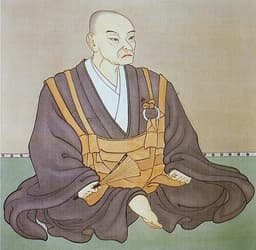
Hojo Soun
Emperor · Medieval
58.1Total
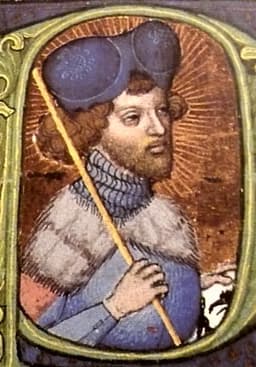
Wenceslaus IV of Bohemia
Emperor · Medieval
45.7Total
Basic Information
Born
1432
1361
Died
1519
1419
Era
Medieval
Medieval
Nationality
Japan
Bohemia
Occupation
Emperor
Emperor
Civilization
Eastern
Western
Score Comparison
Military (10%)
50.0
21.2
Political (20%)
68.0
33.6
Influence (20%)
53.3
54.9
Legacy (20%)
50.0
48.3
Leadership (15%)
74.0
58.8
Strategy (15%)
60.0
39.6
TOTAL
58.1
45.7
Hojo Soun — Complete Timeline
1491 AD
Became a Ronin and Founded the Later Hojo ClanPolitical Action
Hojo Soun, originally a samurai of the Imagawa clan, became a ronin after his lord's death. He seized control of Izu Province in 1491, establishing the Later Hojo clan and beginning his rise to power.
RoninLater HojoIzu
Impact: regional
1495 AD
Captured Odawara CastleWar◆ Major
Hojo Soun captured Odawara Castle from the Omori clan through a combination of military force and deception. Odawara became the Later Hojo clan's stronghold and a symbol of their power in the Kanto region.
CastleKantoMilitary
Impact: regional
1512 AD
Expanded Hojo Control Over Sagami ProvinceWar◆ Major
Hojo Soun expanded his territory by conquering Sagami Province, defeating local lords and the Uesugi clan. This established the Later Hojo as a major power in the Kanto region, controlling key trade routes.
ExpansionSagamiKanto
Impact: regional
Wenceslaus IV of Bohemia — Complete Timeline
1402 AD
Conflict with the HussitesPolitical Action
Wenceslaus IV initially supported Jan Hus and the reform movement, but later opposed them under pressure from the Catholic Church. His inconsistent policies alienated both Hussites and Catholics, weakening his authority.
Religious ConflictJan HusPolitical Instability
Impact: national
1419 AD
Defenestration of PraguePolitical Action
Wenceslaus IV's refusal to release Hussite prisoners led to a mob storming the New Town Hall in Prague. The crowd threw the city councillors out of a window, triggering the Hussite Wars that would devastate Bohemia for decades.
Hussite WarsRebellionReligious Conflict
Impact: regionaldestructive
Death of Wenceslaus IVOther◆ Major
Wenceslaus IV died of a heart attack shortly after the Defenestration of Prague. His death left Bohemia without a strong ruler, allowing the Hussite movement to gain momentum and plunging the kingdom into civil war.
DeathSuccession CrisisHussite Wars
Impact: regionaltragic
Expert Analysis
Origins
Hojo Soun (1456–1519) was born into obscurity as Ise Shinkuro, a minor samurai of the Imagawa clan in Japan. His early life was marked by the chaos of the Ōnin War (1467–1477), which shattered central authority and left many samurai masterless. After his lord, Imagawa Yoshitada, was killed in battle in 1476, Soun became a ronin—a wandering warrior without a master. This forced him to rely on his wits and ambition. In contrast, Wenceslaus IV of Bohemia (1361–1419) was born into royalty as the son of Holy Roman Emperor Charles IV. He inherited the Bohemian crown at age two and was groomed for power. His upbringing was steeped in court intrigue and the tensions between the German-speaking nobility and the Czech reform movement. While Soun clawed his way up from nothing, Wenceslaus was handed a kingdom and an empire, but lacked the temperament to hold them together.
Rise to Power
Soun’s rise began in 1491 when he seized Izu Province from the Uesugi clan. Using a mix of military force and deception, he captured Odawara Castle from the Omori clan in 1495, turning it into the Later Hojo stronghold. By 1512, he had conquered Sagami Province, defeating local lords and the powerful Uesugi. His political score of 68.0 reflects his ability to build alliances and exploit chaos. Wenceslaus IV, by contrast, became King of Bohemia in 1378 and Holy Roman Emperor in 1376. He faced constant conflict with the nobility and the Catholic Church. His refusal to release Hussite prisoners in 1419 sparked the Defenestration of Prague, where a mob threw city councillors out of a window. This event triggered the Hussite Wars, which Wenceslaus could not control. His political score of 33.6 and military score of 21.2 illustrate his weakness. Soun’s turning point was a calculated land grab; Wenceslaus’s was a loss of control.
Leadership & Governance
Soun governed with pragmatism. He implemented land surveys to consolidate control, reduced taxes to win peasant loyalty, and appointed capable retainers regardless of birth. His leadership score of 74.0 reflects his effective command. For example, he allowed defeated enemies to retain lands if they swore fealty, building a stable coalition. Wenceslaus, with a leadership score of 58.8, was indecisive. He initially supported Jan Hus and the reform movement, but under pressure from the Church, he condemned Hus to death at the Council of Constance in 1415. This inconsistency alienated both Hussites and Catholics. He failed to reform the church or curb noble power, leading to a fragmented realm. Soun’s governance was about building a new order; Wenceslaus’s was about maintaining a crumbling one.
Triumph & Tragedy
Soun’s greatest success was founding the Later Hojo clan, which dominated the Kantō region for a century. His capture of Odawara and expansion into Sagami created a stable base. His failure was his inability to expand beyond the Kantō; his descendants would later fall to Oda Nobunaga. Wenceslaus’s triumph was his early support for Czech nationalism and the Hussite movement, which laid the groundwork for religious reform. His tragedy was his death from a heart attack in 1419, leaving Bohemia in a civil war that lasted until 1434. The Hussite Wars devastated the region, but also produced military innovations like the war wagon. Soun’s tragedy was personal—he died of illness in 1519, but his clan endured. Wenceslaus’s death was a national catastrophe.
Character & Destiny
Soun was cunning, patient, and ruthless. He used deception to take Odawara, but also showed magnanimity to defeated foes. His character shaped a destiny of steady expansion. Wenceslaus was educated but weak-willed, prone to anger and indecision. He was known for his love of hunting and feasting, neglecting state affairs. His character led to a destiny of rebellion and chaos. Historians often blame Wenceslaus for the Hussite Wars, while Soun is praised as a model daimyo. The contrast is stark: one built a dynasty; the other lost a kingdom.
Legacy
Soun’s legacy is the Later Hojo clan, which controlled the Kantō until 1590. He is remembered as a founder and a skilled strategist. His methods influenced later daimyo like Tokugawa Ieyasu. Wenceslaus’s legacy is more complex. He is a symbol of failed leadership, but his reign sparked the Hussite movement, which foreshadowed the Protestant Reformation. His influence score of 54.9 is slightly higher than Soun’s 53.3, reflecting his role in religious history. However, his total score of 45.7 is below Soun’s 58.1. Soun’s impact was more immediate and tangible; Wenceslaus’s was indirect but far-reaching.
Conclusion
Hojo Soun had a greater impact on his domain than Wenceslaus IV had on his. Soun’s 74.0 leadership score and 60.0 strategy score enabled him to build a lasting power base from nothing. Wenceslaus’s 21.2 military and 33.6 political scores show a ruler overwhelmed by events. While Wenceslaus’s legacy includes the Hussite movement, that was more a consequence of his failures than his achievements. Soun’s proactive founding of a dynasty contrasts with Wenceslaus’s reactive decline. The 12.4-point score gap reflects this: Soun’s total of 58.1 versus Wenceslaus’s 45.7. In terms of concrete outcomes, Soun wins decisively.
Rankings
🥇
Hojo SounLeader
Mil: 50.0Pol: 68.0Inf: 53.3
58.1
🥈
Wenceslaus IV of Bohemia
Mil: 21.2Pol: 33.6Inf: 54.9
45.7
+12.4 behind
How This Comparison Works
Algorithm
Each figure is scored on 6 dimensions (0—100 scale) based on structured historical data: Military (10%), Political (20%), Influence (20%), Legacy (20%), Leadership (15%), Strategy (15%). The weighted total produces the final ranking.
Data Sources
Scores are computed from structured sub-indicators in the database. Scale factors adjust for era (Ancient ×0.85, Modern ×1.0) and civilization size (Eastern ×1.05, Other ×0.80) to account for differences in population and military scale.
Maximum 3 Figures
Comparisons are limited to 2—3 figures to ensure readability and statistical meaningfulness.
Error Margins
±5 points per dimension — Sub-scores are derived from historical records with inherent uncertainty. Two figures within 5 points on a dimension should be considered roughly equivalent in that area.
Total Score Accuracy
±3 points overall — The weighted combination of 6 dimensions produces a total score with approximately ±3 points of uncertainty. Differences of less than 3 points are not statistically significant— the figures are effectively tied.
Known Limitations
- Historical records are incomplete and uneven across civilizations
- Figures from oral-tradition societies may be underrepresented
- Occupation labels can misclassify multi-role figures
- Scores measure capability and impact, not moral character
- Quantitative scoring is a comparison tool, not absolute truth
Capability Radar
Military (10%) — Battles & Warfare
Battles
40
15
Win Rate
45
10
Expansion
55
5
Political (20%) — Governance & Reform
Reform
50
30
Diplomacy
55
25
Economy
50
30
Influence (20%) — Cultural & Global Reach
Cultural
40
40
Global
20
30
Legacy (20%) — Historical Impact
Historical
55
50
Longevity
50
40
Leadership (15%) — Power & Stability
Tenure
60
60
Stability
45
15
Strategy (15%) — Tactics & Innovation
Strategy
55
10
Tactics
50
10
Reform
30
5
Similar Comparisons
Comments & Discussion
No comments yet. Be the first to share your thoughts!