Loading...
George S. Patton vs Mahadji Scindia
Mahadji Scindia leads by 4.7 pts · 2 figures compared
…
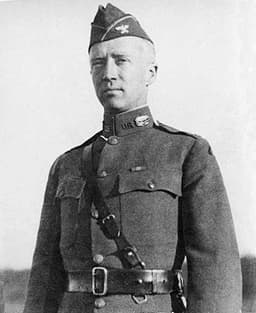
George S. Patton
General · Modern
60.7Total
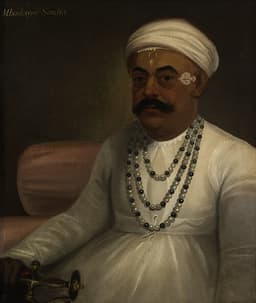
Mahadji Scindia
General · Modern
65.4Total
Basic Information
Born
1885
1730
Died
1945
1794
Era
Modern
Modern
Nationality
United States
India
Occupation
General
General
Civilization
Western
Indian
Score Comparison
Military (10%)
79.9
85.0
Political (20%)
26.4
78.0
Influence (20%)
75.0
56.7
Legacy (20%)
72.0
52.0
Leadership (15%)
30.0
72.0
Strategy (15%)
75.0
72.0
TOTAL
60.7
65.4
George S. Patton — Complete Timeline
1943 AD
Command of II Corps in North AfricaWar◆ Major
Patton assumed command of II Corps after the U.S. defeat at Kasserine Pass. He restored discipline and led the corps to victory at El Guettar, his first major engagement against German forces in World War II.
World War IINorth AfricaCommand
Impact: regional
Liberation of SicilyWar◆ Major
Patton commanded the U.S. Seventh Army during the invasion of Sicily. His forces captured Palermo and raced to Messina, beating the British to the port. The campaign secured the island for the Allies.
World War IISicilyCampaign
Impact: regional
Slapping incident in SicilyPolitical Action◆ Major
Patton visited a field hospital and slapped a soldier diagnosed with battle fatigue, accusing him of cowardice. The incident caused a public scandal, nearly ended his career, and forced him to apologize publicly.
World War IIScandalDiscipline
Impact: nationaldestructive
1944 AD
Relief of BastogneWar
During the Battle of the Bulge, Patton rapidly turned his Third Army north and broke through German lines to relieve the besieged 101st Airborne Division at Bastogne. This action was critical to the Allied victory.
World War IIBattle of the BulgeRelief
Impact: regional
1945 AD
Crossing of the Rhine at OppenheimWar◆ Major
Patton's Third Army crossed the Rhine River at Oppenheim without aerial bombardment or a preliminary artillery barrage, achieving a surprise crossing. This allowed Allied forces to advance deep into Germany.
World War IIRhine CrossingAdvance
Impact: regional
Mahadji Scindia — Complete Timeline
1768 AD
Became Regent of GwaliorPolitical Action◆ Major
Mahadji Scindia assumed the regency of Gwalior after the death of his predecessor. He consolidated power and expanded the Scindia domain through military campaigns and alliances.
SuccessionGwaliorScindia Dynasty
Impact: regionalconstructive
1771 AD
Battle of DelhiWar◆ Major
Mahadji Scindia led Maratha forces to capture Delhi from the Rohilla Afghans. He restored the Mughal Emperor Shah Alam II to the throne, becoming the de facto power behind the Mughal court.
Maratha-Afghan WarsDelhiMughal Restoration
Impact: national
1784 AD
Appointed Mughal RegentPolitical Action
Mahadji Scindia was appointed as the regent (Vakil-i-Mutlaq) of the Mughal Empire by Shah Alam II. This gave him control over Mughal administration and military, making him the most powerful figure in northern India.
Mughal EmpireRegencyScindia
Impact: nationalconstructive
1787 AD
Battle of LalsotWar
Mahadji Scindia fought against the Rajput coalition of Jaipur and Jodhpur at Lalsot. The battle ended inconclusively, but it weakened Rajput resistance to Maratha expansion.
Maratha-Rajput WarsBattleRajasthan
Impact: regional
1790 AD
Battle of PatanWar◆ Major
Mahadji Scindia defeated the Rajput forces of Jaipur at the Battle of Patan. The victory forced Jaipur to accept Maratha suzerainty and pay tribute.
Maratha-Rajput WarsBattleJaipur
Impact: regional
Battle of MertaWar◆ Major
Mahadji Scindia defeated the Rajput forces of Jodhpur at the Battle of Merta. This victory extended Maratha control over Marwar and established Scindia as the dominant power in Rajasthan.
Maratha-Rajput WarsBattleJodhpur
Impact: regional
Expert Analysis
Origins
George Smith Patton was born on November 11, 1885, in San Gabriel, California, into a family with a long military tradition. He attended the Virginia Military Institute and later West Point, graduating in 1909. Patton was an avid student of military history, believing in reincarnation and past lives as a warrior. His early career included participation in the 1912 Olympics (modern pentathlon) and service in the Punitive Expedition against Pancho Villa in Mexico, where he gained experience in mechanized warfare.
Mahadji Scindia (also known as Mahadji Shinde) was born around 1727 in the Maratha Empire, into the Scindia family of the Maratha confederacy. He was the fifth son of Ranoji Scindia, the founder of the Scindia dynasty. Mahadji rose through the ranks during the chaotic period of Maratha expansion and the decline of the Mughal Empire. He was captured at the Third Battle of Panipat in 1761 but later escaped and rebuilt his power base.
Rise to Power
Patton's rise to prominence came during World War II. He commanded II Corps in North Africa after the U.S. defeat at Kasserine Pass in February 1943, restoring discipline and leading to victory at El Guettar in March 1943. His aggressive style earned him command of the Seventh Army during the invasion of Sicily in July 1943, where he captured Palermo and raced to Messina. However, the slapping incident in August 1943 nearly ended his career; he was removed from command and sidelined for nearly a year.
Mahadji Scindia's rise was more gradual. After Panipat, he rebuilt his forces and allied with the British East India Company briefly. In 1771, he led a Maratha army to capture Delhi from the Rohilla Afghans, restoring Emperor Shah Alam II to the throne. This earned him the title of Vakil-i-Mutlaq (Regent) of the Mughal Empire, giving him control over Mughal administration and revenues. By 1780, he had become the de facto ruler of North India, commanding a powerful army with a mix of Maratha cavalry and European-trained infantry.
Leadership & Governance
Patton's leadership was characterized by relentless aggression, strict discipline, and a focus on mobility. He famously said, "Fixed fortifications are monuments to the stupidity of man." He led from the front, often visiting front-line units. His Third Army advanced rapidly across France, covering 600 miles in less than a month. Patton's governance style was authoritarian; he demanded obedience and punished infractions harshly. He scored 30.0 in leadership, reflecting his controversial methods and inability to inspire loyalty among superiors.
Mahadji Scindia's leadership combined military prowess with political acumen. As Mughal regent, he managed a complex bureaucracy and maintained control over a vast territory through a combination of force and diplomacy. He modernized his army with European tactics, employing French and Portuguese mercenaries. His governance was pragmatic: he collected taxes efficiently and maintained law and order. He scored 72.0 in leadership, higher than Patton, due to his ability to navigate political factions and sustain power.
Triumph & Tragedy
Patton's greatest triumph was the relief of Bastogne during the Battle of the Bulge in December 1944. He turned his Third Army 90 degrees and advanced 100 miles in 48 hours, breaking the German siege. Another triumph was the crossing of the Rhine at Oppenheim on March 22, 1945, a surprise assault without artillery preparation. His tragedy was the slapping incident, which marred his reputation and likely prevented him from commanding larger forces. He also died in a car accident in December 1945, just months after the war.
Mahadji Scindia's greatest triumph was the capture of Delhi in 1771 and the restoration of the Mughal emperor, making him the most powerful man in India. He defeated the Rajputs at Patan (1790) and Merta (1790), extending Maratha control. His tragedy was the inability to unify the Maratha confederacy and check the rise of the British. After his death in 1794, his successors lost power to the British in the Anglo-Maratha Wars.
Character & Destiny
Patton was flamboyant, arrogant, and deeply superstitious. He believed in reincarnation and studied Napoleon's campaigns. His character drove him to take risks, but also led to insubordination and public scandals. Historians assess him as a brilliant tactician but flawed commander, with a score of 75.0 in strategy.
Mahadji Scindia was cautious, diplomatic, and strategic. He built alliances and used marriage ties to strengthen his position. His character allowed him to play the long game, but his death left a power vacuum. He scored 72.0 in strategy, slightly lower than Patton in pure military terms, but higher overall due to political skills.
Legacy
Patton's legacy is as a symbol of American military aggression and armored warfare. His tactics influenced U.S. Army doctrine for decades. He is remembered through films, books, and the Patton Museum. His score of 72.0 in legacy reflects cultural impact.
Mahadji Scindia's legacy is more localized but profound in Indian history. He restored the Mughal emperor and reasserted Maratha dominance in North India. The Scindia family continued to rule Gwalior until independence. He scored 52.0 in legacy, lower due to limited global recognition.
Conclusion
Mahadji Scindia had a higher total score (65.4 vs 60.7) and greater political and military impact in his context. While Patton excelled in tactical warfare, Scindia's ability to govern and shape the Mughal Empire's final decades demonstrates broader influence. Patton's fame is higher in the West, but Scindia's achievements in statecraft and military modernization were more enduring. Therefore, Mahadji Scindia had a greater overall impact.
Rankings
🥇
Mahadji ScindiaLeader
Mil: 85.0Pol: 78.0Inf: 56.7
65.4
🥈
George S. Patton
Mil: 79.9Pol: 26.4Inf: 75.0
60.7
+4.7 behind
How This Comparison Works
Algorithm
Each figure is scored on 6 dimensions (0—100 scale) based on structured historical data: Military (10%), Political (20%), Influence (20%), Legacy (20%), Leadership (15%), Strategy (15%). The weighted total produces the final ranking.
Data Sources
Scores are computed from structured sub-indicators in the database. Scale factors adjust for era (Ancient ×0.85, Modern ×1.0) and civilization size (Eastern ×1.05, Other ×0.80) to account for differences in population and military scale.
Maximum 3 Figures
Comparisons are limited to 2—3 figures to ensure readability and statistical meaningfulness.
Error Margins
±5 points per dimension — Sub-scores are derived from historical records with inherent uncertainty. Two figures within 5 points on a dimension should be considered roughly equivalent in that area.
Total Score Accuracy
±3 points overall — The weighted combination of 6 dimensions produces a total score with approximately ±3 points of uncertainty. Differences of less than 3 points are not statistically significant— the figures are effectively tied.
Known Limitations
- Historical records are incomplete and uneven across civilizations
- Figures from oral-tradition societies may be underrepresented
- Occupation labels can misclassify multi-role figures
- Scores measure capability and impact, not moral character
- Quantitative scoring is a comparison tool, not absolute truth
Capability Radar
Military (10%) — Battles & Warfare
Battles
85
85
Win Rate
88
80
Expansion
80
80
Political (20%) — Governance & Reform
Reform
5
70
Diplomacy
20
90
Economy
5
70
Influence (20%) — Cultural & Global Reach
Cultural
65
60
Global
65
55
Legacy (20%) — Historical Impact
Historical
70
75
Longevity
60
60
Leadership (15%) — Power & Stability
Tenure
10
85
Stability
10
65
Strategy (15%) — Tactics & Innovation
Strategy
78
90
Tactics
92
85
Reform
75
75
Similar Comparisons
Comments & Discussion
No comments yet. Be the first to share your thoughts!