Loading...
George Washington vs Wu Zetian
George Washington leads by 6.8 pts · 2 figures compared
…
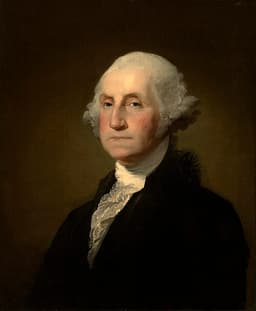
George Washington
Politician · Modern
76.8Total

Wu Zetian
Emperor · Medieval
70.0Total
Basic Information
Born
1732
624
Died
1799
705
Era
Modern
Medieval
Nationality
United States
China
Occupation
Politician
Emperor
Civilization
Western
Eastern
Score Comparison
Military (10%)
75.0
60.0
Political (20%)
82.0
62.7
Influence (20%)
75.0
65.0
Legacy (20%)
80.0
80.0
Leadership (15%)
85.0
78.0
Strategy (15%)
55.0
66.3
TOTAL
76.8
70.0
George Washington — Complete Timeline
1775 AD
Appointed Commander-in-Chief of the Continental ArmyOther◆ Major
The Second Continental Congress appointed Washington as commander-in-chief of the Continental Army on June 15, 1775. He accepted the position without pay, taking command of the forces besieging Boston at the start of the American Revolutionary War.
American RevolutionMilitary Leadership
Impact: national
1776 AD
Crossed the Delaware RiverOther◆ Major
On the night of December 25-26, 1776, Washington led 2,400 troops across the ice-choked Delaware River. The surprise attack on Hessian forces at Trenton resulted in a decisive American victory, capturing nearly 1,000 prisoners and reviving Patriot morale after a series of defeats.
American RevolutionBattleTurning Point
Impact: nationalconstructive
1787 AD
Presided over the Constitutional ConventionPolitical Action◆ Major
Washington served as president of the Constitutional Convention in Philadelphia from May to September 1787. His presence lent legitimacy to the proceedings, and he formally signed the final draft of the U.S. Constitution, though he contributed little to the debates.
ConstitutionFounding Father
Impact: national
1789 AD
Inaugurated as First President of the United StatesPolitical Action◆ Major
Washington was unanimously elected by the Electoral College and inaugurated on April 30, 1789, at Federal Hall in New York City. He established numerous executive branch precedents, including the cabinet system, the inaugural address, and the title 'Mr. President'.
PresidencyFounding Father
Impact: national
1793 AD
Issued the Proclamation of NeutralityOther◆ Major
Washington issued the Proclamation of Neutrality on April 22, 1793, declaring the United States neutral in the conflict between France and Great Britain. This decision established the precedent of American isolationism and avoided entanglement in European wars.
Foreign PolicyNeutrality
Impact: national
1796 AD
Delivered the Farewell AddressOther◆ Major
Washington published his Farewell Address on September 19, 1796, announcing his decision not to seek a third term. The address warned against political factionalism, permanent foreign alliances, and the influence of the military in government, shaping American political culture.
PresidencyLegacy
Impact: national
Wu Zetian — Complete Timeline
655 AD
Became Empress ConsortPolitical Action◆ Major
Wu Zetian was elevated from concubine to empress consort of Emperor Gaozong of Tang in 655. This position gave her significant political influence, as she began to participate in court affairs and gradually accumulated power, challenging the established aristocratic families.
Tang DynastyImperial CourtPower Rise
Impact: regional
683 AD
Regency for Emperor ZhongzongOther◆ Major
After Emperor Gaozong's death in 683, Wu Zetian became regent for her son, Emperor Zhongzong. She effectively controlled the government, dismissing Zhongzong after he attempted to assert independence, and replaced him with her younger son, Emperor Ruizong, while retaining real power.
Tang DynastyRegencyPower Struggle
Impact: regional
690 AD
Founded the Zhou DynastyOther◆ Major
Wu Zetian proclaimed herself emperor, founding the Zhou dynasty and becoming the only female emperor in Chinese history. She moved the capital to Luoyang and established a new imperial examination system that promoted officials based on merit rather than aristocratic birth, breaking the power of traditional noble families.
Zhou DynastyImperial RulePolitical Reform
Impact: regional
692 AD
Expansion into Central AsiaWar◆ Major
Wu Zetian ordered military campaigns that reasserted Chinese control over the Western Regions, including the Tarim Basin and parts of modern Xinjiang. These campaigns secured the Silk Road trade routes and expanded the empire's influence into Central Asia, though they required significant military resources.
Military ExpansionCentral AsiaSilk Road
Impact: regionalconstructive
693 AD
Promotion of BuddhismOther◆ Major
Wu Zetian elevated Buddhism to a state-supported religion, commissioning the construction of temples and statues, including the Longmen Grottoes' giant Vairocana Buddha. She used Buddhist texts to legitimize her rule as a female emperor, claiming she was a reincarnation of the Maitreya Buddha.
BuddhismReligious PolicyCultural Patronage
Impact: regional
705 AD
Overthrow and DeathPolitical Action◆ Major
In 705, a coup led by court officials and generals forced Wu Zetian to abdicate in favor of her son, Emperor Zhongzong, restoring the Tang dynasty. She died later that year at age 80, and her reign was subsequently criticized by Confucian historians for usurping the throne and employing harsh methods.
Tang DynastyCoupAbdication
Impact: regionaldestructive
Expert Analysis
Wu Zetian vs George Washington
# The Emperor and the President: Two Paths to Power, Two Faces of Legacy
On a winter morning in 690, a sixty-six-year-old woman clad in imperial yellow ascended a platform in Luoyang, China. Before her, thousands of officials prostrated themselves as she declared the founding of a new dynasty. Wu Zetian had become the only female emperor in Chinese history. A thousand years later and half a world away, on a crisp April afternoon in 1789, a tall, reserved Virginian stood on a balcony in New York City, his hand on a Bible, and swore an oath to a constitution that had never been tested. George Washington became the first president of a republic that did not yet know if it would survive. Both seized history by the throat, but they did so in radically different ways—one by shattering a millennium of tradition from within the imperial palace, the other by building a new order from the ashes of revolution. What drove these two leaders to such different outcomes?
Origins
Wu Zetian was born in 624 into a family of modest officials, not the aristocracy that dominated Tang China. Her father had been a timber merchant who rose through military service—a background that marked her as an outsider. In an era when women were confined to domestic roles, she entered the palace at age fourteen as a low-ranking concubine of Emperor Taizong. She had nothing but her intelligence, her beauty, and a ferocious will to survive. The Tang court was a world of silk and poison, where a wrong word meant death.
George Washington was born in 1732 to a Virginia planter family that had lost some of its former wealth. Unlike Wu, he inherited a place in a colonial elite that valued land, honor, and public service. But he was also an outsider of sorts—largely self-educated, hungry for status, and deeply aware that his older half-brother had inherited the family estate. Where Wu learned to read people in the dangerous intimacy of the harem, Washington learned to read land as a surveyor, mapping the Virginia wilderness with a precision that would later serve him on the battlefield.
Rise to Power
Wu Zetian’s path was a masterclass in political survival. After Emperor Taizong’s death in 649, she was sent to a Buddhist convent—the usual fate for childless imperial concubines. But she had cultivated a relationship with Taizong’s son, the new emperor Gaozong, and he brought her back to the palace. Over the next decade, she eliminated rivals with clinical precision: she had her own infant daughter smothered, historians claim, to frame the empress; she orchestrated the exile of powerful ministers; she placed her sons on the throne and then removed them. By 660, Gaozong’s failing health had effectively made her co-ruler. When he died in 683, she ruled through puppet emperors until she finally took the throne herself in 690.
Washington’s rise was slower, more deliberate, and entirely public. He first gained notice as a young officer during the French and Indian War, where he made disastrous mistakes—he once helped start a war by attacking a French patrol—but learned from them. He returned to Virginia, married the wealthy widow Martha Custis, and became a planter and politician. When the crisis with Britain erupted, he showed up to the Continental Congress in 1775 in his old military uniform—a silent statement that he was ready to fight. The Congress appointed him commander-in-chief not because he was the most brilliant general, but because he was from Virginia, because he looked the part, and because he could hold the fragile coalition together.
Leadership & Governance
Wu Zetian ruled with an iron hand and an open mind. She expanded the Tang empire deep into Central Asia, sending armies that pushed Chinese borders farther than any previous dynasty. But her true genius was political. She broke the power of the old aristocratic families by creating a civil service examination system that promoted talent over birth. She appointed scholars from humble backgrounds, including women, to high office. She also employed a secret police network to crush dissent—thousands were executed or exiled. Her rule was a paradox: a tyrant who advanced meritocracy.
Washington governed by restraint. As president, he could have become a monarch—many Americans expected it. Instead, he established norms that would define the office: he chose a cabinet of strong-minded rivals like Thomas Jefferson and Alexander Hamilton; he refused to serve more than two terms; he wore plain civilian clothes instead of a uniform. When the Whiskey Rebellion threatened federal authority in 1794, he personally led 13,000 troops to suppress it—then pardoned the leaders. His military score of 70.0 reflects competence, not genius; his political score of 80.0 reflects wisdom, not ruthlessness.
Triumph & Tragedy
Wu Zetian’s greatest triumph was simply surviving and ruling for fifteen years as emperor—a feat unprecedented in Chinese history. Her greatest tragedy came at the end. In 705, at age eighty, she was overthrown in a palace coup led by ministers she had promoted. Her sons took back the throne, and the Tang dynasty was restored. She died soon after, stripped of her imperial title, remembered officially as a "empress consort." The very system she had built turned against her.
Washington’s triumph was the peaceful transfer of power. After eight years as president, he voluntarily stepped down in 1797, returning to Mount Vernon to farm. His tragedy was more personal: he never saw the abolition of slavery he privately hoped for, and he died in 1799, just two years after leaving office, from a throat infection that his doctors made worse by bleeding him.
Character & Destiny
Wu Zetian was driven by a hunger that could not be satisfied. She had to prove she was better than every man who doubted her. This made her brilliant and paranoid, capable of promoting a poet one day and executing his family the next. She trusted no one completely, and in the end, no one trusted her.
Washington was driven by a fear of failure—not personal failure, but the failure of the American experiment. He was famously reserved, even cold, but he understood that his own ambition had to be subordinated to the cause. "I walk on untrodden ground," he wrote. "There is scarcely any part of my conduct which may not hereafter be drawn into precedent." He governed as if history were watching—because it was.
Legacy
Wu Zetian’s legacy is complicated. For centuries, Chinese historians portrayed her as a monstrous usurper. Today, she is recognized as a capable ruler who expanded the empire and reformed government. Her influence score of 70.9 and legacy score of 85.0 reflect this re-evaluation. She remains the only woman in Chinese history to hold the title "Emperor," a fact that still challenges patriarchal narratives.
Washington’s legacy is foundational. His legacy score of 78.0 understates his role as the "Father of His Country." By voluntarily surrendering power, he set a precedent that lasted until Franklin Roosevelt, and his Farewell Address warned against partisan divisions that haunt America today. He is remembered not as a conqueror but as the man who proved that a republic could survive its own birth.
Conclusion
Wu Zetian and George Washington faced the same fundamental question: how does a leader seize and hold power without destroying the very thing they seek to build? Wu answered by centralizing power in herself, using fear and talent to create a brief but brilliant dynasty. Washington answered by distributing power, using restraint and example to create a lasting republic. One climbed the mountain alone; the other built a path for others to follow. Both succeeded, and both paid the price. Their stories remind us that leadership is never just about victory—it is about what you leave behind when the throne is empty.
Rankings
🥇
George WashingtonLeader
Mil: 75.0Pol: 82.0Inf: 75.0
76.8
🥈
Wu Zetian
Mil: 60.0Pol: 62.7Inf: 65.0
70.0
+6.8 behind
How This Comparison Works
Algorithm
Each figure is scored on 6 dimensions (0—100 scale) based on structured historical data: Military (10%), Political (20%), Influence (20%), Legacy (20%), Leadership (15%), Strategy (15%). The weighted total produces the final ranking.
Data Sources
Scores are computed from structured sub-indicators in the database. Scale factors adjust for era (Ancient ×0.85, Modern ×1.0) and civilization size (Eastern ×1.05, Other ×0.80) to account for differences in population and military scale.
Maximum 3 Figures
Comparisons are limited to 2—3 figures to ensure readability and statistical meaningfulness.
Error Margins
±5 points per dimension — Sub-scores are derived from historical records with inherent uncertainty. Two figures within 5 points on a dimension should be considered roughly equivalent in that area.
Total Score Accuracy
±3 points overall — The weighted combination of 6 dimensions produces a total score with approximately ±3 points of uncertainty. Differences of less than 3 points are not statistically significant— the figures are effectively tied.
Known Limitations
- Historical records are incomplete and uneven across civilizations
- Figures from oral-tradition societies may be underrepresented
- Occupation labels can misclassify multi-role figures
- Scores measure capability and impact, not moral character
- Quantitative scoring is a comparison tool, not absolute truth
Capability Radar
Military (10%) — Battles & Warfare
Battles
75
65
Win Rate
70
70
Expansion
60
75
Political (20%) — Governance & Reform
Reform
90
85
Diplomacy
85
80
Economy
65
85
Influence (20%) — Cultural & Global Reach
Cultural
85
85
Global
85
70
Legacy (20%) — Historical Impact
Historical
95
90
Longevity
90
85
Leadership (15%) — Power & Stability
Tenure
70
90
Stability
85
75
Strategy (15%) — Tactics & Innovation
Strategy
80
75
Tactics
65
60
Reform
85
80
Similar Comparisons
Comments & Discussion
BronzeBattleAxe6/16/2026
You revisionists romanticize Wu Zetian as a feminist icon, but she was a ruthless tyrant who executed rivals and subverted Confucian governance. Her secret police, like Lai Junchen, terrorized officials with false accusations and gruesome torture methods—flaying alive, dismembering. She didn't build a stable state; she created a paranoid regime. Washington, by contrast, voluntarily relinquished power after two terms, setting a precedent that forbade dictatorship. Wu seized history; Washington ta
史海铁嘴6/16/2026
把武曌跟华盛顿比?简直是关公战秦琼!一个靠宫斗弄权、踩尸上位,天天搞酷吏清洗;一个靠浴血独立、主动辞权,奠定民主根基。请问武后政权有多久?十五年。美国华盛顿体制到今天两百年。武后能打天下?笑死,她最多算是唐朝后宫锦鲤大赛冠军,华盛顿才是真正的建国狂花。建议题主少看点爽文,多看看《联邦党人文集》和《资治通鉴》。