Loading...
This comparison has not been analyzed yet.
One-time AI generation (~1 minute). Scores and timeline are already available below.
Germa Seyum vs Theudebert I
Theudebert I leads by 8.6 pts · 2 figures compared
…

Germa Seyum
Emperor · Medieval
44.5Total
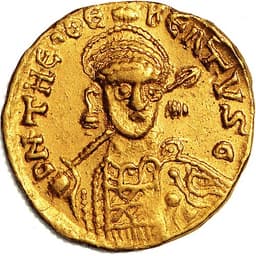
Theudebert I
Emperor · Medieval
53.1Total
Basic Information
Born
1020
500
Died
1060
548
Era
Medieval
Medieval
Nationality
Ethiopia
Frankish Empire
Occupation
Emperor
Emperor
Civilization
Other
Western
Score Comparison
Military (10%)
25.0
30.0
Political (20%)
36.5
61.3
Influence (20%)
50.2
51.8
Legacy (20%)
41.7
43.3
Leadership (15%)
67.0
74.0
Strategy (15%)
35.0
60.0
TOTAL
44.5
53.1
Germa Seyum — Complete Timeline
1040 AD
Expanded Zagwe territoryWar◆ Major
Germa Seyum led military campaigns that expanded Zagwe control over the Ethiopian highlands. His conquests brought additional regions under Zagwe rule, strengthening the dynasty's power and influence during a period of territorial growth.
Zagwe expansionMilitary campaignTerritorial growth
Impact: regional
Theudebert I — Complete Timeline
534 AD
Minting of Gold Coins in His Own NamePolitical Action◆ Major
Theudebert I issued gold solidi bearing his own name and image, a direct challenge to Byzantine imperial authority. This act asserted Frankish sovereignty and independence from the Eastern Roman Empire, marking a shift in Merovingian coinage.
MerovingianCoinageByzantine
Impact: regionalconstructive
536 AD
Expansion into Raetia and NoricumWar
Theudebert I extended Frankish control into the Roman provinces of Raetia and Noricum (modern Switzerland and Austria). This expansion brought the Franks into direct contact with the Lombards and Bavarians, increasing Theudebert's influence in Central Europe.
MerovingianExpansionAlps
Impact: regional
539 AD
Campaign in ItalyWar◆ Major
Theudebert I led a Frankish army into Italy during the Gothic War, plundering Liguria and the Po Valley. His forces defeated both Byzantine and Ostrogothic armies, but a plague among his troops forced him to withdraw. The campaign demonstrated Frankish military power.
MerovingianItalyGothic War
Impact: regionaldestructive
540 AD
Letter to Emperor JustinianPolitical Action
Theudebert I wrote a letter to Byzantine Emperor Justinian I, boasting of his conquests and claiming dominion over many peoples. The letter, preserved in historical records, reveals Theudebert's ambition to be seen as an equal to the Roman emperor.
MerovingianDiplomacyByzantine
Impact: regional
This comparison has not been analyzed yet.
One-time AI generation (~1 minute). Scores and timeline are already available below.
Rankings
🥇
Theudebert ILeader
Mil: 30.0Pol: 61.3Inf: 51.8
53.1
🥈
Germa Seyum
Mil: 25.0Pol: 36.5Inf: 50.2
44.5
+8.6 behind
How This Comparison Works
Algorithm
Each figure is scored on 6 dimensions (0—100 scale) based on structured historical data: Military (10%), Political (20%), Influence (20%), Legacy (20%), Leadership (15%), Strategy (15%). The weighted total produces the final ranking.
Data Sources
Scores are computed from structured sub-indicators in the database. Scale factors adjust for era (Ancient ×0.85, Modern ×1.0) and civilization size (Eastern ×1.05, Other ×0.80) to account for differences in population and military scale.
Maximum 3 Figures
Comparisons are limited to 2—3 figures to ensure readability and statistical meaningfulness.
Error Margins
±5 points per dimension — Sub-scores are derived from historical records with inherent uncertainty. Two figures within 5 points on a dimension should be considered roughly equivalent in that area.
Total Score Accuracy
±3 points overall — The weighted combination of 6 dimensions produces a total score with approximately ±3 points of uncertainty. Differences of less than 3 points are not statistically significant— the figures are effectively tied.
Known Limitations
- Historical records are incomplete and uneven across civilizations
- Figures from oral-tradition societies may be underrepresented
- Occupation labels can misclassify multi-role figures
- Scores measure capability and impact, not moral character
- Quantitative scoring is a comparison tool, not absolute truth
Capability Radar
Military (10%) — Battles & Warfare
Battles
30
35
Win Rate
40
40
Expansion
45
55
Political (20%) — Governance & Reform
Reform
30
40
Diplomacy
35
55
Economy
30
50
Influence (20%) — Cultural & Global Reach
Cultural
25
30
Global
15
20
Legacy (20%) — Historical Impact
Historical
30
35
Longevity
20
25
Leadership (15%) — Power & Stability
Tenure
50
60
Stability
40
45
Strategy (15%) — Tactics & Innovation
Strategy
40
50
Tactics
35
45
Reform
25
30
Similar Comparisons
Comments & Discussion
No comments yet. Be the first to share your thoughts!