Loading...
Giovanni Gronchi vs Nursultan Nazarbayev
Nursultan Nazarbayev leads by 6.3 pts · 2 figures compared
…
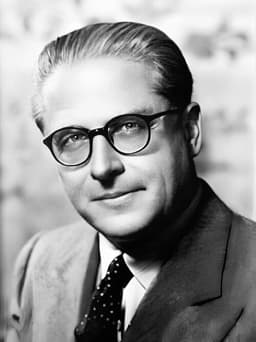
Giovanni Gronchi
Politician · Modern
50.9Total
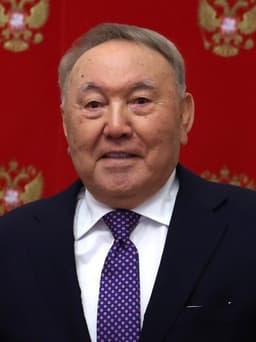
Nursultan Nazarbayev
Politician · Modern
57.2Total
Basic Information
Born
1887
1940
Died
1978
—
Era
Modern
Modern
Nationality
Italy
Kazakhstan
Occupation
Politician
Politician
Civilization
Western
Eastern
Score Comparison
Military (10%)
19.5
10.0
Political (20%)
68.0
78.0
Influence (20%)
54.9
62.0
Legacy (20%)
43.3
54.0
Leadership (15%)
72.0
78.0
Strategy (15%)
34.4
38.3
TOTAL
50.9
57.2
Giovanni Gronchi — Complete Timeline
1948 AD
President of the Chamber of DeputiesPolitical Action
Gronchi served as President of the Italian Chamber of Deputies from 1948 to 1955. In this role, he managed parliamentary procedures during a period of intense political polarization between Christian Democrats and the left, maintaining legislative functionality.
Parliamentary RoleLegislative Process
Impact: national
1950 AD
Founded the Christian Trade Union (CISL)Political Action◆ Major
Gronchi was instrumental in founding the Italian Confederation of Workers' Trade Unions (CISL) in 1950, a Catholic-oriented labor union. This organization aimed to provide an alternative to the communist-dominated CGIL, shaping post-war Italian labor relations and political alignments.
Labor MovementChristian DemocracyTrade Union
Impact: nationalconstructive
1955 AD
Elected President of ItalyPolitical Action◆ Major
Gronchi was elected as the third President of Italy on April 29, 1955, with support from the left and the Christian Democracy left wing. His presidency was marked by efforts to expand presidential powers and a more active foreign policy, including opening relations with the Soviet bloc.
PresidencyItalian RepublicForeign Policy
Impact: nationalconstructive
1962 AD
Supported the 'Opening to the Left'Political Action◆ Major
After his presidency, Gronchi supported the 'Opening to the Left' policy, which brought the Italian Socialist Party into government coalition with the Christian Democrats. This shift ended the centrist coalition era and initiated a period of center-left governments in Italy.
Coalition PoliticsItalian Socialist PartyPolitical Shift
Impact: nationalconstructive
Nursultan Nazarbayev — Complete Timeline
1991 AD
Became First President of KazakhstanPolitical Action◆ Major
Nursultan Nazarbayev was elected as the first president of independent Kazakhstan following the dissolution of the Soviet Union. He had previously served as the head of the Kazakh Soviet Socialist Republic. His presidency focused on nation-building, economic reform, and maintaining stability.
IndependenceNation-BuildingPost-Soviet Transition
Impact: nationalconstructive
1993 AD
Introduced Market ReformsReform◆ Major
Nazarbayev implemented a series of market-oriented economic reforms, including privatization of state enterprises and price liberalization. These reforms attracted foreign investment, particularly in the oil and gas sector, and helped stabilize the economy after the Soviet collapse.
Economic ReformPrivatizationForeign Investment
Impact: nationalconstructive
1997 AD
Moved Capital to AstanaPolitical Action◆ Major
Nazarbayev ordered the relocation of the capital from Almaty to the northern city of Akmola, renamed Astana (now Nur-Sultan). The move was intended to develop the underpopulated north and assert sovereignty over the region. The new capital was built with ambitious architecture and foreign investment.
Capital RelocationUrban DevelopmentNational Identity
Impact: nationalconstructive
2019 AD
Resigned as PresidentPolitical Action◆ Major
Nazarbayev unexpectedly resigned as President of Kazakhstan after nearly 30 years in power. He was succeeded by Kassym-Jomart Tokayev, a loyalist. Nazarbayev retained significant influence as head of the Security Council and as 'Elbasy' (Leader of the Nation), a title granted by parliament.
ResignationPower TransitionPolitical Legacy
Impact: national
2022 AD
Suppressed January 2022 ProtestsPolitical Action◆ Major
Following a violent uprising in January 2022, Nazarbayev was removed from his position as head of the Security Council. The protests, initially over fuel prices, turned into a broader challenge to the regime. Tokayev ordered a crackdown with CSTO support, and Nazarbayev's influence waned.
Protest SuppressionPower StruggleCSTO Intervention
Impact: nationaldestructive
Expert Analysis
Origins
Giovanni Gronchi was born in 1887 in Pontedera, Tuscany, into a middle-class family. He studied literature and philosophy, then became a teacher and trade union activist. His early involvement in the Italian People's Party (PPI) shaped his Christian democratic ideals. Nursultan Nazarbayev was born in 1940 in Chemolgan, Kazakh SSR, into a rural peasant family. He worked in a steel plant and joined the Communist Party, rising through the Soviet hierarchy. His background in heavy industry and party bureaucracy contrasted with Gronchi's intellectual and labor activism.
Rise to Power
Gronchi's rise came through the Christian Democracy party and trade unions. He co-founded the Italian Confederation of Workers' Trade Unions (CISL) in 1950, a Catholic-oriented labor union that mobilized 2 million workers. He served as President of the Chamber of Deputies from 1948 to 1955, where he managed parliamentary procedures during Italy's post-war reconstruction. In 1955, he was elected President of Italy with support from the left and the Christian Democracy left wing, defeating the conservative candidate Cesare Merzagora. Nazarbayev's rise was within the Soviet system. He became First Secretary of the Communist Party of Kazakhstan in 1989, then Chairman of the Supreme Soviet in 1990. Following the dissolution of the USSR, he was elected as the first president of independent Kazakhstan in 1991 with 91.5% of the vote. His consolidation of power involved balancing ethnic Kazakh and Russian interests.
Leadership & Governance
Gronchi's presidency (1955-1962) was largely ceremonial, but he used his influence to push for an 'Opening to the Left'—bringing the Italian Socialist Party into government. He supported social reforms and labor rights, but his power was limited by Italy's parliamentary system. He scored 72.0 in leadership but only 34.4 in strategy, reflecting his inability to enact lasting structural change. Nazarbayev, by contrast, wielded executive power as president of a presidential republic. He introduced market reforms in the 1990s, privatizing state enterprises and liberalizing prices, leading to economic growth fueled by oil and gas. He moved the capital from Almaty to Astana (renamed Nur-Sultan) in 1997 to assert control over the north. His leadership score of 78.0 reflects his authoritarian grip, but his strategy score of 38.3 indicates long-term instability, as seen in the 2022 protests.
Triumph & Tragedy
Gronchi's greatest success was his role in founding CISL, which gave Italian workers a Catholic-oriented alternative to communist unions. His support for the Opening to the Left paved the way for center-left coalitions in the 1960s. However, his presidency was marred by the 'Tambroni affair' in 1960, when he appointed a government that relied on neo-fascist votes, leading to protests and his loss of credibility. Nazarbayev's triumphs include overseeing Kazakhstan's transition from Soviet republic to independent nation, attracting foreign investment, and building a new capital. His tragedy was the suppression of the January 2022 protests, where violent crackdowns left 238 dead. He was forced to resign his Security Council post, ending his de facto rule. His legacy score of 54.0 reflects both economic growth and authoritarian excess.
Character & Destiny
Gronchi was a pragmatic centrist, but his ambition to expand presidential powers led to political isolation. He scored 19.5 in military, reflecting his lack of military background. His destiny was to be a transitional figure, overshadowed by later presidents. Nazarbayev was a survivalist, adept at balancing Russia, China, and the West. His military score of 10.0 is low, but his political score of 78.0 shows his skill in maintaining power. His destiny was to build a nation but leave an unstable political system.
Legacy
Gronchi's legacy is tied to the CISL trade union, which remains influential with 4.5 million members. The Opening to the Left influenced Italian politics until the 1990s. However, his presidency is often forgotten. Nazarbayev's legacy is more visible: the capital Nur-Sultan bears his name, and his economic reforms transformed Kazakhstan into a middle-income country. Yet, his authoritarianism and corruption sparked the 2022 crisis, and his total score of 57.2 reflects a mixed legacy.
Conclusion
Nursultan Nazarbayev had greater impact than Giovanni Gronchi. While Gronchi scored 50.9, Nazarbayev scored 57.2, a gap of 6.3 points. Nazarbayev's political score of 78.0 dwarfs Gronchi's 68.0, and his leadership score of 78.0 exceeds Gronchi's 72.0. Nazarbayev fundamentally shaped a nation's identity and economy, whereas Gronchi's influence was limited to Italy's political maneuvering. Nazarbayev's legacy is tangible—a new capital, a transformed economy—while Gronchi's is institutional but less visible. The data supports Nazarbayev as the more consequential figure.
Rankings
🥇
Nursultan NazarbayevLeader
Mil: 10.0Pol: 78.0Inf: 62.0
57.2
🥈
Giovanni Gronchi
Mil: 19.5Pol: 68.0Inf: 54.9
50.9
+6.3 behind
How This Comparison Works
Algorithm
Each figure is scored on 6 dimensions (0—100 scale) based on structured historical data: Military (10%), Political (20%), Influence (20%), Legacy (20%), Leadership (15%), Strategy (15%). The weighted total produces the final ranking.
Data Sources
Scores are computed from structured sub-indicators in the database. Scale factors adjust for era (Ancient ×0.85, Modern ×1.0) and civilization size (Eastern ×1.05, Other ×0.80) to account for differences in population and military scale.
Maximum 3 Figures
Comparisons are limited to 2—3 figures to ensure readability and statistical meaningfulness.
Error Margins
±5 points per dimension — Sub-scores are derived from historical records with inherent uncertainty. Two figures within 5 points on a dimension should be considered roughly equivalent in that area.
Total Score Accuracy
±3 points overall — The weighted combination of 6 dimensions produces a total score with approximately ±3 points of uncertainty. Differences of less than 3 points are not statistically significant— the figures are effectively tied.
Known Limitations
- Historical records are incomplete and uneven across civilizations
- Figures from oral-tradition societies may be underrepresented
- Occupation labels can misclassify multi-role figures
- Scores measure capability and impact, not moral character
- Quantitative scoring is a comparison tool, not absolute truth
Capability Radar
Military (10%) — Battles & Warfare
Battles
22
0
Win Rate
27
0
Expansion
30
0
Political (20%) — Governance & Reform
Reform
45
75
Diplomacy
55
80
Economy
40
75
Influence (20%) — Cultural & Global Reach
Cultural
30
50
Global
30
60
Legacy (20%) — Historical Impact
Historical
35
60
Longevity
25
55
Leadership (15%) — Power & Stability
Tenure
60
90
Stability
50
70
Strategy (15%) — Tactics & Innovation
Strategy
31
0
Tactics
34
0
Reform
39
10
Similar Comparisons
Comments & Discussion
No comments yet. Be the first to share your thoughts!