Loading...
Gojong of Korea vs Zayed bin Sultan Al Nahyan
Zayed bin Sultan Al Nahyan leads by 8.3 pts · 2 figures compared
…
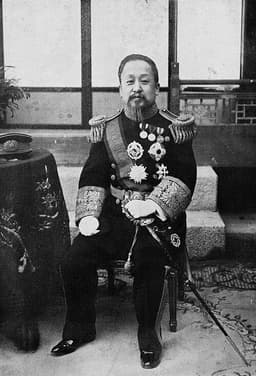
Gojong of Korea
Emperor · Modern
55.5Total
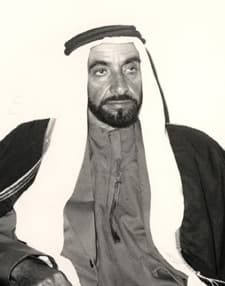
Zayed bin Sultan Al Nahyan
Emperor · Modern
63.8Total
Basic Information
Born
1852
1918
Died
1919
2004
Era
Modern
Modern
Nationality
Korea
UAE
Occupation
Emperor
Emperor
Civilization
Eastern
Middle Eastern
Score Comparison
Military (10%)
43.3
11.3
Political (20%)
68.0
82.0
Influence (20%)
60.0
68.0
Legacy (20%)
50.0
72.0
Leadership (15%)
53.2
85.0
Strategy (15%)
54.6
25.7
TOTAL
55.5
63.8
Gojong of Korea — Complete Timeline
1897 AD
Proclamation of the Korean EmpirePolitical Action
Gojong declared Korea an empire, assuming the title of Emperor. This was an attempt to assert Korea's sovereignty and equal status with China and Japan, and to modernize the state. The move was partly a response to the assassination of his wife, Empress Myeongseong.
Korean EmpireSovereigntyModernization
Impact: nationalconstructive
1905 AD
Signing of the Japan-Korea Treaty of 1905Political Action
Under Japanese pressure, Gojong's government signed the Eulsa Treaty, making Korea a Japanese protectorate. Gojong did not sign the treaty himself and later attempted to appeal to international powers, but the treaty stripped Korea of its diplomatic sovereignty.
TreatyJapanese ProtectorateLoss of Sovereignty
Impact: nationaltragic
1907 AD
Forced Abdication by JapanPolitical Action◆ Major
Japanese authorities forced Gojong to abdicate in favor of his son, Sunjong, after Gojong sent a secret envoy to the Hague Peace Conference to protest Japanese control. The abdication was part of Japan's consolidation of power over Korea.
AbdicationJapanese ImperialismHague Secret Envoy Affair
Impact: nationaltragic
1919 AD
Death and Funeral of GojongOther
Gojong died suddenly, with rumors of poisoning by Japanese agents. His funeral on March 1, 1919, became a catalyst for the March First Movement, a massive nationwide protest against Japanese rule. The movement was brutally suppressed but galvanized Korean independence efforts.
DeathMarch First MovementKorean Independence
Impact: nationaltragic
Zayed bin Sultan Al Nahyan — Complete Timeline
1970 AD
Oil Revenue Investment in InfrastructureReform◆ Major
After the discovery of oil in Abu Dhabi in the 1950s, Zayed directed oil revenues toward building modern infrastructure: roads, hospitals, schools, and housing. This transformed Abu Dhabi from a poor region into a wealthy state.
OilDevelopmentInfrastructure
Impact: nationalconstructive
1971 AD
Formation of the United Arab EmiratesPolitical Action
Zayed bin Sultan Al Nahyan, as ruler of Abu Dhabi, played a key role in uniting seven emirates to form the United Arab Emirates on December 2, 1971. He became the first President, a position he held until his death.
UnificationUAEIndependence
Impact: regionalconstructive
1990 AD
Environmental Conservation InitiativesReform
Zayed established the Zayed International Prize for the Environment and implemented policies to protect wildlife and habitats, including the creation of nature reserves. He was a pioneer in environmentalism in the Gulf region.
EnvironmentConservationAwards
Impact: regionalconstructive
Women's Rights ReformsReform◆ Major
Zayed supported women's education and employment, appointing women to government positions and promoting their participation in the workforce. These reforms were progressive for the region at the time.
Women's RightsEducationReform
Impact: nationalprogressive
2004 AD
Death and LegacyOther◆ Major
Zayed died on November 2, 2004, after a long illness. His funeral drew massive crowds, and he was mourned as the founding father of the UAE. His legacy includes a stable, prosperous federation.
DeathLegacyFounding Father
Impact: nationaltragic
Expert Analysis
Gojong of Korea vs Zayed bin Sultan Al Nahyan
# The Emperor Who Lost a Kingdom and the Sheikh Who Built a Nation
On a cold January morning in 1919, the former Emperor Gojong of Korea died in his palace in Seoul. He was 66 years old, a broken man who had been forced to abdicate by Japanese colonizers twelve years earlier. Rumors of poisoning spread like wildfire through the streets. Within weeks, those rumors would ignite the March First Movement, a nationwide uprising for Korean independence that would be brutally suppressed. Half a world away, in the dusty desert of Abu Dhabi, a boy named Zayed was born the same year Gojong died. He would grow up to do what Gojong could not: forge a nation from fragments, build a future from sand, and die peacefully in his bed, mourned by millions as a father of his country. What separates these two fates is not merely fortune, but the grinding gears of history itself.
Origins
Gojong was born in 1852 into a Korea that had been a kingdom for over five centuries. The Joseon Dynasty, once a beacon of Confucian civilization, was now a hermit kingdom trembling at the edges of a world transformed by Western imperialism. He ascended the throne at age 12, a boy king in a court dominated by his father, the regent Heungseon Daewongun, and later by his wife, Queen Min. His world was one of intricate Confucian ritual, factional intrigue, and a desperate, belated awareness that the old order was dying. He inherited a kingdom, but one whose sovereignty was already being chipped away by foreign powers.
Zayed bin Sultan Al Nahyan was born in 1918 in the stark, unforgiving landscape of the Arabian Peninsula. The area that would become the United Arab Emirates was a collection of tribal sheikhdoms, impoverished and scattered, their economies dependent on pearl diving, fishing, and meager trade. There was no kingdom to inherit, only a harsh desert, a few thousand subjects, and the constant threat of tribal conflict. Zayed grew up in the oasis city of Al Ain, learning the skills of a Bedouin—falconry, camel riding, the art of negotiation between tribes. His education was not in palace libraries but in the oral traditions of a people who survived through resilience and mutual obligation.
Rise to Power
Gojong’s rise was not a rise at all—he was placed on the throne as a child, a figurehead for the ambitions of others. His true test came when he reached adulthood and tried to seize control of his own destiny. The turning point was the 1897 Proclamation of the Korean Empire. Gojong declared himself Emperor, elevating Korea from a kingdom to an empire in a desperate bid to assert sovereignty equal to that of China, Russia, and Japan. It was a bold political move, but it was also a paper shield against the steel of real power.
Zayed’s rise was a slow, patient accumulation of influence. He became ruler of Abu Dhabi in 1966, after his brother was deposed. But his true ascent began earlier, when he was appointed governor of the Eastern Region of Abu Dhabi in 1946. There, he earned a reputation for fairness, wisdom, and an uncanny ability to mediate between warring tribes. When oil revenues began to flow in the 1950s, Zayed did not hoard the wealth. He invested it in wells, schools, and roads—winning loyalty not through force, but through tangible improvements in people’s lives.
Leadership & Governance
Here lies the deepest divide between these two men. Gojong governed a kingdom in decay, trapped between the hammer of Japanese imperialism and the anvil of Chinese and Russian ambitions. His political score of 85.0 reflects genuine intelligence and effort: he attempted to modernize Korea’s military, sent students abroad, and even built an electric tram in Seoul. But his strategy score is a catastrophic 30.0. He repeatedly misjudged Japan’s intentions, believing that diplomatic overtures and international law could protect a state that had no army to defend itself. The 1905 Eulsa Treaty, which made Korea a Japanese protectorate, was signed under duress—but Gojong’s government signed it nonetheless. His secret envoy to the Hague Peace Conference in 1907 was a desperate gamble that backfired spectacularly, providing Japan with the pretext to force his abdication.
Zayed, by contrast, was a master strategist. His military score is a mere 14.6—he never led an army into battle—but his strategy score of 65.8 shows a man who understood that true power lies not in conquest, but in building consensus. When the British announced their withdrawal from the Gulf in 1968, Zayed saw the opportunity to unite the seven emirates. He did not impose unity; he negotiated it, offering wealth-sharing arrangements and assurances to smaller rulers who feared domination by Abu Dhabi. On December 2, 1971, the United Arab Emirates was born—a nation that had never existed before, created not by war but by vision.
Triumph & Tragedy
Gojong’s greatest triumph was the Korean Empire itself, a fleeting moment from 1897 to 1910 when Korea stood, however shakily, as a sovereign equal among nations. His greatest tragedy was the loss of that sovereignty, and the manner of his abdication—a broken emperor forced to hand his crown to his son, who would reign as a puppet under Japanese bayonets. His death in 1919, shrouded in suspicion of poisoning, was the final indignity. Yet even in death, Gojong served his people: his funeral on March 1, 1919, became the spark for the March First Movement, a nationwide cry for independence that, though crushed, kept the dream of a free Korea alive.
Zayed’s triumph was the UAE itself. He turned a desert of scattered tribes into a modern federation with one of the highest standards of living in the world. His oil wealth was not squandered on palaces or armies; it built universities, hospitals, and a society where women were appointed to government positions as early as the 1990s. His tragedy was more personal: the long illness that preceded his death in 2004, and the quiet knowledge that the wealth he had so carefully managed could not buy immortality.
Character & Destiny
Gojong was a man of genuine intelligence trapped in a situation that demanded not intelligence, but ruthlessness and a clear-eyed understanding of power. He was cautious when he should have been bold, and bold when he should have been cautious. His character was shaped by a court that valued subtlety over strength, and by a Confucian worldview that assumed moral authority could outweigh military force. It could not.
Zayed was a Bedouin pragmatist. He understood that leadership is not about commanding, but about providing. His character was forged in the desert, where a leader who hoarded water while his people thirsted would not survive the next season. He was patient, generous, and strategic—qualities that served him perfectly when oil transformed his world overnight.
Legacy
Gojong is remembered today as a tragic figure, the last emperor of a Korea that was swallowed by empire. His legacy is complex: he tried to save his country and failed, but his failure inspired the independence movement that eventually succeeded. His name is spoken with a mixture of respect and sorrow.
Zayed is remembered as the Father of the Nation. His face adorns banknotes, his name graces universities and airports, and his vision continues to guide the UAE. His legacy is one of creation, not loss—a nation built from nothing, united by choice, and sustained by the wealth he used for the common good.
Conclusion
History does not always reward the wise; it rewards the lucky, the ruthless, and the timely. Gojong inherited a kingdom that was already doomed, caught in the machinery of a world order he could not change. Zayed inherited a desert that became a treasure house, and he had the wisdom to use that treasure wisely. One man’s tragedy was that he was born too late for his kingdom to survive. The other’s triumph was that he was born just in time to build a new one. Their scores are nearly identical—68.3 and 69.7—but the difference in their fates reminds us that in history, as in life, timing is everything.
Rankings
🥇
Zayed bin Sultan Al NahyanLeader
Mil: 11.3Pol: 82.0Inf: 68.0
63.8
🥈
Gojong of Korea
Mil: 43.3Pol: 68.0Inf: 60.0
55.5
+8.3 behind
How This Comparison Works
Algorithm
Each figure is scored on 6 dimensions (0—100 scale) based on structured historical data: Military (10%), Political (20%), Influence (20%), Legacy (20%), Leadership (15%), Strategy (15%). The weighted total produces the final ranking.
Data Sources
Scores are computed from structured sub-indicators in the database. Scale factors adjust for era (Ancient ×0.85, Modern ×1.0) and civilization size (Eastern ×1.05, Other ×0.80) to account for differences in population and military scale.
Maximum 3 Figures
Comparisons are limited to 2—3 figures to ensure readability and statistical meaningfulness.
Error Margins
±5 points per dimension — Sub-scores are derived from historical records with inherent uncertainty. Two figures within 5 points on a dimension should be considered roughly equivalent in that area.
Total Score Accuracy
±3 points overall — The weighted combination of 6 dimensions produces a total score with approximately ±3 points of uncertainty. Differences of less than 3 points are not statistically significant— the figures are effectively tied.
Known Limitations
- Historical records are incomplete and uneven across civilizations
- Figures from oral-tradition societies may be underrepresented
- Occupation labels can misclassify multi-role figures
- Scores measure capability and impact, not moral character
- Quantitative scoring is a comparison tool, not absolute truth
Capability Radar
Military (10%) — Battles & Warfare
Battles
5
4
Win Rate
5
9
Expansion
5
12
Political (20%) — Governance & Reform
Reform
40
90
Diplomacy
30
95
Economy
30
90
Influence (20%) — Cultural & Global Reach
Cultural
50
70
Global
40
70
Legacy (20%) — Historical Impact
Historical
60
75
Longevity
40
65
Leadership (15%) — Power & Stability
Tenure
60
85
Stability
20
85
Strategy (15%) — Tactics & Innovation
Strategy
5
16
Tactics
5
16
Reform
10
18
Similar Comparisons
Comments & Discussion
Gojong the Gilded6/16/2026
Gojong thought playing Russia against Japan was clever, but that’s like juggling grenades. The 1895 assassination of Queen Min by Japanese agents should’ve been his wake-up call—instead, he fled to the Russian legation like a scared diplomat. Meanwhile, Zayed was building schools with oil money before most Gulf rulers even had maps. One died poisoned by empire; the other died a father of his nation. The lesson? Strategy without execution is just a history footnote.
拓荒先知6/16/2026
别把戈宗和扎耶德放一块比,一个是被动挨打的末代傀儡,一个是主动造国的沙漠之父。戈宗在1895年乙未事变后躲进俄国公馆,暴露了懦弱;扎耶德却在1968年阿布扎比与迪拜的联盟会议上,亲自拿尺子画边界,把七个酋长国拼成阿联酋。一个被毒杀,谣言四起;一个寿终正寝,万人哀悼。差距不在运气,在于愿不愿意亲手挖第一口井。