Loading...
Goran Persson vs Napoleon Bonaparte
Napoleon Bonaparte leads by 19.2 pts · 2 figures compared
…
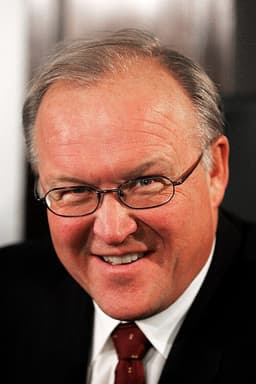
Goran Persson
Politician · Modern
51.7Total

Napoleon Bonaparte
General · Modern
70.9Total
Basic Information
Born
1949
1769
Died
—
1821
Era
Modern
Modern
Nationality
Sweden
France
Occupation
Politician
General
Civilization
Western
Western
Score Comparison
Military (10%)
47.5
94.0
Political (20%)
62.7
72.0
Influence (20%)
50.2
40.0
Legacy (20%)
40.0
80.0
Leadership (15%)
72.0
78.0
Strategy (15%)
42.0
90.0
TOTAL
51.7
70.9
Goran Persson — Complete Timeline
1996 AD
Appointment as Prime Minister of SwedenPolitical Action◆ Major
Goran Persson succeeded Ingvar Carlsson as Prime Minister of Sweden, leading a Social Democratic government. He served for a decade, overseeing a period of economic recovery and welfare state reforms.
Swedish PoliticsSocial Democratic Party
Impact: nationalconstructive
2001 AD
Swedish EU PresidencyPolitical Action◆ Major
Sweden held the rotating presidency of the Council of the European Union under Persson's leadership. The presidency focused on EU enlargement, environmental policy, and the Lisbon Strategy for economic reform.
European UnionSwedish Presidency
Impact: regionalconstructive
2006 AD
Defeat in the 2006 Swedish General ElectionPolitical Action◆ Major
Persson's Social Democratic Party lost the general election to the centre-right Alliance for Sweden coalition led by Fredrik Reinfeldt. This ended 12 years of Social Democratic rule and Persson's tenure as Prime Minister.
Swedish PoliticsElection Defeat
Impact: national
Napoleon Bonaparte — Complete Timeline
1799 AD
Coup of 18 BrumaireOther◆ Major
Napoleon Bonaparte, with support from his brother Lucien and key political figures, overthrew the Directory in a bloodless coup. He established the Consulate with himself as First Consul, effectively becoming the ruler of France. This event ended the French Revolution's most unstable period.
French RevolutionCoupRise to Power
Impact: regional
1804 AD
Promulgation of the Napoleonic CodeOther◆ Major
Napoleon enacted the Civil Code of the French, known as the Napoleonic Code, a comprehensive set of laws that replaced the fragmented feudal legal systems. The code established legal equality, protected property rights, and secularized law. It became the basis for legal systems in many European and world countries.
Legal ReformNapoleonic CodeCivil Law
Impact: globalconstructive
1805 AD
Battle of AusterlitzWar◆ Major
Napoleon's Grande Arm
Napoleonic WarsBattleDecisive Victory
Impact: global
1812 AD
Invasion of RussiaWar◆ Major
Napoleon led the Grande Arm
Napoleonic WarsInvasionDisaster
Impact: globaldestructive
1815 AD
Battle of WaterlooWar◆ Major
Napoleon's French army was defeated by the combined forces of the Duke of Wellington's Anglo-Allied army and Gebhard Leberecht von Bl
Napoleonic WarsBattleFinal Defeat
Impact: globaldestructive
Expert Analysis
goran-persson-vs-napoleon-bonaparte
# The Emperor and the Premier: Two Paths of Power in the Modern Age
On a June morning in 1815, Napoleon Bonaparte surveyed the muddy fields of Waterloo, his grand army poised for a battle that would decide the fate of Europe. Less than two centuries later, on a crisp autumn day in 2006, Göran Persson walked out of the Swedish parliament building in Stockholm, his decade-long premiership ended by a quiet electoral defeat. One man had conquered continents; the other had governed a small, prosperous nation through consensus. Both held power, yet their stories could not be more different. What drives one soul to seek dominion over millions, and another to find fulfillment in managing a welfare state?
Origins
Napoleon was born in 1769 on the Mediterranean island of Corsica, a place of rugged mountains and fierce independence that had only recently become French. His family, minor nobility, struggled financially, and young Napoleon grew up speaking Italian-accented French in a society where honor and vendetta were living traditions. The French Revolution, erupting when he was twenty, shattered the old order and opened a path for talent over birth. He devoured military history, studied artillery science, and absorbed the Enlightenment’s promise that merit could reshape the world.
Göran Persson entered the world in 1949 in a small Swedish town called Vingåker, the son of a construction worker and a homemaker. Postwar Sweden was a social democratic paradise in the making: stable, egalitarian, and deeply consensual. There were no revolutions here, no guillotines, no desperate scrambles for glory. Persson grew up in a society that valued collective security over individual ambition, where the highest calling was service to the community through the state.
Rise to Power
Napoleon’s ascent was a rocket’s trajectory. At twenty-four, he drove the British from Toulon and was promoted to brigadier general. By twenty-six, he had crushed a royalist uprising in Paris with a “whiff of grapeshot” and was given command of the Italian campaign. In 1796, at just twenty-seven, he led an army of ragged soldiers across the Alps and defeated the Austrians in a series of lightning campaigns. Each victory was a stepping stone, each triumph a claim on the nation’s gratitude. By 1799, he had staged a coup and made himself First Consul, effectively dictator of France.
Persson’s rise was a slow climb through the party machinery. He joined the Social Democratic Youth League as a teenager, studied at a teachers’ college, and entered local politics in the 1970s. In 1996, at forty-seven, he succeeded Ingvar Carlsson as Prime Minister—not through battlefield glory, but through years of committee work, budget negotiations, and party loyalty. His path was not a conquest but an appointment.
Leadership & Governance
As emperor, Napoleon ruled with an iron hand wrapped in a velvet glove of reform. He centralized the French state, created the Napoleonic Code—a legal framework that enshrined equality before the law, property rights, and secular administration—and established a meritocratic bureaucracy. His military genius was staggering: he could read a battlefield like a chess master, moving corps of tens of thousands with precision and speed. He won sixty battles, from Austerlitz in 1805 to Jena in 1806, and built an empire that stretched from Spain to Poland. Yet his political wisdom faltered. He alienated the Pope, provoked endless wars with Britain, and installed his brothers on thrones they could not hold.
Persson led Sweden through a quieter revolution. His government privatized state-owned enterprises, reformed the pension system to ensure long-term sustainability, and guided Sweden through the dot-com crash. He was a master of coalition-building, a pragmatist who kept the Social Democrats in power for a decade by balancing left-wing demands with fiscal discipline. His strategy was not to conquer but to manage—to keep the economy growing, the welfare state solvent, and the country stable.
Triumph & Tragedy
Napoleon’s greatest moment was Austerlitz in 1805, where he destroyed the combined armies of Russia and Austria in a single day, a battle so perfect it became a textbook example of military art. His greatest tragedy was the invasion of Russia in 1812. He marched 600,000 men into the endless steppes, only to lose them to winter, hunger, and guerrilla attacks. He returned to France with barely 100,000. Exiled to Elba in 1814, he escaped, raised another army, and was finally crushed at Waterloo in 1815.
Persson’s triumph was the Swedish EU presidency in 2001, where he successfully managed the complex agenda of enlargement and institutional reform, earning respect from European leaders. His tragedy was the 2006 election, when his party lost power after a decade. There was no exile, no battlefield defeat—just a quiet handover of power to Fredrik Reinfeldt’s centre-right coalition. The man who had governed Sweden for ten years returned to private life.
Character & Destiny
Napoleon was driven by an insatiable hunger for glory. “Destiny,” he once said, “is the name we give to our own deeds.” He believed he could bend history to his will, and for a time, he did. But his ambition had no limit, no sense of when enough was enough. He could not stop. That same drive that made him a genius also made him a prisoner of his own legend.
Persson was a different creature entirely. He was described by colleagues as shrewd, stubborn, and deeply pragmatic. He did not seek to remake the world; he sought to improve Sweden. His ambition was bounded by the realities of parliamentary democracy, public opinion, and economic constraints. He understood that power in a modern democracy is not a crown to be worn but a trust to be exercised.
Legacy
Napoleon left behind a transformed Europe: the Napoleonic Code, the abolition of feudalism, the spread of nationalism, and the redrawing of borders. He is remembered as both a liberator and a tyrant, a military genius and a warmonger. His legacy score of 78.0 reflects this complexity—a man who changed history but left a trail of destruction.
Persson’s legacy is quieter. He is remembered as a competent manager, a steady hand during economic turbulence, and a key figure in Sweden’s European integration. His legacy score of 54.7 reflects the modesty of his ambitions. He did not conquer; he administered. He did not inspire devotion; he earned grudging respect.
Conclusion
What separates these two men is not talent or intelligence but the shape of their ambitions. Napoleon’s ambition was boundless, shaped by a revolutionary era that rewarded audacity and punished restraint. Persson’s ambition was measured, shaped by a stable democracy that valued consensus over conquest. One ended his life on a remote Atlantic island, dictating his memoirs to a small circle of loyalists. The other left office to write his memoirs from a comfortable Stockholm apartment, a retired civil servant. In their different fates, we see the two faces of modern power: the emperor who would rule the world, and the prime minister who would govern his nation. Both achieved greatness, but greatness, as these lives show, is a mirror that reflects the age in which it is forged.
Rankings
🥇
Napoleon BonaparteLeader
Mil: 94.0Pol: 72.0Inf: 40.0
70.9
🥈
Goran Persson
Mil: 47.5Pol: 62.7Inf: 50.2
51.7
+19.2 behind
How This Comparison Works
Algorithm
Each figure is scored on 6 dimensions (0—100 scale) based on structured historical data: Military (10%), Political (20%), Influence (20%), Legacy (20%), Leadership (15%), Strategy (15%). The weighted total produces the final ranking.
Data Sources
Scores are computed from structured sub-indicators in the database. Scale factors adjust for era (Ancient ×0.85, Modern ×1.0) and civilization size (Eastern ×1.05, Other ×0.80) to account for differences in population and military scale.
Maximum 3 Figures
Comparisons are limited to 2—3 figures to ensure readability and statistical meaningfulness.
Error Margins
±5 points per dimension — Sub-scores are derived from historical records with inherent uncertainty. Two figures within 5 points on a dimension should be considered roughly equivalent in that area.
Total Score Accuracy
±3 points overall — The weighted combination of 6 dimensions produces a total score with approximately ±3 points of uncertainty. Differences of less than 3 points are not statistically significant— the figures are effectively tied.
Known Limitations
- Historical records are incomplete and uneven across civilizations
- Figures from oral-tradition societies may be underrepresented
- Occupation labels can misclassify multi-role figures
- Scores measure capability and impact, not moral character
- Quantitative scoring is a comparison tool, not absolute truth
Capability Radar
Military (10%) — Battles & Warfare
Battles
29
95
Win Rate
34
90
Expansion
38
95
Political (20%) — Governance & Reform
Reform
55
95
Diplomacy
60
80
Economy
55
85
Influence (20%) — Cultural & Global Reach
Cultural
20
85
Global
20
90
Legacy (20%) — Historical Impact
Historical
25
95
Longevity
15
90
Leadership (15%) — Power & Stability
Tenure
65
85
Stability
60
70
Strategy (15%) — Tactics & Innovation
Strategy
37
95
Tactics
40
98
Reform
45
92
Similar Comparisons
Comments & Discussion
No comments yet. Be the first to share your thoughts!